- Solar cycle 24 is crashing, and we’re still three years from Solar minimum. 24 really does look to be the weakest cycle in 100 years or more.
- And if you don’t think the Sun influences Earth’s climate, read this, about the Sun’s indirect effects on climate and why they make climate so hard to predict.
- I doubt the payback would be more than the cost of the equipment and the electricity, but you can mine bitcoin with a Raspberry Pi–or better yet, a whole farm of them. (Run them from a solar panel?)
- Speaking of the RPi: I burned a new NOOBS micro-SD last week, and used it to install the latest stock Raspbian. What I discovered is that this latest release has a terrible time detecting any monitor that isn’t straight HDMI. I’ve been using the RPi with older 4:3 DVI monitors through an adapter cable ever since I got my first board, and the board had no trouble figuring out the size of the raster. I’ve screwed around with the config file with only partial success; even telling the board precisely what mode your monitor speaks (1600 X 1200, 75 Hz) doesn’t guarantee correct video.
- When I was much younger I wanted a PDP-8. And then a PDP-11, which I almost got because Heathkit actually made a hobbyist PDP-11 desktop. I settled for an S-100 8080, because there was actually software for it. I recently stumbled on a hobbyist PDP-8 system based on Intersil’s IM6120 chip. It’s not hardware you can buy; you download the PCB design and the software, get somebody to make the board (not hard these days) and then stuff it yourself. Runs FOCAL-69 and OS/8. Paleocomputing at its best!
- From the It’s-Dead-But-the-Corpse-Is-Still-Twitching Department: Aetna is pulling out of the Obamcare exchanges entirely next year, citing $200M in losses.
- You won’t believe where Earth’s atmospheric xenon comes from! (Actually, you will…but you have to say that these days because clicks.)
- Excellent long-form piece on why we should fear an ideologically uniform elite. From the article: “If you really want to live in a world without tyranny, spend less time trying to show others why you are right and more time trying to show yourself why you are wrong.” Bingo. Because no matter what you think, you are always wrong. About everything. Nothing is simple. Nobody has the whole story. Ambiguity is everywhere. Certainty is poison.
- How many times do we have to say this? Eat fat to lose weight.
- We could use more research here (can’t we always?) but it’s certainly possible: Eating more salt may help you lose weight. Could be; I determined by experiment that salt doesn’t affect my blood pressure, so it couldn’t hurt to try.
- A correlation has been found between consuming lowfat or nonfat dairy products and Parkinson’s disease. No such correlation is seen with full-fat dairy products. My guess: Your brain is mostly made of fat, and people who eat low-fat dairy tend to eat low-fat everything. So this is yet another reason to go low-carb high fat, even if you don’t need to lose weight. Fat is a necessary nutrient!
- After decades of difficult research, scholars have finally decoded the lyrics to the “O Fortuna” movement of Carmina Burana. And…they aren’t in medieval Latin at all. (Thanks to Sarah Hoyt for the link.)
astronomy
Odd Lots
Fighting the Time Bandits…

…not to mention the energy bandits. I didn’t always have trouble with those.
So. I have not abandoned Contra, am not dead nor even injured. (I took some skin off one of my toes in Hawaii.) I don’t know that I can manage a detailed entry today, but I’m not sure I’ve ever gone a month without posting here. I’ve done a little better on Facebook, but that has mostly been posting interesting links and maybe a little commentary.
Like, f’rinstance, the Sun has gone to sleep, and has been asleep now for twelve days. For ten of those twelve days, even the solar plages went missing, and I generally don’t see that. Yesterday I started to see some plages again, so I’m guessing we’ll see some spots in the next few days. It’s remarkable for this to happen just two years after a solar maximum, poor limp excuse for a maximum that it was. We’re certainly seeing a much quieter Sun than we’re used to. What that means is impossible to know right now. I doubt we’re sliding into a new Ice Age, though it’s fascinating to speculate…and one of the reasons we may not be is that we have a little more CO2 in the atmo to keep things warm.
The cool part (as it were) is that I will probably live long enough to see if a weaker solar cycle has any measurable effect on climate. (I won’t be 90 until 2042, and I certainly intend to live at least that long.)
So. The reason I’ve been so strapped is this: When we packed the house last December so we could winter over in our new house in Phoenix, we packed what we needed, and left everything else in Colorado. Now we have to empty the house except for some furniture and knicknacks for staging.
What was startling was how much was left after we extracted what we needed.
There’s a lesson in that somewhere, and if I had time I’d dig for it. Instead, Carol and I are doing triage on an enormous amount of stuff, packing and labeling the keepers and hauling the discards to whoever will take them. I’m making a salvage run to the metal yard later this week with a couple of ’50s chrome kitchen chairs with the padded panels removed, a couple of ’70s folding chairs ditto, a ’50s charcoal grill, a ’50s stepstool, some odd steel scrap, and about ten pounds of copper wire and other odd copper/brass items. I’m selling furniture and our gas grill on Craigslist. We’re shredding twenty years of odd bills and recycling several boxes of old magazines that somehow escaped the heave-ho last year. Almost all back issues of the Atlantic are now online, so I don’t need to keep paper mags, even the ones tagged with significant articles. (The Atlantic used to have a lot more of those in the ’80s and ’90s than they do today.)
 Carol’s packing glassware and kitchen and office stuff and much miscellany. I have to get rid of a solar panel that I cobbled up in 1977 from six 6-cell subpanels that doesn’t work anymore, and I would like to investigate the peculiar failure mode if I had time: When first placed in the Sun it generates 17 volts, but over a period of no more than five minutes the voltage drops down under 10 volts and eventually to 5. It hasn’t been in the Sun at all these past 40 years…so what died? I’m curious, but not curious enough to keep it and do exploratory surgery on it.
The kicker, though, is this: No sooner did we get back from our Hawaii vacation than I was sent the PDF proofs of my six chapters of Learn Computer Architecture with the Raspberry Pi. That’s 100,000 words and 90 hand-drawn technical figures. I have to read them closely, because I’ve already spotted typos that were not present in the edited manuscript ARs. Somebody, somewhere changed “Jack Kilby” to “Jack Kelby.” The inventor of the integrated circuit deserves better. I may be the last line of defense against stuff like that, so I have to read slowly and pay complete attention. Also, don’t get me started on example code. Whitespace is significant in Python…and for what, Lord? To torment typesetters and technical editors?
Sheesh.
We’re still trying to schedule some essential work, like having an epoxy coating put down on the new garage floor, getting all the outside windows washed, and having the carpets and drapes cleaned. So, evidently, is everyone else in Colorado Springs. Want to make good money? Forget your Grievance Studies degree and go into carpet cleaning.
By now you may be getting the idea. I turned 64 on the 29th, and am feeling every day of it. I’m desperate to do some new SF (so desperate that I’ve started writing country-western songs in my head while schlepping boxes) and that’s not going to happen for awhile.
The bad news is that this isn’t going to be over any time real soon. End of July, I hope. But if the house keeps vomiting up weird stuff that we didn’t have to deal with last time, all bets are off. Your best bet is to watch Facebook, as I allow myself fifteen minutes of online time during the day.
I’ll be back. (Didn’t somebody else say that? Oh, yeah: I used to have some 75 ohm terminators, but they’re long gone.) I haven’t been doing this for 18 years only to stop now.
Odd Lots
- Google is banning Flash-based advertising. About damned time. Flash is and has always been a malware farm. Die, monster, die!
- Flash is the biggest risk but not the only one in terms on online ads. AdBlock Plus is very good, but makes its money by selling whitelist positions to advertisers like Taboola. Here’s how to turn off the whitelist.
- Although he doesn’t say much about it in the article itself, I see this research about the hypothalamic attack region as justification for considering tribalism born and not learned behavior. (Thanks to Tom Roderick for the link.)
- The BMI is a lie, and a deadly one. A measurement that cannot distinguish between fat and lean muscle is a lie now, has always been a lie, and will never be anything other than a lie. Furthermore, it’s been a lie for 185 years. You’d think medical science would have figured it out by now.
- Solar Cycle 24 is the weakest in 200 years. Bummer. First time I can have a reasonable HF antenna in 13 years, and it may not matter. But at least I’m now living in a warm climate.
- Nonetheless, the Sun seems remarkably active in this video showing an entire year of solar activity at 12 seconds per frame.
- What if NASA designed space travel posters? Well, um, they did. (Thanks to Pete Albrecht for the link.)
- Engadget reviews the second-gen Compute Stick 2016, which is a Windows 10 computer the size of a fat thumb drive that plugs into your TV’s HDMI port. HDMI doesn’t supply power (yet, but MHL is coming) so you still need a wall wart. However, it’s now got 2 USB ports so you can plug both keyboard and mouse into it without a hub. (Many keyboards now have USB hubs, so if you want you can put both on a single port just using the keyboard hub.) Even thought it’s as small as it is, it still has a fan. Wow.
- How they build a tunnel with giant concrete Legos and a truck with casters where a hedgehog has spines.
- The Senate has made the ban on Internet access taxes permanent. Note that this has nothing to do with sales taxes on Internet purchases, but is about taxing Internet access itself. The law, originally passed in 1998, had to be renewed annually. If the House passes it and the President signs it, the law will no longer need to be renewed every year.
- People ask me sometimes why I consider Woodrow Wilson by far the worst US President in history. Here’s only one reason. There are many more. Here’s another. He came as close to being the first American dictator as we’ve ever come. (Thanks to Esther Schindler for the first link.)
- Neanderthal genes may be a mixed bag. Well, sweetheart, what isn’t?
Odd Lots
- If you’re of the increasingly rare human subspecies called “morning people,” consider watching the predawn sky for the next few weeks. Once Mercury gets a little higher above the horizon at dawn, you’ll be able to see all five naked-eye planets in a line: Mercury, Venus, Saturn, Mars, and Jupiter.
- Here in Arizona, I don’t even have to get up early. I’ve been spotting planets at 7 AM, when we take the dogs out. (Sleeping until 7 is sleeping in for us.) No Mercury yet, but all the others are there, and easy. And here and there I see a meteor, which is yet another advantage to the contrarian morning-person position.
- Astronomers are looking at planetary perturbations again, and doing some math suggesting that a gas giant bigger than Neptune out beyond Pluto. My question: Wouldn’t anything that big have been spotted by now? It should be possible to calculate the range of visual magnitudes for a gas giant of typical composition at various distances from the Sun. Even if it’s as faint as Pluto, the Hubble could snag it with one secondary mirror tied behind its back.
- One downside to claiming that every summer hot spell means global warming is that the public then unrolls the syllogism and comes to believe that every winter cold spell means global cooling. Climate means trends that extend cross 30-50 years. Everything else is weather.
- A new model of the Sun’s internal mechanisms suggests that solar activity may fall as much as 60% by 2030. That number is misleading for a number of technnical reasons, but if the Sun is indeed the primary driver of climate, I’m glad I’m in Phoenix–and I’m staying here this time.
- If you haven’t reviewed it lately, it’s time to go and read ESR’s very cogent description of “kafkatrapping,” which is a common logical fallacy that cooks down to, “If you’re not willing to admit that you’re guilty of <whatever>ism, that proves that you’re guilty of <whatever>ism.” I see it all the time. I and many other people in my orbit consider kafkatrappers to be utter morons. We may not say it out loud, but we do. Don’t go there.
- Newspaper subscriber numbers are in freefall. I like newspapers, and once we’re really quite sincerely residents of Arizona, we’ll likely pick up the WSJ again. In the meantime, I think I’m doing what most other people have been doing for some time: picking up news on the Web.
- The appendix could be the body’s Federal Reserve Bank for gut bacteria. I’ve often wondered if overuse of antibiotics has contributed to the explosion of obesity cases since the 1970s, by narrowing the range of beneficial microbes in the lower tract. There are solutions, and although they may seem ukky, they do seem to work.
- Watch what happens when you pour molten aluminum onto dry ice, and (a little later) liquid nitrogen.
- And even though I vividly described what happens when you drop fifty pounds of of cesium into water in Drumlin Circus, if you don’t have a thingmaker to cough up a fifty-pound ball of cesium for you, here’s what happens when you drop 25 grams of cesium into water. Do the math.
- Finally, while we’re talking exotic metals, here are some cool videos of gallium doing freaky things.
Seeing (Or Not Seeing) Spots

Above is the image of the Sun’s disk posted today on SpaceWeather.com. The sunspot number is 26. Here’s an experiment you can do yourself: Save the image off the page to disk, bring it up in an image browser, and zoom out until it’s about the size of (…a silver dollar? Nobody knows what those are anymore…) a spray can lid, or something else measuring two inches or under.
Now, how many sunspots can you see?
Imagine yourself an astronomer in 1700, using a telescope made with skills and understanding of optics available at the time, to project the Sun onto a card or a wall. How many sunspots would you see?
Be honest: Zip. Zero. None.
This is the problem we have comparing solar activity today with solar activity 200 or 250 years ago: People then did not have the instruments we have today, so the counts really don’t compare. Some efforts have been made to address this, but it’s really an unsolvable problem if we want accurate comparisons of sunspots in 1700 to sunspots today.
My point, which is hardly original with me, is that we see and count spots today that could not have been seen in 1700. So we may already be sliding into a Maunder-class solar minimum. If solar cycle 25 (roughly 2019-2030) is as weak as they’re predicting, it may exhibit few if any sunspots that astronomers in 1700 would have seen.
Nobody knows what this means. The Sun has been slowly going to sleep since its Grand Maximum in 1958 during cycle 19. I’m not going to claim that solar activity is the sole governor of climate, but it’s a major contributor. (And yes, you hotheads, I freely admit that CO2 does contribute to global warming. We’re still arguing about how much. Remember that you may not use the word “denier” in my comments.) My point is that most of us will live long enough to see whether sunspot counts are in any way a proxy for global temperature.
My blood oxygen issue is the major reason we’re moving to Phoenix. It’s by no means the only one.
Odd Lots
- My collection Cold Hands and Other Stories is now available to Kindle Unlimited subscribers.
- Well, judging by its website it may seem a little wobbly, but Heathkit has a new owner, and is actually selling radio kits. Let us wish them the best and watch what happens. (Thanks to Tom Byers, Michael Covington, and several others for alerting me.)
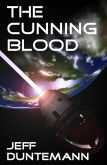
- Smart bullets appear early in The Cunning Blood, which I wrote in 1998. (You can read that part of the story in the Amazon “Look inside” ebook preview.) Seventeen years later, we’re starting to pursue that line of research, with the Army’s XM25, which us about ready to test. By 2374, those little devils are going to be pretty damned dangerous.
- Lazarus 1.4.4 has been released. Mostly bug fixes, but it’s free and well worth having if you program for Delphi or Pascal generally. Plus, it can be installed and works very well on the Raspberry Pi 2.
- Here’s David Archibald’s solar update for October, 2015. I find the trend lines in the graph of F10.7 flux fascinating: They’ve been in a pretty linear decline since the beginning of the year. Anything under 100 signals a cooling trend. We’re now at 84, and the reading may “bottom out” at the lowest possible reading of 64 by January of 2016.
- As if a quieting Sun weren’t enough, there’s a newly discovered mechanism pushing the planet in the direction of global cooling, via volatile organic compounds, particularly isoprene.
- Roy Harvey pointed me to MakerArm, a sort of general-purpose 3-D positioner that can be used to mill PCBs, print 3-D artifacts, and draw things on cakes with frosting. This is definitely second-gen, or maybe third (I lose track) and something in me seriously wants one.
- Esther Schindler sent a link to word that high-fructose corn syrup apparently slows recovery from brain injury. It also overloads your liver, especially downed 44 convenience-store ounces at a time.
- I’m considering renting a short cargo container as a temporary storage shed in our new (large) back yard. We did this at our second house in Scottsdale in the 90s, and it worked very well. Researching containers led me to this writeup of the world’s largest container ship, MSC Oscar, which can hold 19,224 containers. Me, I’d call it Darth Freighter.
- This is very cool: Brilliant color photographs of an era (1940-1942) we remember almost entirely in black and white. (Thanks to Pete Albrecht for the link.)
- More Oldiana, for early vintage Boomers and before: An Old-Time Chicago Quiz. This one is not easy: I got less than half of them right, granting that most of the ones I missed were sports-related. (Thanks to Pete Albrecht for the link.)
- We’re getting closer to being able to prevent Lyme disease, though injection of lab-engineered antibodies.
- Megan McArdle thinks it makes sense. I think it’s their last swing around the drain marked “DOOMED MAGAZINES.” Whoever turns out to be right, Playboy is eliminating nudity. Wow. Isn’t that kind of like caffeine-free diet Jolt?
Odd Lots
- In order to adfertote plus catuli, you had better facite plus catuli first. A number of very sharp people I know are working on this. Their feckless critics will doubtless help.
- September 12 was the annual peak in hurricane activity. Alas, there were no tropical depressions, tropical storms, or hurricanes anywhere on Earth. And as best I can tell from the National Hurricane Center sit, there still aren’t.
- I said this back in 2010. Now, according to a book reviewed by National Geographic, I was right. I love being right. (Thanks to Bill Roper for the link.)
- Carol and I tried several flavors of this stuff when we were in Phoenix recently, and it’s mighty good in coffee. (I also poured some of the black cherry flavor into a bottle of not-quite-meh Reisling and found it much more drinkable.) The manufacturer told me that Wal-Mart sells it, but we looked in two stores and didn’t find any. However, you can order it from Amazon.
- Here’s a nice article on the world’s first science fiction convention, held in Leeds, England, in 1937. Arthur C. Clarke and Eric Frank Russell were there.
- Reader Scott Schad put me on to a phenomenon he’s discovered on Amazon, in which somebody is concocting fake tech books and publishing them under the titles of popular books, including my own Assembly Language Step By Step. I’m looking into this, but (as if it needs saying) be careful what you buy online.
- Esther Schindler sent a link to the earliest use of the F-word, which appears in 1310. I’m guessing it goes back a little farther than that.
- What are asteroids made of? No snipes or snails, one would hope. However, 810 times the amount of ruthenium in the Earth’s crust sounds really good. (Thanks to Charlie Martin for the link.)
- While we’re talking exotic metals, here’s a YouTube video of gallium melting in someone’s hand. (It’s a slow process; FF to about 4:30, where it starts getting interesting.)
- And another showing what happens when you pour liquid gallium on your iPhone 6. I love the way the guy picks up liquid metal with his fingers and drops it on the phone. Mercury doesn’t work that way. Then again, mercury doesn’t eat aluminum phones, either.
- Gallium became a short-term character in Metal Men, the only comic book I ever paid my own money for and read regularly.
- From the ya-gotta-see-this department: My old friend Doug Rice was a designer and storyboard artist on a cartoon filk parody of the Macarena, starring the Animaniacs.
- Take a look at Pastime Projects for vacuum tube ham radio kits, mostly centering around the 6V6 power pentode. There’s an associated blog for the site, and it’s worth reading if tubes are your thing.
Odd Lots
- This stuff has been piling up. And I’ve been tired and perhaps a little grouchy. It’s just a phase I’m going through.
- From the People-Whom-I-Had-Once-Known-About-But-Then-Forgot Department: Annie Jump Cannon, who mostly eclipsed Edward Pickering while helping to complete the Harvard Classification Scheme for stars. Annie made it into the slightly snotty but very entertaining Rejected Princesses site. (Thanks to R. K. Modena for reminding me of Annie and pointing me to Rejected Princesses.)
- Alas, it sounds a lot like Nook is circling the drain.
- Huh? A scientific expedition to the Arctic to study how global warming is melting Arctic ice had to be postponed because…there’s too much ice in the Arctic.
- And you wondered why we just bought a house in Arizona.
- Here’s how NASA keeps “new telescope smell” from destroying new space telescopes. (Thanks to Frank Glover for the link.) One can only speculate what garlic breath would do to them.
- A half-klick diameter radio telescope is under construction in China.
- The Supreme Court just ruled that the Feds can’t just take a raisin farmer’s raisins and give them to other people. That would be, like, theft or something. Government wouldn’t do that, right?
- So you can now keep your raisins. But watch out for your kids: The National School Lunch Program bans whole milk from school lunches but allows sugar-sweetened skim milk. Government always knows best, even if it kills you.
- Cool optical hack: Project the image of the full Moon from a telescope onto a ping-pong ball and get a 3-D model of the Moon.
- This has been around for awhile, but it’s worth bookmarking: a very big list of all the things (supposedly, if often ludicrously) caused by global warming. Science journalism makes climate science look silly and dishonest, and science generally look bad. I used to think I should have gone to journalism school. Now I’m glad I didn’t. It’s starting to sound like a dumping ground for failed Polly Sigh majors.
- Evidence? A scientist hoaxed the media by inventing a study showing that you can lose weight eating chocolate bars…and the media bought it.
- Here’s a database of POP songs used in TV commercials. It does not list (as best I can tell) commercials that were later morphed into pop songs, like “She Lets Her Hair Down” and “Come to the Sunshine,” both originally hair product ads.
- In the new film Pixels, Pac Man attacks Manhattan. The concept reminds me of a very old and really bad TV movie in which an airplane gets stuck between two days of the week, and its passengers have to confront titanic Pac-Man like monsters that eat each expired day’s reality so that the new day can be constructed on a clean backdrop. (Or something.) But damn if I can remember what movie that was.
Odd Lots
- I’m less sure of this than the author, but it’s something to think about: Apple may not always rule; look at IBM.
- Researchers who were testing Android apps to see what-all they connected to (generally without notifying their users) found that dopey little apps of no special character were connecting to thousands of tracking sites. Then they did the obvious, and created an app that watches the other apps and logs what connections they make.
- The EM Drive makes my head hurt, though in a good way. NASA Spaceflight’s article on the gizmo doesn’t exactly make its mode of operation clear, but the fact that NASA is even testing it is reason to stand up and cheer. Somewhere in my notes is an old concept (predating The Cunning Blood by a decade, in fact) that posits an antigravity device built out of the parts in old microwave ovens and harvests energy from the quantum vacuum. It would be so vindicating if this thing works out! (Thanks to Pete Albrecht for the link.)
- The Atlantic takes on lifestyle panic. Don’t miss this one. (I may have been ahead of the curve when I talked about it in 2010.)
- The Sun just ain’t wakin’ up nohow. Barely a year after Cycle 24’s sunspot maximum, whatever sunspots exist are barely discernable. Last year we had the weakest peak since 1906, and the cycle as a whole may eventually become the weakest in recorded history.
- Don’t relax too much: The Carrington Event occurred during a weak solar cycle.
- Recruiters looking to discriminate against older people are now asking for “digital natives.” Lawsuits are beginning. The real problem: It’s legal to charge employers more for group health policies when their staff skews older. Outlaw age underwriting entirely, and that problem will mostly go away.
- Will TV just die already? Cable subscribers drop below Internet subscribers at Comcast. Anything you can watch on TV, you can watch on the Internet. TV is now a redundant nuisance.
- As an Army radio operator stationed in Italy, my father watched the March, 1944 eruption of Vesuvius, and called it the scariest thing he ever saw. That was 71 years ago. If (nay, when) it erupts again, we’re going to have a lot of very serious problems.
- Everybody’s aggregating this, but it sounds bogus to me: The more coffee you drink, the longer you’ll live. (Some people I know should therefore live forever.) I’ll stick with my theory: You can do worse than your genes, but you can’t do better.
- And might I also suggest, for those who attempt immortality the Folgers way, to recall the dangers of invoking the invisible, jet-packed Mr. Coffee Nerves.
- How long would one of Tesla’s new Powerwall home-power batteries keep your house running? Wired does the math.
- If you want to read Larry Correia’s Monster Hunter saga, start at the beginning. The books make much more sense if you read them in order. Baen offers the first three as an ebook bundle.
Odd Lots
- 2014 was a lousy year for adult fiction and nonfiction sales both. SF was down 7%; fantasy down 13%; computer books down 12%. To sell anything at all, you need to be chasing all those bookish kids who are supposedly all off somewhere playing computer games. Or something.
- A “fix-up” in the SFF universe is a novel constructed out of shorter works, with some edge-smoothing to make the whole thing hang together. Having seen the big list of SFF fix-ups on Wikipedia, I realize that I’ve read a fair number of them without ever realizing that they were in fact fix-ups. So I guess the techniques work. Should I perhaps begin The Everything Machine with a slightly modified “Drumlin Boiler”? I’m now seriously considering it. (Thanks to Frank Glover for the link.)
- Too much salt may kill you. So may too little. And it may not kill you at all, in any quantity. So why all the kvetching about salt?
- We may live in a much bigger galaxy than we thought–and a corrugated one, at that,
- A new class of drugs called orexin antagonists have begun to be marketed as sleeping pills, but may also confer resistance to Alzheimer’s Disease. New and still tentative studies suggest that orexin antagonists may also be used to reduce appetite. (PDF; Read the whole paper, or at least find the section on orexin.)
- The first 3-D printer for metal is about ready to mass-produce. It’s an odd system in that it uses metal clay, which must then be…yes indeed…baked. (Thanks to Pete Albrecht for the link.)
- Tom Naughton of Fat Head fame reviews Malcolm Kendrick’s book Doctoring Data, and if you’ve ever had a suspicion that medical studies are a stretch (or in some cases completely bogus…remember Ancel Keyes, the consummate medical fraudster?) it sounds like a great read.
- A guy snuck into several Ivy League universities and acted like a student for four years without being noticed. It’s unclear how much he learned, but the article makes the (to me, obvious) case that today an American college education has far less to do with education and almost everything to do with credentialing, and sorting Americans into populations of winners and losers.
- And he didn’t invent the concept. There was a TV sitcom in 1965 called Hank, about a good-natured campus food-truck guy with a secret life sneaking into classes, so he could someday have a better job than driving a food truck. I followed the series, and remember it fondly. Alas, Dick Kallman, the lead, was murdered in 1980.
- Now that I know they’re out there, I’m going to start watching for abandoned microwave towers. So is this primarily a California thing? Ever seen any east of Nevada?