Jeff Duntemann's Contrapositive Diary Rotating Header Image

books

Novel Compression Schemes

I’ve been selling my writing professionally since I was an undergrad, now literally forty years ago. I’ve had to do remarkably little selling. My first story and first article both sold to the first places I sent them. I’ve never had a publisher turn down a computer book proposal. (Granted that selling books to a publisher you co-own is rarely a challenge.) My fiction has been a mixed bag, but in general a story either sells quickly or not at all.

All changed. This is the toughest market for novel-length SFF since, well, forever. I’ve just spent two years writing Ten Gentle Opportunities, and now the selling begins. This is a new thing for me. I’ve historically considered tireless self-promoters to be tiresome self-promoters, and now I are one. I hate to go that way, and if there were another way I’d already be taking it.

It begins this weekend, when I have a chance to pitch to a major SF publisher at the Pikes Peak Writers Conference. The pitch happens in a time slot literally eight minutes long. I have eight minutes to make a bleary editor hungry to read my book. No pressure.

The primary challenge is to summarize the novel in synopses of various sizes, from 5,000 words down to…140 characters. Various markets and agents prefer synopses of various sizes, so they’d all better be right there on the shelf, ready to go at a moment’s notice.

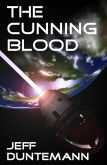
This is harder than it looks; nay, it’s diabolical. The story itself is insanely complicated to begin with: One of my beta testers described it as “a Marx Brothers movie with twice as many Marx Brothers.” That’s just how I write, as anyone who’s read The Cunning Blood will understand. I have a mortal fear of not giving my readers their money’s worth, and a venial fear of being boring.

The way to write synopses of five different lengths is to start with the longest one, and write each one from scratch. In other words, don’t write the longest one and then try to cut it down to the next smaller size. This is like trying to turn hexacontane into propane by pulling carbon atoms randomly out of the middle; sooner or later the molecule has too many holes and falls apart.

It’s work, but it works. I finished the 300-word synopsis earlier this morning, and then set my hand to the gnarliest task of all: the “elevator pitch,” AKA logline. I get to summarize a manic 94,200 word story into 140 characters. I’ve actually been trying and failing to nail this for literally six months, since I finished the first draft. I first thought it would be easy, as I used to write cover copy for early Coriolis books. Heh.

The solution, as I said, is to start from the beginning. Each time I wrote a synopsis from scratch, I was forced to take two more steps up the ladder, and look down at the story from a little more height. You literally tell it again, each time with half the words you had last time. In the process, you get a clearer sense for what the story is about, and what the major themes are. Finally you end up with something you can say in an elevator between two adjacent floors:

A spellbender flees to our world with ten stolen nuggets of magic, and a crew of AIs helps him battle a repo spirit sent to retrieve him.

Will this work? Dunno. I guess I’ll find out this weekend.

Why I Like Old Software

I still use Office 2000. I still use Visio 2000. I still use InDesign 2.0. I still use VMWare Workstation 5. Hell, I still use Windows XP. Am I lazy? Am I cheap? Am I nuts? No, no, and hell no. Every piece of software I use is the result of a calculated decision and a certain amount of research. I am by no means averse to paying for software, and I do so regularly. But I don’t always upgrade, especially if the upgrades cost money and/or deliver 80% of their value to the vendor. By that I mean software designed to win what I call “pip wars” (feature-comparison charts on review sites) or place new restrictions on installation and use ostensibly to limit piracy. (Mostly what anti-piracy features do is massage titanic corporate egos.) There are loads of people who will stand there drooling in wait of the next major release, money in hand, never suspecting that the largest single reason for the upgrade is to keep the revenue stream flowing.

The longer I use my Old, Old, Software, the better I like it. Here are a few reasons why:

  • It’s already paid for. The longer I use it, the more hours of use I get for my buck.
  • By and large, old software (at least pre-2002 or so) doesn’t activate. The benefits of activation flow entirely to the vendor, at least in circumstances where the benefits are not entirely imaginary. Most of the time, they are. Activation delivers nothing but annoyance and occasionally downtime to the end user–and in doing so, trains many otherwise honest users to be pirates.
  • Old software is smaller and faster on new machines. Bloat is real, even if it’s not the result of fighting pip wars somewhere. Office 2000 seems almost supersonic on my quadcore, doubly so on my quadcore from my new SSD.
  • Old software respects the skills I’ve developed over the years. Most of the changes I’ve seen across major upgrades are gratuitous, and don’t add any value over the old versions. UI changes in particular had better deliver spectacular new value, because while I learn them they slow me way down.
  • Tutorial books on old software can be had for almost nothing. I routinely buy books on early-mid 2000′s software for $5 or so…books that had original cover prices in the $40-$50 range. Many of these books are unused remainder copies that are essentially new.
  • The argument I hear when I make this point mostly cook down to, Isn’t it eventually obsolete? That depends on what “obsolete” means. Backward compatibility is usually retained, because people rebel when it isn’t. (Windows 8? Are those peasants carrying registered torches and pitchforks?) The only significant thing that Word 2000 doesn’t do is handle docx files. I bought Atlantis to convert any docx files I might need to keep on hand. (Atlantis also creates extremely clean epubs.) Word 2000 is weak on PDF skills, so I bought PDF Xchange Pro to handle that, and as a bonus eliminate any need for the exploit farm we know as Adobe Reader.

I do upgrade software when I see a need. Windows XP eventually replaced Win2K here, even though it activates, because it had certain things I eventually judged useful. I’ve purchased InDesign three times, because I make money laying out books and the new features were useful, but I stopped when Adobe added their uniquely paranoid activation. (Interestingly, I haven’t felt any compelling need to upgrade since V2.0, and I’m interviewing Scribus.) I dumped Dreamweaver when I wanted to move my Web pages to CSS, because Komposer did CSS as well as I needed it to, for free and without activation. It pains me to say it, but with Delphi pricing now up in four figures (and encumbered by activation) I’ve moved all my Pascal programming to Lazarus 1.0.6.

This last issue is important. Open source has changed a great many things. I used to pay for email clients, including Eudora and Poco Mail. Since I discovered Thunderbird, I’ve stayed with Thunderbird. Why? Email is a mature technology. I’m not sure there’s much innovation left to be wrung from it. This is less true of Web browsers, and I now use Chrome most of the time. But man, what’s new in word processing? What? Lemme think for a second… Hang on, it’ll come to me…

This is a key point: The basic mechanisms of computing are mature. There has been time for the slower dev cycles of open source to catch up with commercial software. The action is out on the edges, in speech recognition, automated translation, vertical markets of many kinds, and niche-y mobile apps. We’re still seeing some useful evolution in Web browsers, but there’s damned little in releases of Office past 2000 that I find compelling. Most of the new features are UI tweaks and useless gimmicks.

Old software still has fizz: The best we could want already is!

Odd Lots

Odd Lots

One Big Band-Aid

Where have I been? Healing. No, I didn’t break anything. (I did floss one of my crowns right out of my mouth last Saturday night. Note to self: Popcorn hulls don’t hide very hard. Back off on the shear force a little.) What I did is watch a number of people I’ve known for some time, including a few that I nontrivially care about, soil themselves hurling hatred at entire groups of people they’ve never met and pretty clearly know nothing about. It almost made me quit Facebook for awhile, though it’s a little unclear how one actually goes about quitting Facebook. (The account of a woman I knew in college is still there even though she died two years ago.)

Reading that stuff hurts. Am I nuts? Maybe. I value friendship, for one thing, and for another, tribal hatred is the first step toward genocide. Giggle if you want. Years of research into tribalism, psychology, history, and our killer ape origins suggests that it’s true. I would write more about it except that knowingly hurling yourself into depression is pretty much as dumb as it gets.

Furthermore, it stopped Ten Gentle Opportunities dead in its tracks, at least for the time being. Am I annoyed? You have no idea.

So I’ve been spending a lot of time in my big chair, reading things that have nothing to do with elections as a way of putting a sort of giant band-aid on my soul. It’s been a mixed bag. Some quick notes:

  • Train Wrecks by Robert C. Reed. (Superior Publishing Company, 1968.) If you need steampunk mayhem in a big way, find this on the used book sites. Virtually every way that locomotives and rolling stock can die are well-represented, including a few that you’ve probably never heard about. This might even be depressing if I didn’t like trains (and steam power) as much as I do. (It also made me damned glad I live in 2012 and travel in a Toyota.)
  • Wicked River: The Mississippi When It Last Ran Wild by Lee Sandlin. (Pantheon Books, 2010.) Still working on it, but what we have here is a collection of colorful anecdotes about the Mississippi from 1800-1863, when it was dredged for reliable river commerce. Pirates, floods, storms, and the New Madrid earthquake. I paid a buck online. Worth ten times that. (Maybe not twenty.)
  • Marry Him! by Lori Gottlieb. (Dutton, 2010.) Meh. Short, breezy read extending (a little) what I read in an article in The Atlantic some years back. Got it cheap in the B&N bargain bin, which suggests that it bombed. No surprise, given that the author is basically shouting “Attention princesses! We are currently experiencing a severe prince shortage. Please select an archduke or viscount while they are still available. Thank you.”
  • Electric Radio Magazine. Jack Smith K8ZOA sent me twelve years of this stunning little monthly, from 2000-2012, and I’ve been savoring them in my loose moments for several weeks. The focus is vintage ham radio gear, especially AM phone, which I would be doing more of if there were people close by to do it with. I still have a working Sixer, Twoer, 99er, and a G28, plus a couple of other things on the shelf that need work.

Carol and I spent some time in Chicago. Our niece Katie turns six next week and we bought her what my sister described as “an RC helicopter in a hamster ball.” It’s an Air Hog Heli-Cage, which has a pair of thin plastic hoops around it, like an equator and a prime meridian, which keep crashes from becoming too serious. Needless to say, in the hands of a not-quite-six pilot, the bands earned their keep. It was amazing how quickly both girls learned to fly it, including Julie, who’s only four. My brother-in-law Bill is even better, and landed the gadget on one of the blades of his livingroom ceiling fan. Wow.

Now, RC helicopters are fairly easy to describe. Not everything is. One evening, my older nephew Brian and his fiance Alexis twisted my arm into watching a YouTube video called “Gangnam Style.” Words fail me. Most of the song is in Korean, except for a peculiar Greek-American interjection, “Opa Gangnam Style!” plus “Hey Sexy Lady!” here and there to prove that computer audio is working correctly. I was impressed by the young Korean chap at about 1:50 who was dancing energetically in an actinic yellow leisure suit. I didn’t know you could lase polyester. Most boggling of all was the fact that the video has been downloaded 693,000,000 times, plus or minus a significant fraction of humanity. I caught myself wondering what it would be like if seven hundred million people had read Drumlin Circus. I would probably have a new minivan–and little or no trouble selling Ten Gentle Opportunities.

Anyway. I’m better now. I’ll have nothing more to say about the election except for one very peculiar thing, which I will take up as soon as I understand it a little better myself. Hint: There may be a stoner stampede into Colorado next year.

In the meantime, I have a pop song to eject from the inside of my head. Listen at your own risk. About all I can say is that it’s better than listening to politics on Facebook.

Odd Lots

Odd Lots

  • My old friend and fellow early GTer Rod Smith has posted a great many excellent pictures he took at Chicon 7, including a book signing that I attended.
  • My mother’s cat Fuzzbucket died yesterday, at 16 years and change. He outlived my poor mother by twelve years, and while skittish as a kitten eventually warmed to me. I’ve never had a cat (for obvious reasons, of which I have four right now) but of all the cats I’ve never had, Fuzzbucket was my favorite. He kept his own LiveJournal page, and the final entry brought a tear to my eye.
  • For those who couldn’t attend Chicon and were cut off from viewing the Hugo Awards by an idiotic copyright protection bot, you’ve got another chance: The award ceremony will be re-streamed tomorrow night, September 9, at 7 PM central time.
  • This morning’s Gazette had an ad for hearing aids, which bragged of their product having 16 million transistors. This is easier than it used to be, since all those transistors are in one container. Now, does anybody remember the days when ads bragged of radios containing six transistors?
  • And while we grayhairs and nohairs are recalling transistor counts in the high single digits, does anybody remember the early Sixties scandal (reported in Popular Electronics, I think) in which Japanese manufacturers would solder additional transistors into simple superhet boards and short the leads together, just so they could advertise the box as a “ten-transistor” radio?
  • Nice piece from Ars Technica on the deep history of the spaceplane.
  • Bill Cherepy sent a link to a marvelous steampunk tennis ball launcher, used for getting pull-strings for antennas (and as often as not, the antennas themselves) into high or otherwise inaccessible places. Gadgets like this (albeit not in steampunk dress) have been around for a long time, and I posted a link to this one (courtesy Jim Strickland) back in March.
  • Also from Bill (and several others in the past few days) comes word of a promising if slightly Quixotic attempt to preserve orphaned SF and fantasy. Here’s the main site. At least they’re offering money to authors and estates; most other preservation efforts (of pulp mags and old vinyl, particularly) are pirate projects most visible on Usenet.
  • That said, there are projects that limit themselves to out-of-copyright pulps, like this one. One problem, of course, is knowing when a pulp (or anything else from the 1923-1963 era) is out of copyright. Copyright ambiguity only hurts the idea of copyright. We need to codify copyright and require registration, at least for printed works. I’m not as concerned about copyright’s time period, as long as the owners of a copyright are known. As I’ve said here before, I’m apprehensive about competing with hundreds of thousands of now-orphaned books and stories.
  • I don’t eat much sugar anymore, but egad, there are now candy-corn flavored Oreos.

Worldcon Wrapup

2001lostsciencecover.jpgIt was a relief to step off the plane in Colorado Springs and grab a chestful of thin, dry air. I’ve lived in dry climates since early 1987, and I’ve lost my taste for late-summer Chicago mugginess. The toughest part of Chicon 7, which concluded on Monday, was going back and forth across the Chicago River between the Hyatt and the Sheraton and wondering if I were walking above the river or wading through it. The con went very well, considering my aversion to crowds. I got to see a lot of people I don’t see very much, granted that I missed a few. I heard some readings and workshopped a couple of stories with my friends from the 2011 Taos Toolbox workshop. And the Hugos, which I haven’t seen in person since (I think) 1986. John Scalzi was easily the best Hugos toastmaster I’ve seen since I began attending worldcons in 1974. He was funny, he was terse, he was great at improv, and he held the awards for the winners as they spoke their thank-yous into the mic. (There was nowhere else to put them.) He’s losing his hair and doesn’t shave his head–he certainly gets private points from me for that.

I was not aware of it at the time, obviously, but a misguided attempt at automated copyright protection killed the stream that Chicon was sending out to people who couldn’t be at the con. This was idiotic on so many levels–the video clips being “protected” had been given to the con by the studios specifically to be shown at the awards–and reminds us that robots should not be enforcers. Never.

The very idea of copyright, on which artists in many areas depend, is being weakened in the public mind by crap like this. If something eventually kills copyright, it won’t be the pirates.

I had a marvelous interview with the fiction editor at a major press, at which he agreed to read the manuscript for Ten Gentle Opportunities. Better than that, he took notes on my experience and my background (I brought both The Cunning Blood and one of my computer books) and suggested that what he might like even more from me than a humorous fantasy mashup was a good ripping hard SF action adventure.

I wondered for a moment: Gosh, could I do that? (Only a moment. A short moment. Ok, no moment at all.) I had intended to pursue my first Drumlins novel The Everything Machine after TGO was on its way. Now, I’m not so sure. The Molten Flesh is less far along, but it may get promoted to the top of the queue. We’ll see.

I did spend a fair bit of time with my sister and her girls down in the dealers room. (She and Bill publish and sell filk CDs as Dodeka Records.) As usual, I did a little shopping, emphasis on little. (We didn’t drive, so whatever I bought had to be packed home on what I call a “sewer-pipe jet.”) But I found something wonderful, as Dave Bowman notably said in 2010.

Across the aisle from Dodeka Records was Apogee Prime, a publisher specializing in aerospace books in several categories. They had a new book that, at 12″ X 14.5″, was mighty big for my creaky old suitcase, but I bought it anyway: 2001: The Lost Science. What we’ve got here are original photos, sketches, and literal blueprints of the technologies presented by Stanley Kubrick in 2001: A Space Odyssey. Much of the material was thought to be lost, and when the sequel 2010 was filmed in the early 1980s, a lot of it had to be re-created from scratch, often by having artists watch the original movie fifty times with sketchpads in their laps.

The book draws on the personal collection of Frederick I. Ordway III, who is a real rocket scientist and former colleague of Werner Von Braun, and worked on the Explorer 1 project. Kubrick hired Ordway to help him predict, as reasonably and realistically as possible, what space science would be like in the year 2001. This book is a good overview of his predictions, at least those that made it into the 1968 film. Satellites, space stations, nuclear propulsion systems–these were the aches that a certain class of nerdy 16-year-olds were feeling in 1968. For a good many reasons, only some of which I’ve discussed here, 2001 has long been and will likely remain my favorite film of all time. I remember those aches, and wear them proudly, as they are the aches of boys who dare to dream.

This is a coffee table book, but one that you may actually read cover-to-cover. (I’m not quite done but will be soon. There have been times when I’ve had to take a deep breath and set it down.) Softcover. $49. Very highly recommended.

Algorithmic Prices on Amazon

I’m trying to write 38,000 more words on Ten Gentle Opportunities (basically, the rest of it) by Worldcon, so I won’t go on at length about this, but today I stumbled on some information on a topic I mentioned briefly several years ago: The weird way used book prices wobbulate around on Amazon. As it happens, the goofuses are apparently using software originally developed for high-speed stock trading. Techdirt explained the process in a little more detail last year, providing us (finally) a clue as to how a mild-mannered book on the genetics of certain flies could come to command the super price of $23,698,655.93. Lots more out there if you’re interested.

In short: If you define your book’s price as 1.270589 times that of your competitor’s, and your competitor defines his price as 1.270589 times yours, well, you’ll both be rich in no time…or at least pricing your books as though you were. Fly genetics never had it so good.

What remains a bit of a mystery is why you’d want to price your books above your competitor’s and not below. Unless…the game is to buy the book from your competitor when you find a buyer so dumb as to buy the book from you, at 1.270589 times the price they could get it elsewhere. It’s likely that the fly genetics book was not in either seller’s hands at any point.

Such clueless buyers may exist–after all, people are still installing smileys and comet cursors and anything else on the Internet labeled “free.” This implies that the magic number 1.270589 is in fact the atomic weight of Sleazium, which absorbs certain subatomic particles, particularly morons, better than anything else ever discovered.

The Agency Model and the Fair Trade Laws

All the recent commotion over the agency model vs the wholesale model in ebook retailing reminded me of something: my very first pocket calculator. I got my first full-time job in September of 1974, and whereas fixing Xerox machines wasn’t riches, it paid me more than washing dishes at the local hospital. In short order I got my first credit card, my first new car, and a number of other things that had been waiting for my wallet to fatten up a little.

One of these was a pocket calculator. The device itself has been gone for decades, but I’m pretty sure it was a TI SR-50, with an SRP of $149.95. I shopped around for the best price, since $150 was a lot of money back then. However, everybody who sold the SR-50 was selling it for $149.95. I bought it at a camera store downtown, and only a little research told me that it was covered under the Fair Trade laws, meaning that all retailers sold it for the same price, set by the manufacturer. I grumbled a little, but wow! I had a calculator! I gave it no further thought.

Between 1931 and 1975, a significant chunk of retailing in the United States was basically on the agency model. Books, cameras, appliances, some foods, wine and liquors, and certain other things were sold for the price the manufacturer chose. This is one reason prices were often printed right on the goods. Retailer margins were open to discussion, but in a lot of industries, the margin was 40% or pretty close to it. The Fair Trade laws were enacted during the Depression to protect local one-off retailers from being driven out of business by much larger chain stores, during a time of reduced demand and thin profits. How well this worked is disputed, but by 1975 the laws had become so unpopular with the public and so difficult to enforce that they were repealed by an act of Congress.

I grant that Fair Trade was not a clear win for the little guys. Some of my readings suggest that the Fair Trade laws accelerated the dominance of retail chains because chain retailers could build bigger stores and shelve a greater variety of goods, even if their prices were the same as prices in smaller, one-off stores. House brands were invented largely to evade the Fair Trade laws, since the retailer was considered the manufacturer for legal purposes and could set prices in stores as desired. This gave another advantage to large chains, since only large chains had the resources to establish house brands.

Fair Trade retailing as I understand it rested on two big assumptions:

  • Manufacturers compete on price.
  • Retailers compete on things like customer service and selection.

Shazam! Those are the same two assumptions underlying the agency model in publishing, and I don’t think it matters whether we’re talking print or digital. So I think it’s fair to look at what happened after 1975, when Fair Trade went away:

  1. Discounting allowed consumer prices to go down.
  2. Both the chains as a whole and individual chain retail stores got bigger.
  3. Smaller, independent stores vanished in droves.
  4. Small retailing became specialty retailing. This was certainly true of bookstores. Of the two bookstores I could easily reach on my bike in the 1960s, one became a card shop that carried a few books, and the other became a specialty bookstore carrying Christian/Catholic books only.
  5. Small retailers dealing in used goods hung on longer–think used bookstores and used record stores. The Doctrine of First Sale allowed used goods retailers to set their own prices even on Fair Trade goods.
  6. Manufacturer consolidation went into high gear. One reason, I think, was monopsony, which is the power big retailers have to dictate prices to suppliers. Smaller manufacturers who could not meet retailer price expectations merged with larger manufacturers, became importers, or went under.

In the ebook publishing/retailing world, #5 does not apply, as there’s no unambiguously legal used market. Most of the other consequences in the list above are things that I predict an agency model would work against:

  1. Retail prices will rise–though perhaps not as much as some fear.
  2. It will be easier to mount and maintain a new online retailer against competition by enormous retailers like Amazon.
  3. Given the above, with the consequence of more players in the retail market, monopsonistic pressures on cover prices will be greatly reduced.
  4. Absent Amazon’s monopsony, smaller publishers have a better chance of competing with much larger publishers, given small publishers’ advantages of lower fixed costs vs larger publishers.
  5. The presence of a larger number of smaller publishers will keep downward pressure on prices, since that’s their primary way to compete. Macmillan has to keep ebook prices up to protect its print hardcover line. Ten thousand small ebook publishers have no hardcover lines to protect. $10? No problem. $5? The new $10. Even within the agency model, small press will train consumers to expect ebooks to sell for $10 or less.

There’s another consequence that I don’t think has any precedent in the Fair Trade phenomenon: Larger numbers of retailers and publishers will reduce the power of very large retailers or publishers to “silo” the business with proprietary file standards and DRM.

There are problems with such an agency-based business model (and wildcards; Pottermore, anybody?) but overall I think those problems are more solvable than the collapse of book retailing into Amazon, Amazon, and more Amazon. So my vote goes with agency retailing. I’ve just told you why. (Polite) discussion always welcome.