
Me? I’m a guy who does the following: I write; I edit my own material and that of others; I work in, with, and on technology (with my own hands) of several kinds; and I think about almost everything from as many different perspectives as possible. My contrarianism is conscious and deliberate. Why? If you don’t regularly require yourself to think beyond your own habits and suppositions, you end up in a very deep mental rut. I do not always take every contrarian position, but I consider each one I encounter. I may support things, but for the most part I don’t join them.
Education
I was born and grew up in the northwest corner of Chicago, in a neighborhood called Edison Park. I grew up a Catholic, and attended Immaculate Conception parochial school on Talcott Road. The teaching there, both intellectual and moral, was rigorous.
I graduated from Lane Technical High School in Chicago in 1970. At that time, Lane had many shops and labs (fewer now) where I had plenty of opportunity to learn by doing—which, as I have found, is the only way to learn anything well. I learned basic electricity, woodworking, metal machining, and computer programming (FORTRAN IV) while there. The college prep curriculum was primary, and included biology, chemistry, physics, Spanish, and four years of mathematics. I graduated 30th in a class of 1,337.
In the fall of 1970, I attended Illinois Institute of Technology for one semester, and found that engineering was not my calling. Intending to pursue a teaching career, I entered De Paul University in Chicago in the spring of 1971, and graduated with a B.A. in English, summa cum laude, in 1974.
Since graduating from De Paul, I have taken numerous continuing education courses in many things, primarily technology topics, including electronics, database design and programming in several languages, but also including book and magazine editing and management.
Employment Experience
I will answer pertinent questions about my work history on request; however, I generally do not do so for publication.
- 2008-Present: Independent contractor
- 2002-2008: Editor at Large, Paraglyph Press, Scottsdale, Arizona
- 1989-2002: Vice President/Editorial Director, The Coriolis Group, Scottsdale, Arizona
- 1988-1989: Independent Contractor, technical writing
- 1987-1988: Editor in Chief, Turbo Technix Magazine, Borland International, Scotts Valley, California
- 1985-1987: Senior Technical Editor, PC Tech Journal, Ziff-Davis Publishing, Baltimore, Maryland
- 1979-1985: Programmer/Analyst, Xerox Corporation, Rochester, New York
- 1976-1979: Branch Data Analyst, Xerox Corporation, Chicago, Illinois
- 1974-1976: Technical Representative, Xerox Corporation, Chicago, Illinois
Short Nonfiction Publications and Magazine Work
My books will be listed separately below, under Bibliography. Listing each short item I’ve published separately would take too much space, so I will summarize:
I have been a published writer since I was an undergraduate at DePaul. Both my first piece of fiction and my first piece of nonfiction appeared in commercial publications in 1974. In following years, I wrote technical articles for Byte, PC Magazine, Creative Computing, Kilobaud, Computer Graphic, PC Week, 73, and smaller newsletters and specialty anthologies.
I wrote frequently for PC Tech Journal between 1983 and joining the staff in 1985. While on staff I wrote regular reviews and short technical items, and the “Product of the Month” column.
In 1987 I was hired by Borland International to create and edit a magazine for their programming language customers. The magazine was Turbo Technix, and it ran bimonthly for six issues. I wrote both editorials and technical items in almost every issue. The magazine was sent free of charge to all registered language customers (in excess of 200,000) so it was an expensive effort. Borland shuttered the magazine during a corporate downsizing in 1988.
After leaving Borland’s staff I wrote material for Borland on contract, including a great deal of the OOP Guide included with the object-oriented release 5.5 of Turbo Pascal, in 1989. (These efforts were not bylined.)
In early 1989 I began writing the “Structured Programming” column in Dr. Dobb’s Journal, which appeared under my byline for 43 months, until the pressures of my other work prevented me from continuing. The column emphasized the “non-C” structured languages of the time, primarily Pascal and Modula 2, but touching on others here and there.
In 1989, fellow writer Keith Weiskamp and I created The Coriolis Group in Scottsdale, Arizona, for the purposes of publishing a magazine for programmers in the spirit of the popular Turbo Technix. The first issue of PC Techniques appeared in March, 1990. As with Turbo Technix, I contributed both editorials and technical pieces throughout the publication’s ten-year run. In 1994 I wrote an idea piece, “The All-Volunteer Virtual Encyclopedia of Absolutely Everything,” that anticipated today’s Wikipedia. (I was wrong about its distributed nature—hard disk storage was much more expensive back in 1994.)
In 1996, we redesigned PC Techniques and renamed it Visual Developer Magazine, reflecting the industry’s shift to programming tools like Visual Basic and Delphi. PCT/VDM ran for ten years, until we were forced to shutter it for financial reasons in 2000. A longer, less formal description of my experiences in magazine publishing (along with some of my editorials and idea pieces) can be found here.
Nearly all of my short-item writing since the folding of Visual Developer in 2000 has been for the Web.
Book Publishing and Bibliography
The Coriolis Group was founded to publish a technical magazine, but in the early 1990s we decided to create a parallel effort to publish technical books. Our first book appeared in January 1994. Technical book publishing was strong in the 1990s, and by 1997 Coriolis Group Books (as that part of the business was called) had become the largest book publisher in Arizona, employing 107 people at its peak and publishing over 130 titles per year.
The bursting of the Internet bubble took much of the profitability out of technical publishing by late 2000, and shortly afterward spun publishing in general into a recession that worsened post 9-11. Even after reorganization and several rounds of layoffs, The Coriolis Group could not regain its footing, and closed in March of 2002.
In the summer of 2002, Keith Weiskamp, Steve Sayre, Cynthia Caldwell, and myself (all former Coriolis staffers) created Paraglyph Press, again in Scottsdale, Arizona. The corporation was designed from its outset to be fully virtual: There was to be no central office, and we conducted our business via the Internet and phone. This allowed me to move to Colorado in 2003 and still continue my work with Paraglyph. We were too small for any of us to be specialists, and my role there was what circumstances demanded at any given time: I acquired books, developed concepts for books, promoted our titles with the media, researched publishing technology, and actually wrote a few of our books when time allowed. As hard as we tried, Paraglyph Press really didn’t catch fire, and Keith and I quietly shuttered the company and reverted all rights to authors in 2007.
My first book, however, was published long before Coriolis was founded, and I published books regularly with several large NY houses between 1985 and 1995.
Books Published as Sole Author
- Complete Turbo Pascal: Scott, Foresman, 1985
- Complete Turbo Pascal, 2E: Scott, Foresman, 1986
- Turbo Pascal Solutions: Scott, Foresman, 1987
- Complete Turbo Pascal, 3E: Scott, Foresman,1989
- Assembly Language from Square One: Scott, Foresman, 1989
- Assembly Language Step By Step: John Wiley & Sons, 1992
- Borland Pascal from Square One: Bantam,1993
- Assembly Language Step By Step, 2E: John Wiley & Sons, 2000
- Jeff Duntemann’s Drive-By Wi-Fi Guide: Paraglyph Press, 2002
- Jeff Duntemann’s Wi-Fi Guide, 2E: Paraglyph Press, 2003
- Degunking Your Email, Spam, and Viruses: Paraglyph Press, 2004
- Assembly Language Step By Step, 3E: John Wiley & Sons, 2009
- Assembly Language Step By Step, 4E: John Wiley & Sons, 2023
Books Published With Other Authors
- Windows Programming Power with Custom Controls (with Paul Cilwa): Coriolis, 1994
- Inside the PowerPC Revolution (with Ron Pronk): Coriolis, 1994
- Mosaic & Web Explorer (with Urban Lejeune): Coriolis, 1994
- Mosaic Explorer Pocket Companion (with Ron Pronk and Pat Vincent): Coriolis, 1994
- Web Explorer Pocket Companion (with Ron Pronk and Pat Vincent): Coriolis, 1995
- Netscape & HTML Explorer (with Urban Lejeune): Coriolis, 1995
- Delphi Programming Explorer (with Jim Mischel and Don Taylor): Coriolis, 1995
- Delphi 2 Programming Explorer (with Jim Mischel and Don Taylor): Coriolis, 1996
- C++Builder Programming Explorer (with Jim Mischel): Coriolis, 1997
- Degunking Windows (with Joli Ballew): Paraglyph, 2004
- Degunking Your PC (with Joli Ballew): Paraglyph, 2005
- Learning Computer Architecture with Raspberry Pi, John Wiley & Sons, 2016
My books have appeared in translation in many languages, including German, French, Spanish, Portuguese, Dutch, Italian, Croatian, Polish, Japanese, Korean, and Chinese.
ContraPositive Diary
I have been a blogger since long before that awful word came into being. In June of 1998 I began posting daily or near-daily observations on the Coriolis Web site, at the encouragement of my ad sales rep for Visual Developer. As she put it, the advertisers liked my writing, and given our limited page count, it was an opportunity to work in a lot more product mentions. I’m not sure it ever sold us any ads, but VDM Diary gathered a following, and morphed into ContraPositive Diary after Visual Developer folded in the spring of 2000.
ContraPositive is not themed as many blogs are. It’s not “about” computing, or Wi-Fi, or religion, or politics. It’s a record of my life as an emergent process, done in the hope that others can use or at least enjoy some of the things I’ve learned and seen and done. It’s something like a public “day book,” as writers call it: The place to keep those strange ideas and vivid impressions that occur to one on a walk in the mountains, so that they can be put to use in later writing. It’s also good writing discipline. ContraPositive is now almost 3,000 items long, with many photos and individual entries as long as 1000 words.
I’m sure that ContraPositive is neither the oldest nor the longest-running blog on the Web, but it’s right up there, and I claim (with Lisa Marie Hafeli, God love her) independent invention of the concept.
Computer Programming
I have programmed in quite a few computer languages, beginning with FORTRAN on an IBM 360 mainframe in high school. My primary experience, however, has been with APL, COBOL, BASIC, Pascal, Modula 2, and x86 assembly. (I wrote code for a few in-house programming languages at Xerox that are best left forgotten. No, they were not Mesa or Cedar, alas.) That said, most of what I have done has been in Turbo Pascal and its visual descendant, Delphi. Post-Xerox, the bulk of my programming has been to support writing and hobby projects, but I fielded a little mortgage calculator program with SofSource, a “$6.99” discount software publisher, in 1992. The program, albeit for DOS in text mode, was hugely popular with real estate agents and sold over 35,000 copies until the company ceased operations in 1996.
I still program in Pascal and occasionally x86 assembly, mostly to support other research and stay current. More recently, I’ve been using the free and open source Lazarus visual development environment for FreePascal, and enthusiastically recommend it, especially to students and hobby programmers.
Professional Affiliations and Awards
I received the Award of Distinguished Technical Communication and Best of Show for my book Assembly Language Step By Step, presented by the Phoenix Chapter of the Society for Technical Communication in 1993.
The Coriolis Group and several of our books (some of which I co-authored) won or placed in the Glyph Awards, conducted by the Arizona Book Publishing Association.
While living in Arizona, I was a member of the Arizona Book Publishing Association between 1992 and 2003. I served as President of the association for two years, 1999-2000.
Science Fiction
I was a published SF writer before (if by only a few months) a published technical writer. Shortly after attending the Clarion East SF writing workshop at Michigan State University in 1973, I sold a short SF story to Harry Harrison’s hardcover anthology Nova 4. The book appeared in mid-1974. Since then I have had thirteen or fourteen professional publications in the SF world, depending on what you consider “professional.” I did well in the 1970s, and in 1981 I placed two short stories on the final ballot of SF’s Hugo Award. After I began writing for the computer technical press, my SF output fell off sharply. I gave up SF almost completely from 1985 to 1997, simply for lack of energy to produce both tech books and SF at the same time. Tech books made me (lots) more money, so I went where the money was.
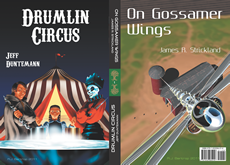
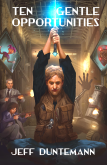
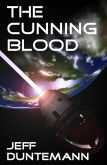
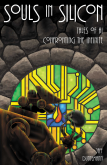
My first SF novel The Cunning Blood was published in hardcover by ISFiC Press outside of Chicago in November 2005. I self-published it on the Kindle store in 2015 and paperback in 2018. In 2011 my friend Jim Strickland and I published two short novels in a single volume about my Drumlins universe, and published a paperback edition in tête-bêche format, in tribute to the Ace Double novels on which I cut my SF teeth in the 1960s. 2016 saw me self-publish my second full-size novel, this time a humorous contemporary fantasy, Ten Gentle Opportunities. Staying with a humorous slant, I published Firejammer in 2019, as a conscious tribute to the humorous adventures of Keith Laumer. In 2020 I published another fantasy novel, Dreamhealer. I have two self-published collections of short fiction: Souls in Silicon, containing all my short SF about strong AI, and Cold Hands and Other Stories, containing all the rest.
In 2021 I self-published a short novel, Complete Sentences, which is a nostalgic junior-high kind-of-a-romance, taking place in Wisconsin in 1966. It’s the only sizeable work of fiction I’ve ever published with no fantastic elements at all.
My Life and Other Passions
As I’ve told many people, I’m interested in almost everything except sports and opera. However, most of my spare-time energy has gone into technology projects of one kind or another. I built a simple but large reflecting telescope when I was 14, which is still in use today, though like the Dutchman’s Hammer there’s not much left of the original but the primary mirror. When I was 15 I ground and figured a 10″ Newtonian telescope mirror at Chicago’s Adler Planetarium for an even larger telescope, which is also still in use. I observe with both telescopes regularly. For details of these and other “junkbox” telescopes I’ve built, see my Junkbox Telescope Gallery.
I have been interested in electronics since I was 10, and throughout my teen years I was constantly assembling radios and other gadgets from parts pulled out of broken TVs and radios that I picked up off the curb on Chicago’s Garbage Day. I won my 8th grade science fair with a simple robot the size of a cigar box that could follow a white line on the floor, or home in on a flashlight beam. I took a correspondence course in electronics while I was in college (hedging my bets against finding an acceptable teaching position) and while I was at it, obtained an Amateur Radio license in 1973. I have been a licensed amateur ever since then, and currently hold callsign K7JPD. My very first transmitter was homemade (again using tubes and parts yanked out of junk TVs) and I have always had a radio project or two on the bench somewhere since then.
My enthusiasm for electronics led me to wire-wrap a primitive home computer in 1976, from an article published in Popular Electronics. I was never without a computer (or five or six) after that time. I built two separate computers into an elaborate radio-controlled robot named Cosmo Klein in 1978, and appeared with Cosmo on a very early Chicago cable TV show that I doubt anyone saw. For several years Cosmo and I appeared at malls and computer shows, and had a fair amount of press exposure that culminated in a co-appearance (with several other homemade robots) in a 1980 issue of the late Look Magazine.
I have been building and flying homemade kites since I was eight or nine, and still build them on occasion, and used to fly frequently at kite gatherings in Chicago’s Grant park. I have a popular Web article (originally published in Kite Lines) on the seminal Hi-Flier Kite Company, which manufactured the paper kites that I and my friends flew in the early-mid 1960s.
My wife Carol Ostruska Duntemann and I met when we were juniors in high school, and she only two weeks past her sixteenth birthday. Without quite realizing what we were doing, we transformed one another in subsequent years: She drew me out of my eccentricity, and I drew her out of her shyness. We married in 1976, and I will stand beside her as long as I can stand at all.
We have kept bichon frise dogs most of our adult lives. The most famous of them, the regal Mr. Byte, appeared in all of my magazines and figured in most of my early tech books. After seven years off, we adopted one again in mid-2005, the hyperdynamic QBit (for “quantum bit”). In 2007 we adopted Aero, and in 2009 Jack and Dash. QBit left us for the Rainbow Bridge in 2019, Jack in 2021, and Aero in 2023. We currently have only one, Dash, a retired AKC dog show grand champion. We are now living in Scottsdale, Arizona (again) after spending 13 years in Colorado Springs.
Well, that’s what I’ve done, and most people feel that what you are is (mostly) what you do. If pressed to describe what I am, I simply claim to be an optimist. I used to say “contrarian optimist” until I realized that optimism itself is contrarian in these cynical times. (I don’t speak of “free gifts” either.) Call it gonzo optimism, then. It stems from an insight I didn’t have until my forties: Life is neither comic nor tragic, because there is no “life”—there are only lives, each of which is subject to forces and freedoms that none share precisely nor truly understand. No one knows how—or even if—it ends, so how in all honesty can anyone prescribe a path other than one of radical hope?




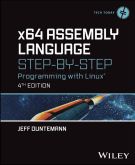

300 pages in to the 4th edition of x86 Assembly Language Programming and it’s a page turner, for sure. Either, I’ve hit critical mass on understanding this stuff or it’s the best book ever written on the subject :). I’ve been using it with gdb – what a pain compared to sasm. Still, it’s worth the extra effort. gdb, while being pretty unfriendly to beginners, is incredibly powerful and with some handwritten cheats scribbled on the back pages, it has worked for every example in the book so far.
Awesome.
This post is exactly what I was looking for. You’ve addressed all the questions I had and provided clear, actionable advice. Thank you for sharing your expertise.
Hello Jeff. Enjoyed reading. I remember you and Carol with fondness and admiration from my time proofreading/editing as a Coriolis contractor. 1989-1994 or so? Learned a lot at Coriolis until adopting a baby forced me to take a “real” job. I retired and moved to Oregon last year after working 56 years. Best of everything to you both. Diane Cook
Hi Jeff,
I feel like I know you after reading so much you wrote. My life was changed when I read many Carl & Jerry stories and was particularly enamored by “The Lightning Bug.” You can read about it on my website https://shavers.page/?p=39 There’s a photo of my version of the lighting but on that page. It’s sitting on a shelf in my office right next to my Altair 8800 Computer.
It changed my life. Sense then I spent about fifty years designing and programming things that needed some smarts built. The first job out of college I designed, prototyped and programmed an arcade video game. It hit the market in 1977.
https://www.arcade-museum.com/Videogame/embargo
I want to “pay it forward” so to speak, like you have done. This page, https://shavers.page/?p=208 lays it out somewhat. I’ve written the first draft of a Carla & Geri story. It isn’t great but I’ve got to start somewhere. (I’m dabbling with AI to help.)
Oh, I want to thank you for making the Carl & Jerry stories. I bought the set from you several years ago since I didn’t read all of them from hand-me-down Popular Electronics.
I wonder if there is a way to get more folks that enjoy these stories to talk about them and maybe even encourage people to make more? I hope we can correspond.
Peace, Love, Laughter,
Rob:-]
Jeff,
Thank you for your informational article on the green Giant kite. Had to laugh because just a while ago saw a Youtube video about UFO sighting caught on camera and popped in my head oh there is my lost 1969 Green Giant kite. After this posting thought and wondering heck duck duck search this kite and wow found your article.
Love it and the photos. After reading and going over my age math at the time figuring 1969 but after reading your article I must of had the first issue of 1970. And everything was as I remembered it, to all the details like plastic 5 stem hub. I was so proud assembling this Hugh kite and finally taking outside in the back field in the St. Louis area. That thing went straight up so high and guess it caught some high winds forcing the connecting string to the limits. So first and only flight then yes tears and years later and here we are. Now live northern mid east Missouri and have my time thinking about old times lol.
Hi Jeff,
I got an old copy of Delphi 2 Programming Explorer and I am using it in learn Object Pascal (Free Pascal flavor) using Lazarus.
I have made my way through the first 8 chapters and it maps fairly well over to FP/Lazarus.
There have been a few hoohaws but considering that the book was published almost 30 years ago Object Pascal has aged rather well.
I think you mentioned somewhere on this website you are working on an updated version of the book that features FP/Lazarus.
I hope you are able to complete that effort. There really are not a lot of current books or materials focused on Pascal.
Cheers,
Brian Pech
Look on My Currently Available Books page:
https://www.contrapositivediary.com/?page_id=1808
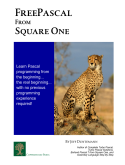
At the bottom of the list is a link to a PDF of “FreePascal From Square One.” Totally free; it’s a distillation of my main Pascal books all the way back to 1985. I haven’t finished the file access chapter yet, but the rest is reasonably complete. It does not go as far as OOP, since that’s going to take a fair amount of page space and demo code.
Hi there— My name is George (26), and I reside just south of Des Plaines. I’ve known about the Orchard Place community for quite sometime, but wasn’t until recently where I gained a personal interest in learning more about my local history.
Orchard Place has always hit a soft spot with me. Though I don’t have any personal or family history, I’ve just always admired it and how it came to be (Plus I live next to where the community once was.) Looking through the few photographs I’ve found in books, history centers, and online, it just makes me nostalgic for a time never experienced. To me, it seemed like a good and self-sustaining place to live at the time. Simpler times as they say. Due to the forces of human nature and its technological advancements (airport + tollway), Orchard Place seemed to have disappeared without a trace.
Needless today, I want to learn and preserve as much about Orchard Place as I can. I’ve purchased books from the Des Plaines history center, Wisconsin Central Railroad archive, and scoured the internet for photographs and recounts of this lost town. I have a pretty good understanding of the history and some names of the area. Now I’m trying to visualize the area.
Considering the significance of your grandfather and family, it would be a privilege if I had the chance to speak with you and ask some questions about your family and Orchard Place’s history. I greatly appreciate your time and hope to hear from you soon.
Best,
— G.A