Jeff Duntemann's Contrapositive Diary Rotating Header Image

The Star-Rite Type C Heater

StarRightTypeCHeater.jpgI happened by a consignment antiques shop yesterday while shoe-shopping. My first thought on seeing this item in the window was Captain Nemo has hocked his labs! So I bought it. It’s a Star-Rite Type C heater, made circa 1925 by Fitzgerald Manufacturing Company of Torrington, Connecticut. 630W at 110V, and it even works, not that I left it plugged in for very long. It’s seen some hard use but the paint appears to be original, and only the clips holding the wire cage to the dish are missing. (The cage stays in by spring pressure, and not much of that.)

The parabola seems reasonably accurate, and when I took it out on the deck and pointed it at the Sun it smoked a piece of an advertising flyer in a second or two. It needs a little cleanup, but nothing heroic. Anybody care to guess what I’m going to do with it?

Odd Lots

  • A 20-year study does suggest that personality affects longevity, though interpreting the results sounds tricky. The question arises whether personality can be changed, and if not, well, longevity is (as I’ve long suspected) almost entirely in the genes. (Thanks to Frank Glover for the link.)
  • I had never heard of Kindle novelist Amanda Hocking until a week or two ago, but she’s obviously doing something right. What I think she may be doing right is accruing fans, as Kevin Kelly suggested back in 2008. Get to 1000 fans, and you can make a living. (She clearly has more than 1000 fans.)
  • A Wi-Fi only Xoom will go on sale at the end of March at a $599 price point. I’m still waiting for them to make the SD card slot work, but it’s nice to see some flexibility in other areas.
  • A 128GB SDXC card was inevitable (and still expensive–though check back in an hour or so) but I wonder what devices can actually use it. Most of the “barrier” issues are with Windows; Linux does not differentiate between SDHC and SDXC cards as long as they have compatible filesystems.
  • It’s not blogs that have debased American politics. It’s email–email sent to you by your aunt, who tells you to forward it to everyone in your address book. We laugh, but new research suggests that the strategy works.
  • Digging around in the shop the other night I found an envelope of crystal pairs for my old Standard 2M HT, which I bought in 1976. That was a great radio, built like a brick, and I’m looking to get another one. I’m watching eBay, but if you have one in the pile somewhere you might part with, I’m interested.
  • OMG! There are still potato chips fried in lard! Glorioski!
  • We’re finally starting to admit it: Fruit will make you fat. I ration fruit to three or four servings a week. Fruit is candy and almost entirely sugar, much of it fructose, which basically goes straight to your gut.
  • And while we’re talking food, consider: If a dozen eggs cost about $2 where you live (as they do here, sometimes cheaper) that means that two eggs plus a little butter to fry them in will set you back about 35 cents. That’s cheap calories, and good ones.
  • While listening to the 1968 Association song “Six Man Band” the other day, a line in the lyrics caught my attention: “We’ve got the seventeen jewels that dictate the rules…” How many people under the age of 25 or so have any idea what this refers to?

Space Westerns vs. SF Westerns vs. Weird Westerns

Back in 2002, when “Drumlin Boiler” appeared in IASFM, somebody in the comments on the IASFM Web site grumbled that the story was “a glorified western.” I hadn’t thought of it in those terms, but even though I’m sure the comment was intended to be dismissive, it was true: “Drumlin Boiler” was a story set on the frontier in a society roughly equivalent to 1870s America. The frontier was on another planet, and there were all these alien gadgets lying around causing trouble, but people were riding horses and packing six-guns.

Ever since then, I’ve used the term “space western” to describe the genre of the first several Drumlins stories. (Drumlin Circus is different for a number of reasons, but I’ll get to that in future entries.) The term was floating around in obscurity for years in the SF culture, but then Firefly happened, and abruptly what my Clarion ’73 compatriots once razzed as “cowboys on Mars” became legitimate and even hit the bigtime.

I learned not long ago that there’s a mirror image of the space western: the science fiction western. I hadn’t known that the literary classification knives were cutting that fine, but they are. Space westerns transplant themes and cultural elements of the American west onto other planets. Science fiction westerns transplant SF themes into the actual American West of an earlier time. Think of the difference as “cowboys on Mars” vs. “Martians in Texas.” (For a great example of the latter, see Howard Waldrop’s wry “Night of the Cooters.” I’m guessing, not having seen it nor read the graphic novel, that Cowboys and Aliens is much the same.)

And as if that weren’t enough, there are also weird westerns: supernatural themes transplanted onto the American West. This surprises some but doesn’t surprise me. The era of the American West was also the apex of Spiritualism, which originated near Rochester, New York in 1848 but by 1880 was everywhere in the country, including the western territories. The weird western subgenre goes way back: The mere handful of classic horror comics that I read in my cousin Ron’s basement in the late 1950s always had a few cowboy settings. These days, you can find things like Six-Guns Straight From Hell, which appears to include such genre cross-products as werewolf sheriffs, vampire bank-robbers, and “new-fangled electric zombies.” Many of the stories were first published in Science Fiction Trails, an annual anthology edited by David B. Riley. SFT goes broader and covers all three categories, sometimes with a steampunk flavor, as in Jim Strickland’s story “Brass and Steel” in the recent #6. “Brass and Steel” might well be said to include “new-fangled electric zombies,” a concept Jim pursues with a lot more rigor than the author of your average sparkly vampire yarn, ten-gallon hats or no.

I went a little cold on SF for quite awhile (I’m guessing almost 15 years) because it began to take itself a little too seriously and thereby ceased to be fun. Fun is what we do this for, after all, and sending things a little bit over-the-top is the very best way to puncture the stuffies and get the fun back front-and-center. The first three Drumlins stories were space westerns. Drumlin Circus is a steampunk western, with just a hint of weird, if a postulated sensitivity of quantum computers to human mental states counts as weird. (I stop well short of vampires.) Hell, I can wear lots of hats; hats are among the things I do best. Ask Carol. Or just look in my closet.

Odd Lots

  • Finally, the epic review of the Motorola Xoom that we assumed we’d eventually see from Ars Technica. My only gripe is that somebody over there needs to learn how to take sharp, close-in photos of hardware.
  • While we’re talking Xoom, I learned that my Degunking collaborator Joli Ballew is doing a Xoom book for Wiley. According to Amazon, it will be out on June 7.
  • Ibuprofen (Advil etc.) may provide some protection against Parkinson’s. It may also tear up your stomach lining, as happened to me in 1999. Be careful.
  • And damn, I shoulda gone to Polish school when I was four, like my mom wanted. (Thanks to Pete Albrecht for the link.)
  • Here’s a list of the ten most powerful earthquakes since 1900. (They have not yet included the Japanese quake, which has recently been promoted from 8.9 to 9.0.) I remember the stories in the papers about the 1964 Alaska quake. Man, that was ugly. Let’s be glad it wasn’t in the Cascades.
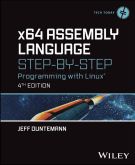
  • My assembly language book is now for sale on both the Kindle and the Nook stores. Kindle: $36.86. Nook: $52.00. Print: $65.00. (But nobody pays cover anymore.)
  • I’ve been called a crank for my position on this, but I don’t care: Sleep is more important than food. (If you won’t listen to me, maybe you’ll listen to Harvard.)
  • Here’s a nice page on magic eye tubes, which are remarkably little-known (especially among the young) given their off-the-charts coolness factor. And another photo page. Some of the miniature types were used well into the 1960s. We had a Grundig tape recorder from 1961 or so, and it incorporated a DM70, which I still have in a box somewhere, along with a 6AL7 and a couple of 6U5’s.
  • From the Ideas You Can Have For Free And Are Worth Every Nickel Department: Somebody should start a Wikipedia extension wiki that automatically grabs and posts anything deleted from Big Wiki for that peculiarly intense Wikipedia fetish, non-notability. In this era of pervasive broadband and $50 terabytes, why shouldn’t the 6U5 get its own page? It’s certainly notable to me.
  • From the Law of Unintended Consequences Department: Scrupulously green San Francisco is turning brown because government-mandated low-flow toilets aren’t moving solid waste through the system quickly enough to forestall clogging. Be glad you live in New Yawk, Ed. (Thanks again to Pete Albrecht for the link.)
  • Although I’ve always known what hops are used for (beer, basically) I realized this morning that I had no idea what a hop looked like. Now I know.
  • Classmates.com has evidently been bought out by a nostalgia site called Memory Lane. I haven’t gotten any email pitches from them lately, so I’m quietly hoping that either Memory Lane has reformed their fraud-laced marketing practices (telling me of girls who supposedly attended my all-male high school back when I did) or that the whole mess will soon sink into bankruptcy and vanish.

Taking a Breath

This has been a helluva month. To finish Drumlin Circus I wrote 26,000 words in two weeks, and then by six days later had polished it, laid it out, proofed it, and combined it with a second short novel (by the formidable Jim Strickland) to make something book-sized, with a twist. (More on the twist in a later entry.) We’re now waiting for the cover art, and so for a day or two I’ve had a chance to pick up my office, read a little, run the dogs around, and ruminate on what I’d learned.

coincellgrab.jpgOh, and I bought a TV for downstairs. A TV. 55″ wide and 1.37″ thick (!!) by my digital calipers. Sure, I’d like a flying car. But this again reminds me that we really do live in the future.

The do-it list was getting long. I’ve needed to replace a couple of coin cells in the Dell USFFs we have here and at church for some time. In most PCs this isn’t difficult, but Dell put the coin cell holder in a bad spot, especially in the SX270. Pulling out the old cell, no sweat–that’s what God made needle-nose pliers for. Reinserting a new cell would be easier too, except that the pliers would short out the cell. So I put a short length of shrink tubing over one of the two jaws and held it over a match for a bit. Shazam! The cells survived the operation, and I broke no fingernails trying to coerce them in either direction. It’s a trick worth remembering if you can’t use your fingers to get coin cells into place behind that plumber’s nightmare of a heat sink you’ve got.

One of the things I had to do to write Drumlin Circus was adopt an older style for the first-person narrator, who is an educated city guy in an 1890s sort of culture, albeit one not on Earth. This isn’t normal diction for me and I had to train myself to do it, first by reading largish chunks of The Time Machine and Food of the Gods, and then by going back to Gene Wolfe’s boggling 5-volume New Sun saga, which I hadn’t been through in ten or fifteen years. Again, the complexity of the tale boggled me a little (as did more than a few of the words he repurposes but never invents) but this time I was ready: I had ordered Michael Andre-Driussi’s Lexicon Urthus and kept it at my elbow. It’s a 420-page index of terms, concepts, and proper names from the series, with not only their meanings in the story but also their derivation from myth, religion, and other languages. If you intend to read the Urth cycle closely, you’re gonna need this. Highly recommended.

Over the next few days here I’ll try to cover a few more noteworthy things associated with Drumlin Circus. Mostly I want to reassure you all that I’m back and looking forward to writing here a little more regularly than I’ve been.

The Long, Long Circus

Whew. Drumlin Circus is done. Or at least complete and intact, if not finished. (Stories are a little like software to me: They’re never finished, not in a truly final sense of the word.) I had dared myself to get it all down by last night, and come four PM I found myself staring at the screen, thinking that I needed a short “resonance” scene to wrap it all up but couldn’t figure out what it might be. (Such scenes are not part of the outline.)

So I sat down this morning and started reading the whole thing through from the beginning. By the time I got through it about 11:00, I knew what I wanted, and fifteen minutes later the words were on the page.

The story came out a lot longer than I planned. 33% longer, in fact: I planned for 35,000 words and my subconscious handed me 53,000. The same thing happened to me in 1998 and 1999: I had intended The Cunning Blood to come in at 90,000 words, and by publication in 2005 was 145,000 words long. Several people have told me that that was a major reason none of the big houses would publish it.

Getting the flu in January slowed me down radically. To make our deadline of introducing it at AnomalyCon at the end of March, I set the completion deadline for March 2. That was a tough one, and in fact, I wrote 25,000 words in the last fourteen days alone. I don’t think I’ve ever written that much fiction in that little time, at least since I was in high school and did little else.

How did it turn out? Reasonably well. It was an experiment on a number of fronts. I’ve never written anything in that length class before. I have a completed but unpublished novella that came in at 27,000 words, and nothing else much past 12,000. It was also a conscious effort to bend the work in a steampunk direction. How that worked I’m not sure yet, though sooner or later people will probably tell me. I wedged in almost every steampunk trope there is, even if briefly: airships, goggles, steam locomotives, strong women dressed provocatively, long-barrelled pistols, and as much brass as I could mention on a planet more or less flooded with intelligent nanocolonies of alien metal. I even tipped the hat to zombies, if only in a metaphor. (Calm down. There are no actual zombies in the story. None.)

I read some Verne and Wells before getting down to business, so that my first-person viewpoint character would sound like an educated city man from 1890, and not like the cowboys and farmers who have dominated the drumlins canon so far. Again, I’m not sure yet how well that worked out. We’ll see.

The story needs some cleaning up, some continuity checking, and as much peer review as I can gather in the next couple of days. Cover art is in progress, and if all the streams collide into the same river, we’ll see Drumlin Circus in book form on or before March 27.

Drumlin Pressure Cooker

I guess it’s time to at least let you all know that I’m alive, but I’m in death-march mode on Drumlin Circus. In ten minutes I’ll begin writing the action-packed climax, with repeating pistols, flamethrowers, a small hydrogen airship, a self-modifying steam calliope, and the Big Ball of Cesium. Oh, and a few deinotheria, a couple of woolly mammoths, a dire wolf, and all the expected smilodons. And did I mention a coven of witches who don’t believe in magic because they have something better?

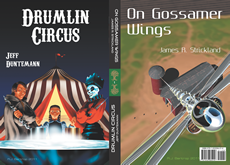
This is a collaboration with Jim Strickland, and we intend to have it finished, laid out, and printed by Lulu before AnomalyCon on the 27th. Cover art is on the way, though not having it won’t stop us. (The dog-ear on the cover will say, “Uncorrected Proof” because that’s the standard excuse for slightly overaggressive deadlines. If I hadn’t had the flu for three weeks the damned thing would be done already.)

I’ve written over 8,000 words in the last four days. I have 38,000 words down, and expect the climax to take another 5,000. The story must be finished by 4 PM Wednesday. I expect to make the deadline with difficulty; hell, do you think writing adventures in Victorian diction is easy?

More when I can take a breath.

Odd Lots

  • Okay, I promised more about circuses and steampunk today, but odd lots are piling up.
  • From the Words I Didn’t Know Until Yesterday Department: spudger, a small tool like a miniature putty knife that helps you pry the backs off of watches and electronics, like the monitor I repaired last month. (Thanks to Tom Roderick for alerting me to its existence.)
  • Also from the Words I Didn’t Know Until Yesterday (ok, last month) Department: algophilist , a person who takes sexual pleasure in pain. Broader and more ancient term than “masochist” or “sadist.” (One such appears in Drumlin Circus.) And to think I first thought it was a guy who liked algorithms…
  • Given that Amazon buries the cost of Kindle’s 3G connection in publisher content fees, the lack of graphics (big) within text (small) makes sense. I always thought it was about the crappy low-res e-ink display. It’s not. Here’s how it works.
  • Alas, this may be too late for me. (Thanks to Pete Albrecht for the link.)
  • From Bill Higgins comes a link to a list (alas, not searchable) of the 200 Borders bookstores that will be disappeared shortly. (PDF) Bogglingly, neither of the Colorado Springs stores are on the list, even the small, always empty, and mostly pointless one at Southgate. I will miss the one in Crystal Lake, though.
  • Guys who come up with schemes like this talk about avoiding government censorship and such, but what will actually drive adoption (if it ever happens) is anonymous file sharing. And nertz, I outlined a novel a couple of years ago describing a technology very much like it. The late George Ewing called this The Weaselrats Effect.
  • Years ago I remember reading somewhere that steam calliopes are hard to keep tuned because the metal whistles expand as steam passes through them, throwing their notes off enough to easily hear. Can’t find a reference now. Running a calliope on compressed air from a tank might be problematic as well, because air stored under pressure gets cold when it’s released. Surprisingly (perhaps unsurprisingly) good technical information on calliopes is hard to come by.
  • Whoa! If you’re interested in solar astronomy, do not miss this video of new monster sunspot 1158 forming out of nothing. It will give you a very crisp feeling for the tubulent nature of the photosphere. Those aren’t spots: They’re solar hurricanes!
  • If you’re reasonably high-latitude (45+ degrees) look north after dark for the next few days. That giant sunspot 1158 is spitting a great deal of energetic chaos in our direction, and the sky could light up as a result.
  • Samsung has announced a new, larger 10.1″ Galaxy Tab, running Android Honeycomb. Details are sparse, but I’m wondering if we’re not ultimately going to see the slate market divide into 7″ and 10″ form factors.
  • Beating cancer may mean we’ll have to be three and a half feet tall, like these mutant Ecuadorians. I’d be good with that–as long as everyone else was three and a half feet tall as well.
  • Gawker Media has a new Web UI that I find so annoying that I’ve mostly stopped reading their sites, which include Io9 and Gizmodo. I could do without sites like Jalopnik and Jezebel, but damn, I’m gonna miss those other two.
  • I have yet to find a good popular history of refrigeration. Somehow I doubt people are going to feel sorry for me about that.

Accidental Steampunk

5,000 words in two days. Wow. I haven’t done fiction at a rate like that since I was wrapping up The Cunning Blood in early 1999. It’s the main reason you haven’t seen me here much recently: I have a hard deadline for a story (this is uncommon; deadlines are for things like computer books and articles) and if I don’t produce at this rate for a little while longer, Drumlin Circus won’t be finished and laid out in time for AnomalyCon in Denver at the end of March. I have 27,200 words down now, out of a target 37,000 – 40,000. That’s heading out of novella territory into the strange turf of short novels, where I’ve never worked before.

But that’s the idea. Ruts are horizons pulled in too close, and I’m trying to push ’em back as much as I can, in as many ways as I can. Those who are familiar with my drumlins stories have gotten comfortable with a sort of Weird Western ambiance, and perhaps a hint of Cowboys & Aliens, except that the aliens are gone to parts unknown, having left all their incomprehensible machinery behind. (I was actually inspired more by Fred Pohl’s Gateway novels, at least in terms of the alien machinery.) So far I’ve focused on the rural and frontier areas of the drumlins planet, but much of Drumlin Circus takes place in the planet’s largest city. There were cowboys aplenty in 1890s Colorado, but out east in 1890s Chicago or 1890s New York, society was radically different.

The Drumlins Saga as a whole is about human castaways on an Earthlike planet who slowly re-create Earth technology and civilization, hoping eventually to repair their starship and return home. They “pass through” stages of technology roughly corresponding to advances in Earth history, and at the time of Drumlin Circus they’re basically gotten to 1890, with steam power and the beginnings of electricity. (The first three Drumlins Saga stories are collected with others in this book. More are planned.)

However, there’s a wildcard: alien machines scattered all over the planet, analogous to 3-D printers with a back-end database of manufacturable parts. Enter a 256-bit binary code, and…something…comes out. Some of these somethings are familiar and useful, some can be repurposed, and some, well, they’re just weird–and maybe dangerous. (Furthermore, there’s a lot of somethings. Do the math.)

So it’s 1890 with a twist.

Drumlin Circus itself recounts a sort of low-level war between a traveling circus and a cultlike research organization called the Bitspace Institute, which is very much a steampunk bad-guys version of the Ralpha Dogs from TCB. The steampunk part wasn’t deliberate, and when I was first defining the Drumlins Saga back in the early 2000’s, I hadn’t read any of the steampunk canon yet. But it’s tough to set a story in an 1890s technological milieu these days and not be accused of steampunking, so at some point I gave up and said, Awright awready. I’m a steampunker. (I’ve even had a top hat since 1999, and you’ve seen this. And this.) I’ll deal with it.

(More tomorrow.)

Uphill Melts First

We’ve had a miserable cold winter here, and whereas we haven’t gotten any more snow than average, the snow that we’ve gotten has been a long time leaving. Over the past four or five days the temps have finally been trending up, and as the snow melted on our sidestreets I once again noticed something I’ve seen the last few winters: The uphill lane melts first.

It’s a fascinating business. It’s consistent, and there are a lot of stiff inclines here on the slopes of Cheyenne Mountain. No matter what street I drive on after a snowfall, it’s the uphill lane that melts first. So the citizen scientist in me started chewing on the question: Why?

My first hypothesis was that on the eastern slope of a mountain, roads running east and west have the uphill lane on the north side, meaning that the southerly winter Sun is more likely to fall unshadowed on the north-lying lane. This may be a factor on some streets, but I quickly found hilly streets running north and south and at odd angles. In all cases (I didn’t find even one exception!) the uphill lanes melted first. This was true even on the north sides of small hills where the road surface got little if any sunlight at all.

This left me only a single hypothesis: That car engines have to work harder to move a vehicle uphill, and therefore the undersurface of the car (engine and exhaust system) are hotter going uphill than downhill, when the engine is basically idling. Heat radiating from the undersides of uphill-traveling cars melts more snow than vehicles idling their way downhill. This is a suburban area rather than rural, and there are a lot of houses up here, all on smallish lots. So traffic is significant, especially at rush hours, when conga lines of minivans and four wheelers (necessary on winter roads with 12% grades) commute down and back to Colorado Springs.

I don’t know how true this is, nor how to test it in a controlled fashion. The snow is now gone, but come next week another experiment will be set up, and I’ll have a chance to look again. (I need to keep a camera in the car so I can snap a picture of the effect in action, something I haven’t done yet.)

If you’ve seen something like this happen in your area, let me know.