- It appears that Learning Computer Architecture with the Raspberry Pi is a live project and will be published sometime late summer. (I don’t think the June date given on Amazon is realistic.) I’ll keep you posted.
- An art student built this bogglingly complex mechanical clock out of…wood. It doesn’t just tell the time–it writes out the time every minute. I think he’s in the wrong curriculum. (Thanks to Pete Albrecht for the link.)
- From Charlie Martin: Are black holes really quantum computers? Depends on whether there really are gravitons.
- Also from Aeon, an article that agrees with what I’ve been saying for years: Even if LENR (i.e., cold fusion) isn’t actually fusion, it might be something interesting and useful, and research should continue.
- I’ve also been saying this for years: Fruit juice is no healthier than soda. Both are nearly all sugar, and both will eventually kill you. Fruit juice is basically fruit-flavored sugar; all the stuff that might conceivably be good for you (fiber, mostly) is thrown away.
- It gets worse: New research suggests that long-term vegetarian diets predispose people to heart disease and cancer. It’s complicated; read the whole thing, and then consider this item from phys.org, which may be the research that the other article is talking about. What Cornell was researching were evolutionary adaptations to different diets, and if you eat against your evolution, you may be causing yourself problems. That seems reasonable to me.
- Something about this purely textual clock appeals to me.
- Here we have Wayne’s Radios, which focuses on vintage radios, some deco, most midcentury modern, all of them interesting. Oh, and a few dinner plates for flavor. Or something.
- Nonetheless, if you’re going out to dinner, insist on plates. Because eating dinner out of vintage radios can be hazardous to your health.
- This is by far the worst wine I’ve ever tasted. The runner-up was evidently so bad they don’t make it anymore. No other wine I’ve ever tried was even in their ballpark.
- Is there now or has there ever been a wintergreen cream cordial? I’ve kept an eye open for years for something that tastes like Canada mints and is the color of Pepto Bismol. Why? Because contrarian.
writing
Odd Lots
Respect and the Hyphenation of God
My father was big on respect. We were taught to say “Yes, sir” and “Yes, ma’am” and much else that cooked down, for the most part, to respect. He understood the culture as it existed in 1960, and I was warned strongly not to speak slurs against people for what they were, especially Jews and blacks. If he had known how hatefully anti-semitic our universities would become by 2010, he would probably have apprenticed me out to a tool and die maker.
We were taught flag etiquette in Boy Scouts. We genuflected before we got into the pews at church. (I once genuflected before going into a row of seats at the Pickwick theater, so thoroughly soaked into my bones had the gesture become.) I was taught that girls were not casual entertainment, but potential friends and colleagues, and ultimately, spouses. Like I said, respect was a very big deal.
So it puzzles me sometimes when people write “G-d” instead of “God,” especially non-Jews. I understand, perhaps imperfectly, the Jewish traditions regarding the name of God, which, when written down, should not be burned or thrown in the trash, but buried in hallowed ground. God’s name is holy and must be respected. I get that.
But…”God” is not the name of God.
When Moses met God on the mountain and asked Him what his name was, God replied with what we today call the Tetragrammaton, approximated by YHWH in English characters, usually spoken as ‘Yahweh” when spoken at all. Given that this translates (roughly) to “I am that I am,” I think what God was telling Moses was, “I exist in and of myself, and that’s all you really need to know.” In the pre-Mosaic animist traditions, to know the true name of an entity was to have a certain amount of control over it, and that’s how shamans and magicians earned their keep, by commanding spirits/angels/demigods/demons to either deliver favors or keep their distance. The Hebrew God was beyond commanding. A great deal of the early part of the Old Testament can be seen as the transition between primordial animism and genuine monotheism. Given that names are how we tell similar things apart, a truly singular and infinite God would not in fact need a name at all. But to the extent that God has given us His name (and “Yahweh” is pretty much it) we need to respect it.
All that said, we need a way to address God, because God is our Creator and immanent, not off behind the clouds somewhere that He can’t hear us. “God” works well in that capacity, because it isn’t a name but a respectful and singular title, as befits a singular God. I think it’s fair to compare the title “God” to the word “Sir” as my sister and I were taught to use it: as a respectful form of address. The respect is built in. So I’m not sure I see how saying “S-r” is any more respectful than “Sir,” given that “Sir” was established specifically as a respectful form of address.
We could argue about that all night and halfway to lunchtime; why not use the word “Lord” or “Father” instead of “God”? Some do. On the other hand, there are many lords and many fathers, but only one God. As I see it, to blot out part of the word pushes the idea of God away from us in the here and now, away from the immanent toward the abstract. Push it far enough in the cause of respect, and the idea of an immanent and transcendant God vanishes over a sort of epistemological horizon, beyond which God ceases to be graspable by His creation. After that, what’s left but human lords and lesser gods?
I don’t want anybody to misunderstand here: This isn’t me chewing out people who choose to use the term “G-d”. I respect their choices, and if it makes sense to them, so be it. It just doesn’t make sense to me.
I have a plaque immediately above my desk, presenting an epigram from Erasmus in bold Roman letters:
BIDDEN OR NOT BIDDEN, GOD IS PRESENT.
Jung had the same epigram, in Latin, over his front door. (I have that plaque too.) It simply means that we don’t have to whistle God up from somewhere else. He’s always here, no matter what. We mean Him no disrespect to recognize that, with a word custom-made for the purpose, standing intact, graspable, and ready for us when we need Him most.
Odd Lots
- Lazarus 1.6 has been released. It was built with FreePascal 3.0.0, a first for Lazarus. Mostly incremental changes, but there’s a new rev of the docked form editor that looks promising, even though it’s not quite stable yet. Wish I had more time to play with it!
- Older versions of Lazarus have run well on the Raspberry Pi for me. However, installation on the newer Raspberry Pi 2 is much trickier. This installation tutorial is almost a year old, and I haven’t yet installed Lazarus 1.4 or 1.6 on my Pi 2, but it’s the best how-to I’ve yet seen.
- From Glenn Reynolds: Indie author Chris Nuttall lays out his journey as an indie, emphasizing that all but the biggest names are being driven to indie by publishers who simply don’t understand which way the wind is blowing. Read The Whole Thing, as Glenn says.
- Back when I reviewed the Baofeng handhelds, there was some discussion in the comments about the RDA-1846S SDR chip. Gary Frerking pointed me to the HamShield project on Kickstarter, which is an Arduino add-on board (a shield, in their jargon) that uses the RDA-1846S to transceive on 2M, 220 MHz, and 450 MHz. Like the Baofeng radios, HamShield will also operate on FRS, MURS, and GMRS, though the group doesn’t say that explicitly. (This is an SDR, after all.) It’s not shipping yet, but they’ve raised a fair amount of money (well over $100,000) and appear to be making progress. Definitely one to watch.
- Cool radio stuff is in the wind these days. One of Esther Schindler’s Facebook posts led me to Beartooth, which is an SDR roughly similar to HamShield built into a smartphone battery case that snaps onto the back of your phone. Unlike HamShield, beartooth is going for FCC type acceptance and will operate on MURS. However, there’s been no activity on their Web site since mid-December and I wonder if they’re still in business. It’s not an easy hack; see this discussion from midlate 2014.
- Oh, and I remembered GoTenna, which is similar to Beartooth except that it’s limited to texts and geolocation data. (That is, no voice.) It’s a Bluetooth-powered stick that hangs on your belt and uses your smartphone as a UI, basically, and allows you to text your hiking buddies while you’re out beyond the range of cell networks. I guess that makes it a sort of HT…a Hikey-Textie. Unlike HamShield and Beartooth, GoTenna is shipping and you can get two for $300.
- Twitter continues to kill itself slowly by shadowbanning users for political reasons. What the hell is in it for them? When they collapse, something else will appear to take their place. They’re a tool. (Take it any or every way you want.) When a tool breaks, I get another tool, and generally a better one.
- In case you’ve never heard of shadowbanning…
- I stumbled on something called Roblox, which is evidently a high(er) res take on the Minecraft concept. It’s looking more and more like what I was thinking about when I wrote my “RAD Mars” piece for the last issue of Visual Developer Magazine in late 1999. Anybody here use it? Any reactions?
- Slowly but steadily, reviews are coming in on my Kindle ebooks. Here’s one that I particularly liked.
- The Obamacare exchange in Colorado “smelled wrong,” so Carol and I avoided it. We were right. (Thanks to Sarah Hoyt for the link.)
- I don’t care how many tablets and smartphones you have. Paper is not dead.
Guest Post by Brian Niemeier: Announcing Souldancer
Before I turn today’s entry over to Brian, a few words of explanation: In the wake of the Sad Puppies explosion almost exactly a year ago, my career as a writer changed. When 2015 opened, I was still locked in a state of existential paralysis, trying to decide if it was worth hammering on tradpub doors trying to get a (lousy, all-benefit-to-the-publisher) contract for Ten Gentle Opportunities and whatever works I might produce going forward. And I wasn’t writing very much at all. Moving to Arizona was time-consuming and didn’t help, but every time I tried to get a new writing project underway, I failed. I didn’t say much about it here. Why bitch online? You folks don’t need that. I started to get depressed again. Been there. Faced that abyss in 2002 for reasons you all know. Climbed out again. I’m not going back.
A year later, I have four books on KDP and KU, and they’re making money. I’m not talking about a buck here and a quarter there. Think hundreds of dollars most months. Not riches…but would I have made more in tradpub? Not likely. So I tossed tradpub overboard, and for the first time in my 42 years as a published author, I control my writing career completely.
What happened? Sad Puppies. In researching the phenomenon I found people who were facing the same problems I was. They were writing adventure stories in the old style, and getting sneered at. They dared question the elites who dominate tradpub and con-oriented fandom, and were called every name in the book. I reached out to them, and they pulled me in the door, handed me a drink, and made me one of the gang. I was called a moral coward at one point for daring to embrace the Puppy culture, but by then I just laughed. I had already won that argument. I had new friends, and they had my back.
One of those friends is Brian Niemeier, a new author whose path into indie publishing has been very much the same as mine. His debut novel intrigued me: Nethereal is a seamless blend of space fiction and a sort of theological fantasy that admits to a deeper strangeness in the universe than most are willing to accept. No spoilers here, but I will caution that people with an instinctive dislike of fantasy may not care for it. Radical materialists will probably loathe it. Their loss. In truth, I’ve never seen anything remotely like it. I’m now reading it a second time and will review it here as time allows.
So on that note, I’ll turn it over to Brian, who has a few words about his new novel. I bought it an hour ago and (obviously) haven’t read it yet, but I have this sneaking hunch that I’m not going to be disappointed.
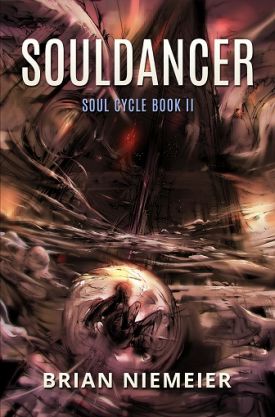 Announcing Souldancer, Soul Cycle Book II by Brian Niemeier
First things first: thanks to Jeff Duntemann for lending me his platform. The higher elevation lets my voice carry farther. [Ed: About a mile less high than it used to be!] He’s given me a few digital inches to announce the release of Souldancer, the sequel to my debut space opera-horror novel Nethereal.
My indie publishing journey has felt like riding a spaceship at relativistic speeds. The past months have seemed like days, and in that time I’ve gone from an obscure SFF writer with a couple of short story publications to an obscure SFF writer with enough reader loyalty to get my first book into the Sad Puppies 4 top ten.
I’m quite sure that my readers wouldn’t have had Nethereal to suggest if I’d stuck with my initial plan of riding the tradpub rejection carousel. I can now focus on writing, and it took less time to release a second book than the big publishers often take to do initial edits. It’s a crazy time to be alive in a lot of ways (read the news much?) but it’s also the best time in recorded history to be a writer.
If you’ve got a story to tell and the discipline to tell it in prose fit for public consumption, you can be an author. You don’t need the Manhattan crowd. The only people you need are readers. If your primary motivation for writing fiction is anything other than pleasing your readers, you really don’t understand writing.
Yes, the money is thin. It’s a long game. Hardly any authors ever got rich, even back before publisher advances began imploding. Self-published millionaires are likewise extreme outliers, but the data show that indie allows more authors than ever to at least earn a decent living. Not only are NY publishers no longer the boss; they never were the boss, and it’s not surprising that readers are flocking to authors who understand that publishing sovereignty rightfully belongs to those same readers.
And so to my new book Souldancer. It’s a true sequel to Nethereal; not the second part of a single story split into two halves [Ed: Or three halves?] like certain Hollywood adaptations of popular YA books that I will not name. The action picks up a generation after the first book’s ending, and we immediately get to see the changes that resulted from the prior story’s climax.
As Jeff said of Nethereal, it’s almost impossible to say much more about Book 2 without spoilers. I can say that Souldancer features stronger romance and horror elements than its predecessor-and yes, it’s scarier than a book that’s largely set in Hell.
I appreciate the chance to launch Souldancer here, because my own SF sensibilities could justly be described as contrarian. Fans of Nethereal (including Jeff) have told me that, for all of its nods to classic SF, gaming, and anime tropes, they’ve never read anything quite like it.
You can buy the eBook right now from Amazon. For those with more old school tastes, the trade paperback edition will be available soon on Amazon CreateSpace.
Thanks again to Jeff, and as always, to the readers who make indiepub possible. We’re all in this together, and the fun is only beginning!
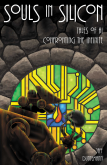
Now Available: Souls in Silicon on Kindle and KU
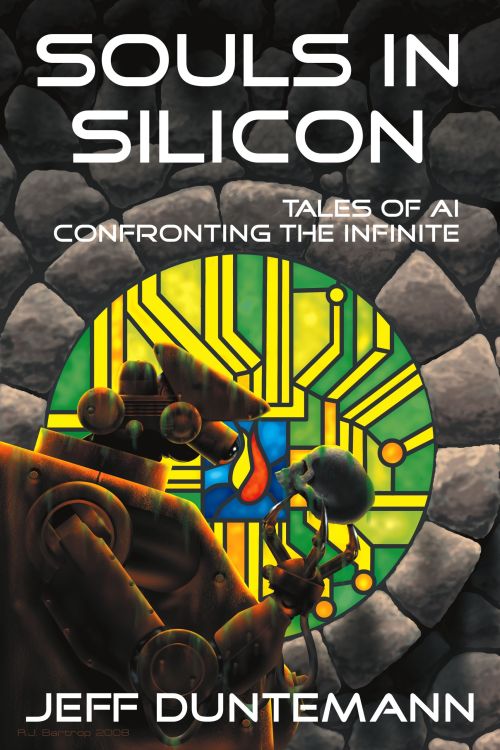
I am pleased to announce the Kindle ebook edition of Souls in Silicon, my second short fiction collection, containing all my stories about strong AI, plus excerpts from both The Cunning Blood and Ten Gentle Opportunities. It’s available for $2.99, or as part of your Kindle Unlimited subscription. No DRM.
The POD paperback edition has been available since 2008. I’ve updated the cover to a more legible font; the same font used in The Cunning Blood and Cold Hands and Other Stories. I’m evolving a line look here, and so far, I like it a lot. The original cover type font for Souls in Silicon was a little more atmospheric, but it didn’t read well on Amazon thumbnails. The cover art is the same 2008 drawing by Richard Bartrop, created specifically for the book.
The stories inside are all the stories I’ve written about strong AI that I’m pleased with:
- “The Steel Sonnets”
- “Guardian”
- “Silicon Psalm”
- “Marlowe”
- “Borovsky’s Hollow Woman” (with Nancy Kress)
- “Bathtub Mary”
- “STORMY vs the Tornadoes”
- “Sympathy on the Loss of One of Your Legs”
People who have followed my work closely since the beginning (there are a few) will notice that “Ariel” from Burchenal Green’s Tales of the Marvelous Machine isn’t here. It wasn’t in the POD paperback either. The reasons are complicated. “Ariel” centered on two characters from a failed novel that I was tinkering in 1980 and eventually abandoned as untenable. The theology, furthermore, is dicey. I know more now than I did then. A modern priest who grew up with computer technology would not have the reaction that Fr. Fiocca did to Ariel the AI.
So I’ve wondered here and there down the years if I should rewrite the story. If I did it would be a pretty radical rewrite. That decision will have to wait for another day; there’s too much to do in the meantime. I have one more significant story, a longish novella, that needs to be dealt with and posted on Kindle, but it has its own share of problems, which I’ll talk about in a future Contra entry.
In the meantime, Souls in Silicon is up there. Go get it. Don’t forget to drop a review on Amazon when you can.
Right now, I have stuff to write. Lots of stuff.
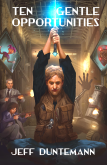
Ten Gentle Opportunities: Go Get It!

In case you hadn’t gotten the word yet, this morning Amazon cleared my upload of Ten Gentle Opportunities, and it’s now in the catalog, ready to buy for $2.99, or as part of your Kindle Unlimited subscription. No DRM. Cover by the utterly amazing Blake Henriksen. It’s in a genre that barely exists anymore: Humorous SF and fantasy, with a pinch of satire for those with ears to listen. I tried to shop it to tradpub imprints for a couple of years after I finished it in 2012. An editor at a major press told me that Douglas Adams did SF humor so well that nobody else can ever hope to compete.
Huh? That’s like saying that Heinlein did hard SF so well that nobody else should bother to try. Well, dammit, I’m competing. More than one of my beta readers said the book kept them up all night, and one called it “pee-your-pants funny.” Me, I consider that a win.
The book has an interesting history. I’ve been fooling with it for almost fifty years.
Here’s the story. Back in 1967, when I was 15, I got an idea: What if there were a sort of partial or incomplete magician who could change magical spells, but not create them? What sort of mischief could he get into? I called him The Spellbender, and started writing a story about him. I shared it with the writer girl down the street, and we talked about collaborating on it. Nothing came of that, because she and I had utterly incompatible understandings of magic. She saw it as a sort of moody, ethereal, hard-to-control spiritual discipline. I saw it as alternative physics. (We had other issues as well; when I finally meet God I’m going to ask him if He could please flash the human firmware and get rid of puberty.)
Not much happened on the story. I had a short catalog of gimmicks and little else. The Spellbender had a sidekick who was an incompetent djinn named Shrovo. Not only could he not remember how many wishes he gave people, he simply couldn’t count, and so had had his djinn license revoked for reckless and excessive wishgranting. Sure, it sounds dumb. I was 15.
I eventually got bored with it and tossed it back in the trunk, where it stayed until 1978. That year I read it over, dumped Shrovo, and told another tale about the Spellbender, which I presented at the Windy City Writers’ Workshop, in front of luminaries like George R. R. Martin and Gene Wolfe. Nobody liked it. Back in the trunk it went.
Come 1983, I had become a close friend of Nancy Kress, and we surprised one another by collaborating on a novelette that was published in Omni and drew a surprising amount of favorable buzz. If we could pull off “Borovsky’s Hollow Woman,” well, what else could we do? Nan suggested a contemporary fantasy, and I was quick to sketch out still another take on the spellbender concept, adding in the sort of universe-jumping gimmick that Sprague de Camp and Fletcher Pratt had used to such good effect in the Harold Shea stories. A spellbender who had gotten on the wrong side of a magician jumps universes to finds a place to hide, and lands in a small-town advertising agency in our near future. Nan was working for precisely such an agency at the time, and told the story of a staff meeting at which someone was talking emphatically about tangential opportunities, which Nan heard as “ten gentle opportunities.” I knew a great title when I saw one, and grabbed it.
I also drew on a novelette I wrote in 1981, which centered on a war in a robotic copier factory, and an AI named Simple Simon.
We tried. We really did. But as it turned out, Nan could move in a hard SF world a great deal more nimbly than I was able to move in a fantasy world. Shades of Lee Anne down the street. (Puberty, at least, was no longer an issue.) After a few thousand words she ceded me what we had and we decided to set it aside. Back in the trunk it went, this time for almost 25 years.
The Cunning Blood came out in hardcover in 2005, and garnered enough rave reviews (including one from Glenn Reynolds and another from Tom Easton at Analog) to make me feel like I should start something else. As was my habit, I went digging around in my trunk for concepts. Three aborted novels came to hand: My cyberpunk experiment, The Lotus Machine; a gimmicky hard SF concept called Alas, Yorick; and Ten Gentle Opportunities. The Lotus Machine went back in the trunk almost immediately; by now I understand that, as cyber as I might be, punk remains forever beyond my powers. I spent a fair amount of time reading and meditating on the 14,000 words I had of Alas, Yorick, but ultimately went with Ten Gentle Opportunities. Why? I like humor and I’m intrigued by the challenges of writing it. I had an ensemble of interesting characters, and the very rich vein of “fish out of water” humor to mine. And–gakkh–it was fun! Can’t have that now; we’re serious SF writers…
Basically, I went with fun. And it was.
I wrote three or four chapters in 2006, then got distracted by another concept that I’ve mentioned here, Old Catholics. TGO didn’t exactly go back in the trunk, but I didn’t touch it again until February 2011. That’s when I took it to this new writer’s group I’d joined. I submitted the first thousand words or so for critique and asked them if the concept was worth pursuing. The answer was yes, and it was unanimous.
I took it to Walter Jon Williams’ Taos Toolbox workshop that summer, and got my momentum back. After that it was my main writing project until I finished it in November 2012. I asked my nonfiction agent to shop it, and some shopping got done, but there were no nibbles. So several months ago I took it back and decided to publish it myself.
Oh–and then we kicked into high gear with our move to Phoenix. Writing of all sorts went on the back burner.
Which brings us to the current day. There’s a lot to be done yet here in the new house, but the end is at least in sight. We’re far enough along that I can afford to take a couple of days a week to Just Write. Which brings me (again) to the question of what I do now.
Truth is, I don’t know. But I’ll think of something.
Daywander

We had another estimator come out today for the move. After she was gone, once again Carol and I collapsed on the couch and didn’t say much for awhile. The reason is interesting: After working on this move for as long as we have (and with about 150 boxes stacked up to prove it) we get worn out thinking about how much we still have to do. We’re going to drive down to Phoenix in November with a small U-Haul trailer and no dogs, to make sure all the work on the new house was completed and done correctly. Then we fly back and kick into high gear on packing in preparation for a December move.
A fair amount of stuff will remain in this house so that we can come back in the spring to finish repairs and stage it for sale. That will take a couple of months, and we’ll have to have the ordinary machineries of life available while we work: clothes, a bed, a kitchen table, a coffee maker, a couch, kitchen implements, etc. Resistors and capacitors, not so much. So we’ll need to have a second (much smaller) truck bring down what’s left when the house goes on the market.
Among (many) other things, we packed the stuffed animals today. Some people have knicknacks (and we have our share) but a lot of the odd items on our shelves are stuffed animals. Not all are animals; I have a stuffed Space Shuttle, created by my very brilliant seamstress sister Gretchen Duntemann Roper. Decades ago, in the Age of APAs (google it; blogging didn’t come out of nowhere) I wrote an APA called “A Dead Rat and a String to Swing It On.” So she made me a dead rat, complete with a string to swing it on. (Above.) Nearby was the closest thing to an action figure that I own: a giant squid with posable (is that the word?) tentacles. I’ve never actually handled a dead squid and it’s not on my bucket list, exactly, but I’m wondering how well one would hang together if swung in a circle by one of its long feelers. (I suppose it depends on how long it had been dead.) However, someday, perhaps in some saga I have not yet imagined writing, somebody will grab a giant squid by a tentacle and swing it in a brawl. The image smells a little like a Stypek story back in his ancestral Realm of Tryngg, but no promises.
A book came to hand on its way to a box today that I think I’ve mentioned before: Conjuror’s Journal by Frances L. Shine. (Dodd-Mead, 1978.) I see that numerous hardcovers are available on Amazon for 10c plus shipping. Read the first review of the book, which is mine. If you want a quick, cheap read that will, at the end, both bring tears to your eyes and make you want to stand up and cheer, this is it.
Tomorrow is Halloween, and we’re having our first and last Halloween nerd party here at Phage House in Colorado Springs. I’m of way more than two minds about leaving here, but the little box I just clipped to my finger says my blood oxygen is at 88%. Better than nothing…but it’s not enough. And so the move goes on.

Odd Lots
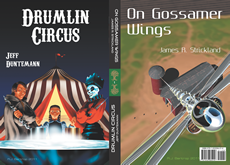
- My collection Cold Hands and Other Stories is now available to Kindle Unlimited subscribers.
- Well, judging by its website it may seem a little wobbly, but Heathkit has a new owner, and is actually selling radio kits. Let us wish them the best and watch what happens. (Thanks to Tom Byers, Michael Covington, and several others for alerting me.)
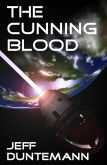
- Smart bullets appear early in The Cunning Blood, which I wrote in 1998. (You can read that part of the story in the Amazon “Look inside” ebook preview.) Seventeen years later, we’re starting to pursue that line of research, with the Army’s XM25, which us about ready to test. By 2374, those little devils are going to be pretty damned dangerous.
- Lazarus 1.4.4 has been released. Mostly bug fixes, but it’s free and well worth having if you program for Delphi or Pascal generally. Plus, it can be installed and works very well on the Raspberry Pi 2.
- Here’s David Archibald’s solar update for October, 2015. I find the trend lines in the graph of F10.7 flux fascinating: They’ve been in a pretty linear decline since the beginning of the year. Anything under 100 signals a cooling trend. We’re now at 84, and the reading may “bottom out” at the lowest possible reading of 64 by January of 2016.
- As if a quieting Sun weren’t enough, there’s a newly discovered mechanism pushing the planet in the direction of global cooling, via volatile organic compounds, particularly isoprene.
- Roy Harvey pointed me to MakerArm, a sort of general-purpose 3-D positioner that can be used to mill PCBs, print 3-D artifacts, and draw things on cakes with frosting. This is definitely second-gen, or maybe third (I lose track) and something in me seriously wants one.
- Esther Schindler sent a link to word that high-fructose corn syrup apparently slows recovery from brain injury. It also overloads your liver, especially downed 44 convenience-store ounces at a time.
- I’m considering renting a short cargo container as a temporary storage shed in our new (large) back yard. We did this at our second house in Scottsdale in the 90s, and it worked very well. Researching containers led me to this writeup of the world’s largest container ship, MSC Oscar, which can hold 19,224 containers. Me, I’d call it Darth Freighter.
- This is very cool: Brilliant color photographs of an era (1940-1942) we remember almost entirely in black and white. (Thanks to Pete Albrecht for the link.)
- More Oldiana, for early vintage Boomers and before: An Old-Time Chicago Quiz. This one is not easy: I got less than half of them right, granting that most of the ones I missed were sports-related. (Thanks to Pete Albrecht for the link.)
- We’re getting closer to being able to prevent Lyme disease, though injection of lab-engineered antibodies.
- Megan McArdle thinks it makes sense. I think it’s their last swing around the drain marked “DOOMED MAGAZINES.” Whoever turns out to be right, Playboy is eliminating nudity. Wow. Isn’t that kind of like caffeine-free diet Jolt?
Rant: The Lasting Legacy of the Sad Puppies

After the appalling 2015 Hugo Awards ceremony (google “Hugo Awards asterisks”; I can’t bring myself to write about it) there arose a litany:
The Sad Puppies Lost!
The Sad Puppies Lost!
The Sad Puppies Lost!
(Repeat until purple.)
Except…they didn’t. The losers were the poor writers who would likely have won the award if the Worldcon Insider Alphas hadn’t decided to burn the award down rather than let people they disapproved of win it. The even bigger losers were the Hugos themselves, which are now proven to be political proxies for a bogglingly stupid culture war that most of us would prefer not to fight.
The biggest losers of all were the hate-filled tribalists themselves, Alphas down to their shitflinging Omega footsoldiers, who got their asses handed to them in a big way and threw the only tantrum that they could. Now, I don’t know precisely what to make of it, beyond my longstanding contention that tribalism will be the end of us all if we’re not careful. What I can say with fair confidence is that it isn’t over. (More on this later.) What I can say with complete confidence is that the Sad Puppies won big on several fronts:
- They brought the cobwebbed machinery behind the Hugo Awards out into the open where everybody could look at it. Sunlight is the best disinfectant.
- They made everyone aware of the curiously obscure fact that you don’t have to go to Worldcon to vote for the Hugos. All you need is $40 (soon to be $50, I think) and an Internet connection.
- They exposed corruption that’s been going on for quite a number of years, and I’m not talking about inclusiveness, or diversity, or clever (if silly) experiments with pronouns here. (That’s a separate issue.) I’m talking about the fact that a derivative and mostly boring novel like Redshirts can only win a Hugo via corruption.
- They alerted everyone to the fact that Worldcon and traditional SF fandom are rounding errors compared to the number of people who buy and enjoy SF and fantasy. Too few people nominate and vote for the awards to make corruption impossible and the awards themselves meaningful.
That’s a lot, right there. That would be enough, in fact, to persuade me that the Puppies won. But the Sad Puppies did something else: They created the nucleus around which a whole new fandom is crystallizing. People who took that lonely walk away from SFF suddenly realized that lots of other people were taking the same walk, and for the same reasons: Modern print SF is for the most part dull, dudgeon-rich message pie, and fandom is ideologically exclusionary and mostly under the control of a handful of high-volume haters. (I and many others have been called fascists one too many times.) If you have the unmitigated gall to have libertarian or (gasp!) conservative leanings, there is no place for you at that table.
Well, alluvasudden there’s a brand-new table.
In part (like most of everything else these days) it came from Amazon. The NY imprints have a powerful bias against fiction with libertarian or conservative themes. While they were the gatekeepers, there was little to be done. Now, with indie-published ebooks generating close to half of all ebook sales, authors can make fair money (or even a good living!) without bending the knee to Manhattan culture. They don’t even need ISBNs. They do have to rise above a pretty high noise level, but that’s a technical challenge: If you write well and understand the nature of the game, you will be noticed. The more you write, the more you’ll be noticed, and the easier it becomes.
What didn’t come from Amazon came from Google. The commotion generated by the Sad Puppies’ sweep of the Hugo nominations got a lot of attention. Commotion does that; it’s almost a physical law. People who hadn’t followed the SF scene for many years (if ever) discovered Web forums and new authors whose vision of SFF was far closer to their own.
Ironically, most of that commotion came from the Sad Puppies’ opponents, who could have strangled the Puppies in their sleep simply by keeping their mouths shut. But no: They had to vent their tribal butthurt, and in doing so recruited thousands of brand-new Puppies to the cause.
This new fandom centers around a crew of writers who (I suspect) give the New York imprints nightmares: Larry Correia, Sarah Hoyt, Brad Torgersen, John C. Wright, Peter Grant, Cedar Sanderson, Brian Niemeier, Amanda Green, Kate Paulk, Tom Knighton, R. K. Modena, Dave Freer, and many others whose work I’m only beginning to sample. Some have books from the tradpub imprints (Baen especially) but all are indies as well. I’m linking to their Web forums here so you can discover them too. Additional sites of interest include collaborative webzines like The Mad Genius Club, The Otherwhere Gazette, and Superversive SF. (Several of the above authors contribute to all three sites.)
At least one SF convention leans libertarian: Libertycon, in Chattanooga, Tennessee. There may be more than that, especially among the smaller gatherings. I don’t know, but I’m always looking. I think there’s a lot of upside in smaller, in-person meetups held in local pubs and other gathering places, and if I can’t find one in Phoenix I may well start one. I’m intrigued by reports from the major Puppy authors who have attended various media cons around the country. Sarah Hoyt’s is instructive. The boggling crowds at events like ComiCon are more diverse by far than attendees at traditional literary cons, and much, much younger. There is way more interest in textual SFF at the media cons than I expected. It’s not all movies and comic books. Now, I’m not sure how much I’ll be attending media cons; Worldcon-level crowds make me a little crawly, and the media cons draw eight to ten times more people. What stood out in those reports for me was the fact that people at the media cons were actually having lots of pure freeform fun, not searching desperately for something to be offended about.
The bottom line is that a vast and mostly invisible network of new friendships happened as a result of the Sad Puppies phenomenon. I’m reading more SFF now than I have in a decade. The Paperwhite helps, of course, as does the “toss-it-in-the-cart” pricing that predominates in the Kindle store. I’m corresponding with other writers whom I’d not met before. I’ve learned that indie publishing can work, and work well. (Thanks, Sarah!) I’m hearing others saying more or less the same thing about the Sad Puppies universe: “It was like coming home.”
And it’s not over.
No sirree. Sad Puppies 4: The Embiggenning is well underway, run by Kate Paulk, Sarah Hoyt, and Amanda Green. These are formidable women; I pity the poor tribal troll who tries to call them “female impersonators.” The logo once again is from Lee “ArtRaccoon” Madison. Sad puppies Frank, Isaac, and Ray from last year’s logo have returned, this time bringing their new robot friend Robert with them. Robert isn’t the least bit sad. He has no reason to be.
His side is winning.
(More thoughts on this issue of a new SFF fandom as time/energy allow.)