This has been a busy two weeks, hence my silence. Carol had her foot surgery on Halloween, and she still can’t walk unassisted. She’s resting with her leg up on cushions, generously draped with bichons, catching up on her reading. Her mood is good. The leg is improving every day, though she still has two weeks to go before the cast comes off and she can put significant weight on both feet.
I’m working on a book project, for large values of “work.” The work isn’t all in the writing. The worst of it lies in the critical difference between a casual understanding of a topic and a detailed understanding. Ever since I got my first Android device and looked into writing apps for it, I’ve been reading up on Android and the ARM processors that lie beneath probably 98% of all Android instances. I picked up the broad strokes quickly: 32-bit single-issue load/store RISC architecture, 8-stage pipeline (for ARM11, at least), dual cache, lotsa registers, several privileged processor modes, SIMD instructions, and good coprocessor support. A little study revealed an instruction set optimized for staying out of system memory and keeping the pipeline full at all times. I had read about but not meditated on a remarkable ARM feature: Virtually all ARM instructions can be conditionally executed based on flags embedded right in the instruction itself. Do a comparison that sets the zero flag, and then any following instructions compiled/assembled to execute when Z=0 will percolate smoothly through the instruction pipeline but not do anything. In essence, instructions whose condition bits aren’t satisfied become NOPs. It’s like branching past a block of code without actually branching and thus messing up the pipeline. Pure brilliance.
You don’t really grasp how much of a topic you don’t understand until you need to explain it in detail. Most hardware guys know how exceptions work, in broad terms. But…does the CPU disable interrupts automatically upon entering an interrupt handler? Or does the handler have to do it explicitly? Things like that require drinking from the doc firehose in a way I haven’t had to for some time.
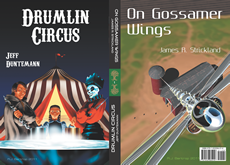
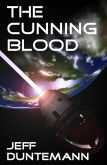
The book hasn’t been announced yet, but I think I can reveal that it’s mostly about hardware, and that I’m not the sole author. More later, but (I think) sooner rather than later.
I do that all day. In the evenings Carol and I cuddle on the couch and watch TV. TV is a little outside of type for me, granted. (Cuddling with Carol is a lot of what I live for.) But I was poleaxed at how good the comedy writing is on the nerd series The Big Bang Theory. I hadn’t seen more than a few isolated minutes on TVs at doctors’ waiting rooms, and once for maybe half an episode at my sister’s house. TBS has been running several rerun episodes back-to-back on most nights, and we’ve watched what’s been on for a week or so. That nowhere near exhausts the canon, which is now seven seasons and 145 episodes long. Sure, it’s over the top. But it’s a lot less over the top if you’re a guy like me than some jock who went into insurance sales. I’ve met a fair number of Leonard Hofstadters, and at least one remarkably close instantiation of Amy Farrah Fowler. Even if you don’t like TV much, give it a shot.
I’ve had to wonder if all the equations on the whiteboards are real and not gobbledegook meant to fool the rubes who are not into string theory. Maybe a physicist reader will clue us in.
More animal stories: We’ve had an 11-point buck wandering around the neighborhood recently, close enough to the house that I could stand about twenty feet from him and count his points. (He has a small extra one on his left side.) The deer have been thronging our property because the little stream in the gully has been running continuously now for probably six weeks. Ordinarily it runs for eight or ten hours after a bad rain and then goes dry again. Running for several relatively dry weeks suggests that a new spring has opened up on the mountainside above us. It’s not a lot of water, perhaps half a gallon per second. But it just keeps coming and coming, and I’ve begun to see mosquitoes on my office window, staring longongly at my exposed forearms through the glass. The low spot just before the Villegreen cul-de-sac is now a swamp. The deer love it. We see them in groups of eight or nine standing around the flowing water, drinking. Mr. Big Buck sits or lies there, his grey muzzle confident, daring me to disrupt the party by running out there and yelling dumb things like “Roogie! Roogie! Whoosh!” Probably not.
We’ve noticed something else: For the last six weeks or so, we’ve neither seen a fox, nor smelled a skunk. Ordinarily it’s one or the other down there in our gully. Now, nothing. Dare we hope that it’s because the 24″ corrugated iron pipe under Stanwell is half-full of water all the time? We’ve seen both species coming and going at the pipe entrance when it’s dry, though not at the same time. (They’re ecosystem competitors, and they fight. We had a dead skunk in the gully once for several months. Don’t mess with fox.) Nobody likes to sleep in a pipe that’s got eight or ten inches of water in it. We’re good with that.
If you’ve never seen the film Pirate Radio, rent or stream it. Carol got it for a dollar at the local Blockbuster while they were blowing out their inventory. Rehabbed fishing boats really did park off the coast of England once, broadcasting rock’n’roll and manic DJ chatter while deliberately tweaking the BBC bluenoses who eventually shut them down. A little raunchy but goodhearted, and the 1966 period look was uncanny. (I was 13 in 1966 and remember the era well, largely because I didn’t have a girlfriend to distract me.)
One of the other dollar DVDs she bought astonished me with its awfulness. Yes, I loathed Cowboys and Aliens. Sue me; it sucked bigtime. Every bad Western cliche that’s ever seen print or film was there in seething, wriggling, vomiting color–except when the film retreated into faux moody darkness so deep you had no idea what the hell was going on. The aliens looked and moved like gorillas in alien suits. The HQ spaceship was stolen–most appropriately–from Alien. The formidable Daniel Craig was utterly wasted. The aliens were so stupid they set down a wrist-mounted raygun right next to Craig so he could put it on and start blasting them. The plot made very little sense except when it was utterly predictable. I’m glad we got it for a dollar–which was probably five dollars more than what it was worth.
Dash threw up on our bed late this afternoon. We got it all before it soaked through to the mattress, but we have to wash and dry several more rounds of sheets and blankets before we sleep tonight. We have a perfectly good bedroom downstairs–but Carol only has one good leg for the time being, and there are a lot of stairs. Talk atcha later. I have to go upstairs and throw another round in the dryer.



 The six-disc changer in my 4Runner’s console stereo dropped dead late last summer, after serving me well for eleven years. Considering the mechanical nightmare the damned thing was internally, I’m a little surprised it lasted as long as it did. So for about ten months now, I’ve been reduced to listening to the radio, in a town where radio is not a priority. (Irony, however, is a Colorado Springs delicacy: With just about every other town and county but Denver voting to ban legal marijuana,