Jeff Duntemann's Contrapositive Diary Rotating Header Image

writing

Daywander

Buck Walking.jpg

This has been a busy two weeks, hence my silence. Carol had her foot surgery on Halloween, and she still can’t walk unassisted. She’s resting with her leg up on cushions, generously draped with bichons, catching up on her reading. Her mood is good. The leg is improving every day, though she still has two weeks to go before the cast comes off and she can put significant weight on both feet.

I’m working on a book project, for large values of “work.” The work isn’t all in the writing. The worst of it lies in the critical difference between a casual understanding of a topic and a detailed understanding. Ever since I got my first Android device and looked into writing apps for it, I’ve been reading up on Android and the ARM processors that lie beneath probably 98% of all Android instances. I picked up the broad strokes quickly: 32-bit single-issue load/store RISC architecture, 8-stage pipeline (for ARM11, at least), dual cache, lotsa registers, several privileged processor modes, SIMD instructions, and good coprocessor support. A little study revealed an instruction set optimized for staying out of system memory and keeping the pipeline full at all times. I had read about but not meditated on a remarkable ARM feature: Virtually all ARM instructions can be conditionally executed based on flags embedded right in the instruction itself. Do a comparison that sets the zero flag, and then any following instructions compiled/assembled to execute when Z=0 will percolate smoothly through the instruction pipeline but not do anything. In essence, instructions whose condition bits aren’t satisfied become NOPs. It’s like branching past a block of code without actually branching and thus messing up the pipeline. Pure brilliance.

You don’t really grasp how much of a topic you don’t understand until you need to explain it in detail. Most hardware guys know how exceptions work, in broad terms. But…does the CPU disable interrupts automatically upon entering an interrupt handler? Or does the handler have to do it explicitly? Things like that require drinking from the doc firehose in a way I haven’t had to for some time.

The book hasn’t been announced yet, but I think I can reveal that it’s mostly about hardware, and that I’m not the sole author. More later, but (I think) sooner rather than later.

I do that all day. In the evenings Carol and I cuddle on the couch and watch TV. TV is a little outside of type for me, granted. (Cuddling with Carol is a lot of what I live for.) But I was poleaxed at how good the comedy writing is on the nerd series The Big Bang Theory. I hadn’t seen more than a few isolated minutes on TVs at doctors’ waiting rooms, and once for maybe half an episode at my sister’s house. TBS has been running several rerun episodes back-to-back on most nights, and we’ve watched what’s been on for a week or so. That nowhere near exhausts the canon, which is now seven seasons and 145 episodes long. Sure, it’s over the top. But it’s a lot less over the top if you’re a guy like me than some jock who went into insurance sales. I’ve met a fair number of Leonard Hofstadters, and at least one remarkably close instantiation of Amy Farrah Fowler. Even if you don’t like TV much, give it a shot.

I’ve had to wonder if all the equations on the whiteboards are real and not gobbledegook meant to fool the rubes who are not into string theory. Maybe a physicist reader will clue us in.

More animal stories: We’ve had an 11-point buck wandering around the neighborhood recently, close enough to the house that I could stand about twenty feet from him and count his points. (He has a small extra one on his left side.) The deer have been thronging our property because the little stream in the gully has been running continuously now for probably six weeks. Ordinarily it runs for eight or ten hours after a bad rain and then goes dry again. Running for several relatively dry weeks suggests that a new spring has opened up on the mountainside above us. It’s not a lot of water, perhaps half a gallon per second. But it just keeps coming and coming, and I’ve begun to see mosquitoes on my office window, staring longongly at my exposed forearms through the glass. The low spot just before the Villegreen cul-de-sac is now a swamp. The deer love it. We see them in groups of eight or nine standing around the flowing water, drinking. Mr. Big Buck sits or lies there, his grey muzzle confident, daring me to disrupt the party by running out there and yelling dumb things like “Roogie! Roogie! Whoosh!” Probably not.

We’ve noticed something else: For the last six weeks or so, we’ve neither seen a fox, nor smelled a skunk. Ordinarily it’s one or the other down there in our gully. Now, nothing. Dare we hope that it’s because the 24″ corrugated iron pipe under Stanwell is half-full of water all the time? We’ve seen both species coming and going at the pipe entrance when it’s dry, though not at the same time. (They’re ecosystem competitors, and they fight. We had a dead skunk in the gully once for several months. Don’t mess with fox.) Nobody likes to sleep in a pipe that’s got eight or ten inches of water in it. We’re good with that.

If you’ve never seen the film Pirate Radio, rent or stream it. Carol got it for a dollar at the local Blockbuster while they were blowing out their inventory. Rehabbed fishing boats really did park off the coast of England once, broadcasting rock’n’roll and manic DJ chatter while deliberately tweaking the BBC bluenoses who eventually shut them down. A little raunchy but goodhearted, and the 1966 period look was uncanny. (I was 13 in 1966 and remember the era well, largely because I didn’t have a girlfriend to distract me.)

One of the other dollar DVDs she bought astonished me with its awfulness. Yes, I loathed Cowboys and Aliens. Sue me; it sucked bigtime. Every bad Western cliche that’s ever seen print or film was there in seething, wriggling, vomiting color–except when the film retreated into faux moody darkness so deep you had no idea what the hell was going on. The aliens looked and moved like gorillas in alien suits. The HQ spaceship was stolen–most appropriately–from Alien. The formidable Daniel Craig was utterly wasted. The aliens were so stupid they set down a wrist-mounted raygun right next to Craig so he could put it on and start blasting them. The plot made very little sense except when it was utterly predictable. I’m glad we got it for a dollar–which was probably five dollars more than what it was worth.

Dash threw up on our bed late this afternoon. We got it all before it soaked through to the mattress, but we have to wash and dry several more rounds of sheets and blankets before we sleep tonight. We have a perfectly good bedroom downstairs–but Carol only has one good leg for the time being, and there are a lot of stairs. Talk atcha later. I have to go upstairs and throw another round in the dryer.
Odd Lots

Odd Lots

Daywander

Feeling better. Some. Not lots.

Of course, “better” (as with other words like “warmer”) are inherently comparative and need reference points, or they’re meaningless. Better/warmer since when? Better since last week? Hell yes. Better since two weeks ago? Maybe a little. (It’s hazy; like the Ball says, “Ask again later.”) Better since three weeks ago? No way. I’ll be back with the docs again tomorrow. We’ll see what they say.

This is the first time I’ve done bedrest with a tablet. Read stuff, played Random Factor Mah Jong, checked in on email and Facebook. I have the Transformer Prime’s matching keyboard dock, which made many things easier. That said, most of Facebook, being as it is a mighty global confluence of Loud And Aggressive Persons, is a vexation to the spirit. By a week or so ago my body had had all the vexation it was willing to put up with, so to avoid its actually becoming a spirit, I pondered pleasanter things, like tweezing my armpits.

I did read one reasonably good book: Wicked River: The Mississippi When It Last Ran Wild, by Lee Sandlin. Great light reading, and full of interesting things. We’ve been a little too thoroughly romanced by Mark Twain and others: The Mississippi in the 1850s was just freaking nuts. The book is not a systematic history but a collection of vivid vignettes. A lot of it is well-covered elsewhere, like the siege of Vicksburg. Some of it was described with a hair too much vividness, especially the explosion of the Sultana. Much of it was new to me, like the phenomenon of Mississippi River moving panoramas. John Banvard’s signature product was a painted scene twelve feet high and literally half a mile long. (It was by no means the longest moving panorama ever done. It wasn’t even close.) It was displayed to an audience by slowly spooling it between one large roller and another. Banvard toured the country with his and made a great deal of money from an entertainment-starved populace, who had neither TV nor Facebook to kill time on. Sandlin’s description of the pandemonium at riverside camp meetings is wonderful, and aligns with other descriptions I’ve seen of revivals in that era. The revival phenomenon is a scary thing, far scarier than anything you’ll ever see on Facebook, or even TV. (It is also not exclusively religious in nature.) I was at a small one once. It was the best evidence of mental power at a distance I’ve ever experienced. It went well beyond hysteria or even mass hypnosis. It almost completely defies my ability to describe, which is why I probably won’t, at least here. I’ll write it up for my memoirs.

I did watch some TV. In doing so, I learned that “Mermaids” is the most-watched series that Animal Planet has ever run, egad. We were actually watching the “Too Cute” episode that included Bichon Frise puppies, but the channel was pushing its signature achievement with everything it had. Uggh. Can we please go back to Chariots of the Gods now?

Mostly, Carol and I watched episodes from the DVD gatherum of “Anything But Love.” It was a half-hour TV sitcom that ran from 1989-1992. We would watch it now and then while Carol brushed dogs, and it featured a brand of gentle humor that TV simply doesn’t understand anymore. 25 years is a long time, and I had completely forgotten Joseph Maher, who had a long run with the series. He’s one of those guys that you’ve doubtless seen and heard but probably can’t name, and his chemistry with stars Richard Lewis and Jamie Lee Curtis was damned near perfect. The series is about a magazine based in Chicago, so I paid attention to the details. Yes, magazine publishing really did sort of work like that back in the 80s, with a lot fewer people, a lot less screwing around, and a whole lot more work.

My most promising entertainment, however, was lying on my back and vividly imagining the Neanderthals who may star in a possible comic novel called The Gathering Ice. They’re homely but clever guys who have been hiding in plain sight for 20,000 years by pretending to be ugly humans, telling jokes at our expense and harnessing homo sap’s frenetic energy to make their lives easier. They wrote the Voynich Manuscript and gave it to Emperor Rudolf II just to torment him (along with a long line of homo sap cipher hobbyists.) When it looks like a new Ice Age begins setting in during the 2020s, the Plugs (as they call themselves) go looking for long-lost members of their tribe and the occasional throwback. Among other techniques, they break into the TSA’s top-secret Cloud database of traveler X-rays and look for conical ribcages and occipital buns. (I have both, but my Neanderthal blood is far from pure.) They have a plan that might in fact reverse the relentless march of the glaciers and short-circuit the end of the Holocene. Should they do it? (Of course they should. And of course they do. Duhhh.) It’s a sendup of steampunk, dieselpunk, reality TV, the Holy Roman Empire, global warming, Pythagoras, the Paleo Diet, and a great many other things. No dancing zombies. Cavemen throw good polka parties, though. And all those skinny-dipping ladies in Voynich? Neanderthal babes doing hands-on DNA research.

I will probably be a little quiet for a few more days. I’m still here. If I’m envisioning scenes from a novel, I’m probably going to be all right. Patience!

Odd Lots

The Primacy of Ideas

One of my SF teachers, a brilliant man whom I respect very highly, said something once that I still don’t understand: “In the end, what people will remember about your fiction are the characters.” This was in the context of an intense discussion about character creation, but it seems extreme to me. In some sorts of fiction, sure. What I remember about Saul Bellow’s The Adventures of Augie March is Augie March.

Or is it?

Sure, I remember Augie. But I, too, am an American, Chicago-born. A great deal of what I remember about The Adventures of Augie March is depression-era Chicago, and how it shaped Augie’s character. Without Chicago, there wouldn’t have been anything particularly memorable about Augie himself. I bring this up because I’m encountering more and more new writers who seem to think that ideas don’t matter in SF and fantasy. Characters are the whole story. Everything else is backdrop. That simply isn’t true, and I think it’s time for a little pushback.

Here’s how I see it: The two essential elements in any story are characters and context. Without characters, context is narration. Without context, characters are soap opera. The magic happens when you rub one against another.

In mainstream fiction and real-world genres like romance and mystery, you don’t create your context so much as select it from a huge menu of known placetimes and cultures, like Chicago in 1933, modern-day Manhattan, or Amish country in the 1950s. There’s some tinkering around the edges, but for the most part you pick a well-documented placetime and turn your characters loose in it. If you’re a good writer, entertaining and insightful things will then happen, and your readers will come back for more.

It gets interesting when you switch from real-world genres to SF and fantasy: You can then create your own contexts. World-building is (as I like to say) a spectrum disorder. You can build a little or a lot, or go nuts and create entire worlds and societies from whole cloth.

To do that, you need ideas.

For good or ill, I’m an ideas guy. It’s just how I think. Furthermore, I have a hunch that ideas are in fact what people actually remember about good SF and fantasy. Really. C’mon, when was the last time you heard somebody ask, “Hey, what was the name of that story in which a callow young man is jolted out of ordinary life and with the help of an ironic sidekick finds unexpected strengths and talents that allow him to defeat evil in ways that change him forever?” No, you hear questions like this: “What was the name of the story that had an FTL communicator in which every message ever sent, past, present, and future, is gathered into a beep at the beginning of every message?” (I know the answer, and if you’re serious about SF you should know it too.)

When I read SF, I want to see cool ideas. When I write SF, I feel a responsibility to deliver them. It’s not just about having rivets. It’s about having rivets that nobody’s ever seen before. Is it silly to love the rivets? Well, I’ve gotten several fan letters about the wires in The Cunning Blood. The novel centers on a prison planet in which microscopic nanomachines seek out and disrupt electrical conductors, supposedly keeping the prisoners from developing electrical technologies. Well, the prisoners make non-disruptable wires by filling hoses with mercury. When your rivets start getting fan mail, I think it’s fair to assume that you’re on to something.

This sort of idea-centric story isn’t for everybody, but there are a lot of people for whom it’s the heart and soul of fantastic literature. The challenge is to use clever ideas to draw out characters that grow, change, and learn. I’ll freely admit that I’m still better at ideas than at characters. However, I’m aware of the issue and I’m throwing a lot of energy into the character side, now that I’m finally out of my teens and into my sixties.

I’ll grant the “cowboys on Mars” objection, in which an ordinary situation is dropped without modification into an exotic locale and called SF. However, it’s just as bogus to say, “Nobody cares about your starships,” when the starships are in fact a key part of the story’s context. Jack Williamson’s definition of stories as “people machines” is correct but incomplete: To have a people machine you need the machinery. Without that machinery, you have “white universe syndrome” and your story collapses into soap opera. You can choose your context from a menu, or you can build it. Either way, you need that context to make characterization meaningful.

I’ll get myself in trouble here for going further and suggesting that a story’s settings and ideas can be entertaining and sometimes dazzling, even when its characters are thinner than we’d like. That’s not an excuse but simply a fact of life. Do we remember Ringworld because of Louis Wu? Or do we remember it because of, well, the Ringworld?

As I prefer to put it: Ideas will get you through SF stories with no characters better than characters will get you through SF stories with no ideas.

That said, have characters. Have context. Rivet them together so well that both your characters and your rivets get fan mail. Then, my friend, you will have arrived.

An Ebook Piracy Mystery

For the most part, the ebook pirates have forgotten about me. Five or six years ago, I was all over the pirate sites. Now I’m not even on the Pirate Bay, and haven’t been for some time. Binsearch shows that the last time I was uploaded to Usenet was almost a year ago. It’s enough to give a guy a complex. (It’s certainly enough to make me feel like I need to write more books.)

So last week the backchannel sent me a link to an article about how several major textbook publishers have subpoenaed a couple of Usenet service providers demanding the identities of two prolific Usenet uploaders operating under the pseudonyms Rockhound57 and HockWards. Both upload technical books to a certain newsgroup devoted to technical nonfiction.

Boy, do they.

I fired up my newsreader and took a look. I’d been there before, and have gladly downloaded crufty scans of old Heathkit and classic tube gear manuals and the occasional supreme oddity, like the German-language service manual for the Nazi V-1 flying bomb. There are scans of military field manuals and much other odd junk, plus all the spam, trollery and asshattery we’ve been accustomed to seeing in newsgroups since, well, there were newsgroups. (I first got on Usenet in 1981.) Rockhound57’s posts are, for the most part, academic science books of almost vanishing narrowness. If you’re ever curious about Dipetidyl Aminopeptidases in Health and Disease, well, Rockhound57’s got it. Ditto Automorphisms and Derivations of Associative Rings. I actually thought that “cobordism” in Algebraic Corbordism was a typo. Then I looked it up. Man, if you can make head or tail of that one, you’re a better geek than I.

If you think about what those books (and they are indeed books, and not articles) have in common, you may understand some panic on the part of the big presses: Those books have very, very small audiences and very, very high cover prices. Algebraic Cobordism has a cover price of $99. Small potatoes. Hold on to your manifolds: Automorphisms and Derivations of Associative Rings will cost you $269. I’m not exaggerating when I suggest that there are maybe 500 people on Earth who might conceivably buy such books, most of them starving graduate students. (I suspect that the publishers make what money they make selling to university libraries.) Having perfect PDFs flitting around on Usenet is an academic publisher’s worst nightmare.

But that leads us to a very important and completely unanswered question: Where did all those perfect PDFs come from? Not a single one of the titles I spot-checked is available as an ebook on Amazon. These copies are not slap-it-on-the-glass pirate scans. They are as perfect as the print images we used to generate for our books at Coriolis and Paraglyph. If they’re not being sold, how did the pirates get them to begin with?

I can think of a couple of possibilities:

  1. They’re DRM-stripped versions of e-texts that aren’t sold on Amazon but rather through heavily protected textbook sales channels like Adobe’s.
  2. They’re the print book equivalent of “screeners,” sent out for review, proofing, indexing, etc.
  3. They’re downsampled print images lifted somewhere along the pipe leading from the publisher to the printing presses.

My gut is going with #2, though #3 is certainly possible. Publishing services have been thoroughly commoditized. Most publishers use freelancers for proofing and editing, and many outsource layout itself. Any time a print image goes outside a publisher’s doors, there’s the chance it will “get legs.”

That said, I boggle at how many perfect PDFs were uploaded by those two chaps. We’re talking literally tens of thousands. Are there that many leaks at the major presses? Or is something else going on here? I still can’t quite figure it. I do know that a number of backchannel sources have told me that ever more file sharing is being done locally and off-Net, often by passing around now-cheap 1TB SATA hard drives. There’s no stopping that. Publishers need to start taking a very close look at their own internal processes. Pulling production back in-house might help, but it wouldn’t be a total solution, at least as long as desktops have USB ports. Problems don’t always have solutions, and piracy is probably one of those increasingly common nuisances.

There were times when I miss being in publishing. Alas, there are other times when I’m glad I’m not.

Odd Lots

  • Yes, I’ve been away from Contra for longer than I’d like, and the Odd Lots have been piling up. Some of that away was necessary for my sanity, and was spent by the pool at a resort in Phoenix, where Carol and I discussed things like the wonder of a single-celled organism that is 10 cm long. The secret appears to be evolving superior organelles. Bandersnatchi, anyone?
  • While I was gone, someone released a new OS for the Raspberry Pi: The Pidora Remix. It’s basically Fedora for the Pi. I haven’t tried it yet, but I’ll flip another SD card out of the drawer soonest and burn an image. Man, you have to run like hell just to stay in one place in this business.
  • The Raspberry Pi’s main competition, the BeagleBone, now has a 1 GHz ARM Cortex A8 version that ships with a Linux 3.8 kernel. BeagleBone Black supports the Linux Device Tree, which does a lot to decouple hardware details from the kernel. Looks terrific–now all it needs is an installed base.
  • I noticed a system resource draw-down when I had iTunes installed on my old and now electrocuted quadcore. The software took a lot of cycles and memory, even when it didn’t appear to be doing anything. The discussion has come up on Slashdot. (The poster also mentioned Rainmeter, which I tried once and found…ok.) I try to run a lean system here, and I frown on things that want services, tray icons, and 15% of my cycles all the damned time. (The Dell Dock does precisely that. For showing a row of icons. Sheesh.)
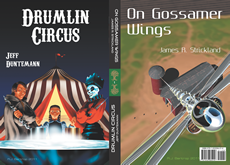
  • Amazon is setting up a new markeplace for short fiction, with a twist: It offers to share revenues on fan fiction with the authors of the original items. It’s unclear how many authors will accept that, but I would, like a shot. (I guess all I’d need are some fans.) In truth, Jim Strickland and I talked in detail some years back about opening up the Drumlins World to all authors who’d care to tell a story there, without even asking for money.
  • Clinical depression may be linked to sleep cycles, which appear to have a genetic basis. How to fix this is unclear, but I’ll testify that depression in the wake of losing Coriolis laid waste to my sleep habits for a couple of years. (Thanks to Jonathan O’Neal for the link.)
  • The Man Who Ploughed the Sea may soon be mining it…for uranium. I’d cut to the chase and just mine it for gold, so I can buy more ytterbium for my Hilbert Drive. Alas, there’s less gold in the oceans than we thought (1 part per trillion) and not much more ytterbium (1.5 parts per trillion) so maybe I should just extract the uranium (3 parts per billion) and make yellow pigments to sell on Etsy.
  • I’m not sure I buy this, but it’s an interesting speculation: That the Younger Dryas cold snap was triggered by a smallish asteroid that crashed…in Lake Michigan. Click through for the maps if nothing else. My favorite Great Lake is deeper and more complex than I thought.
  • Save the apostrophe’s! (From a fate worse than dearth…)
  • And save us, furthermore, from new Microsoft technology that counts people in the room watching your TV. Because having more than one person watching a TV show or movie rental is…is…stealing!
  • 3-D printing is still in the stone age (and the Old Stone Age at that) but if we don’t allow berserk patent law to strangle the kid in its crib, wonderful things will happen once 3-D printers are no longer CNC glue guns. (Thanks to Pete Albrecht for the link.)
  • I’m starting to think that 3-D printers like that will soon make one-off repro of small plastic parts like the ones at the center of kites practical. I guess the challenge is somehow getting the precise shape of the part into a file. If I weren’t trying so hard to be a novelist I would probably have a 3-D printer already. For the moment I’m glad I didn’t jump as soon as I otherwise might have.
  • Speaking of CNC…and guns: Plastic guns are dumb, dangerous, ineffective, and basically a stunt that seems designed (probably in Autocad) to make politicians say stupid things and make enemies. The real issue is cheap, portable CNC machines capable of cutting metal. That horse is out of the barn and beyond the horizon.

Odd Lots

Odd Lots