- The United States has overtaken Germany as the world’s lead producer of wind energy, measured in total kilowatts. Way to go–keeping in mind that Germany still beats us all hollow with kilowatts per capita. I’m a big believer in NWS, in that order, and part of the reason N comes before W is that over the past few years, when Carol and I have passed giant wind turbines along I-80 on our way to and from Chicago, they were only turning about a third of the time. Wind energy is great, but it does not stand alone.
- Small children should be allowed to get dirty as a way of building their immune systems. I was digging in the back yard since before I can remember, and never had much trouble with allergies. There may be a downside to our dirt- and germ-averse culture that has nothing to do with the risk of antibiotic-resistant pathogens. (With Gretchen’s approval, I think I’m going to buy our nieces a couple of garden trowels next Christmas…)
- Few people today remember that Apple Computer was once a Pascal shop, and had a promo poster in the late 70s incorporating a classic “railroad” diagram of Pascal language syntax. Yes, the 70s really did look like that. (At least it wasn’t all done in Harvest Gold.) Thanks to Paul Santa-Maria for the link. Paul created his own version of the poster in black and white, which I hope he makes available at some point. The Waite Group sold (or gave away; not sure if it was a boom promo) a similar card in the same era, but it’s long since vanished from my collection.
- Has anyone here ever read any of the Very Short Introduction books from Oxford University Press? Are they useful? I just ordered several, and I’m curious as to the quality of the series. I’ll report here once the books show up and I’ve had a chance to read them. There are many subjects I’m interested in sufficiently to read 150 pages on, but not 600 pages.
- A German publisher wrote an article claiming that cheaper ebooks will put them out of business. (The article is in German; take what you can from the English summary or if you know the language, click through to the original.) The gist is that there are special costs associated with e-publishing that more than balance the special costs associated with print publishing. My take: If true, it’s only until we get up to speed. (I also think it may be true that many publishers don’t really understand all the forces that bear on how they make their money. Many things lead up to the cash-register’s beep, not all of them obvious.
- I’m a lot less sanguine about the OLPC than I used to be, but the recent unveiling of future designs intrigues me: The next-gen OLPC will have two displays, and can be held and read portrait-style, like a book. When a keyboard is needed, rotate the device 90, and one of the two displays becomes a keyboard. Very cool, and something like that should be sold worldwide by every electronics retailer. (Their peculiar distribution mechanism will eventually be the end of them.)
Odd Lots
Cleaning Up 21-Year-Old Writing
Context changes are expensive, whether you’re a writer or an operating system. That’s why I like long, uninterrupted days to write. Writing in small chunks on large projects never worked well for me; I’d rather pull three ten-hour days than find thirty disjointed hours in the course of a week and waste half of each of them trying to recover my train of thought.
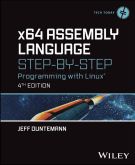
So it’s been with the fourth edition of Assembly Language Step By Step. I’ve spent most of the last four days blasting away at it, and if I haven’t returned to the Carb Wars here, that’s the reason. All in good time.
This is a big project, probably the biggest I’ve attempted since Drive-by Wi-Fi Guide, and it’s likely to be eating my life until June. There’s a great deal of new material to be written, and a lot of concepts to be covered that just weren’t issues under DOS. For example, when you work at the assembly level under Linux, endianness comes into play and needs to be explained, even though 85% of the world’s desktop hardware is little-endian.
That’s actually been fun; as I’ve said many times, the very best way to make sure you understand something is to explain it to somebody else. What’s been humbling is running into writing bad enough to make me wince. Every so often, I have to push back in my chair, heave a deep sigh, and ask myself the purely rhetorical question: “Geez. Did I write that?” (I did. 21 years ago. Practice helps…)
No problem; this is what editors do, though I am very glad that we’re not using typewriters anymore. And unlike certain other projects I’ve worked on, the author in this case takes criticism well.
Odd Lots
- In one of my rambles around the Web looking for interestering perspectives on education, I ran across this very insightful (if possibly misnamed) blog post. My take: We are teaching an entire generation that their own blathery opinions are unassailable. Be Afraid. Be Very Afraid.
- From Frank Glover comes a link to recent research suggesting that too much artificial light at night correlates with higher risk of breast and prostate cancer. More research is needed, but if the answer is to go to bed early and sleep in a dark room, Carol and I have it covered.
- Rocky Jones’s Silvercup Rocket is well along on its restoration, and this page has both period and recent photos, as well as the best history of the Rocky Jones TV show that I’ve seen anywhere. (Ok, I’m biased–two of the photos are mine!)
- Many people who have read my Hi-Flier Kites article have asked me what sort of paper was used to make the dime-store paper kites of the 1960s. I’ve asked around and tried any number of papers, but now I think I’ve come fairly close with a type of paper made in Germany and called–sunuvugun–“kite paper.” For some reason it’s popular with the Waldorf school crowd, though not for making kites. You can get it in 19 1/2″ X 27 1/2″ sheets, albeit only in 100-sheet lots, from A Toy Garden. That’s a little smaller than the Hi-Flier 30″ kite, but it’ll work. As spring gets a little closer, I’ll make one and report back here.
- What the Waldorf schools do with kite paper is in fact impressive; this Flickr album scrolls through a good many photos of Waldorf traditional origami stars made with kite paper.
- From Bill Higgins comes a link to Low End Mac, a site devoted to older Mac machines, especially pre-OS/X.
- Pete Albrecht sends hope that Maurice Lenell may not be out of business, though their suburban Chicago plant will be razed to make way for yet another damned shopping mall.
- I have several reasons for opposing contact team sports in schools (as opposed to careful weight training and aerobics). This is another one.
- The three things I was afraid of as a six-year-old were robots, mummies, and volcanoes. I’ve made my peace with robots and mummies, but volcanoes still give me the willies, and our Alaskan citizens are watching another one nervously.
- In case I don’t remember to mention it tomorrow or Sunday, Puppy Bowl V on Animal Planet kicks off at 3 PM EST Sunday, 2 PM central, 1 PM Mountain. When you get good and tired of watching spoiled-brat millionaires get the crap beat out of them by other spoiled-brat millionaires, the puppies may be a blessed relief. We never miss it anymore.
Cruzer Micro Skin
 I’ve been using removable storage for a long time, and five years ago I moved from Iomega ZIP 250 MB disk cartridges to Cruzer Mini 256 MB thumb drives. I chose the Cruzer Mini line for a slightly weird reason: They fit comfortably in the pencil groove of my Northgate keyboards. Not all thumb drives do, and I’ve found it very convenient to have all of my active removable storage devices sitting there right where I can grab them.
Five years on, and not a single one of the Cruzer Minis has ever given me a lick of trouble, though I destroyed one once by working too fast. SanDisk no longer makes Cruzer Minis, and the ones I have are fairly small, some only 128 MB. This makes for lots of thumb drives lying around; for example, I had to put each one of the five Carl & Jerry books on its own Cruzer. It was time to scout out something else that would fit in my pencil groove, and with considerable delight I discovered the SanDisk Cruzer Micro Skin. They’re shorter than the Cruzer Minis, and a little narrower. No problems keeping them in the groove.
 I bought them for their size, and didn’t understand the line’s gimmick until I had one in my hand: The Cruzer Skins are inside a flexible, tough plastic sleeve with an end cap of the same material. The skin and cap fit the metal body of the device very closely, enough so that if you dropped one in the sink the works wouldn’t even get wet if you pulled it out within a few seconds. (I’m guessing that they float, in fact, though I’ll let somebody else do the experiment.) You can remove the sleeve and apply a Brother-style label to the drive body, and then wiggle the sleeve back over it. This protects the label, especially if you drop it in your pocket with your car keys, as I’ve done a time or two. (Brother labels mar very easily.)
They’re yawning huge compared to my five-year-old Cruzer Minis. I recently bought several 4 GB units for $12 each, and an 8 GB (for $20!) to hold all five Carl & Jerry books, including high-res raw scans of all the 300+ illustrations. I’ve been able to consolidate several ongoing book projects from separate 256 MB cartridges onto a single 4 GB unit. The caps don’t fall off; you have to yank them. They don’t come with lanyards, but you know, I have yet to see anybody keep a thumb drive on a lanyard. (A lanyard loop is there at the end of the unit if you want to make your own, like we did at summer camp in 1965.) We’ll see how they hold up over time, but right now, I say highly recommended.
An Outrageous Experiment, Part 3
(Continued from yesterday’s entry; the series began on 1/25/2009.)
Recapping: After losing five pounds by not eating Cheerios every morning for breakfast, I tried replacing the calories with protein and fat calories to see if those five pounds would return. I deliberately ate more to see if I could accelerate the process, but what I ate more of was limited to eggs, meat, and cheese. It backfired, and I lost two more pounds in ten days.
When I told Carol on the phone that I was down to 148, she told me to knock it off and go back to my Cheerios. So on the 11th day I called a halt to the experiment. Most of the meat and cheese was gone by then, and I’d had to get another dozen eggs and more yogurt. But I started cooking carbs again: primarily rice, and some conventional pasta. Since I was still batching it, I did weird things like having a bowl of Cheerios as my carb course at supper, next to a yummy plate full of formerly frozen shrimp and a side of creamy cole slaw.
That was only about a week ago, and as of this morning, stark naked and dripping wet, I weighed 151. It only took a week of slamming carbs again to gain three pounds. Carol got home last night. I’m a much happier guy, and will be returning to eating like a real human being. The only long-term change is that I’m having an egg for breakfast instead of Cheerios. Keeping my edge all morning has been delicious.
This experience didn’t surprise me too much. I’ve run into the effect before, although I never had the opportunity to do anything quite this gonzo to test it. Back when I was in college, I weighed about 125 pounds and was mostly skin and bones. Over the years I gradually put on weight, as people do. By the time I was 45 I weighed 170, and Carol told me that I was starting to look several months’ pregnant. Then something interesting happened: I threw a bad kidney stone, which forced me to stop drinking three or four Snapple bottled sweetened iced teas every day. I stopped drinking anything but water while the stone was being analyzed, and I lost several pounds almost immediately. This intrigued me, and when I started drinking sodas again, I drank only diet. The weight stayed off, and started drifting slowly downward. (None of this is news to my long-time readers.)
The next event happened a year or so later when I stopped eating rice bowls down at the corner for lunch every day. I switched to sandwiches or pizza (and no longer ate a softball-sized wad of white rice on a daily basis) and lost another slug of weight very quickly. My weight since then has wandered between 155 and 160. Once I started weight training in 2004, it drifted down to 155 and has been remarkably consistent since then…until last summer, when I stopped eating Cheerios for breakfast.
And now the experiment is over. So…what did I learn? Mostly, this: The conventional wisdom that Fat Bad, Carbs Good, is not unassailable, and the whole business is hugely more complex than most people think. It’s not an issue of thermodynamics, as far too many people believe. We do not “burn” calories in the same sense that we burn leaves out in the alley. Metabolism is an enormously complex biological mechanism, one that we still don’t understand as well as we should–or even as well as we think we do.
I was certainly struck by this: Changes happened a lot more quickly than our conventional understanding of calories and weight gain/loss would explain. If it were simply a matter of wadding on weight when we eat more than we burn, or losing weight when we burn more than we eat, it should take a lot longer. A pound, after all, represents 3,500 calories, and my intake deltas were nowhere near large enough to account for the changes I saw as quickly as I saw them, both on the downswing and on the upswing. I’m aware from my reading of the tendency to shed water on low-carb diets. I took care to drink more water than I generally do, and did not notice myself losing any more than usual. Something else must be going on, and while I’m still researching it, I think the answers may lie in a book I read almost by accident a month ago, a book that triggered this whole crazy idea.
(To be continued as soon as I can manage it.)
An Outrageous Experiment, Part 2
Recapping Part 1 of this series, yesterday: Back in the summer of 2008 I stopped eating a bowl of Cheerios every morning, to see if I could avoid the “fuzzy” feeling that commenced half an hour after breakfast and lingered for an hour and sometimes longer. Within three weeks, I had lost five pounds. I also lost the fuzzy feeling.
I found this intriguing, since it meshed with a few other things that had happened years earlier when my diet changed abruptly for some reason. (I’ll save the deep history for Part 3.) I read a few books, some of which I will review in the near future. There is a very old and very contrarian position in the health field to the effect that if you eat more carbs, you gain weight, and if you eat less carbs, you lose weight. This seemed to be the case with me, though all the data that I could find had been gathered in the treatment of overweight people. I was not and had never been significantly overweight. (I have never weighed more than 170.) It was a head-scratcher, and the question would have remained purely academic, except that we have known since last fall that Carol was going to be in Chicago for two or three weeks in January. I was going to be cooking for myself and eating alone all that time.
Hmmm.
I had lost weight by dropping one daily bowl of Cheerios from my diet. The hypothesis was obvious: Suppose I replaced the calories represented by a bowl of Cheerios with an equivalent number of calories, but from protein and fat. Would I gain the weight back?
I went shopping on the way home from dropping Carol off at the Denver airport. I bought more almonds. I bought a dozen extra-large eggs. I bought lots of cold meat, cube steaks, bratwurst, and frozen shrimp. And cheese, wow: sliced Havarti, a wedge of Romano, grated Parmesan, and a package of those appallingly delicious artificial Swiss-flavored cheese slice substitutes. I bought a big container of creamy cole slaw. I bought several cups of Greek-style high-fat yogurt. I bought a pint of table cream for my coffee. As a coup de gras (heh) I bought half a pound of bacon.
Slightly daunted by all that unapologetic fat, I drew up my courage, and I ate.
Now, a largish bowl of Cheerios with a half cup of 2% milk represents about 150 calories. An extra-large egg is 85 calories; fried in butter brings it up to a little over 90. A tablespoon of cream for my cafe au lait is another 29 calories. 3 oz of Greek-style yogurt gave me 115 calories, over about 85 for the light yogurt I had been eating before, for a calorie delta of 30. It was close to a wash; 150 before; 150 after.
That was breakfast. For lunch I had cold meat and cheese and occasionally an egg, and every couple of days, two strips of bacon. I did a lot of interesting things with the raw materials: I made a handcrafted Bacon Cheese Egg McMuffin. I made a new sort of ham and cheese sandwich, by sandwiching two slices of ham between two slices of Havarti cheese. I did not cut out carbs completely–I like them too much–but one Bays english muffin was it for lunch. For dinner I typically had a cube steak fried in walnut oil, another 3 oz of Greek-style yogurt with blueberries, some Romano cheese, and maybe a few Wheat Thins.
I made buffalo spaghetti sauce, enough for several nights, and served it over whole-wheat capellini. When I didn’t feel like cooking, I just thawed some shrimp and went nuts.
What I did not eat was sugar or refined carbs. I read labels like I generally read only SF, history, and theology, taking notes. There’s at least a smidge of sugar in almost everything, but if it was high-fructose corn syrup, I put it back on the shelf. I had no desserts, and I left the last two boxes of Christmas cookies in the pantry, unopened. I did not eat any potato chips. I did not eat any rice. I did not eat any white pasta. The only bread I ate was from a package of cracked-wheat bratwurst rolls. When I snacked at all, it was on dry roasted almonds.
I did not scrimp. I ate as much as I wanted; in fact, to accelerate the process (given that I only had a little over two weeks to regain my five pounds) I ate as much as I could stand. I probably ate about 25% less in terms of carbs than I generally do, but I ate a lot more protein and fat. I did not change my exercise regimen.
After ten days of this, I tallied the results: I felt great. I was never hungry.
And I had lost two more pounds. Oh, dear. If I wasn’t careful, I would be burned at the steak for heresy.
(To be continued tomorrow.)
An Outrageous Experiment, Part 1
Carol’s coming home tomorrow, finally, after two and a half weeks in Chicago helping her mom. This was nothing sudden, and I had had a crazy idea in reserve, at which I hinted in my 2009 plan file, which I posted on New Year’s Eve. Some of you mailed me, puzzled, about this item:
- Eat Less Sugar. Eat More Meat. Lose More Weight. (More on this shortly.)
One woman, whom I’ve known for a number of years, scolded me: “You’re crazy! You don’t need to lose any weight!”
That’s true. I do not need to lose any weight. However, when I do lose weight, I damned well want to know why.
Ok. There is some backstory that I haven’t given you yet. This may take me a couple of days to get through, but I think it’s important. So let’s get underway.
For a number of years now, I’ve weighed 155, and I consider that my ideal weight. I’m 5’9″ tall and lightly built. My blood chemistry is good and I have no major health problems. I walk regularly, and do weight training once a week. This has been my regimen (such that it is) since we moved to Colorado in 2003.
My customary breakfast all this time has been a bowl of Cheerios in 2% milk, and half of a 6 oz cup of fat-free, low-sugar “light” yogurt, mixed with organic blueberries. (The organic is incidental. I don’t care how they were grown; they just taste better.) I’m used to a certain period of muzziness that follows breakfast, and assumed it was just my blood rushing to my stomach. Morning is my productive time for writing, and my post-breakfast fuzzies slowed me down. I resent that, but I considered it inevitable until I read something online about the phenomenon. Eating carbs for breakfast will do that to you. Hmmm. So some months back, I just stopped eating Cheerios in the morning, hoping that I would be mentally sharper until lunch. And wham! It worked. I got a little hungry at 10:30 AM, but I did not lose my edge after breakfast. I was writing more, and better, from 7 AM all the way until noon. So I bought dry-roasted almonds to snack on mid-morning, and kept to the regimen.
Well, something else happened: In about three weeks, I lost five pounds.
I did not think that had five pounds to lose, but I shed another inch of waistline, and had to punch another hole in a couple of my belts. Carol told me she wanted me back at 155. However, I am unwilling to lose my morning edge. It was a bit of a conundrum, but I knew that, come January, I would be batching it again for almost three weeks, eating alone. So a totally outrageous experiment suggested itself…
More tomorrow.
Odd Lots
- From the Words I Didn’t Know Until Yesterday Department: The Ranters were a wild-eyed seventeenth-century religious fringe group, who were perhaps most notable for incorporating nudity into their worship. (Whatever else they might have been, they sure weren’t Catholic.)
- From ditto: In modern urban slang, a “butterface” is a homely girl with a great body, as in, “Every part of her was perfect but her face.”
- And elsewhere on the words front, even William Safire, from whom the scariest words recoil in terror, was unable to determine the origin of that very up-to-date and with-it 90s expression, “it is what it is.” Wikipedia suggests that it was coined by John Locke, circa 1680. So much for being up-to-date.
- From the Microprocessors I Never Heard of Until Yesterday Department: There was an 80376. It was an embedded variant of the 80386 that did not support real mode, but only protected mode, and was produced from 1989 until 1994.
- Much angst is flowing about the blogosphere concerning the Conficker worm, but this is the first page about it that I respect at all. I’ve long since disabled Autorun, and in fact, “autorunning” things is one of the worst ideas in computing since DLLs. Make sure you’ve got that November patch they speak of
- And while we’re talking worms, here’s some news on a piece of malware that comes in on pirated Mac software, evidently with the intent of creating an all-Mac botnet. The dangerous thing here is that a lot of nontechnical people seem to believe that the Mac is immune to malware somehow. OS/X is certainly tougher to infect than Windows, but it can be done, especially when people are sure that it can’t.
- Carol and I launch our Internet-facing apps under a clever mini-utility called DropMyRights, which basically runs such apps with limited user account privileges instead of admin privileges, even if you’re running as admin. Doesn’t work on Win2K, so I have not used it myself until fairly recently, but I installed it on Carol’s XP box probably two years ago, and she has used it daily without any issues since then.
- I have tried and failed to make a Linux utility called KGrubeditor work under my instance of Ubuntu Intrepid. When I attempt to launch it, an item appears in the taskbar for about fifteen seconds before vanishing, and nothing else happens. At least one another person I know has made it work correctly, but I just don’t see what I’m doing wrong. I installed it through Ubuntu’s apt-get shell and saw no errors during the process. If any of you are users and are aware of any trickiness in the utility, I’d love to hear more.
An Embarrassment of Riches
I’m hard at the rewrite of my assembly book, and in going over the chapters closely I realize that I have a lot to do, significantly more than I thought going in. Parts of this book date back to 1988, and the work as a whole was not organized back then the way I would organize it today. So I’m doing more to it than I thought I would, and although that will make for a better book, it’s also eating more of my time. (Expect a few fewer Contra posts over coming months, and perhaps shorter ones.)
I’ve also been using Ubuntu a lot more than I ordinarily do, since the rewrite finally exiles DOS from the discussion except as a historical footnote. I find myself surfacing for a breath now and then, and realizing, I haven’t been in Windows for almost six hours! Crossover Linux has made this possible, since I have Office 2000 and Visio 2000 installed under Ubuntu now, and don’t have to be bouncing between two machines or two partitions to write code and then write about the code.
In the process, I’ve been using Ubuntu more and at more depth than I ever have before. One thing I’m beginning to appreciate is just how easy it is to get software and keep it current, and just how good the software that’s out there really is. That’s changed in ten years. Back in 1999, in order to run NASM under Red Hat I had to download a tar file full of source, unzip it somewhere, and then recompile the whole damned thing. I had no intention of changing the assembler and would have been more than happy with binaries.
It’s different now. With Ubuntu (and I assume most modern distros) you go up to a software repository through a package manager utility, cruise an enormous list of free packages that are available, and check off the stuff you want. Then you click Apply and stand back: The package manager downloads the package and anything that the package depends on, checking first to see if you’ve got any of the prerequisites installed already. Only the stuff you need comes down, and when the smoke clears you have new apps on your app menu, or new libraries tucked in where they’re supposed to go. (Or both.) Wow.
Ubuntu periodically checks to see if updates are available for anything you have installed, and a couple of clicks brings them down and installs them.
I’m sure that not everything that exists is up there, but what’s up there is extremely impressive. If I allowed myself to get distracted, I’d be playing with Gambas and Boa Constructor rather than writing. The Nemiver debugger front end didn’t exist ten years ago, and it will star in the new edition of Assembly Language Step By Step. Most of all, I want to play with Lazarus (the GUI IDE for Free Pascal) and have to slap my hands periodically, or I’d get nothing else done.
The primary barrier to the adoption of the Linux Desktop is unlearning old habits, followed as a distant second by conversion of existing Windows-centric files. There may have been a third barrier somewhere, but I’ve forgotten what it was. There is certainly no shortage of software to get the jobs done.
Michael Arrington’s Crunchpad Gets Real

I read about Michael Arrington’s concept for a low-cost Web tablet back last summer, and was intrigued. Web is useful, but the resolution on this gadget (1024 X 768) would make it ideal for reading PDF ebooks, particularly textbooks and scientific/technical nonfiction with lots of illustrations. Not every type of book can be read on a cellphone, and the sorts of ebooks that require larger displays are getting precious little respect in the gadget world.
But I learned today that the Crunchpad (as the TechCrunch crowd is now informally calling it) has reached the prototype stage. They sound like they’re aimed in the right direction, but remarkably, I see no discussion at all of the device’s usefulness as an ebook reader. (I added a comment to the entry to this effect.) It looks like it can work in portrait mode, and has an accelerometer to sense when it’s been “spun.” Ebook reader utilities are not cycle-hogs, and would add little to the burden on the CPU or SSD storage.
I’m a little queasy about on-screen touch keyboards; I would use the USB port for a “real” keyboard when one is needed. I would also add an externally-accessible SDHC card slot for loading content without waiting for the inevitably slow Wi-Fi link. But beyond that, if the thing can render PDF and CHM ebooks well, I’d buy one like a shot, and pay $300 for it without regret. This is one to keep an eye on.