- When I was a (much) younger man, I wanted a ’59 Chevy. Having seen this, I guess it’s just as well that I didn’t get one. (Thanks to Todd Johnson for the link.)
- Micropayments may not allow small creators (like me) to make money. They may not allow big huge monstrous media outlets make money either. They may not allow anybody to make much money at all. Bummer. I did have hopes…
- Oh, and the Long Tail may not be as long as we thought. Double bummer.
- Has anyone reading this ever played with the Alice language/GUI system for teaching programming? (Alas, no Linux version. Triple bummer. ) Any opinions? I have nieces who are growing up so fast…
- From Pete Albrecht comes word that Chicago’s Kiddieland is closing. My father took me there in 1955 while my mom was working. We had pizza and I went on all kinds of rides. That night I puked my guts out, and my mom thought I was coming down with polio. (They don’t call it the Scrambler for nothing.)
- Here’s another thing I thought I might have imagined: World Of Giants , a b/w TV show from 1959 that went into syndication and used to run just before the 4:00 PM monster movie on Channel 7 in Chicago, circa 1965. At least two people must have watched this, and the other one must have been Irwin Allen. (And the guy who created the show must have read Richard Matheson.)
- Although the sun’s face has been devoid of sunspots for 18 days running (and 212 days this year) there is a major sunspot on the other side of the Sun, which may rotate into view sometime tonight. I boggle a little to think that we can image a sunspot on the far side of the Sun. How this is done is interesting, and has little or nothing to do with light. Flying cars or no, we are living in the future!
- From the Not Too Clear on the Concept Dept: I just nuked a spam message pitching “herbal testosterone.” Right.
Odd Lots
Rant: The Case for Killing Newsweek
I am aghast. Yesterday afternoon I was at Barnes & Noble, and at the checkout stand I saw what must be the most appalling magazine cover ever to appear on a mainstream US magazine. It wasn’t on Hustler or Soldier of Fortune. It was on the latest Newsweek.
I don’t dabble in politics much here, and I haven’t had much to say about the health care debate that others haven’t said many times, and probably better than I would. But I want to make my position clear: If health insurance reform collapses, it won’t be due to any vast, right-wing conspiracy, not with ol’ Newsweek leading the charge. Salon ran this piece back in August. Same gist. Similar stupid title.
There is a meme abroad, and while I don’t know if it has a name, I call it “Lammism.” The gist of the meme is that the elderly are an expensive extravagance, and money spent on them would be far better spent on younger people. This is not a new thing. I gave the meme its name in honor of former Democratic Colorado governor Richard Lamm, who famously said in 1984 that the ill elderly “have a duty to die…and let our kids build a reasonable life.” I guess it’s us or them, Dick, right?
It doesn’t matter that the Newsweek article is far more nuanced than its moronic title suggests. It doesn’t matter if “society needs to have this conversation with itself.” All that matters is that we are scaring the living crap out of our elderly, and if the elderly don’t sign on to health insurance reform, we don’t have a bill. Furthermore, if we dismiss their fears out of hand and pass a bill anyway, there could well be another party in control of Congress after the next election.
The elderly are not simply being paranoid. They know that Medicare is a very sweet deal, especially compared to the insurance situation of a great many younger people. They know that the government spends a huge amount of money on their care and sustenance. Given articles like those I mention above, they can be forgiven for fearing that when the government goes looking for health care cost savings and “waste,” that they will be first in line for close examination. They know that without fairly constant and often expensive medical intervention (paid for through Medicare) many of them would be disabled, dependent and suffering, and a great many more would simply be dead. Small wonder that they’re willing to believe the fearmongering lies of death panels that do not exist.
(The elderly might wave the magazine and reply: Yet.)
In Newsweek, we have a classic example of a print publication floundering to survive, and willing to risk it all on a misleading and alarmist cover line that bears little connection to the cover story. The plug on the cover of the latest issue isn’t connected to Granny. It’s connected to Newsweek.
Please join me while I pull it.
Google Feeds the Bookstore Bookburners
This morning’s Wired blog announced the reality of something I’ve been watching for and expecting for a long, long time: Bookstores have begun installing a significant and vapor-free mechanism (starring the long-but-no-longer vaporous Espresso Book Machine) to print books on demand. The books in question (for the time being) are out-of-copyright works scanned by Google into its Google Books system.
This is a fine thing, even though it probably spells the end of the road for book preservation efforts like my own re-creation of The New Reformation and The Pope and the Council the hard way: Scanning and OCR extraction of text followed by conventional layout. Google books are facsimile editions, complete with library stamps, marginal notations, flaws in hundred-and fifty-year-old paper, and the occasional squashed silverfish. I’d prefer new editions, but I’ll settle for facsimiles, and certain scholars would prefer to see a facsimile to make sure that nothing of the original author’s work has been left out or changed.
So no carping here, except to demand of Google: Keep going. You’ve got the means and the manpower, so expand the system to allow the ordering of any book–not simply the public domain ancients–for which a printable PDF image can be mounted on one of your servers. If this happens, there would be three big benefits:
- Bookstores would have a new reason for people to come in the door: To browse the bookburner kiosks for interesting stuff (old and new both) that just isn’t popular enough to stock on physical shelves. We need bookstores, and this is the best recent innovation to surface that may help us keep them alive.
- New (not ancient) titles without sufficient market to warrant physical book distribution (like my SF) would have a chance to get some bookstore presence, especially if hands-on bookburner systems create new sizzle for B&M bookstores.
- Publishers who won’t release electronic editions of low-volume books for fear of file sharing may be willing to trust a PDF to Google to sell in print form.
It’s still unclear whether anything covered by the Google Books settlement with the Authors’ Guild will become available through the system anytime soon, but in truth, if it doesn’t, I’m not sure authors of our-of-print works will see any financial benefit from the settlement. Ebooks remain a geek enthusiasm. The volume is still in paper copies, and systems like this remove the wasteful overprinting and returns privileges that make conventional book publishing such a financially risky proposition.
Much to love here, and no evil that I can see. Let’s watch, and hope for the best.
Review: Banting’s A Letter On Corpulence
“Do you like Banting?”
“I don’t know. I’ve never banted.”
Unlike the oft-quoted line about our man Rudyard, this isn’t really a joke. I have banted, I’m still banting, and I do like it. However, I didn’t know it had a name until a couple of months ago, when I read William Banting’s A Letter on Corpulence, Addressed to the Public, and began to research the booklet’s background.
Dr. Atkins, shove over. Mr. Banting was here first.
In London in the early 1860s, an overweight undertaker was talking to doctors about his obesity. He had watched himself put on weight over the previous thirty years until, at age 65, he weighed 202 pounds, and stood only five foot five inches. He was having trouble getting up and down stairs and doing simple things like tying his shoes. He was annoyed. He had tried everything local physicians suggested, including buying a boat to row on the Thames and walking briskly every day, and taking various medicines that we would today consider worthless nostrums. Nothing worked. Then he came upon Dr. William Harvey, who made a suggestion that seemed too simple to be useful: give up beer, sugar, and “farinaceous” (starchy) foods.
Banting did so, beginning in September, 1862. And fortunately for us, he was of a scientific turn of mind, and wrote down both what he ate daily, and what he weighed every three weeks, for the following year. And in that year he dropped 46 pounds, eating mostly meat and non-starchy vegetables, plus a piece of dry toast or rusk (zweiback) for tea. And he lost the weight even eating four meals a day and drinking an amount of alcohol that would leave me unconscious on the floor.
After losing about a pound a week for that year, he felt better than he had in two decades, could navigate stairs without hyperventilating, and do whatever he needed to do in terms of ordinary activities. He felt that his eyesight and hearing had improved. He was, in short, a happy guy. And having achieved his goal of losing significant weight, he did a remarkable thing: He wrote up his experience as a pamphlet addressed to the public (what today we’d call an “open letter”), printed it at his own expense, and then handed it out to anyone who was interested.
It was popular enough to warrant two sizeable addenda across several printings, but even with those included the whole thing is only 25 pages long, and available as a free facsimile scan from Google Books. You can read it in fifteen minutes, though people who are not used to Victorian diction may find the text a bit of a slog. The pamphlet became popular and was much discussed in the London area at that time, enough so that “to bant” became a new verb, and meant to adopt Banting’s diet as a means of losing weight.
The Google Books edition include two longish contemporary commentaries, one from Blackwood’s Magazine, the other from Harper’s Weekly. Both are snarky wanders intent on demeaning Banting’s experience, and neither confronts the truth face-on: Banting did an experiment, recorded his results, and made them public without any attempt to profit from them. (In fact, he gave 50 pounds to a local charity hospital in thanks.) Instead, Blackwood’s tries to convince its readers that Banting was not all that fat to begin with, and besides, fat people tend to be affable and law-abiding citizens, so it’s good to be fat! There’s not a lot to be taken away from the two reviews except the sense that things don’t change much; many of the same groundless arguments are thrown today at low-carb diets, simply because “everybody knows” that eating fat makes you fat and the best course is a “balanced diet,” which, as always, means “a diet that I favor.”
William Banting is important because his experience predates the modern carb wars by close to a century. He wasn’t trying to debunk Ancel Keys’ fraudulent research or establish a diet-book empire. He was just writing down something that had worked for him, and he cautiously suggested that, under advice from their own physicians, overweight people might try the same method. It may not work for everyone, but (in contradiction to the ridiculous critique in Blackwood’s) that does not mean it will not work for anyone.
Highly recommended, especially since you can read it over your eggs and bacon at tomorrow’s breakfast. (I read it on my X41.)
Carson Cuts the Cannon
We’ve lived in this house since March, 2004, and one night in July 2004 we were startled to hear someone playing Taps at 10:00 PM. The next morning, Mr. Insomnia here heard First Call at 5:55, and then Reveille at 6:00 AM sharp. During the playing of Reveille, a cannon sounded.
This was almost unbelievably cool, and whether our hearing it is an accident of geography is hard to tell. Our house is about one and a half linear miles from the main gate to Fort Carson, one of the largest Army bases in the country, home to about 10,000 military personnel, two handsome maroon-and-yellow Diesel locomotives, a highly regarded golf course, and probably a lot of other things that aren’t talked about in the daily paper. We are up the slopes of Cheyenne Mountain from Fort Carson, and it may be that sound just travels well from the main complex near Gate 1 to our location. (We can look down on the Fort from our back decks, and watch their impressive fireworks displays on the Fourth of July.) There are people living a whole lot closer to Gate 1 than we are, and I’ve often wondered how loud the bugle calls are right across Highway 115 from the Fort. It would be an easy experiment to make–just run down the hill to Danceglen Drive a little before 5–but I confess I’ve never had the presence of mind to try it.
We’ve been hearing the amplified bugle calls and the accompanying cannon ever since then. About a year ago, First Call was pushed up to 6:25, and the cannon sounded with Reveille at 6:30. Alas, some time last week, the cannon ceased to sound, both at 6:30 and at 5:00 PM, after Retreat and during To the Colors. There’s a bugle call at noon, but it isn’t Mess Call and I don’t recognize it from my Boy Scout days. Futhermore, it has never been accompanied by a cannon, so I tend to hear it less often, especially if I’m in the middle of something intense at noon.
I miss the cannon. Carol and I generally get up at 6:30, and the cannon was a convenient goad to stop cuddling and get on with the day’s imperatives. I still listen for Taps at 10 PM, often going out on the back deck to lean on the railing in the dark, and it’s a very spooky thing sometimes, especially when the just-past-full Moon is rising above the Colorado plains to the east. Doubtless someone with an exaggerated sense of personal importance complained, forgetting or not caring that Fort Carson was here decades before anybody lived anywhere near it. I hope they bring it back someday. It’s a useful reminder that somebody’s keeping an eye on things in our difficult world, and that matters a great deal to me.
Covington on Time Management
I’m short on time today (and will be for probably the next week or two) so it’s appropriate to point you to Dr. Michael Covington’s post on how he teaches time management to graduate students. Much gold to be dug here, and most of what he says applies to writing a book as well as writing a doctorial thesis. Never let a day go by without progress is one of the toughest goals to meet, but also one of the most important. Life intrudes, especially for freelance writers who have houses, spouses, kids, dogs, and day jobs. Still, you should try. Take too many “days off” and you will waste time recovering context when you return to the task. This happened to me several times while I was writing Assembly Language Step By Step, Third Edition, and the deeper the subject, the more subtle the context, and therefore the easier it is to lose. (We had several family crises in Chicago while the writing was underway, and such things are impossible to avoid. I got better at context recovery through practice, but it’s still time lost that you’ll never have again.)
Another thing that Michael alludes to is that you can’t split up a difficult writing task into widely-scattered one-hour bursts. One hour is not like every other hour, except for well-defined rotework. More to the point, there is something I call “flow,” which means that I’ve goosed my subconscious into a state of high activity, and it’s spitting words up from the depths almost exactly as quickly as I can write them down. This is more common in fiction than nonfiction, but I did find that there were moments when I was blasting away at 100 wpm+ on things like passing parameters to libc functions, because I knew the material well and had had a good night’s sleep. But once you’re in flow, it’s best to keep going until it stops, or until you run out of evening, energy, or both. If you think recovering context is hard, just try to get back into flow after any interruption more involving than a bathroom break.
And finally, the Big One, which Michael does not place in bold but which in fact should be in dayglow colors: Productive people know what not to spend time on. In other words, half the trick of time management is interruption management. When I know that a flow attack is imminent and I have a free afternoon, I turn off Skype and my cell phone, clear all the toys out of my taskbar (including email) and do absolutely nothing but make tracks on the project. Without that discipline, I would not have finished ALSBS3E; in fact, without that discipline, I’m not sure I would ever finish anything.You don’t see me post as often on Contra these days as I used to because I’m feeling better and getting more done in other areas. But that’s also the reason I gather short items into Odd Lots entries: It’s less disruptive to bookmark something and gather bookmarks into a list later on than to be constantly formatting and posting one-liners.
Assuming that you have at least basic literacy in the topic at hand, success consists of focus plus debris. Really. And so on that note, back to work.
Odd Lots
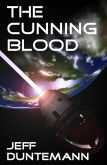
- What the Hell: Some researchers at the University of Michigan have created an 8-bit processor incorporating pneumatic gates, pointing toward a computer that doesn’t require electricity at all. Make sure you watch the videos. It’s not going to beat your local Beowulf cluster on the speed side, but if you find yourself on a planet where nanomachines eat electrical conductors (as they did in my novel The Cunning Blood) such a machine might well come in handy.
- The Make Blog aggregated probably the best writeup of a homebrew railgun that I’ve ever seen. Make sure you prowl around the site, and make double sure you see the pictures and watch the videos!
- Bill Cherepy sent me a link to a short writeup on the still-hypothetical Asus 2-screen ebook reader. You can use it as a netbook, with one screen doubling as a touch keyboard, or you can use it as a facing-pages ebook reader display. Now, displays are probably the most expensive part of devices like this, so I doubt a 2-screen model will be the low cost leader. Still, it’s an idea that’s well worth a try. (And please, guys, make the card slot XDHC compatible, ok?)
- If you ever loved whole milk and wish you could go back to it, read this. And then go back to it. No guilt. No apologies. And yes, no heart attacks.
- Back in the ’50s there was a product called Siz that was (I kid you not) foaming Napalm in a spray can. It was for starting charcoal. Lileks does a wonderful riff on it. (They had such indescribably cool toys in the ’50s.)
- On the other hand (with Lileks always there to remind us) they did some ungodly weird stuff in the ’50s too.)
- When I was a kid, Verne/Wells films were all the rage, and by far my favoriate was Journey to the Center of the Earth . Small boys aren’t equipped to appreciate Arlene Dahl, but I was quite the fan of James “Nemo” Mason, and was willing to tolerate Pat Boone even though my older cousin Diane thought he was “dreamy.” The film was dazzling in 1959, especially the “cave of crystals,” which flooded out when dreamy Pat Boone got too agressive with a geologists’ pick. Well, some years ago Mexican miners discovered a real cave of crystals 1200 feet beneath Naica, Mexico that makes those old 1959 movie sets look sick. National Geographic has more textual coverage, and it’s worth noting that the cavern is unliveable without life support suits, being at a constant 122 degrees and 90% humidity, which is worse than Houston, if that were possible.
Letting Bigfoot Go
We’ve thought about it for some months now: Our 24′ Bigfoot motorhome has been out with us exactly seven times since we bought it, all of those being quick weekend getaways that we could squeeze in between frantic trips to Chicago. We might have driven it to Chicago at least once, but neither my sister nor Carol’s sister has any place to park something that big, and we’d have to rent a car anyway for local travel.
The Chicago situation isn’t going to change radically in the near future. So, as much as we’ve enjoyed it, we’re going to have to let it go. I’ve posted a For Sale ad on the Bigfoot owners’ organization site. (Photos and floorplan there.) It was a little small for our needs (although on short trips space wasn’t a horrible problem) and when life settles down enough to consider RVing again, we’re going to look for a unit with slideouts and something approximating a real bed.
It’s a 2006, model 30MH24DB. We are the original owners, and it’s been garaged indoors at a storage place ever since we bought it, figuring that if we decided it wasn’t for us, it wouldn’t have been out in the sun in the interim. (The sun can get pretty intense at 6600 feet.) It’s only got 3,300 miles on it, and there are no scrapes or dents. There is a downloadable PDF from the manufacturer with full specs and lots of pictures, which you can get to from this page. (Find and click the button “PDF Download.”)
Again, we’ve enjoyed it a lot, but we’re paying for the loan and for indoor storage, and if we can’t take it out a full week at a time to see some of the West (instead of short weekend trips within a hundred miles of home) we’re better off putting it in other hands.
A Fine Fritter
Last night I did something I hadn’t expected to do: I signed up for Facebook. As Terry Dullmaier almost immediate wrote on my Wall: “Apparently we all end up on Facebook eventually!”
Indeed. And I guess I signed up for Facebook for the same reason I bought an XP machine: Sooner or later, I’m going to need to know something about it, so why not now? I was a little boggled at how many people I know are on there, including both of my nephews and most of my friends, some of whom go wayyyy back. (Terry and I went to Catholic grade school together. Dominus vobiscum and all that.)
So I’ve been doing a fair bit of frittering this afternoon, trying to make sense of it all as both a technology and a phenomenon. There are games like Farmville and Mafia Wars that I have no intention of playing, but which are interesting to watch. And refreshingly little politics, though I’ve already been warned that it’s out there. I’m just not looking hard enough. Thanks; I’m looking as hard as I want to.
I’m not sure what all it’s good for yet. I already have a blog in two places and plenty of Web pages, and the amount of email that shoots through here gets scary sometimes. Do I need any more social machinery? I’m not looking for a job (there’s plenty of contractor work for me if I want it) or a girlfriend (I’m very happy with the one I’ve had for forty years now) and whatever else I might need I generally find on Amazon, ABEBooks, eBay, Craigslist, or NewEgg.
It’s always good to be findable, but I think I was pretty findable before. I need to post covers of my books in an album, especially now that a new one’s in the chute. Beyond that, I stand a little puzzled before the whole thing. If you’ve got some insights as to how Facebook is best used (beyond the obvious: “sparingly”) definitely drop them in the comments.
Odd Lots
- On Monday I returned the last third-pass page proofs (of a very gnarly part of the book, the partial instruction reference) and if the publisher’s schedule is to be believed, Assembly Language Step By Step, Third Edition goes on press tomorrow. Real books should be out of the bindery and in the warehouse by September 22.
- We came within a few hours of having a sunspot-free calendar month in August, but then very late Monday night, a barely visible sunspeck showed up, ruined the run, and then immediately started to vanish. The sunspot minimum appears to be heading for a double bottom, and there are people at NASA suggesting that deeper mechanisms are changing within the sun, and we may be a long time before seeing anything like a proper sunspot peak. So much for DXCC on 10M.
- Cory Doctorow speaks up on cloud computing, the goal of which, he says, is to allow companies to make money in a mature computing market by charging you month by month for computional facilities that you already have at home. So tell me: How many people actually collaborate in the Cloud, as a percentage of people who actually compute? I think it’s in low single digits–which suggests that the Cloud as an idea is something like 95% scam.
- If you’re following Michael Arrington’s CrunchPad project, the CrunchPadFans blog is worth a visit every week or so. It’s a little sparse, but there hasn’t been much news generally on the long-awaited gadget in recent weeks. I intuit that it would make a jack-fine ebook reader, if software to handle the major formats is included or installable.
- And speaking of ebook formats, Sony has announced that it will be supporting the EPUB format in its new reader products, days after Google’s announcement that it will be doing the same within its Google Books system. EPUB is a reflowable open standard not controlled by any particular firm, and if I had to finger a winner in the ebook standards wars (at least for primarily textual works) this would be it.
- Further relevant to ebooks is a reader app I’ve been fooling with on Ubuntu: Okular, which is nominally a PDF viewer but can open and display lots of other formats, including DjVu, CHM help files, Epub, Plucker, MobiPocket, and a few others. Although it’s a KDE 4 app, I’ve had no difficulty making Okular run under GNOME. Okular on a suitable handheld Linux-enabled device could make a helluvan ebook reader.
- And Okular led me to the KDE on Windows project, which aims to create native-code ports of KDE apps to Windows, with an installer to make it easy for non-techies. It’s early and the product doesn’t look as easy as it should be, but then again…it’s early.
- I’ve discovered a much higher-resolution photo of the old Turtle Wax building at the Ashland/Ogden/Madison intersection in Chicago here. We would pass that building on the way to my grandfather’s house Back of the Yards back in the late 1950s, and my mother would always point out the 25-foot tall turtle on the top of it. Cool building, too, turtle or not. Gone now, alas–the turtle and the building both.