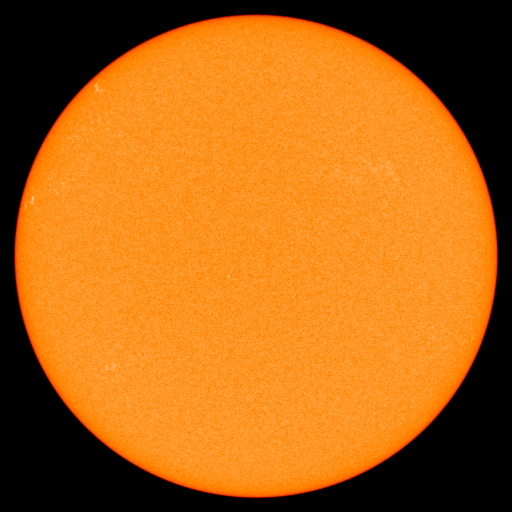
Boy, did this come out of left field: Something in the Sun alters the rates of radioactive decay of certain isotopes. Read that again, and slowly. You are in the presence of an exceedingly rare thing: experimental results that call into question something once thought to be about as settled as science gets.
To summarize for those in too much of a hurry this morning to click to the article: Scientists at Stanford and Purdue (hardly cranks or lightweights) have measured differences in the decay rates of certain short-lived radioisotopes. That’s boggling enough, given my own science education (granted, now 35+ years old) which indicated that decay rates were utterly immutable. But your boggler isn’t finished yet: The differences in decay rate appear to be synchronized to the period of rotation of the core of the Sun–33 days. So something the Sun is doing is influencing the timing of nuclear decay, way out here at just short of a hundred million miles’ distance.
Wow. Like, wow.
Because the core of the Sun is where solar neutrinos happen, the assumption is that neutrino flux is what does the job, as strange a notion as that is. Neutrinos are as close to nothing as things come without actually being nothing, and they can pass right through the core of the Earth without slowing down, much less hitting something two millimeters wide sitting on somebody’s lab bench. The effects are minute but measurable, and not an illusion. Somebody, somewhere (perhaps more than one somebody) is going to score a Nobel for this.
It’s too early to say much more, but I’ll put on my Scientific Wild-Assed Guesser’s Hat here and suggest that there’s another, more intriguing explanation: gravity waves generated by the rotation of the Sun’s considerable mass, particularly its core, where most of its mass lies. The rate of decay of radioisotopes might depend on the local curvature of space. If that curvature changes, as by a passing gravity wave, the rate may change. (Don’t ask for references here; I made it up on the spot and it’s nothing more than a wild speculation.)
The cool thing about this is that it might be testable, with patience and better instruments than we have right now. (Having a small black hole to play with would help a lot, but I won’t wait up for that.)
The Universe, my friends, is full of surprises!
 We’re going to see just how fat our pipes are tomorrow, when Canonical cranks open the spigot for Ubuntu 10.04 Lucid Lynx. It’s an LTS release, and I’m guessing that a lot more people will be grabbing it than usual. I may download it just to see how well the torrent works on Day One; in fact, I have a new hard drive on the shelf for my SX270 here and if abundant time presents itself this week (possible) I may swap in the new drive and install the release. This is the second-to-last machine I have that still uses the System Commander bootloader app, and I’d really much rather have grub everywhere.
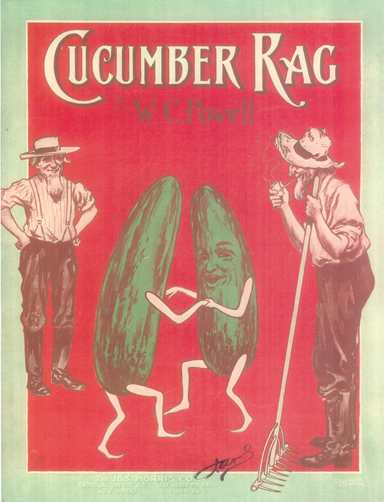
 We had dinner with the family the other night at Portillo’s in Crystal Lake, and whenever we eat at a place like that, I wander around gaping at what I call “junkwalls”–old stuff tacked to the wallboard to make the place look atmospheric and (in this case) 1925-ish. Close to our table was a framed piece of sheet music for a song called “Ketchup Rag.” It was published in 1910 and is now in the public domain, and
  Say what you want about cold fusion; it’s been a great show and a huge amount of fun. If time allowed I would read more on it; right now, the only book I’ve been through is