- Here’s an easy read about Boom Supersonic’s project to create a supersonic airliner capable of cruising at Mach 1.7 without a significant sonic boom reaching the surface beneath the aircraft. Their target is to deliver aircraft by 2029, though skeptics think that’s overly ambitious because Boom is designing a supersonic-capable engine from scratch. The engine will also be marketed as part of a power-generation system for AI data centers.
- There’s a new ATSC (Advanced Television Systems Committee) standard, ATSC 3.0, which will improve TV image quality, it also includes technology to allow DRM on broadcast TV, encrypting “over the air” signals and turning broadcast TV into yet another form of pay TV. You’d have to buy a new “NextGen” TV to watch ATSC 3.0 content. TV isn’t my thing, but I predict a great deal of bitching and moaning against this possibility. Stay tuned, heh.
- According to recent research, working crossword puzzles for two minutes a day can slow brain aging dramatically. Actually, anything that requires cognitive activity can slow brain aging. One reason I tinker with programming (for me, in Free Pascal/Lazarus) is to keep my mind working. I do a couple of word puzzles on my tablet here and there. Maybe I should do more. What I don’t do is sit in front of the TV all day. Or on most days, even for two minutes.
- The US House has passed a bill making Daylight Savings Time permanent. Umm…didn’t we try this already? We did. Nobody liked it, and it didn’t last long. My response is that we should make standard time permanent, which wouldn’t push dawn to an hour later and force people to start the day in darkness. Yeah, back in Chicago in late December it used to get dark by 5 PM. The kids were home from school by then, and cars for commuters have headlights. Arizona is on standard time all year, and it works fine for me.
- Private collectors are outbidding museums for fossils—right up to Gus, one of the largest and most complete T-Rex fossils ever found. Sotheby’s is selling dino bones to the very rich, some of them earning in excess of $30M. It may gall some people, but even I know that leaving fossils in the ground — especially if they’re exposed to the elements—can cause serious deterioration. One wonders what a billionaire would do with a T-Rex skeleton. In the rec room? Office? Maybe we’ll find out.
- Astronomers have found a species of sugar scattered out in the gas and dust in our galaxy. Sweet!
July, 2026:
Odd Lots
AI and the Doctrine of First Sale
Earlier today I happened upon an article in Futurism describing the latest on using published books to train AI. Basically, AI providers are buying used print books (not ebooks!) in bulk, taking off the covers by machine, and then scanning, OCRing, and training their AIs on the OCRed pages.
The twist is that unlike Anthropic’s $1.5B settlement over training AIs on pirated ebooks, buying physical books to train AIs is protected by something called the doctrine of first sale. What this means is that if you buy a print book but don’t distribute it in violation of copyright, the copyright owner can’t stop you from doing anything to that book. Scanning a legally purchased book and OCRing up a copy for yourself isn’t illegal. You bought the book. You OCRed it and loaded it on your tablet. You didn’t give a copy to anybody or post it in a pirately fashion. Theoretically, that’s legal. There are judicial rulings specifying that such an action is “transformative” and considered fair use.
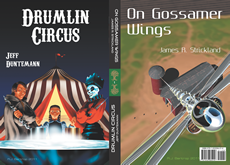
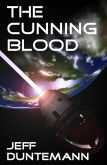
Now, the weird part: Is feeding a scanned book to an AI a violation of copyright? Many think it is. I thought so at first. Much depends on how the AI is used. Suppose an AI trained on loads of books (including mine) were asked, “Show me the full text of Jeff Duntemann’s novel The Cunning Blood.” If it coughs up substantial parts of the book, that’s copyright infringement. But if it says, “Sorry, Dave. I’m afraid I can’t do that,” things get very fuzzy. Could it fork over a few paragraphs and a synopsis? Or just a synopsis? Without producing substantial chunks of literal text from the work in question, my understanding of the law suggests that it’s not infringement.
Now, suppose you ask an AI trained on my books, “Write a novel about a prison planet protected by nanomachines that corrode electrical conductors and thus make electrical devices impossible.” If it drops big chunks of my novel into its output, yes, that’s infringement. But if it writes an original novel with that core idea but without including substantial text from my book, I don’t think it’s infringement. Sleazy, maybe. But not illegal.
One metaphor here would be reading a lot of books we’ve purchased or borrowed from a library (something many of us do) and then writing material inspired or informed by what we’ve read. We digest a lot of factual or fictional material and then talk or write about that material. Absent literal transcription, that’s not copyright infringement.
The Futurism article is a little too worried about destroying huge numbers of print books and not worried enough about the theoretical legality of training AIs on legally-purchased print books. I suspect some law group may try to put together a lawsuit about it, but I think that won’t pass judicial muster.
There may already be machines that can flip through the pages of a print book and OCR its text without destroying the book. Even if they don’t exist (yet), if this means of training AIs on purchased print books becomes clearly legal, my guess is that those machines will happen.
I’m sure it’s possible to build guardrails into AI software preventing it from delivering literal content from OCRed books in copyright. I don’t know how hard that will be, but I suspect that such guardrails could be added to AI. And then, if I understand the legalities correctly, the whole problem goes away.
Sooner or later the problem will be solved. Stay tuned—and bring some popcorn.
Our Strategy for Getting Old in Style
Reader Vince posted a comment on my 74th birthday entry, asking about my strategy for retiring and getting old. Carol and I do whatever we can to grow old in style and (more to the point) functional and (most pointedly) alive. It’s complicated, but I’ll get as much of it as I can into this single (rather long) entry.
So…we’re retired. Topic #1: Stress. Do what you can to keep it at a minimum. I admit that’s harder if you raised kids, which we did not. We’ve been together now for 57 years, married for 50. We discuss all kinds of things. We laugh. We cuddle. We see to each other’s needs. We take each other very, very seriously. We go to church. We pray. Death may do us part—but not forever.
We have no debt to worry about. We don’t spend extravagantly. We use our cars until they fall apart, which for our 4Runner took 25 years. We’ve bought two lightly used cars from CarMax, and both have been big wins. We didn’t have to go through the usual BS kabuki with conventional dealerships, which is guaranteed to raise your blood pressure. We don’t buy things for the sake of buying them. We bought a Radio Shack stereo the November after our wedding…and it’s still living happily on the entertainment center fifty years later, playing music from dawn to bedtime. Our TV is now 15 years old, and (granted that we don’t watch much TV) it’s still very good at its job.
Topic #2: Brain health. I’ve seen studies suggesting that living with music playing constantly helps with brain health. As I said above, our ancient but flawless stereo plays classical music from our local classical station, KBAQ, from the time we get up until the time that we turn in. Writing helps too, and lord knows I do plenty of that. There is a study of Catholic nuns that’s been underway since 1986, indicating that the nuns who wrote emotionally positive text (often in their daily journals) were less likely to develop Alzheimer’s than nuns who didn’t write, and were more likely to live longer. Most of my writing is emotionally positive, so I have some hope that this will apply to me as well, even though I’m not a nun and don’t play one on TV.
I have no studies to support it, but my guess is that programming also contributes to brain health. I still program for fun (generally in Lazarus/Free Pascal) and read whatever current Pascal texts that I can find. I still tinker with electronics and build things, sometimes from kits, and sometimes from scratch. Ham radio helps too. I stay busy.
I teach myself things. I read books on all kinds of stuff, as those who have visited here at Fortress Duntemann may have noticed. I taught myself the Pascal-ish language Lua, though Free Pascal pretty much leaves it in the dirt by comparison. I created a spreadsheet to design solar-twin star systems with planets, which I used in writing The Cunning Blood. You get the idea. Brains matter. Use ‘em or lose ‘em.
Topic #3: Body health. I think that genetics plays more of a role in general health than most people are willing to admit. My Polish immigrant grandfather worked at grimy jobs his whole working life, and lived to just a month short of his 90th birthday. I take after that side of the family. People yell at me for saying it sometimes, but my research suggests that you can do worse than your genes, but you can’t do better. I have good genes, which helps a lot with regard to health. We never smoked or did drugs. I generally have a glass of red wine with non-fish dinners most nights, but I don’t overdo it, and will taper it if my liver numbers start drifting out of range.
Food. We eat meat, fish, eggs, dairy, and salad. We don’t have a starch course unless we have friends or family over for dinner, and when we do it’s generally polenta (i.e., corn grits). I fry one egg in butter every morning for breakfast. Lunch is usually a slice of cold meat (no bread) rolled up with a slice of cheese, plus some tree nuts. I learned back in the ‘90s that carbs make me fat, especially sugar. So I drink water instead of sodas, and keep starches (breads, pasta, potatoes, etc.) to a minimum. We do have desserts when eating with friends or family, but usually not when we’re alone.
We pay attention to ingredients lists, and avoid things with umpty ingredients that we can’t identify. (I call such foods “chemistry sets.”) We consume organic dairy. Our salads are baby spinach topped by carrot shreds, sliced radishes, diced mushrooms, olive slices (for Carol) and diced red bell pepper (for me.) We buy whatever we can in glass rather than plastic. We don’t snack much, and when we do, it’s almost always either tree nuts or sugarless snacks with only a few ingredients, and nothing freaky. Lately it’s been PopCorners. 3 ingredients: Popped corn, vegetable oil, and salt.
Exercise. We do weight training once a week at the gym, with a trainer who specializes in older people. I walk a lot, which is tricker in hot weather, but I shoot for 6,000 steps a day, and make that target three or four days out of seven.
Sleep. We’re morning people and hop out of bed at 6 or 7 AM, shooting for eight hours a night. Sleep is not optional, and we structure our lives to allow those eight hours to happen almost every night.
Topic #4: Supplements. I take 5 grams of creatine hydroxide every day, and 10 on gym day, generally in my midmorning iced coffee. There is strong evidence that creatine acts against cancer. I also take a standard multivitamin, a D supplement, quercetin/bromelain, zinc, magnesium, and until recently, a B-50. (Carol takes others as recommended by her doc.) My blood pressure is low to normal. We both get physicals once a year, with a broad blood panel and other tests. I pay close attention to my numbers, and take action when test results go out of bounds; e.g, vitamin B-6 and prostate-specific antigen (PSA).
Topic #5: Emotional health. This one is gnarly for a lot of people, but not for me. Carol and I are deeply in love, which is the powerful central element in our emotional health. I don’t do as much on social media as I used to, largely because a great deal of it is slobber-screaming about politics. I do not doomscroll. Nor do I talk about politics. As close as I come is the climate issue, which I research as science and sometimes post about but don’t get involved in tribal fights over. Allowing other people to make me angry gives them control over me, and I won’t abide that. Anger is deadly. My father’s father died of anger. I strive for an upbeat outlook on life and don’t allow current events to bring me down.
Friends. I’ve said this here many times, and I will say it again: Friendship is the cornerstone of the human spirit. I have a circle of friends whom I greatly value, granting that a couple of them have followed my writing for thirty or more years without ever meeting me. They’re still friends. I value them more than they probably understand.
And that’s as good a summary as I can fit here. Yes, I will admit that life is a crapshoot, but it’s a gamble I’m willing to take—and so far I’ve done very well. What works for me may not work for you. Live an examined life, and don’t let other people control you. Watch your numbers. Have friends. Stay active. Stay busy. That’s most of it. You may be surprised by what you discover in the process. I certainly was.
Let Freedom Ring!!!
Freedom is a slippery business. I call myself a contrarian skeptic because that’s the catchphrase for what I consider freedom: Question everything, especially conventional wisdom; and develop a tendency to lean away from conventional behavior. What this requires, of course, is sufficient generosity of spirit to allow others the same freedom. And the real problem arises when your vision of freedom conflicts with mine in ways that leave one or both of us less free. Compromise requires responsibility on both sides.
From time immemorial, this conflict has nearly always arisen between the elites and the common people. Aristocracy is an older name for these elites. Kings, queens, dukes, barons; that whole uppity ilk always assumed that they knew better than the scruffy folk out in the world growing their food, sewing their clothes, and trying not to get hung for getting on some ilkiphile’s nerves. It was that way for a very long time.
Then America happened.
Our nation grew out of an unprecedented establishment of balance between freedom and responsibility. We still have elites, who are still striving for a world government with all freedom and power in their hands and little or none in ours. You know the kind: slobbery screamers who want to take away your gas stove while roaring around the world in private jets belching out tons of carbon dioxide. Sometimes the rules lean toward the elites. There is machinery in place to allow ordinary people to pull those rules back into balance.
Astonishingly enough, two hundred fifty years later, this still works.
That’s what I celebrate on Independence Day: A balance between those who want to gather all power to themselves and those who want to spread it around. I don’t see that working in the rest of the world, though there are some bright spots in South America and other places. For reasons that would take a book to explain, freedom leads to prosperity, while authoritarianism leads to poverty and collapse and bloodshed.
Happy birthday, America! Two hundred fifty years ago, you nailed it—and those nails are still holding our nation together.