- I’m 77,241 words into the revision, of which about 25,000 words are new. So I now have a little less than 100,000 words to go, and I’ll have a book. More has to be rewritten than I thought, but mercifully, not all of it. This is going to be almost my sole project for the next four months or so. Maybe I should get one of those writers’ progress bars for WordPress, if such exists.
- I finished the second ASCII chart, for the IBM-850 code page.
- The glyph for the German sharp-s (esset) character is not called “szlig” except within HTML pages, where it appears to be a name invented for the glyph by people who do not speak German, perhaps from “sz ligature.”
- Bright green Comet Lulin whistles past us today, at its closest a still-comfortable 38 million miles off, but it’s apparently a fine object in even a small telescope, and can be seen with the naked eye if you’re out past city lights. It’s very close to Saturn in Leo. Space Weather has a nice map showing where to look, and when.
- This may be the hoax of the decade.
- And while we’re talking digital TV, I’ve been wondering if those little USB TV receiver thingies are digital-ready–but not wondering hard enough to go research. (I watch almost no TV, but you knew that.)
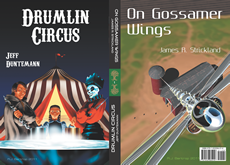
- David Stafford and Jim Mischel informed me that there is an audiobook of someone reading my story “Drumlin Boiler” in what we think is Russian. (“Dramlinkskiy Kotel”) It’s a 50 MB MP3, so think twice about downloading it, but I would like some confirmation as to the language. Sure, it’s a pirate edition, but these days I’m happy someone is reading me, even if aloud.
- Bruce Baker sent me a link to an intriguing article by Rudy Rucker on self publishing. The problem: Only your friends will buy your book. The solution: Work hard at having a lot of friends.
writing
Odd Lots
Cleaning Up 21-Year-Old Writing
Context changes are expensive, whether you’re a writer or an operating system. That’s why I like long, uninterrupted days to write. Writing in small chunks on large projects never worked well for me; I’d rather pull three ten-hour days than find thirty disjointed hours in the course of a week and waste half of each of them trying to recover my train of thought.
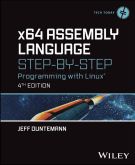
So it’s been with the fourth edition of Assembly Language Step By Step. I’ve spent most of the last four days blasting away at it, and if I haven’t returned to the Carb Wars here, that’s the reason. All in good time.
This is a big project, probably the biggest I’ve attempted since Drive-by Wi-Fi Guide, and it’s likely to be eating my life until June. There’s a great deal of new material to be written, and a lot of concepts to be covered that just weren’t issues under DOS. For example, when you work at the assembly level under Linux, endianness comes into play and needs to be explained, even though 85% of the world’s desktop hardware is little-endian.
That’s actually been fun; as I’ve said many times, the very best way to make sure you understand something is to explain it to somebody else. What’s been humbling is running into writing bad enough to make me wince. Every so often, I have to push back in my chair, heave a deep sigh, and ask myself the purely rhetorical question: “Geez. Did I write that?” (I did. 21 years ago. Practice helps…)
No problem; this is what editors do, though I am very glad that we’re not using typewriters anymore. And unlike certain other projects I’ve worked on, the author in this case takes criticism well.
The Risks of Quirky English
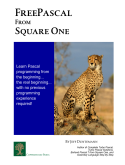
As I've mentioned here a time or two, I've been gradually recasting my 1993 book Borland Pascal 7 From Square One for the current release of FreePascal. It's turned out to be a larger project than I had expected for a number of reasons, some of them humbling (I was not as good a writer in 1984 as I am today) and some completely unexpected. The one that came out of left field stems from the fact that Pascal isn't used in the US that much anymore. Most of the audience for the new book is in Continental Europe, and while most of them understand English, they understand correct, formal, university-taught English.
Not slangy, quirky, down-home, Jeff Duntemann feet-up-on-the-cracker-barrel English.
This became clear some time back when I posted the first few chapters for FreePascal users to look at. I got a few emails with detailed critique (for which I am extremely grateful) and there was a certain amount of puzzlement about some of the language. A few of the things that puzzled my European friends were not a surprise:
- QBit stretches and climbs on my chest, wagging furiously as though to say, “Hey, guy, tempus is fugiting. Shake it!”
- Ya gotta have a plan.
- …and write the plan in German, to boot.
- …cats are pets, not hors d'oerves on the hoof.
But some were. The expression “to run errands” is not universally understood there. Nor is the word “shack.” (I changed it to “shed.”) I want very much for the book to be accessible to those who are using Pascal the most, and that's a new kind of challenge for me: Writing plain English without resorting to clever coinages and Americanisms.
Alas, I'm not always aware of it when I'm using Americanisms. (I should find a book for English-speakers traveling here, just as there are books on British English for those of us who visit the UK.) There are other problems: Europeans are not intuitive with Fahrenheit temperatures, any more than we're intuitive with Celsius here. I mentioned in the book that it hit 123° in Scottsdale once in the summer of 1996, and although my European friends know that that's hot, when I translate it to Celsius—50°—they gasp. We were gasping too—Keith and I had to shut the Coriolis offices down because the air conditioners were losing the race. Solution: Put temps in Celsius. Americans know damned well how hot it is in Scottsdale. (As I left in 2002, it seemed like most of them had already moved there.)
It's a two-edged sword. I like writing the way I talk, and for those who haven't met me, well, I talk the way I write. It's easy. On the other hand, having worked my way through the first hundred-odd pages of the new book, straightening out my language quirks, I find that it now reads very well. It doesn't sound quite as much like me, but that's OK. The idea is to keep Pascal alive, wherever and however it is to be done. Writing for the world—and not strictly for us American barbarians—is a useful skill and good discipline. If I stick with Pascal and Delphi, which I have every intention of doing, you're likely to see more of it in the future.
LiveJournal Sentence Sunday
This is a writer thing, which I'm doing at the behest of
1. You go to one of your current novels-in-progress, and find the page number declared for this event.
2. You choose an excerpt beginning at the first complete sentence on that page.
3. You post it where others can read it.
4. You tell everyone what you like about it.
5. People discuss it in the comments.
My only problem is that Melissa has chosen page 123 this time, and although I have a number of novels-in-progress (including a few that have been in progress since the early 1980s) none have gotten to that page yet. Old Catholics has gotten to page 81, and it's the project on which I have the most momentum right now, though with all the jackhammering my mouth has undergone in the last two months, the momentum has been thin. Alana has given me permission to knock out the hundreds column and start with the first complete sentence on page 23. Remarkably, that one page stands together very well:
—–
“They have a church building. And a woman priest! Just like your Episcopal church. That has to count for something, doesn’t it?”
Suzy didn’t nod.
“So let’s make a deal. I’ll call Peter and ask him if he can help me with my laicization paperwork-if you’ll come to their church with me tomorrow. It’s right out Devon Avenue, near Western.”
Suzy puffed out her cheeks and considered. The steam rose from her cup in slow rosettes. “Ok. Deal. But I get to be the judge. If these people are crackpots, I grab your arm, and you leave with me. No questions. No objections. You get up, we leave, and we don’t go back.”
Rob sat silently, his fingers clenching in his lap, thinking of Mrs. Przybysz reading his aura, and imagining a deacon fishing in the cold-air vents for fugitive rosary beads. Suzy’s definition of “crackpot” might not quite match his own. Cutting deals with a brilliant woman like Susan Helms was a lot like gambling, and he knew how good he was at gambling. Making ordinary, rational decisions was hard enough. Taking bets–it was an invitation to humiliation. If this were not the woman he loved, and had loved in absentia virtually his entire adult life…
“Oh–and if you don’t call Peter, I will.”
Rob opened his mouth, afraid what his face would reveal, thinking of Suzy on the phone with his old friend. People had called them a “threesome” back at Loyola, and there had been enough resentment in that to yield more than a little relief in not getting a response from Peter Luchetti. Rob remembered once–was it 1972?–walking along the lakefront with his arm around 5’2” Suzy Helms, and 6’2” Peter on the other side, his arm on her back above Rob’s.
The feeling that rose in him that evening when he was back in his room–anger, jealousy, covetousness, whateverthehell it was–had scared him half-silly and sent him screaming for his confessor. His friendship with Peter was conflicted (and stale) but Suzy’s threat was not idle: Her father, bakery magnate David Warren Helms III, had left a cool three million dollars to the Archdiocese of Chicago upon his death in 2004. Cardinal Peter Luchetti did not answer just anyone’s phone call. But he would answer hers.
—–
Those who have followed my fiction at all know that this is a peculiar thing for me to write: No starships, no aliens, no AIs, no gunfights. It's about a Roman Catholic priest who resigns his parish position in Indianapolis to return to Chicago to the woman he abandoned for the priesthood thirty years earlier. He runs across a (very) eccentric Old Catholic community that includes an ex-con, a psychic little old Polish lady, a former call girl who became a priest, a young computer geek who has a side business converting churches into condos, and a bishop who spent the bulk of his life writing advertising copy. The priest's seminary buddy has since become Chicago's cardinal, and the new Pope–a reactionary conservative from Brazil–is hell-bent on bringing the American Church's liberal wing to heel.
I like it because it's been a necessary exercise in the things that I am not naturally good at: Characterization, nuance, and a story told without chase scenes. I've had to create characters who are eccentric but not ridiculous, and treat with a light heart a set of topics that, often as not, incites people to fury: Should priests be married? Should women be priests? Do we really need a Pope? And what really defines the Catholic idea? That's what I'm reaching for. I'm not sure how successful it will be, but I intend to finish it, and will get back to work as soon as I can chew without wincing, which should be any day now.
2008: The Final Odyssey
I had breakfast with Isaac Asimov. I shook hands with Robert Heinlein. Kate Wilhelm did a tarot reading for me. I've workshopped with Gene Wolfe, George R. R. Martin, and A. J. Budrys. Nancy Kress is still a close friend. David Gerrold wrote for my magazine for ten years. I saw Keith Laumer from a distance once, and have had several conversations with Larry Niven and David Brin. But I have never been anywhere close to Arthur C. Clarke. Now I won't get the chance; as I learned on arriving at home this evening, he has died in Sri Lanka at age 90.
Arthur C. Clarke was my favorite SF writer for a long time. Asimov was a little dull, and Heinlein's stridency bothered me at times, but Clarke was as close to perfect as SF writers got for me, at least in high school—and maybe still. His SF was about ideas, and he let nothing else get in the way of those ideas. I began writing SF by imitating his short stories. When I later began writing SF novels I was imitating Keith Laumer, because I knew damned well that I could never imitate Against the Fall of Night or Childhood's End.
As I have reported here more than once, when I was seventeen I gulped and asked a beautiful girl to go out with me and see 2001: A Space Odyssey. She said yes. Seven years later, Carol said yes again, when I asked her to share a different kind of odyssey with me. Yup, Arthur C. Clarke landed me first a best friend, then a lover, and finally a spouse. (One doesn't get that kind of service from Barry Malzberg.)
There's not much more to say. When a man gets to be 90 before he dies, I don't mourn, I celebrate. We had him a long time, and now he is free of all the suffering and limitations inherent in flesh. I happen to think that I may meet him yet…but let that pass. We have his stories. He worked his magic on me, and I would not be the writer I am if he were not the writer he is.
Just one more word: Thanks, Sir Arthur. Really. And thanks again.
My 2008 Publishing Plan File
This oral surgery business has set me back on a number of projects (no, scratch that; all of them!) but things get a little better every day and I'm hard at work again on several fronts. The fifth and final volume of Carl and Jerry is getting close to finished. I'm now doing the topic index, which is an interesting concept. I regularly get messages from guys who ask me, “Hey, Jeff, what was the Carl and Jerry story where they set up a talking skull for a haunted house?” That's all they remember: The talking skull. So there will be an index entry like the following:
Skull
November 1959: V11 #5 Book 3 p.81 “The Ghost Talks”
On Halloween, Selsyn motors and a glowing skull haunt a house for Norma's sorority.
The topic index will have entries like Iceboat, Dogs, Kidnapers, Bootleggers, Capacity-operated relays, RC models, Telemetry, Tesla coil, Norma, Mr. Gruber, Theremin, Ultrasonics, and so on. I already have a complete chronological index on the Web here, but I wanted to make the search possible by topic, and if all you remember is that the boys were fooling with a police speed radar unit, you can look up Radar and see both stories (there were two) in which police speed radar figures significantly. After the index is done, I have two “new” Carl and Jerry stories to typeset and then it should be finished. I'm hoping to have it available by February 10.
With Carl and Jerry in the can, my next major push will be to get two anthologies of my own SF out there on Lulu and as ebooks. The two volumes will be:
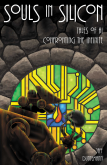
- Souls in Silicon, including all my SF featuring any sort of artificial intelligence, plus a significant excerpt from The Cunning Blood; and
- Firejammer!, which will contain all the rest of my published SF plus the title novella, which has never seen print and, given its 27,000-word length, is unlikely to in traditional markets.
Unlike my earlier Lulu publications, these two will get ISBNs and be available on Amazon. I also intend to make them available on the Kindle. Most of the material has already been typeset, and a lot of the remaining effort will go into things like finding art for the covers. I'm hoping to get these both out by midyear; Souls in Silicon may happen sooner.
In loose moments I've been recasting the 1993 print edition of Borland Pascal from Square One for FreePascal, and will release an initial volume as a free ebook sometime in late summer. As FreePascal was designed to be compatible with Borland Pascal 7, this should work. The ebook will be free, but I will offer an inexpensive printed edition with a color cover on Lulu. The first volume will cover the basic concepts of programming, installation of FreePascal on several platforms, the use of the console window IDE, and the core Pascal language. Much of the book is now obsolete, and it doesn't really cover OOP beyond the basic idea, so if additional volumes happen they'll take a fair bit of work and won't be out until 2009. I'm also considering adapting my portions of The Delphi 2 Programming Explorer for Lazarus, but that won't likely be this year either.
Toward the end of the year I may release a third Old Catholic history title, which will be a compendium of several shorter items from journals published between 1875 and 1900.
Note well that this is a publishing plan file; I still intend to do a fair bit of writing and will continue to shop my material to traditional markets. I hope to finish Old Catholics and make some headway on The Molten Flesh—and if I can't get traction there, I will go back to Ten Gentle Opportunities. Shorter items may pop up at any time; writing is a messy business. But you knew that. I hope.