- Here’s a nice detailed article about how Linux treats hard disks and how Linux partitioning works.
- We now have two major sunspots on the visible face of the Sun. I don’t remember the last time I saw that. (Most of the specks we’ve been giving sunspot numbers to in the last couple of years don’t count, in my book.)
- The New York Times has finally shone their light on an ebook marketing technique that Baen Books pioneered years ago. (Thanks to Pete Albrecht for the link.)
- Version 4.0 of the FastStone Image Viewer is out, and well-worth having. It’s the best image browser I’ve ever used, and if you have to sort an SD card full of digital photos and cull marginal shots quickly, there’s nothing like it. Make sure you get the portable version; it lacks nothing and doesn’t make any changes to your system. Freeware. Highly recommended.
- Rich Rostrom sent a pointer to a fascinating article on Moscow’s stray dogs. They’re going feral, but it’s a peculiar sort of urban feral that considers humans and all their gadgetry to be just another part of the landscape. They’ve learned how to ride the subway, for pete’s sake!
- I’d read in a number of places that faces judged as beautiful are generally “average” faces, without a lot of distinguishing characteristics. Because I could never quite get a grip on what an “average” face would be, I always took the notion with a grain of salt. But this site, assuming it really is creating a “facial average” from a gallery of headshots, suggests that there’s something to it. Start with two faces, then add faces one by one, and see if the average face doesn’t become more beautiful (and distinctly ambisexual) as you go. It did for me.
- Here’s a short interview with Bob Silverberg, describing his writing life during the Golden Age of Pulps. A million words a year…
- Cracking ice in the surface of a frozen lake sounds like a blaster battle.
- From the That-Certainly-Has-To-Count-For-Something Department: Behold the world’s largest disco ball.
writing
Odd Lots
Synthesizing a Functional Cardinal
I haven’t done any new fiction in over a year, largely because I took ten months out of my life to update Assembly Language Step By Step, and another three months to catch up on all the stuff that didn’t happen while I was doing the update. Today was the first day in ages that I had both a reasonably clear schedule and a solid night’s sleep behind me, so I sat down this morning after a bacon & cheese omelette to see what would happen.
Much good did. I got 2,000 words down on Old Catholics, which is about as much fiction as I generally crank out in an uninterrupted day. So far I’ve got 6 1/2 chapters completed, out of 18 planned, for a total of 32,000 words. The target is 90,000 words, with a hard ceiling of 100,000. I mean to impose whatever discipline is necessary to stay under that ceiling; I set myself the same ceiling for The Cunning Blood and ended up with 145,000 words of novel, which I don’t think helped me at the big presses during the five years that I shopped it.
The current chapter represents a difficult point in the telling of the story. I’m about to introduce the last of the major characters: Cardinal Peter Paul Luchetti of the Archdiocese of Chicago. The problem is that while I’ve met a fair number of Roman Catholic seminarians and priests, as an adult I’ve never been within striking distance of a Roman Catholic bishop, much less a cardinal. (It is true that Cardinal Albert Meyer came within striking distance of me when I was 12, as some of my Roman friends of a similar age may understand.) I generally design characters by drawing on people I’ve met and talked to, but in this case I came up completely empty.
The entire novel is an attempt to design and portray better characters than I have in my SF so far, in a setting where I’m unlikely to get distracted by gunfights, hyperdrives, or berserk nanomachines. Creating a convincing Roman Catholic cardinal is probably the toughest characterization issue I’ve ever faced, simply because cardinals exist. People can call me on the details. I can’t just make things up on a whim. It’s the issue SF people call “offending the known,” and, as I’ve discovered, offending the known is much easier in non-fantastic fiction set in the current day.
I did my best, and used a technique I learned from my SF mentor, Nancy Kress: I wrote a 1,500-word fictional dossier on the man. Only a little of that will actually make it into the story, but filling in the details of Peter Luchetti’s life forced me to consider his strengths and weaknesses and special talents and record them in a coherent way. I’m drawing on the few books I’ve found that speak honestly and in detail about cardinals without mythologizing them: Peter Hebblethwaite’s The Next Pope (1995) and I Am Your Brother Joseph (1997) by Tim Unsworth, a short biography of Cardinal Joseph Bernardin, who was by far the finest cardinal Chicago has had or probably ever will have.
Perhaps I should worry less. The book is a sort of fantasy, in that what I describe is whimsical, outrageous, and almost certainly impossible. That said, I’ve managed to work in almost everything I’ve ever learned about Catholic life, worship, and history, from Benediction, Tenebrae and Holy Hour to apostolic succession, Arminianism, and the Council of Constance (1414-18). Both liberals and conservatives within Catholicism will likely be annoyed at me, and if they are, I’ll call the book a resounding success.
As for the feeling of sitting down to write fiction again: Damn, it’s good to be back!
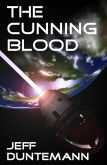
Get The Cunning Blood for 10% Off
In honor of the debut of the TV series FlashForward (based on a novel by Robert J. Sawyer) ISFiC Press is having a sale until November 10:
- Buy Sawyer’s collection Relativity and any one other ISFiC Press book direct from the publisher, and deduct 10% from your order total (before sales tax and shipping);
- Buy Relativity and either two or three other ISFiC Press books, and deduct 25% from your order total (before sales tax and shipping);
- Buy Relativity and four or more other ISFiC Press books, and deduct 40% from your order total (before sales tax and shipping).
ISFiC Press is, of course, the publisher of my novel The Cunning Blood , and here’s your chance to pick it up at a discount.
About FlashForward I can’t tell you much, since I don’t watch TV, but the concept is intriguing: Everyone on Earth blacks out for 137 seconds, and experiences a kind of timeslip, each seeing visions of his or her own future. The blackout itself causes mayhem on a grand scale (though I wonder if it would be as grand as the premise suggests) and government agents begin searching for Suspect Zero, who was caught on tape awake during the blackout and might, therefore, have had something to do with it.
But about The Cunning Blood I can tell you a lot: It’s a hard SF future action/adventure, featuring a prison planet where electrical devices don’t work, due to the presence of a pervasive bacterium-sized nanomachine that homes in on the magnetic fields around electrical conductors and literally chews the conductors until the circuit fails. Hell’s inmates do all right in spite of not having electricity, as there are a lot of different ways to build a technological civilization, and even a few ways to get around those pesky nanobugs. (Think wires made of liquid mercury flowing through hoses.) But the bugs on Hell are kid stuff compared to what’s lurking in the bloodstreams of selected individuals on Earth: highly intelligent distributed nanocomputers, supposedly under the complete control of the secret societies of engineers that created them–except for The Sangruse Device, which has a slightly different concept of “control.”
I’m guessing that my long-time readers have already heard most of this, but if you’re new here, the novel has reviewed well and might be worth a look. Here’s a sample chapter. And another sample chapter, which I just carved out of the novel to post for the first time. (It will make more sense if you read the older sample first.) If you like action, ideas, and cultures completely unlike our own, I don’t think you’ll be disappointed.
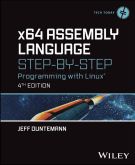
Assembly Language Step By Step, Third Edition
 A few minutes ago, UPS left my author’s carton of Assembly Language Step By Step, Third Edition on the front porch. So after ten months of work (and another month of anxious waiting around), it’s really and truly real.
100% Linux. Certified DOS-free. It turned out pretty well, all things considered. And having (finally) held it in my own hands, I think I won’t ask anything more from today.
Covington on Time Management
I’m short on time today (and will be for probably the next week or two) so it’s appropriate to point you to Dr. Michael Covington’s post on how he teaches time management to graduate students. Much gold to be dug here, and most of what he says applies to writing a book as well as writing a doctorial thesis. Never let a day go by without progress is one of the toughest goals to meet, but also one of the most important. Life intrudes, especially for freelance writers who have houses, spouses, kids, dogs, and day jobs. Still, you should try. Take too many “days off” and you will waste time recovering context when you return to the task. This happened to me several times while I was writing Assembly Language Step By Step, Third Edition, and the deeper the subject, the more subtle the context, and therefore the easier it is to lose. (We had several family crises in Chicago while the writing was underway, and such things are impossible to avoid. I got better at context recovery through practice, but it’s still time lost that you’ll never have again.)
Another thing that Michael alludes to is that you can’t split up a difficult writing task into widely-scattered one-hour bursts. One hour is not like every other hour, except for well-defined rotework. More to the point, there is something I call “flow,” which means that I’ve goosed my subconscious into a state of high activity, and it’s spitting words up from the depths almost exactly as quickly as I can write them down. This is more common in fiction than nonfiction, but I did find that there were moments when I was blasting away at 100 wpm+ on things like passing parameters to libc functions, because I knew the material well and had had a good night’s sleep. But once you’re in flow, it’s best to keep going until it stops, or until you run out of evening, energy, or both. If you think recovering context is hard, just try to get back into flow after any interruption more involving than a bathroom break.
And finally, the Big One, which Michael does not place in bold but which in fact should be in dayglow colors: Productive people know what not to spend time on. In other words, half the trick of time management is interruption management. When I know that a flow attack is imminent and I have a free afternoon, I turn off Skype and my cell phone, clear all the toys out of my taskbar (including email) and do absolutely nothing but make tracks on the project. Without that discipline, I would not have finished ALSBS3E; in fact, without that discipline, I’m not sure I would ever finish anything.You don’t see me post as often on Contra these days as I used to because I’m feeling better and getting more done in other areas. But that’s also the reason I gather short items into Odd Lots entries: It’s less disruptive to bookmark something and gather bookmarks into a list later on than to be constantly formatting and posting one-liners.
Assuming that you have at least basic literacy in the topic at hand, success consists of focus plus debris. Really. And so on that note, back to work.
The Twilight of the Ad Era
I made a decision late last year without saying much about it: I won’t be using AdSense ads anymore. Now, I’m not going to remove them from existing pages, and I’m not going to shut my account down, but as you might have noticed if you’ve perused my articles over on junkbox.com, my new layouts do not contain ads.
There’s not a lot of point. The curve is heading in the wrong direction.
When I first used AdSense in 2006, my goal was to bring in a dollar a day on average, and I either met or beat that for the rest of 2006 and the first few months of 2007. After May, 2007 things went into a slow decline. My page impressions grew slowly, but revenue slumped, and over 2007 I averaged only 85c per day, which is still worth pursuing. Across 2008 I was averaging only 61c per day, even though page impressions were higher than they had ever been. People just seemed to stop clicking on ads. (“Ad-numb” is a coinage that I’ll offer here if no one else has.) 2009 has earned me an average of about 20c per day, and that’s really not enough to warrant the effort of designing ad spaces into my layouts, especially if it’ll be down to 10c per day next year.
An interesting thing has happened over the course of 2009 so far: Google-tracked page impressions have plunged, even though my overall page hits continue to climb. Some of this is doubtless the rearrangement of my Web content that I began last fall, but it was also true for individual pages (like my Homebrew Radio Gallery) that had not changed significantly since 2006. Daily AdSense page impressions for that single page were always up in the high 30s to low 50s, and are now down to 15-20 tops.
I didn’t start doing anything differently. I’ve never worked at building traffic to my site, and in fact the only way AdSense makes sense to me is if you don’t have to screw with it. Spending time and effort trying to drum up traffic for the sake of ad clicks is time and effort I can’t spend researching and writing new articles (or heaven knows, fiction) so I’ve never bothered.
I think I know what happened: Malware delivered from Web ads has gotten enough publicity that people in large numbers are starting to install ad blockers. This is the only way I can reconcile imploding AdSense page impressions with steadily growing traffic to my site as a whole. Google only counts a page impression when an ad is served; block the ads, and viewing the page does not generate an AdSense page impression.
I’ve never used an ad blocker before, and it was eerie surfing around using the Iron browser, which blocks ads from a huge number of major ad sites (including AdSense) by default. Eerie–and fast. Malware isn’t the only issue with Web ads: Overloaded ad servers slow down page render time, sometimes hugely. This is not new news, but until I saw it myself I couldn’t appreciate the scale of the problem. Iron may not be intrinsically faster than IE or FF, but it looks faster because it doesn’t wait on ads. Blocking ads still makes my conscience twinge a little; here is an interesting discussion on whether it’s wrong to block Web ads. The tipping issue is malware: If all it costs me is time to render your ads, then that may be the cost of viewing your pages. But if there is some significant chance that your ads are serving malware (whether you knew anything about it or not) I feel that I have a right to protect my system and my network. Remember that I can’t tell if your site even has ads before I go there, and if your ads serve malware, my system gets nailed faster than I can back out. The only way I can reliably protect myself against ad-served malware is to block ads entirely, so until each browser instance is a thoroughly isolated VM, there’s no other way.
Thus fades the Great Hope of “free” content supported by ads. What replaces it is obscure. One barely hears the term “micropayments” anymore, and those sites that have retreated behind paywalls don’t seem to be doing well. Among the pubs I read, The Atlantic Online dropped its paywall last year, and the only paywalled site I still read is The Wall Street Journal. Money does need to be involved somehow: I write better material when I get paid for it, and when I pay for material, I have higher standards for it than for what’s lying around free. That being the case, I intuit that a paid Web would be a smaller but far more useful thing than a free Web groaning under the weight of pages (you see them all the time) that exist solely to serve ads. Still, I’ll be damned if I can see the way there.
The Cloud in Your Pocket
We’ve been getting rained on a lot this week, in more ways than one. Carol’s garden is going gangbusters, and I’ve never seen an explosion of wildflowers along my accustomed hiking paths as I’m seeing right now. There’s a bee shortage somewhere in the country, I’ve heard, but the little buggers are thronging the wildflowers here. Temps are deliciously cool, for June, which seems to be a trend this year.
On the flipside, some dorks broke into my hosting directory a few days ago and inserted porn spam links into all my static HTML. They tried to modify the PHP in my instances of the Gallery photo manager for purposes unclear, but Gallery stopped working and I had to delete both instances. (I have backups of all the photos and captions and will reinstall as time permits.)
That whole adventure happened while I was on deadline reading copyedits on the first five chapters, and it did not endear me to cloud computing. I’ve had some time to think about the whole sorry mess, and some larger questions arise:
- How do we keep crap like that from happening? (This is a mostly rhetorical question; I’m not sure that we can.)
- Apart from portability (i.e., accessing your data on the road) what’s the real value-add in cloud computing? Remember to figure in the cost-benefit of having to find and sometimes pay dearly for a broadband connection to use it.
- And if portability is the only value-add, why screw with something as inherently pricey and dicey as the Cloud?
Why not put the Cloud in your pocket?
I just ordered my very first 32GB thumb drive. I skipped the 16 GB size entirely, because my trusty and much-missed 2001 Thinkpad X21 had a 32 GB hard drive, and I never filled it up. It contained all my major apps (Word, Excel, PowerPoint, MapPoint, InDesign) and all my Internet apps, plus a scattering of smaller utilities. It also contained a great deal of data, including everything I had written electronically since 1979, though in truth much of the bulk lay in MP3s. Document files are remarkably small.
One of the most significant trends of the last two years is the explosion in “portable” apps, meaning software that does not require a formal installation process beyond unzipping it into a directory. Nothing goes into the Registry, nor into \windows\system32. The whole app lives in a single folder. What a brilliant idea! (Wait…all software used to be like that…)
There have always been portable apps, but for the last fifteen years or so it’s been seen as declasse to produce them. Why? Think for a second: Once installed, a conventional Windows app can’t simply be lifted out of its folder and copied to another machine. It was one of the earliest forms of stealth DRM, invented, I suspect, specifically to keep MS Office from wandering.
No more. There are now lots of portable packages, many or most of them completely free. See PortableApps and 100 Portable Apps for Your USB Stick. You can get OpenOffice, the Gimp, Thunderbird, Firefox, Kompozer, and just about anything else you might need in portable versions. You can unzip them into directories on a thumb drive, and execute them from File Manager. (There are also portable app managers like CodySafe that give you a separate UI for your portables and stick data.) Portables run like conventional Windows apps, except that they don’t crap in your machine.
I got into portable apps while thinking about degunking for Windows. The Registry is Gunk Central, and much havoc is caused by duelling and mis-versioned DLLs dropped like softball-sized hailstones into the system32 directory. When I got my new Core 2 Quad last summer, I resolved to install only what conventional apps I absolutely needed, and use portable apps for everything that I could. The results? I have a cleaner-running machine that boots fast and has a remarkable lack of line items in Task Manager’s Processes tab. I’ve tried to stick with FOSS apps, because commercial apps are always down there in your taskbar popping up nag balloons, trying to upsell you or force updates down your throat.
It’s worked very well. What I want to try is having a single largish thumb drive containing not only data but also the programs used to manage it. Other people have been doing this for years, and it’s time I gave it a try. In the meantime, my view of the Cloud cooks down to this:
Take from the Cloud what can only be had from the Cloud–and keep the rest in your pocket.
INC Whew
Well. A few minutes ago I found myself staring at the last line of the last page of the last chapter of Assembly Language Step By Step, Third Edition. I’m sure it’s a feeling a little like that described by some of my friends who took their time getting through college, and one morning at the end of a term found themselves thinking, “Hey! I have enough credit hours now! I can graduate!”
It took so long that I wasn’t quite ready when I realized that it was finally over.
I celebrated by playing the MP3 of David Buskin‘s “Flying Child” and singing along. Loudly. That felt so good that I played Dean Friedman‘s “Ariel” and sang along louder still. Rather than make myself a little too nuts by singing Danny Hutton‘s manic cover of “Funny How Love Can Be” I poured myself a Diet Green River and ate too many Cape Cod Robust Russet potato chips before collapsing in my comfy chair.
Ten minutes later, Carol got back from Crystal Lake after a two-day sojourn wrapping up our trip and (not coincidentally) leaving me free to work here in Des Plaines. That was a piece of timing, but Carol’s good like that. We understand one another in a quantum-entanglement sort of way that is the very best part of loving a woman for forty years.
In truth, I’m not quite finished. Chapter 12 is still first draft and needs a polish pass. I have to write a new introduction and bibliography, and add two pages to the instruction reference. After that, of course, comes proofs and so on, but it’s starting to look like I’ll have real books sometime this fall, probably by November and perhaps as early as October. It ran a little long (187,000 words instead of 175,000) but not long enough to fuss about. It soaked up almost all of my creative time and energy since last December. I learned a lot doing it, and as often as I found myself feeling ragged and annoyed at the scale or the pace of the project, I’m still glad I did it. The book has been in print now for 21 years across three editions (the first from a now-defunct publisher under another title) and could well be in print for another ten or fifteen. It paid off my mortgage. In fact, it’s made me more money than all my other paid writing projects put together, in all of the 35 years that I’ve been writing for money. It’s gotten to be kind of an institution around here, and I’ll rewrite it again if I have to.
But not this week. Please.
Redshanks and Omathauns and Gomogs, Oh My!
I had an Irish grandmother. Her Irishness was off the scale, pinning the needle and wrapping it around the (green) post three times, one for each Person of the Trinity. She was wry and cranky and as a younger woman had an operatic voice, which she used mostly to ridicule the whole idea of opera. (If I had inherited her voice, by God, I’d use it for the same thing.) Sade Genevieve Prendergast Duntemann (1892-1965) was quite the character. Back in 2005, I published the marvelous letter she was writing to my father when WWII ended. She gave me her Underwood typewriter–the same one from which that letter emerged–when I was only ten years old, and in doing so changed me forever. Words, both spoken and hammered in uneven type on a smeary two-color cloth ribbon, were the bond we had together.
And some of those words were…odd. Four in particular come to mind, though she died 44 years ago and I may have forgotten a few. I always assumed she had made them all up, as making things up was one of her gifts. (I believe that my knack for storytelling came down from her through my father.) Then, as the years rolled on, I started encountering them in real life:
- Redshanks, in her parlance, were small imaginary animals that burrowed in her garden, making a mess. As a preschooler I imagined them as bright red mice with little horns. I would build redshank castles with my blocks, and my father and I once made redshank houses with strips of papier mache laid over half-flattened beer cans. I later found out that redshanks were also Scottish mercenaries serving in the Irish army circa 1600. There may have been an ancient family tradition coming to the surface here; had the Irish Army ever marched through County Mayo and trampled the Prendergast tomato patch?
- An omathaun was a silly, clumsy goof–a word she applied to me often, and my father perhaps more than that. Again, I thought it was a pure Sade invention, until we saw the scraggly Irish cartoon fox in Mary Poppins yell “You heathen omathauns!” at the pursuing fox hounds. As with a lot of things, it was hard to research because I didn’t know how it was spelled. I suspect that in the original Gaelic the “th” was the single letter thorn (which looks like a crooked “d”) and today it’s generally spelled omadhaun. Sade had this one precisely right.
So. That’s as far as I’ve gotten. The two other words I will give you phonetically. My favorite is gomog, which in use was a somewhat stronger version of omathaun, particularly when there was a lot of frantic motion involved. “Running around like gomogs” is an expression Carol and I still use to describe QBit and Aero tearing through the house at flank speed, yapping like hyenas. I’ve already used the term “gomog” as a sort of immaterial AI PDA in my magic-as-software fantasy novel, Ten Gentle Opportunities, which I may finish someday with some borrowed Irish luck. (Quick, where’s my shamrock?)
And finally, oonchick. (Again, the spelling is phonetic.) An oonchick, if I recall the nuance correctly, was a dullard, albeit one deserving of some respect. I suspect it was Sade’s opinion of President Eisenhower, though we never talked politics. Mostly it was spoken in conversation I overheard, about adults I did not know. Sade was never short of opinions, just as she was never short of words.
I miss her, as I miss all those who were ever kind to me; and I miss her more than many, because of the peculiar power that her kindness imparted. I’m sure, as my mother lugged the heavy cast-iron contraption with “Underwood” painted on the front out of the car and up to my room, she was wondering, “Now what in heaven’s name is he going to do with that?” Sade had a hunch, and she was right. Wherever she is, I hope she got the word.
Odd Lots
- The dairy that delivered milk to our house when I was a kid was indeed Hawthorn Mellody Farms (as verified by the Sister of Eidetic Recall) which was unusual in several ways: They had an amusement park in Libertyville, Illinois, complete with a miniature train ride, a petting zoo, Western town, and pony rides, that was a famous destination in the 50s for suburban moms with station wagons full of Boomer kids. They were the first dairy to put pictures of missing children on milk cartons. And before they went bankrupt in 1992, they were one of the largest Black-owned businesses in the country.
- Also relevant to my entry of Febraury 24, 2009: Dunteman’s Dairy evidently existed before 1939. A page out of the 1937 Arlington Heights phone book from Digital Past shows an entry for Dunteman’s Dairy at 830 N. Dunton Avenue in Arlington Heights. The 1936 phone book shows a listing at the same address for “L. Dunteman,” so Lenard may have begun operating the dairy from his back yard (not an uncommon thing to do back then!) in that year. Prior to 1936 his listing shows yet a different address. I’ll have to see what’s at that address today the next time I’m in the area.
- Digital Past is a very good source if you’re doing genealogy research on Chicago’s northwest suburbs; awhile back I found the location and a photo of the headstone of Laura Brommelkamp Dunteman there, after looking in vain for some years. (She was the second wife of Henry Dunteman, founder of R. W. Dunteman Construction, which is still in operation in Chicago’s western burbs.)
- Well, grub is still plug-ugly, but it’s no longer difficult to configure. I’ve been using KGrubEditor for over a month now, and it makes the job a breeze. Highly recommended.
- Where’s my flying car? Well, it may be here: Yet another Skycar concept, but this time it’s more Mad Max than Flash Gordon. Put a big fan on the back of a go-kart, get up some speed, and then release the parawing. Off you go!
- Philip Jose Farmer has left us. Along with Heinlein, Clarke, and Keith Laumer, Farmer was one of the SF writers who inspired me to keep going and make something of myself in fiction. I still consider the Riverworld concept one of the most compelling ideas ever to surface in SF, even though the series wandered toward the end and would have been much better had it been three books (on the outside, four) instead of five.
- I was going to do a whole entry on this, but Cory Doctorow said everything I intended to say about whackjob Roy Blount Jr and the knucklehead Authors’ Guild, who want money from anyone who does text-to-speech. There’s nothing I can add, and as a longtime author who still makes money writing, I think I have a right to strong opinions about this. Let me quote Cory here, and cheer:
-
Time and again, the Author’s Guild has shown itself to be the epitome of a venal special interest group, the kind of grasping, foolish posturers that make the public cynically assume that the profession it represents is a racket, not a trade. This is, after all, the same gang of weirdos who opposed the used book trade going online.