Jeff Duntemann's Contrapositive Diary Rotating Header Image

writing

Daywander

I think a lot of the air is going out of the whole pirates thing; surely I thought there’d be more pirate talk online yesterday, but saw virtually none. Dare we hope that declaring a holiday for a meme may be the kiss of death for that meme? I’m not sure what else will work, as they don’t respond to DDT anymore. So perhaps somebody needs to declare International Walk Like A Zombie Day. I’m open to suggestions on dealing with vampires. Suck Like A Vampire Day? They already do.

The pirates themselves are still out there, even if they’re not talking much. I got a note from the Jolly Pirate last week telling me that he has finally filled a 2 TB hard drive with MP3s, mostly downloaded from Usenet. The collection comes to 350,000 songs. He just grabs whatever gets posted, no matter what it is, and looks for duplicates when he’s bored. (He admits that about 10% may still be dupes; I’m thinking that figure is higher.) This is boggling; I wouldn’t have thought that that many songs had ever been produced in all human history. But what’s more boggling yet is that all 350,000 will fit on a $100 2 TB SATA drive. I asked him how long he’s been gathering them, but have not heard back yet. That’s just under 100 songs per day for ten years. (My guess: he’s been scrounging songs from his friends by the thousands.)

I’m anal about filenames (I’m the Degunking guy, after all) and not a hoarder to begin with, but I’ll bet others have that problem too. Perhaps someone should write a utility that compiles a database of Bayesian signatures for each MP3 file, so to easily spot mostly similar (but not bit-for-bit identical) song files having different titles. Easy Duplicate File Finder doesn’t do this. I’m not an expert at such things, but it might also be able to suggest excessively similar photos (like the endless hundreds we have of various Pack members) that might be deleted and never missed.

I’ve been using the minuscule and frighteningly response Atlantis word processor for odd documents lately, and turned on the sound effects just for jollies. Atlantis plays small sounds at certain times, including a very realistic typewriter click on each keystroke (trust me, I know what those sound like!) a typewriter bell when the line wraps (ditto) and an odd little “mew” like a kitten when it encounters a word not in its dictionary. It also plays a sound like a car horn the first time you touch a key after pressing either Caps Lock or Num Lock, which is surprisingly useful, especially for people like me who watch the keyboard as much as the screen while typing. For awhile I found this annoying, but at some point I ceased to notice it, and now when I type on close-lipped Word 2000 it “sounds funny.” Odd how quickly we adapt to small changes in our environment, quickly making them the norm. Or maybe I just miss my old Underwood Standard.

I had the strange notion today that when I finally get around to building my Geiger counter, I’m going to craft an oak-and-brass case for it, with fluted knobs, shiny trim and whatever other odd touches might be necessary to make it a steampunk artifact. Of course, then I’d need to get with my sister to design the rest of the outfit to match. (“Does this Geiger counter make my butt look small?”)

The shingles rash is spreading around the entire left half of my torso, and is so touchy now that I can’t lean back in my computer chair. So be glad you’re not here; not only am I growing contagious but am also uncharacteristically grouchy. I’ve been making some good progress on the first novella I’ve attempted in almost thirty years, but it’s increasingly difficult to get into flow with the constant electrical-ish prickliness on my back, which morphs into a weird sort of pain with any kind of contact. So I may have to set Drumlin Circus aside for awhile, and continue to gather research on the Pleistocene megafauna. (In the story, all the circus animals are megafauna now extinct on Earth.) I learned yesterday that there was once a 6,000 pound giant wombat, and am trying to get my head around the concept. Whatever else our early human ancestors did, they certainly ate well. For awhile.

The Pulps Reconsidered, Part 4

BasketballStoriesCover350Wide.jpgThe essential difference between literary (as we define it today) and non-literary fiction didn’t crystallize for me until first-person shooters happened. I’m not one for games in general, but an hour or two playing early shooter games like Doom and Quake back in the 90s was an epiphany: This is a species of fiction. The following years proved me right. Most ambitious action games have at least a backstory of some kind, and some modern MMORPG systems have whole paperback novels distilled from them. (See Tony Gonzales’ EVE: The Empyrean Age, based on EVE Online.)

Of course it’s not literature. Did anybody say it was?

What it is is something else, something important: immersive. You get into a good game, and you’re there. I can do the same thing with a decent SF novel, but the phenomenon is in no way limited to SF. I’m guessing that Farmville or almost any reasonably detailed simulation works the same way.

Immersivity is the continental divide between literary fiction and pulp fiction. Like anything else in the human sphere it’s a spectrum, placing World of Warcraft on one end and Finnegan’s Wake on the other, with everything else falling somewhere in the middle. The term measures the degree to which you can lose yourself in a work, where “lose yourself” means “forget that you’re reading/playing and enter into experiential flow.”

Don’t apply a value scale to immersivity. It’s only one dimension of many to be found in fiction, and my point here isn’t to dump on Finnegan’s Wake. Literature is intended to evoke a response in the reader, but that response is not necessarily immersion. (It can be, particularly with classics like Huckleberry Finn that are new enough to be culturally familiar to us–dare you to read Chaucer without footnotes!–and yet not so new as to be afraid of Virginia Woolf.)

Pulling the reader in and carrying him/her along requires a smooth, linear narrative style, a vivid setting, and enough going on to maintain the reader’s interest after a long day working a crappy job. Pulp characters are often types, but that’s not necessarily due to a lack of skill on the writer’s part. A carefully chosen and well-written type allows room for a reader to imagine being that character, which is important in immersive fiction. As much as I enjoyed Gene Wolfe’s massive Book of the New Sun (and I’ve read it three times since its publication) I had a very hard time imagining myself as Severian. I empathize with him and certainly enjoyed watching him against the dazzling surreality of Urth (though I had to read numerous sections several times to be sure I knew what was going on) but being him? No chance. Keith Laumer’s Retief, on the other hand, no problem. Louis Wu? Same deal.

And for the umptieth time: (I can hear the knives being sharpened) This is not to denigrate literary fiction, of which I’ve read a lot and still do. My point is that immersive fiction is a valid entertainment medium, requiring different mechanisms and different skills than literary fiction. Let’s not dump on things for simply being easy to read. Easy is good if easy is what you want–and (on the author side) if easy is what people are willing to pay for.

Which should not suggest that easy to read is necessarily easy to do. The immersive magic of the pulps is obscured by the fact that a lot of it was just badly done, and could not have been otherwise, given that some pulp titles paid a quarter cent a word and published eighty thousand words twice a month. We can do much better these days, at least on the quality side. A brilliant potboiler is eminently possible–if we as readers give authors some sense that it’s ok to take up the challenge, and that they’ll be paid for their efforts when they succeed.

More in this series as time allows.

Daywander

Jeff&NanKress500Wide.jpgI’m preparing a writer’s autobiography for Gale Research, and they requested photos of me at various points in my career. One of the most interesting–and one I haven’t seen in a while–was taken by Peter Frisch back in 1983, when we lived in Rochester, NY. Nancy Kress and I had just finished “Borovsky’s Hollow Woman,” and I was in my Chester A. Arthur stage. I want to say it was in connection with a TV interview that she and I gave, but I’ve forgotten most of the details. It did occur to me that the facial hair/leather vest thing had a certain steampunkish air about it, but steampunk itself wouldn’t exist for another fifteen years or so, and once again I was too far ahead of the curve for it to do me any good.
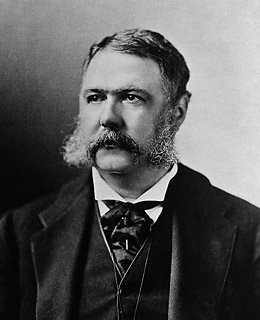
ChesterAArthur.jpgPresident Arthur was an interesting guy in his own right, an unelected one-term, one-issue president hell-bent on reforming the civil service system, otherwise mostly famous for his linear facial hair and serving between James A. Garfield and Grover Cleveland. He appeared on what I believe is our nation’s only 21 cent stamp, issued because we had many more past presidents than postal rates back in 1938. I commemorated him by naming the President of Valinor (of my Drumlins saga) Chester A. Arthur Harczak mostly after him, but also after a well-known Chicago sausage factory. This fairly represents my opinion of most politics.
The other excitement in recent days is that we have a daytime bear here. Four times since Tuesday I’ve been driving through the neighborhood and seen him sitting nonchalantly in front of an overturned garbage can in broad daylight, feasting. Bears are generally nocturnal but this one didn’t read the manual, and he’s been raiding dog food bins in people’s garages and scaring the crap out of the unwary. I actually stayed in the garage yesterday tidying up, from 8 AM, when I put the cans out, until about 11 when the trash guys came by, to make sure he wouldn’t make a mess in our driveway as he’s made in so many others. Now, precisely what I was going to do if he decided to raid the can is unclear. Per my entry for September 8, 2010, I do have a hacksaw here, but not a pistol that a bear would understand. (And bears have been known to open freezers all by themselves.)

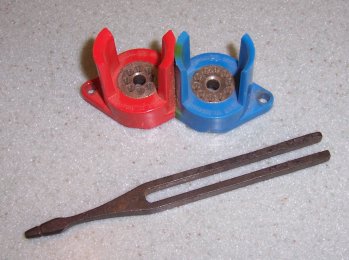
ForkAndStraightener.jpgNo bear action, alas (or whew) but I did get the garage about as tidy as it’s been since the day before we moved in back in 2004. Our rear wall full of brand-new Elfa shelving system absorbed a boggling amount of clutter, allowing me to get my tool shelves in order and compacted (I now have empty shelf space!) and actually schedule time to wipe down, oil, and maybe even use my lathe.

Given that we never saw the bear, yesterday’s highlights included finding my tube pin straightener and my father’s tuning fork (stamped “A”) neither of which I’d seen since the last century. I’m out of Diet Mountain Dew and my back hurts, but overall I still consider it a win.

Insight Is Gone From Ubuntu…

…and in fact from everything else based on Debian. Not six months after I saw Assembly Language Step By Step, Third Edition hit the shelves, the Debian team decided to pull the Insight debugger package from their seminal Linux distribution, on which Ubuntu, Kubuntu, Mint, and several others are based. Come Ubuntu 10.04 Lucid Lynx at the end of this past April, and suddenly people reading my book can’t work through the examples, because the software that I used in those examples (for single-stepping and examining registers and memory) is no longer available for their version of the OS.

This isn’t new news, and I’ve been trying to figure out how to finesse the problem ever since I heard about it mid-May. I got a number of queries this past week, suggesting that I had better get on it. (This is why you haven’t seen much from me in recent days.) Assuming at first that Insight had been dropped just to keep the distro CD-size, I tried to install it under Lucid from Software Center (not found), next a deb package, and finally from source, but nothing worked quite right. As the months have passed and more and more people are installing Lucid, I’m getting more and more mail about this. It’s a serious problem: A lot of the skill of assembly programming lies in debugging at the instruction level, and much of the tutorial depends on being able to run a debugger. Insight was that debugger. It’s GUI-based, rather than purely textual, and I think it’s a great deal easier to grasp, especially for newcomers.

So why didn’t I just use gdb?

Um…I did. Or at least I thought I did. Insight is an odd case. Most people assume (as I did) that it works the same way that Nemiver, KDbg, and DDD work, as independent front ends for gdb, passing textual commands to gdb and getting textual data back for display. Not so: Insight is gdb, and therein lies (in my opinion) most of the problem. What Insight’s originators did was take the gdb source code and add a built-in GUI, using Tcl/Tk. In effect, they forked gdb and produced a new custom version that contains all of gdb (at least gdb as of 2007) plus a windowing visual wrapper.

That in itself is unorthodox but not necessarily damaging, though forking something as fundamental as gdb should not be done lightly. Still, if you do it, you have to do it well, and I’m seeing indications that Insight isn’t nearly as clean a product as it should be. The Debian team spoke tersely; see the bug report and resolution here: “RoQA; insane packaging; unmaintained; low popcon.” (Yes, I read “popcorn” at first too.) More details may be found here. (Warning! DDG: Deep Debian Geekery.)

Quick translation:

  • RoQA means “Request of Quality Assurance”; basically, Debian’s QA team decided that the package was too broken to keep in the Debian distribution and requested that it be removed.
  • Two release candidate (RC) bugs were reported by the Debian team to Insight’s maintainer, but no one there responded. This is odd, because the maintainer is none other than Red Hat.
  • An NMU is a non-maintainer upload, which is when a package is sent to the distro team by someone other than the package maintainer of record. It is often a sign that the maintainer has abandoned the package, especially if the maintainer never acknowledges the third-party fix.
  • “Low popcon” is a reference to Debian’s unique “popularity contest” system for gaging how much individual distro packages are being used. Insight got 36 votes, which, in browsing the rest of the stats, seems low but not fatally low.

The real problem is that “insane packaging” issue. Insight contains embedded copies of software that is maintained by others and would be better linked in as libraries. The embedded bits “age” with respect to the current release of the OS and its libraries, eventually getting out of sync to the point that the package will not understand the current system well enough to function correctly. Tcl and Tk are either part of or easily installable to any Linux distro there is; you do not have to cut’n’paste them into your program source. With old software copied into its sources the package may build correctly, but might not necessarily run.

That said, the right way to approach the problem may be no more complex than taking the most recent release of Insight and making a proper Debian package out of it. The version I used last year in Karmic Koala goes back to 2007, and that’s the version pulled from Debian. The July 2009 release may be better. I’ve read enough on building Debian packages to know that I’m not the guy to do it, but I hope that somebody with better Debian chops will eventually try it, so that we can tell if Insight was just wounded, or if it’s really and quite sincerely dead.

In the meantime, the best fix appears to be falling back to Ubuntu 9.10. More here as I learn it.

Millard Fillmore in the Rivervalley

FillmoreBuck.jpgI finally got a Millard Fillmore dollar at the bank today. I’ve been meaning to ask for one for a long time, but I hate to bother the poor tellers for silly things like that when there’s a line. Today, for whatever reason, the Wells Fargo branch at Safeway was empty and staffers were standing around BSing, so I asked. And I got.

It’s a ridiculous coin in a lot of ways, none of them involving poor President Fillmore. Nobody uses dollar coins, and the government only issues them as a means of making something out of a nickel’s worth of metal and selling it to collectors for a dollar. The coins don’t suggest “money,” (and certainly don’t suggest “dollar”) and after only a little while in circulation they darken up and look like big ugly old pennies.

But I like Millard Fillmore, and have wanted to work him into a story for thirty years. I got closest in the fall of 1984, when someone in my SF group told me that Philip Jose Farmer was allowing people to write stories set in his Riverworld universe, as long as the yarns didn’t conflict with anything in the novels themselves. I have a collection of such stories, which were far better than what we now call fanfic, and are worth reading if you enjoyed Farmer’s epic even a little.

So I read up on Fillmore a little, and began a story. That was 26 years ago. I dug around in my two moving boxes full of old manuscripts downstairs just now, and found it without a great deal of trouble. Some quick OCR, and I can give you a sample:

It had been a quiet night, and the late night rains were past. Nicky was close by, too close: Through the merest wisp of thatch Fillmore heard female giggling. Soon, too soon, he suspected he would hear Nicky say something like, “I’ll do that again if you’ll go next door and be good to President Fillmore…” When the line worked, he felt wretched. When it didn’t work, he felt worse.

Fillmore had died an unhappy old prig at age 74, and even after thirty years on the great River, where everyone had been resurrected a healthy, glowing, eternal twenty-five, he had never gotten the knack for seducing young women who seemed more suitable to be his granddaughters than his paramours. Telling them he was Millard Fillmore virtually always produced a shrug–telling them he had been President of the United States usually brought forth a belly laugh.

For five years he had lived with a woman who had heard of him: Phyllis Swoboda, a twentieth-century American from Chicago. She had been a psychologist and was fascinated by what she called a “self-persecution complex manifested in a claim to be an unimportant historical figure.” She was clearly the one who was insane, but she had a magnificent memory, and she was from the future of America.

America! Phyllis told him tales of Apollo’s conquest of the Moon, the Panama Canal, Hoover Dam, personal computers, television, Chevrolets, and Space Shuttle Columbia. The most powerful, noble nation in the history of planet Earth, and he had led it for a little while. Wasn’t that worth something?

When Phyllis Swoboda couldn’t cure him of being Millard Fillmore, she moved on. Soon afterward, a tall, muscular blond man in a Panama hat approached him on the beach, set down his grail, and shouted, “You’re Millard Fillmore!” He had almost fainted.

The man was Nicky Daniel Scroggins, who had died of polio in 1955 at twelve years of age. Nicky had collected stamps, and his favorite series of stamps had been the “Prexies,” issued in 1938, including every deceased President up to that year. On the 13-cent issue was the face of Millard Fillmore. “I had a whole sheet of you!” Nicky had shouted, and it was the beginning of the longest friendship Fillmore had enjoyed in either of his two long lives.

I doubt I would have sold it anywhere, but the story had some promise: Fillmore and Nicky trudge on along the River, where they find an “America” every three or four hundred miles. Each of these ersatz Americas boasts a charismatic leader who claims to be someone like John F. Kennedy, FDR, or Andrew Jackson. In no case is this true, but in every case the phony Presidents tell Fillmore to hit the road. After having adventures and being insulted by Sam Clemens (“Millard Fillmore! The man who proved that no one can grow up to be President!”) they happen upon yet another America, a small enclave led cooperatively by three men who claim to be Franklin Pierce, Chester A. Arthur, and Warren G. Harding. Conceding that there was little point in falsely claiming to be Millard Fillmore, the three obscure former presidents welcome Fillmore and make him the fourth partner in ruling the cooperative. (Somehow I flash on a Victorian steampunk epic entitled The League of Unexceptional Presidents.)

I got a few thousand words down, but the story had started to wander when I set it aside. Shortly afterward, I took the job with PC Tech Journal, and my SF career went into near-immediate eclipse. Still, I’m glad I tried: It was the only time I had ever attempted to write a story set in someone else’s world, and that whole challenge gave the project a very weird feel. I had to be careful not to be too imaginative, for fear of violating the fabric of the Riverworld saga, and I wasn’t used to putting artificial limits on my inventiveness. That, of course, is a core skill of a really good writer, and anyone who claims to be a master of his/her craft should try it.

Daywander

I put Carol on a plane Thursday morning for Chicago, after her mom was taken to the hospital late Tuesday night. Delores is doing a lot better now, but for a few days it was unclear just what was going on. We were both planning on flying out there on the 16th, so this wasn’t an immense change in our summer plans–it just means I’m here by myself for a bit, trying not to eat like a bachelor nor dress like a college student.

I didn’t get the whole story yesterday when I cited the YouTube video of Carol’s sister talking about her experiences at her local Ford dealership. It’s actually a clever piece of marketing, though I’m also sure it’s not viral: The dealership will award a gift certificate to the customer garnering the most clicks on their YouTube video by July 15. So do us a favor and go look at the video. Thanks! (I will admit I’m curious to see how many clicks a citation on Contra can generate, and this is a rare opportunity to find out, with real numbers.)

When Carol’s gone, I generally drown my sorrows by writing, but I ran into an interesting problem yesterday. I finished Chapter 7 of Old Catholics last week. I won’t know how good it is until I get a month’s emotional distance from it, but in the meantime there’s Chapter 8. The problem came in when I sat down to write, me in my shorts with an iced tea on the coaster, the sun beating down on the oaks outside my window, only to realize that Chapter 8 is the Christmas chapter. It’s about the quirky Polish Christmas vigil supper at St. JJ’s, and draws heavily on my own experiences with Polish Christmas vigil suppers, both quirky and ordinary. It was 86 degrees out yesterday afternoon, and no matter what I did, I just could not get my interior state to feel like Christmas. It may be the mark of a true hack to be able to write convincingly about Christmas during the second week of July, but I may need to go back to hack school. I just can’t do it.

No matter. I’ve been working on Old Catholics since 2005; what’s another five or six months’ delay? In the meantime, there’s “Drumlin Circus” to work on. It’s still at the notes-and-outline stage, but that doesn’t mean progress isn’t being made. Imagine a line of circus wagons pulled by woolly mammoths, and a show with an acrobat who performs in a cage with two live smilodons. (I may even work in a giant beaver.) And every artifact the circus owns; wagons, props, steam calliope, everything, is made out of drumlins. The Bitspace Institute kidnaps the circus master’s wife, who supposedly has a private drumlin that compels wild animals to obey her. After two years without her, the circus master finds out where the Institute is keeping her, and let’s say that he has a grudge. When the circus comes to a nearby town, it mounts a show that no one in town–especially the Institute–will ever forget. Pleistocene megafauna, scary clowns, calliope music, secret drumlins, the legendary Function Controller–we’re gonna have a real good time!

It may be as much as 35,000 words long. Jim Strickland is doing a Drumlins novella as well, and we may try to put the two stories together as the first Copperwood Double. I’m not an ace at tete-beche, but I intend to learn. Stay tuned.

The Pulps Reconsidered, Part 2

bakehead.jpg

Back in my Febrary 23, 2010 entry, I began a series about the pulp fiction mags of the first half of the 20th Century. Because most people would assume I’ll be talking about SF, I deliberately went elsewhere, to a category most of my readers have probably never even heard of: railroad fiction. I bought and have been reading some 1930s issues of Railroad Stories magazine, published by the Frank A. Munsey Company, which in 1882 basically invented pulp fiction mags as we know them.

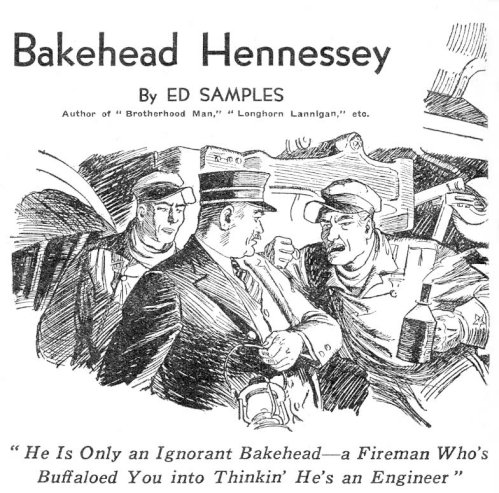
I can give you a good flavor for the genre with a single 300-word excerpt, from a story called “Bakehead Hennessey,” by Ed Samples, in the August 1935 issue:

Barney softly coupled his two engines into the head car. An “air” man connected the hose. The compressors on the head engine cut in, racing, clicking, thumping, forcing the train line pressure up to ninety pounds. Barney glanced at his gage, then out toward the yard office, where Conduc­tor Gardner was running to the plat­form with two sheaves of green and white tissue in his hands. Behind him waddled stout Superintendent Moran. A second later Old Tom Ryan was climbing down upon the brick plat­form to meet Gardner.

Barney watched him, glanced once more at his air gage, then toward the rear. An inspector’s light was saying: “Set the air.” He opened the valve, watched the needle swing back, then closed it; and wiping his hand on a piece of cotton waste, went striding toward the men who were comparing watches and reading train orders.

The conductor handed him his set of flimsies in silence. There were only three: two slow orders and the running order. He glanced at the latter.

“Running us as Second Seven?” he asked, looking at Gardner.

Gardner nodded. Barney read the order through. He knew that never in the history of the road had such a task been laid out for an engineer: to clip sixty minutes off the time of No. 7, the fastest train through the Rockies on any line.

Air pumps were racing. The pop valve on the 3775 opened and white steam climbed skyward. A dozen lights darted hither and yonder about the steel mail cars. Superintendent Moran came panting up to the group.

“We want action on this run tonight,” he began.

“What the hell’s the use uh puttin’ out a fast schedule for that sizzlin’ bakehead?” snarled Old Tom. “He’s got you fellers all buffaloed into thinkin’ he’s a hoghead. Hoghead! Bakehead! Bakehead Hennessey!”

‘Nuff train talk for ya? I’m the son of a passionate railfan and have researched railroads more than most people, but I still had to look some of this stuff up. A “bakehead” is a locomotive fireman, who stokes the engine manually or maintains the stoking machinery. A “hoghead” is the engineer of a freight train. “Flimsies” are train orders, often printed on something just a hair better than tissue paper. Nonetheless, if you know the jargon, this scene will be utterly clear to you, and back in 1935, this was not nostalgia but the way the railroad industry actually worked.

Nor is this unusual within the genre. In the two issues I’ve read so far, all the writing is precisely like this, in that what matters are the trains. The people are types, which isn’t to say they didn’t exist in the real world or are somehow badly drawn in the tale itself. (Not everyone is an American Original.) But descriptions of their internal conflicts and personal growth were not what the reader was paying for. In a way very much like the Tom Swift books I read in the early 60s, the railroad pulp stories (and I’m guessing all pulp stories) were created to help people imagine themselves in certain roles and in certain situations. The people (thinly) depicted in the stories were like halloween costumes, in a way, to be put on by people who wanted to imagine themselves as railroad engineers and brakemen, or perhaps remember being railroad engineers and brakemen years ago.

This should be obvious, and it may be obvious to you, but I’m amazed at how some people just don’t understand why pulp fiction was ever popular. A lot of people would consider the railroad pulps bad fiction because they focus on technology (railroad tech, such that it was in 1935) rather than inner conflict and growth. Swap in “spaceflight” for “railroads” and you’ll have pulp SF of the same era. The railroad pulps had their share of adventure and fistfights and gunplay, but I was amazed at how close the action stayed to the tracks. And just as superb writers like Robert A. Heinlein stepped aside from the action to teach lessons on orbital dynamics, the railroad pulp authors sometimes taught lessons about their beloved technology. Read this excerpt from “When Destiny Calls” by E. S. Dellinger, the cover story in the August 1935 issue. It’s dense, but if you love trains you’ll understand the frightening energy contained in a boiler full of steam (enough to lift a 100-ton locomotive two and a half miles into the air) as well as how the devastating boiler explosions common during the steam era actually happened. I’ve ridden behind a couple of steam locos on tourist lines. That excerpt gave me chills.

Which, of course, was part of the package. The firms that published pulp fiction knew exactly what their customers wanted: a sense of being somewhere else, somewhere vivid and colorful, somewhere better and more exciting than a boarding house during the Great Depression, after a twelve-hour day at a mindless job in a sweltering factory that paid a quarter an hour.

The pulps were hugely successful for quite awhile. The writing wasn’t great, but it was nowhere near as bad as people make it out to be. Much of its “badness” was the focus on action, setting, ideas, and a certain sort of culture. The words could be carelessly arranged, but words can be fixed, and there is a particular skill in creating vivid settings and action scenes that few people understand until they realize that they don’t have it. The concept of pulp fiction deserves better than it’s gotten in recent decades. It didn’t even completely disappear, though the psychology is a little different these days. More in Part 3.

The Pulps Reconsidered, Part 1

RailroadStoriesCoverMay1933-500W.jpg

How bad were the Golden Age pulps, really? Thirty-odd years ago I had a few SF pulps from the late 1930s, and while I’m not sure where they ended up, I remember the cognitive dissonance that arose from knowing that I should despise them–while in fact enjoying them a lot. Reading them was a little like watching old B-movies like The Crawling Eye: You know damned well they weren’t literature, but somehow they kept your attention and made the time pass..which is exactly what they were created to do.

Few people–especially those under 40–realize just how broad a phenomenon the pulps were, and how small a part of it SF actually was. Beyond SF and fantasy there were sports pulps, many subspecies of crime/detective pulps, adventure pulps, romance pulps, aviation pulps, western pulps, railroad pulps, and doubtless others that I’ve never heard of. The SF pulps were better than I’d been led to believe, and I started wondering recently whether the SF pulps were outliers, or whether the pulps as a phenomenon and even a literary form have been slandered out of proportion by the ultrasophisticated artsy elite.

I bought a couple of railroad pulps pretty much at random on eBay not long back, and have been reading them as time permits. The cover above is from the May 1933 issue of Railroad Stories. I also bought the August 1935 issue and found with a grin that the cover author and the cover artist were the same in both issues: E. S. Dellinger writing the cover stories (both novelettes of about 10,000 words) with Emmett Watson on watercolors. I chose railroad pulps because I like railroads; I’m not sure I could have bulled through a sports pulp or a true crime pulp.

Being a magazine guy myself, at my first flip through the issue I was startled: These books had almost no ads! The back cover and inside covers were full-pagers, and the single-page TOC was set within a 4-page block of fractional ads, generally 1/8 page items hawking hair tonic or remedies for hemmorhoids. And that was it. There were no ads whatsoever set in or between the stories themselves. It’s obvious that they didn’t pay much for the paper (and we know they paid almost nothing for the stories) but I boggle that the 15c for a single issue or $1.50 for a full year carried that much of the operation.

The inside front cover ad seemed odd for a railroad pulp: Dr. Frank B. Robinson pushing his artificial religion Psychiana. On the other hand, readers of Popular Mechanics were never too far from discovering the secrets of the Rosicrucians, and this was clearly their competition.

The TOC divides each issue into three sections: Fiction, nonfiction, and departments. Fiction was less of it than I had thought. A quick tally shows about a third of the editorial to be fiction, and probably half nonfiction. The departments include a joke page, a question-and-answer column about railroad history and tech, news items submitted by readers, short items from readers who worked at railroad jobs, and a scattering of railroad poems.

So…how bad was the writing? What were the stories about? Tune in next time, kids!

Daywander

Not having much luck making Workstation 6 function, and two conversations and numerous emails with VMWare’s tech support people hasn’t helped. I install the product, I enter the serial number as requested, and get this error message. Has anybody else ever seen this? Or can anybody even explain it? I emailed the screenshot to VMWare, and that’s about the time they clammed up.

I hate to abandon Workstation entirely. VMWare’s snapshot system is far superior to that of VirtualBox, and I use it a lot. I’ll miss it. Boy.

And while I’m asking peculiar things, let me ask the multitudes here how you pronounce “iodine.” I have always said eye-oh-dyne, but Bob Thompson, who knows more than a little about chemistry (and certainly more than I) pronounces it eye-oh-deen. This lines up with the rest of the halogens; we don’t, after all, say “broh-myne.” So? Which is it?

I edited another half a chapter of FreePascal From Square One yesterday morning, and in laying out the edited material got up to page 136. The book I’m adapting it from is 800 pages long, but don’t look for anything that size. To be workable on Lulu, the book is going to have to stop at or before page 400. A lot of the material in Borland Pascal 7 From Square One just doesn’t apply anymore…who’s called the Borland Graphics Interface lately, or done text output by poking word values into the video display buffer? The BGI chapter was 100 pages all by itself, and when I slice out that and other things like overlays and DOS/BIOS calls, I’m really pulling 400 pages out of no more than 600 pages of useful material, maybe less. Should be done by June. I hope.

The issue of whether Amazon imposes DRM on Kindle publishers is complicated, and I’ll back away some from my statement to that effect on Monday, and will hold off until I try to get one of my own titles into the system. This article suggests that recent policy changes have made DRM optional. Having to face the DRM issue square-on has kept me putting off publishing on the Kindle for some time. As a very small publisher I’ve made this promise to my readers: No DRM of any kind, on anything, ever. I’m willing to forgo Kindle sales if the DRM decision is not my own, but from what I’m reading now, I think that won’t be the case.

As for Amazon caving, well, that’s more complex too. I see that Nancy Kress’s new book Steal Across the Sky is listed on the Amazon Web store, and her publisher, Tor, is one of Macmillan’s imprints. However, you can’t order it from Amazon at this time. (Third-party affiliates are offering it, but Amazon itself is not. Note the double dashes under “Amazon Price.”) Ditto Nancy’s Beggars and Choosers, another Tor book. Yesterday morning’s Wall Street Journal had a story explicitly stating that Amazon had conceded the price issue to Macmillan. But Amazon isn’t selling the books yet, so clearly the struggle goes on.

Off to church, to install an SX270 in place of a doddering old E-Machines box that is four times the size and probably a third the capability.

Rant: That Old Linux Package Format Blues

I described my FreePascal from Square One book project in detail a couple of weeks ago, and I work on it as time allows. There have been some hangups; in fact, I sometimes wonder if I’m not Cing evil spirits at work hereabouts, frustrating my efforts to popularize Pascal.

A lot of this has to do with Linux software package formats. I’m trying to write a chapter in a beginners’ book describing how to install the FreePascal/Lazarus compiler/IDE combo. For Windows it’s easy: Download the executable installer, run it, and answer the wizard’s questions. I ran into a stone will with Ubuntu: There is a deb package for Lazarus (which includes the FreePascal compiler binaries) but it’s ancient, and much worse, it does not install the compiler source code, which Lazarus needs. Now, why an IDE needs the source code for its compiler is obscure, but that’s how they wrote it, and when you run Lazarus in the absence of FreePascal’s source code, it complains, and warns that some (unspecified) subset of its features may not work.

The rpm package, on the other hand, is current and complete. In the installation chapter I’d like to describe installation in detail for Windows and the three most popular Linux distros: Ubuntu, Fedora Core, and OpenSuSE. Fedora and OpenSuSE use RPMs. No problem there. Installing Lazarus under Fedora may in fact be as simple as opening a console and typing “yum install lazarus.” (I haven’t tried that yet; more on why a little later.) YaST has OpenSuSE covered. But with the Linux market leader, I’m hosed.

Yes, I know, there are solutions: Get the tarballs from the Web site, build the whole damned thing from source, convert from rpm to deb with Alien, etc. etc. etc. I can do that stuff. But this isn’t about or for me. It’s for people who are just starting in on programming and may be just trying out Linux. I don’t want to explain how to frakking rebuild the whole damned 200 MB monstrosity from source code. (Wasn’t CP/M Turbo Pascal happy to take up 24 KB? Does anybody even remember that old letter “K”?) All that is beside the point. The real question is this: Why can’t the FreePascal/Lazarus guys keep a workable deb package together? I know enough about Debian package management to be sure that it’s possible. (I don’t knows enough, alas, to do it myself.) It isn’t being done. And nobody seems to want to talk about why.

Not having a complete install for Ubuntu made me uneasy about running tests in Lazarus under Ubuntu, so I realized I would have to get instances of Fedora Core and OpenSuSE together. How hard could that be? Well…

  • I created a new VM in Workstation 5 for Fedora Core 12. The install failed partway through, with the VM locked up. “He dies and gives no sign.”
  • Ditto a VM for OpenSuSE. Ditto. The YaST installer could not detect the virtual hard drive created for the VM, so we didn’t even get as far as installation.
  • I reformatted an old Kubuntu partition on a machine downstairs and attempted to install Fedora on it. Different fail, but fail nonetheless. The DVD vetted itself with a clear bill of health, but I may download it again anyway.

I managed to get OpenSuSE to install on that same partition, so I finally have a complete and trustworthy Linux installation of Lazarus. And I will say that I really like OpenSuSE. (This is the first time I’ve ever laid hands on it.) The OpenSuSE Build Service is a thing of beauty.

The double VM fail is a puzzler. And that led to me wonder if newer distros just don’t play well with 2004-era Workstation 5. So I finally took my still-sealed retail copy of Workstation 6 off the shelf, installed it, registered it…and VMware doesn’t seem to know how to license it. I’m sure they don’t do much business in boxed product, but that’s no excuse. Email tech support with their Indian support people has a 24-hour turnaround, and the last time I got a response, the guy sent me the serial number for my copy of Workstation 5 and told me to use that, as it was already licensed. Gakkh. So they have my $180, and I have a copy of Workstation 6 that won’t run. We’re three days into this adventure, and I’m sure nothing will get resolved until Monday. If then.

You wonder why I hate activation systems so violently.

And people wonder why tech books take so long to write.

Screw it. It’s the weekend. I’m going to find the nearest bag of potato chips and eat the whole damned thing.