Jeff Duntemann's Contrapositive Diary Rotating Header Image

writing

Humor Is Hard

Humor is hard. Way hard. Especially when you attempt to write 25,000 words of it at a rate of 1,000 words a day. As I mentioned recently, I have a significant press interested in my novel-in-progress, Ten Gentle Opportunities. I’m trying to have all 80,000 words of it not only written but polished by September 15th. As of this afternoon, I’m at 57,100. I’m on track. (Barely.)

But man, this is hard.

Now, I have a knack for humor. I was famous for opening with a humorous anecdote while doing the “Structured Programming” column in DDJ back in the ’90s. (I learned that from Isaac Asimov, glory unmeasurable be upon him.) Does anybody remember the Pizza Pride Girl? I got more fan mail on that one column than on some of my books, and for a couple of months afterward I’d get regular emails asking what the Pizza Pride Girl was wearing that day. I did standup for most of an hour at my 40th grade school reunion in 2006, to the extent that some of the girls who had ignored me in 1966 came up to me and said things like, “Jeff, I didn’t know you were funny.” (One added, “I don’t mean funny-looking. Not that you were ever funny-looking. Really, you weren’t.” Sorry. I was.)

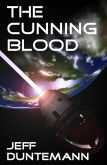
I’ve written a number of well-regarded humorous SF shorts, including “Stormy Versus the Tornadoes” and “Sympathy on the Loss of One of Your Legs.” (Both are in my collection, Souls in Silicon .) In 1978 I wrote a (still unpublished) lighthearted 27,000-word action/adventure hard SF novella in the style of Keith Laumer’s Retief stories, which took me close to a year; in fact, by the time I submitted it to Asimov’s SF Adventure Magazine, the magazine had folded. Most of my longer SF items (including Drumlin Circus and The Cunning Blood ) contain a certain amount of comic relief. But never in my entire writing life have I tried to be funny for 80,000 words in a row.

The editor who wants to see the novel suggested at a recent writers’ conference that humorous SF is uncommon because Douglas Adams set the bar so high. If true, that’s unfortunate. I’m not trying to be Douglas Adams, just as I wasn’t trying to be Isaac Asimov at DDJ. I’m not going for some kind of world record. Genius does not invalidate competence. I just want to tell a good story that makes people laugh.

The problem lies in sustaining the mood. The premise is already loopy, in the way that the Harold Shea stories were loopy. Going in I had a lot of ideas that ran from whimsical to downright silly. One of my AIs discovers that she has an FPS-style Core Wars video game built into her kernel (complete with a cannon that shoots machine instructions) and uses it to fight back when she’s attacked by malware, right down to a Lara Croft-style skin. On another of my AIs’ bookshelves is a book called Sixty-Four Shades of Gray. Then, of course, are my already-famous dancing zombies. I’m attempting every type of humor I’ve ever heard of, with the single exception of puns. Will it work? I don’t know yet. Sooner or later (by this fall, with any luck) I will.

In the meantime, a sample from today’s output:

…If the gomog failed to return, he would not be leaving this universe soon, or perhaps ever. What Stypek thought about that changed from hour to hour. He had spent some wistful moments on the edge of sleep remembering the pleasures of Ttrynngbrokklynnygyggug: finding castoff spells in garbage heaps, eating stewed squykk, sleeping in drain pipes, studying ancient books until his eyes burned, dodging zombies, running away from angry magicians…

Yes, he supposed that there could be worse fates than being stranded in a universe like this. Here he had been given fine clothes and the best food he had ever eaten. Carolyn’s meals were sublime, especially those containing meat from an animal called a spam, which his own world was not fortunate enough to offer. She had gifted him with sacks of delicacies that any nobleman in Ttrynngbrokklynnygyggug would kill for: Doritos, Cheetos, Pringles, Ruffles, and sweets baked by elves.

Even the protective charms were delicious. Carolyn had offered him a sack of edible talismans called gummies that would ward off bears. They did seem effective; after three days he had yet to see a bear. A small jar of similar talismans were either made from flint stones or deflected them away. (He would learn when he finally worked out the secret of opening the jar.) No matter. With the protective spells he had carried with him mapped to inexplicable or useless things, Stypek would gladly arm himself against local hazards however he could.


Daywander

Aeros Birthday.jpg

Today is Aero’s sixth birthday. We’ve given the Pack (and their forebears, Mr. Byte and Chewy) cake and lemon bars on their various birthdays down through the years, with good results. Dash, however, is peculiar in that he simply doesn’t like sweet things. So this time we took a quarter pound of good burger and divided it four ways. (L-R: Jack, Aero, QBit, and Dash.) We were out of birthday candles, so I took a plumber’s candle and stuck it in Aero’s portion.

It’s a testament to the quality of Carol’s training that even after she placed the plates of burger in front of them, saying “Leave it!” was enough to keep them seated patiently on the bench behind the table. Once the photos were taken, saying “Take it!” ensured that the burger was gone in two heartbeats. Maybe one. (Carol yanked the candle first.)

It’s also been two weeks since I last posted here, which is well beyond my usual threshold of pain. Insiders know what’s going on: I have a novel to finish. And I’m not trying to finish it just to get it off my do-it list. No sirree: An editor at a significant press has asked for the full manuscript.

Boy. Nothing like a little request like that to light a fire under a guy.

I have a pair of hard deadlines now: Finished manuscript by 8/31. Polished manuscript ready to ship by 9/15. Today was a milestone: I hurtled past 53,700 words, which was the finished length of Drumlin Circus. That means that Ten Gentle Opportunities is the longest piece of fiction I’ve written since The Cunning Blood crossed the finish line on Good Friday 1999.

It is also the strangest. At my Clarion workshop in 1973, Lloyd Biggle, Jr said during a guest lecture that you can’t mix SF and fantasy. I’ve had it in my head ever since then that when Biggle’s words reached my ears, it was like swearing on the Runestaff: I knew I would damned well do it someday.

Sorry, Lloyd. I offer you: Dancing zombies. Well-dressed AIs. Object-oriented magic. Virtual universes, virtual doughnuts, virtual Frisbees, virtual stomach acid. Romance. A cannon that fires machine instructions. Heavily networked kitchen appliances. Total war waged inside a robotic copier factory. (Did I miss anything? I’ve heard there’s a sink shortage locally.)

I admit it. The romance has been hard. Reading romance novels to see how the pros do it was not especially helpful. Worse, I have no real-world experience engaging in screaming matches with significant others, of whom there have been exactly four, anyway. The romance may thus seem less real than the magic, which might be described as Supernatural Pascal.

What’s been harder than the romance has been maintaining the mood for 53,000 words. Humor is just, well, hard, which is a topic worthy of one or more entries all by itself. I think it works, but it’s hard to know until the whole thing’s done. I suspect my beta testers will tell me. If they don’t, my editor will.

53,800 words down. 26,200 words to go. Three weeks. Watch me.

Odd Lots

  • I hit a milestone the other day: 40,000 words on Ten Gentle Opportunities, which is at least halfway there and maybe (if I’m willing to settle for a 75,000 word story) more than halfway.
  • One of my readers sent a link to a page describing how to install the Insight debugger under Linux Mint. As my ASM freak friends will recall, I no sooner described Insight in Assembly Language Step By Step, Third Edition than Debian pulled it out of their distribution. Supposedly this method will also work for newer versions of Ubuntu. I need to test the repository under both distros, and will report when I do.
  • There’s a new nova in Sagittarius. (Is that redundant?) Mag 7.8–which is easy to see with binoculars, if you can separate it from the stellar mosh pit in which it appeared. Thanks to Pete Albrecht for the link.
  • Michael Covington sent a Google Ngram for the words “whosever” and “whoever’s” indicating that “whosever” has been on the run for a couple of centuries. It became the minority player about 1920 and has been down in the mud since about 1960.
  • Ok, I agree: This is the most brilliant kitchen gadget since the salad spinner. Or before.
  • I used to do this a lot, though I haven’t done it since 1977: pull the guts out of a photocopier. This guy’s blog, by the way, is news to me but should be on every techie’s blogroll. (Thanks to Jack Smith K8ZOA for the link.)
  • Haven’t heard much about software radio recently. Ars Technica just had a nice overview piece on it. The hardware keeps getting better, but all the promised weirdness (including new types of pirate radio) hasn’t happened yet. My theory: Wi-Fi is just a better weirdness magnet.
  • Foxconn is releasing a fanless nano-PC toward the end of summer, and I like the looks of it, at least if it’s got something better than an Atom in it. Roughly 7.5″ X 5.25″ X 1.5″. No optical drive. 5-in-1 card reader on the front panel. Under $300.
  • Talk about nutty brilliance for film promotion: RC drones in the shape of superhero-style flying people to hype the film Chronicle, which is evidently about…flying people. (Thanks to Pete Albrecht for the link.)
  • To inflate a Buckyball, just use a laser.
  • This sweet merlot (scroll down) was lots better than I thought it would be, especially for a hot summer evening’s barbecue. May be hard to find outside Colorado. No least hint of concord grape, for you mutant-blueberry purists. About $15.
  • Yet another sign that we may be winning the Fat Wars: Fat-free dressing is bad for you.
  • Still yet another sign may be that the grocery store near our condo outside Chicago carries a sort of spreadable lard called “smalec.” This is the best-kept secret in the food world; it took me ten minutes to even find a picture of it. It was brought here by Polish immigrants and is no less healthy than butter, though I have no clue as to its taste.
  • As if we didn’t have enough to worry about, well, the latest home hazard is swallowing loose bristles from your grill brush. My brush is at least five years old and failing. Looking for another technique. (Again, thanks to Pete Albrecht for pointing it out.)
  • This sure sounds like a hoax, but there could be a zombie apocalypse theme park in Detroit’s future. The concept suggests that time’s about up for the zombie craze, so I’d better get my novel (which contains dancing zombies) shambling on to completion before the whole thing caves in.

Whosever Language This Is

This doesn’t happen too often, but today it stopped me cold: I was writing a paragraph from Ten Gentle Opportunities and couldn’t decide which of two usages was the right one. When there are two ways to say something, I generally have an intuitive sense for which is the more correct way, based on what I’ve read as much as what I’ve learned of proper grammar. This is one of the benefits of reading much and broadly.

Today I got stuck between two usages that both felt a little wrong, and both almost precisely the same measure of right. Here’s the sentence in question, done the way I learned it way back in the Precambrian:

Carolyn stabbed the End Call button, and rose to go fetch her intern, or whosever intern he was.

It sounded a little off. The other way also sounded a little off:

Carolyn stabbed the End Call button, and rose to go fetch her intern, or whoever’s intern he was.

My (moldy) style books all say “whosever” but I hear “whoever’s” a lot more in recent writing. I think what we’re seeing here is a usage at the tipping point. In a few more years, “whosever” will become an archaism, and people will look at you funny when you say it.

Is this good or not? I don’t know. Language evolves; sound and sense and all that. About the only thing I’m certain of is that I’m old. But I knew that.

Odd Lots

  • The mysterious X-37B has returned to Earth after 468 days in space, evidently without a scratch. One of the comenters on the many space hobby sites I read suggested something interesting: The spacecraft might be considered a “retrievable satellite” that can stay in orbit for years at a time, then shimmy down the gravity well for a refurb when necessary before being launched to orbit again. (Thanks to Frank Glover for the link.)
  • The secret to an successful programming language may be a good…beard.
  • Here’s a nice, short, practical piece on password security. In case you haven’t heard yet, a long password of concatenated plain English words (“correct horse battery staple“) is better than a shorter password of unmemorizable gibberish.
  • Why 419 scam emails claim to be from Nigeria and are written idiotically, as they’ve been for years’n’years: It’s a stupidity filter. Only the spectacularly gullible would now reply to one, which maximizes the chances that the respondents will actually fall for the scam. Damned clever, these Nigerians.
  • Here’s yet another assault on wine snobbery.
  • I’m closing in on 60, and in my life have known a fair number of redheads. Not one of them would I describe as “fiery.” Not one. The cliche has become widespread enough that we recently discussed it as such in our writing group. (Most of my heroines have black hair, which seems more exotic to me.) Now that Pixar has anointed the cliche in a new film (rough language alert) might we hope that redheads will now be given some slack? (At least it’s a film in which the folks with Scots accents are actually Scottish.)
  • Speaking of redheads…there is some science now suggesting that the Neanderthals may have been gingers.
  • Speaking of Neanderthals…in my note-taking for a possible novel called The Gathering Ice, I suggested that Neanderthals (who hide in plain sight, and have done so for 50,000 years) refer to themselves as “the Uglies” and to the rest of us as “the Saps.” Now I learn that Graham Hancock uses “the Uglies” to describe the Neanderthals in his 2010 novel, Entangled. Bummer.
  • Double bummer: There is a YA teen series called The Uglies. Not about Neanderthals, though. Still, having twice been outgunned on the term, I’m considering renaming my Neanderthals “the Plugs.” Could work.
  • The anomalous cold snap called the Younger Dryas 12,000 years ago figures into the backstory of my Neanderthal yarn. It’s still unexplained, as this article maintains, but it sure looks like a phase-transition stutter to me, as Earth’s climate was changing from its cold state to its warm state. I’ve often wondered if we are now in the thick of a phase transition from the climate’s warm state to its cold state. (Such a stutter is the main gimmick in The Gathering Ice.)
  • This was utterly news to me: Parts of New York City have a vacuum-driven garbage-collection system that literally sucks trash through pipes under the streets to a central disposal location–and has had it for 35 years.
  • The email subject read “Your parcel is expecting of receiving.” Its parcel was expecting of delivering trojan. My delete was delivering of action. Alreet!

Odd Lots

  • I was wrong about Diesel engines being easy to make, as I suggested in my entry for March 5, 2012. Fuel injection, as it turns out, is a bitch. You’re trying to divide oil into a multitude of very small droplets of (reasonably) consistent size. Gasoline carburetion, by comparison, is a snap. (Thanks to Pete Albrecht, an automotive engineer, for the reminder.)
  • I suspect it’s easier to produce wood gas (AKA “producer gas”) at a small scale than gasoline. In a future where large-scale oil refiners are no more, a Dieselpunk society could power internal combustion engines with wood gas. This has been done a lot around the world, especially during WWII when oil supply channels were disrupted.
  • This has little or nothing to do with the Holy Roman Empire, but if you’re a map freak, boy–budget a day for it. Wow.
  • This looks like a good book, especially if you’re finding it hard to keep track of genre mutation within SFF. Will order and report after reading. (Thanks to Trudy Seabrook for pointing it out.)
  • We found one of these in a drawer in my late grandfather’s workbench after my grandmother died in 1965 and we had to sell their house. I never knew what it was until it made the A-head story on the front page of yesterday’s Wall Street Journal , in an article about…olympic sheep shearing. My grandfather lived a quiet life in a modest house on a tiny lot on Chicago’s north side. There wasn’t a sheep for miles. (I hope he didn’t use it to cut my father’s hair.)
  • I’ve noted some confusion about this: “Retina display” is not an Apple trademark, but a technical term: a display with such high resolution that the eye can’t make out individual pixels at typical reading distance. Here’s a good explanation of the whole retina display concept. The new iPad certainly qualifies, but it wasn’t the first. Asus’ Tranformer Prime was there some time ago. Retina-quality displays are made by several vendors, and will eventually appear in other high-end tablets.
  • The Lytro camera has been mentioned in a lot of places, but here’s the first in-depth description I’ve seen. A camera that allows you to fiddle with the focus after the shot is taken is FM, if you know what I mean. I ditch about a third of my digital photos (mostly taken in bad light) for focus problems. It’s an awkward form factor, but if it’s the first of it’s kind, I’ll assume the next one will fit the hand a little better.
  • The mad scientist in me cried out when I saw this. I need a castle. I need a kite. I need a monster.

Falling Back to Dieselpunk

My writing time has taken some hits in the last few weeks, but the weather has hugely improved. It got up to 72 here today, so with joyous enthusiasm I took a long walk. As usual, something occurred to me, this time when a badly adjusted dump truck went past and bathed me in fumes. Ahh! Dieselpunk!

The insight followed soon after: If the world went to hell for some reason and I had to build a vehicle, it wouldn’t be steam. It would be Diesel. With some study and care, you could render farm animals or even roadkill and make Diesel fuel. Diesel engine technology requires machining and some skill, but not exotic materials nor computer models. (The same is true of gasoline engines, but gasoline is harder to make than Diesel.) You can do it in a garage. Clean rooms not required.

I had some experience in thinking about recovering technology after a societal crash while creating the Drumlins world. The glitch there is that all the inadvertent colonists’ knowledge was in computers, but they didn’t have the critical mass of technology to make more computers, nor even fix the ones that broke. (Quick! We need ten pounds of indium! Jimmy, Sam! Go dig around and see what you can find!) So when the computers died, their technology died too, and they were back to a medieval style of life that might have stayed medieval except for the Thingmakers that shared the planet with them. Advanced technologies build on simpler technologies, which in turn depend on simpler technologies still. It made me wonder if there were a sort of minimum technology level, one that, with common sense, an oral tradition, and few old books, might be constructed more or less from scratch.

Speculation: Steampunk might be a consequence of ignorance (i.e., we don’t know enough yet) whereas Dieselpunk might be a consequence of a sort of poverty of connectedness (i.e., our societal matrix is neither large enough nor rich enough to build what we might find in old books or otherwise imagine, even if we knew how.)

It occurred to me that there was an interesting plateau of sorts between about 1920 and 1940. Most of the stuff that existed in 1940 existed in a slightly cruder form in 1920. During those two decades, we got better at doing the stuff we did before, but we didn’t invent a great deal of truly new stuff. WWII changed everything, of course, and nuclear energy and transistors and many exotic materials showed up by 1950.

The era 1920-1950 was the Golden Age of Back Room Science and Technology. You could do lots of interesting things with an engine lathe, a microscope, a slide rule, a gas stove, a source of electricity, and raw materials you could buy at the local drugstore, hardware store, and feed store. The science was straightforward, the technology simple. Most important of all, it was still possible to be a generalist. A hundred books (Ok, maybe two hundred) could teach you most of what we knew in the hard sciences. You could usefully master physics, chemistry, and math in less than a lifetime. Specialization has always existed, of course, but I think it became mandatory after 1950. After that, you could no longer hear street traffic near a university for Asimov’s Sound of Panting.

If the population of Earth were reduced by three quarters (especially by something limited to human beings, like a very nasty flu virus) high-tech civilization might no longer have the critical mass of human skill it would take to maintain itself. The computers would work for awhile, but after they died, all the support infrastructure (chip foundries etc.) would die with them, and what would be left after a few decades would be less Mad Max than Dieselpunk.

All that’s debatable, of course, and I could be completely wrong. I bring it up only as an insight obtained by getting out in the sunlight for the first time this cold season and making the blood pump a little. I’m taking notes on a fictional setting involving a new Ice Age, and now I’m sure it’ll be a Dieselpunk culture, with no computers but a great deal of steel, vacuum tubes, carbon black soot, and internal combustion. Neanderthals, too: Brute muscle mattered before WWII in a way it may never matter again. And airships–hey, they were huge in the ’30s! (Why let the steampunkers have all the fun?)

Now for the time and energy to finish what I’m working on now so I can get on to The Gathering Ice.

Odd Lots

Odd Lots

  • For the several people who asked: The odor-free carpet pad that we used in carpeting the lower level here is called Napa Carpet Cushion, from Leggett & Platt.
  • Apart from N&P’s Fallen Angels, Bob Tucker’s Ice and Iron, and possibly Mackelworth’s Tiltangle, what other SF novels involve an ice age on Earth in the near(ish) future? I have a concept that capitalizes on all my recent paleoclimate research, and I’d like to see if it’s already been done.
  • Whoops, found a list just before posting this. I clearly have some reading to do, assuming I can find any of these items. What are your personal favorites?
  • Today’s sunspot number is very close to zero. I haven’t seen sunspot activity this low in some time, and here we are supposedly barreling into the Cycle 24 maximum. The sunspot number is going in the wrong direction. 6M DX is evidently not in my immediate future.
  • Joe Flamini and Jack Smith are both pretty sure that the mysterious Comco gizmo I presented in my February 6, 2012 entry is an early remote control unit for commercial and public service radio systems, allowing control of a transmitter or repeater through leased phone lines. More on this in a future entry.
  • Having read briefly about hydraulic analog computing in a magazine decades ago, I built hydraulic calculators and computers into the technological background for my novel The Cunning Blood. Turns out the Russians did it on a pretty large scale back in the years running up to WWII. (Thanks to Jim Strickland for the link.)
  • From the You-Probably-Couldn’t-Do-That-Today Department: The flipside of the Chad Mitchell Trio’s 1963 hit kid/Christmas 45 “The Marvelous Toy” was “The Bonny Streets of Fyve-I-O, about a colonel who shoots one of his own captains for insubordination.
  • Tucows (does anybody even remember Tucows?) is launching a contract-free mobile service using Sprint’s network. The rates are interesting, and favor people who want smartphones but just don’t use them much, and data little or not at all.
  • The Maker Shed has a $99 Geiger counter kit that allows logging of pulses through a serial port, and detects both beta and gamma radiation.
  • A little gruesome maybe, but it’s real: When we lived in California in the late ’80s, there were reports of sneakers washing up on Santa Cruz area beaches…with human feet still inside them. At the time we assumed drug violence, but there’s a less scurrilous if no less ghastly explanation for a phenomenon that’s still happening. (Thanks to Pete Albrecht for the link.)
  • Mmmph. Military combat aircraft should be able to fly in more air than we’re used to, no? Sweden had this problem recently. (I’m guessing that Saab has it too, now.) Thanks to Aki Peltonen for the link.
  • The name of my company, Copperwood Media, LLC, was inspired by a set of traces on an old PCB that just happened to look (a little) like a tree. I had an artist draw me a better copper tree for the logo, way back in 2000. Now Rich Rostrom sends a link to the odd tradition in some parts of the UK of hammering coins into cracks in trees until the notion of “copperwood” takes on a whole new meaning.
  • Some very nice steampunk watches and jewelry. “Chronambulator” is a great word, whether or not you’ve got a steampunk gizmo to hang it on. Note also the level-reading absinthe hip-flask. (Thanks to Bill Cherepy for the link.)

Indies and Gatekeepers

Janet Perlman put me on to this article about why indie publishers (a category that may or may not include self publishers, depending on whom you talk to) get no respect. The whole piece might be summed up this way:

  • Quality is hard work.
  • Quality is expensive.
  • Quantity is no substitute for quality.

I agree, as far as it goes. But that’s not the whole story. You can break a sweat and write a superb novel at considerable expense of time and energy. You can pay an editor to look at it and perhaps fix certain things. You can pay an artist for a great cover. You can pay somebody to do a great page layout, generate print images, ebook files, and so on. Having shelled out all that expense in time, money, and personal energy, you are not likely to sell many books or become especially well-known. Publishing is an unfair business in a lot of ways.

Perhaps the most unfair thing about publishing as we know it now is that it cares not a whit about quality. Sure, the publishers will tell you otherwise. So will the agents, and so will the retailers, assuming you can find any these days. Alas, it’s not true. Publishers, agents, and retailers are indeed our gatekeepers, and the gates are tightly kept. The gates do not open for quality, alas. The gates open in the hope of making money.

This is true not only in quirky markets like fiction (more on which in a moment) but in technical publishing as well. I’ve received and rejected beautifully written books that were well-organized and basically error-free, for a simple reason: The Radish programming language (I just made that up) is used by 117 people world-wide, which means the total worldwide market for a book about Radish is 116. (The author already has a copy.) On the flipside, the best possible book on Windows XP won’t be accepted at any traditional publishing house, because all the books on XP that the universe needs were written a long time ago.

The reverse is also true, to some extent. If a publisher thinks your book will make money, the book will probably be published. Being well-written doesn’t change this equation much. Back in the Coriolis era I spent a lot of money on developmental editors to make a manuscript readable in those cases where I suspected (after market analysis) that the book met a hitherto unmet need. I wasn’t always right, of course, but the point is that I didn’t accept or reject books based on any judgment of quality. What I was looking for was market demand.

This is true of fiction as well, in spades. I picked up Cherie Priest’s steampunk entry Dreadnought last year, and had to force myself to finish it. Two other people in my circle, who live 1,000 miles apart and don’t know one another, both described the book in a single word: Unreadable. (Another said the same of her earlier book, Boneshaker.) Dreadnought was dull, slow, short on ideas, over-descriptive in some places and far too sparse in others. Yet Cherie’s got a following and is evidently doing very well. Somebody at Tor thought her books would make money and took a chance. They were right. That doesn’t make them well-written. (I did like the covers, and covers do matter–if you can get them in front of the readers somehow.)

I don’t want to be seen as picking on Cherie, who will doubtless chew me out if she reads this. It’s a pretty common thing. Nor is it a new thing. Decades ago I read a lot of abominable novels, from Sacred Locomotive Flies to Garbage World. They got into the stores. They probably made their authors at least a little money. (They got mine, after all.) They were crap.

If Dreadnought made money, why would a book that was better written not make money? It’s a long list. The author may not have been able to get a hearing from the gatekeepers in the first place. Luck is needed here, as well as brute persistence, not that persistence is any guarantee. The topic may be considered out of style, or just worked out and already done to death. It may be too long. (I ran into this trouble with The Cunning Blood. Unit manufacturing cost matters.) The book may have been judged to push buttons in the public mind that the publisher would prefer not to push. (Back when I was in high school I read a purely textual porn comedy novel that was brilliantly written and hilarious. Would I publish it? Not on your life.) Books that demean women or minorities a little too much, or focus on cruelty to animals (or probably a number of other things) won’t be picked up as easily, and it has nothing to do with quality. It’s tough to make money in publishing, and publishers are trolling for as broad a market as possible.

This is why I think the article on HuffPo cited above is misleading. Quality is a problem, but not as much of a problem as the author thinks, and not in the same ways. Worse, solving the quality problem won’t make an indie publisher’s books any more likely to get into B&N, and suggesting to indie publishers that they will is just dishonest.

So what’s the answer? Don’t know. There may not be one. The publishing industry is in the process of changing state, and nobody knows what we’ll inherit in five or ten years. Losing B&N (or waking up one day to find that B&N is a tenth the size it was yesterday) could work to indie publishing’s advantage, at least if independent bookstores fill the subsequent vacuum. The more gates to the retail channel there are, the more likely it is that one will open when you buzz. Self-published ebooks have worked for people like Amanda Hocking with Herculean energy who write for twelve hours and then promote themselves the other twelve. Tonnage can get you noticed, even if it’s bad tonnage.

For the rest of us, again, I don’t know. Quality in all writing (fiction especially) is not the choke point. It’s an unfair and beneath it all a mysterious business. Submit good work if you can, but be prepared to have the gates shut in your face a lot. That’s just what gates do.