Jeff Duntemann's Contrapositive Diary Rotating Header Image

Contrarian Wisdom: Butter

Still on my several-day antihistamine high, but this short entry might be useful:

One of the odder things I uncovered during my ongoing research on the Carb Wars was the divide in American thought on whether butter needs to be refrigerated. You’d think something that simple and that wide, er, spread would have a simple yes/no answer that everybody accepted.

Not so: See the Yahoo Answers forum on the question, “Does Real Butter Spoil?” Almost as many people thought that butter left out even overnight would spoil as thought it could be left out at room temperature for some time.

The first answer on Yahoo Answers is correct: You can leave butter out for weeks and it won’t spoil. I don’t know precisely how long butter will last at room temperature, but it’s at least six weeks. I know that because on one of our trips to Chicago, Carol and I forgot to put the butter in the fridge before we left. When we got back a month and a half later it was fine, and we finished it.

In truth, we weren’t worried. 35 years ago, Carol’s grad school roommate was an Iowa farm girl, and Connie simply left the butter out in a covered dish in the middle of the kitchen table. It never went bad. Seeing (and tasting) is believing, and ever since then our butter has lived on the kitchen counter unless we knew we’d be away for a week or more.

I could never quite understand the confusion (nor the product category of “spreadable butter”) until I read Barry Groves’ uneven but worthwhile jeremiad Trick and Treat, which describes how margarine mostly replaced butter in American households after WWII, at first because it was cheap, and later because it was supposedly healthier. Margarine does go rancid if left at room temperature for more than a day or two, and in time margarine’s conventional wisdom replaced butter’s.

Butter is always spreadable unless you stick it in the fridge. And it makes almost anything taste better. Best of all, it isn’t shot full of chemistry-set goodies, like (of all things) nickel. (See this shrill but scary description of how margarine is made, and from what. They’re not exaggerating; I’ve seen similar descriptions elsewhere.)

Make peace with butter. The science that condemned it was weak, and little by little it’s being exonerated by more recent (and more honest) research.

The Biggest American Place You’ve Never Been

I’m still too groggy to tackle anything cerebral in this space (and it’s uncouth to let your nose drip down into your expensive buckling-spring keyboard) but this self-directed question came up while I was pondering the life I had documented versus the life I remembered: What was the largest American city I had never set foot in?

My guess going in was Minneapolis/St. Paul, but I was wrong, and wrong by a lot. Working from this list of the largest American cities by population, I discovered that the most populous American city I had never visited was…Jacksonville, Florida.

WTF?

Jacksonville is not only larger than either Minneapolis or St. Paul, it’s larger than both of them put together, by almost 150,000 people. I didn’t know that. Nor did I think that Indianapolis was as big as it is (800,000) nor Pittsburgh as small (310,000).

My top three were Jacksonville, Memphis, and El Paso, assuming you don’t treat Minneapolis and St. Paul as a unit. (In practical terms, most people do.) If you do consider them as a unit, the Twin Cities come in third, narrowly ahead of El Paso. Of the top 100 cities listed, I had visited 66. I guess I’m not as much of a hermit as I thought I was, though I’ll admit it took me 57 years to get there.

It’s an interesting exercise, and if any of you are inclined to do the test yourself, I’d be interested in seeing your results in the comments. Now I need to pop another decongestant and lie down again, so that I can get back to real work (of which there is much) tomorrow.

Odd Trip Notes

Caved-in clay pipe under Gretchen's back yard

We rolled into the driveway here in Colorado about 3 PM yesterday after three weeks away, exhausted (as usual) and me fighting a nasty headcold, which blossomed last night (as usual) once I no longer had to drive 400 miles every day. As soon as I felt my scratchy throat last Sunday night I began taking Zicam Cherry Quick Melts, and while I can’t prove that they held off the cold during the subsequent four days, it’s possible–but it’s certainly true that they failed to prevent the cold entirely. (I also suspect that they give me mild headaches, and I don’t think I’ll be taking them again in the future.)

Just before we left Chicago, I rigged a wrist strap for my pocket camera and took a bunch more photos of the inside of Gretchen’s sinkhole. (See photo above.) It’s pretty clear now what’s going on under there: A section of 24″ clay drain pipe collapsed, allowing ground water to wash the surrounding soil into the storm drain system and hollowing out a large cave under the sod. This is what we figured, and at some point there will be a whole lot of digging going on back there.

Fat Dogs waterWhile passing through western Nebraska, we stopped at a Kum & Go and picked up a bottle of water. All bottled water tastes alike to me, so I bought the cheapest: Fat Dogs from Sandhills Water, which is bottled in Oshkosh, Nebraska, population 887 and the county seat of Garden County. I love the label and may keep the empty bottle. (See photo at left.) Above the logo is the legend, “You are nowhere.” Coastist dorks like Ted Rall may think so, but I kind of like Nebraska, not the least for this sort of self-deprecating humor, which I guarantee you won’t find in New York City.

I-80 travels a little south of the US 30 alignment, which in turn follows the original Union Pacific right-of-way. We stopped for gas at Cozad and drove north to the town center just to get a sense for it. Increased prices for corn have brought a certain prosperity to the town (which contains a monster grain elevator) and we saw three grocery stores, and Ace Hardware, a Walgreen’s, and museums celebrating artist Robert Henri, and Cozad’s location on the 100th meridian. The houses were tidy and everybody was driving recent cars. There are ghost towns in Nebraska, but Cozad is not one of them.

We stopped in Ogallala for the night and spent a couple of hours at Lake McConaughy, though we were too bushed to do any serious swimming, especially with my increasingly runny nose. So we walked up and down the beach together, picking up broken glass when we saw it (as we always do) and hoping to come back when both of us felt better. (Maybe September, when all the kids are back in school.)

There’s still a lot to post about human memory system corruption, but it may have to wait a day or two until I feel a little better. Let’s just say I’m very glad to be home again. I’ve got my own bed, and all the Kleenex my nose would ever want. Everything else will take care of itself.

The Impersistence of Memory, Part 1

The other day, I had dinner with my high school locker partner and college friend Tom Barounis. He handed me something that he had found among his own things: a college-era non-SF story manuscript of mine, a typewritten original and not a Xerox copy, complete with comments by an unknown third party who sounded like a college prof. On the back of the last sheet, in my own distinctive block printing, was the date: 4/30/72.

There were two things wrong with this: 1) I don’t remember having my Selectric typewriter in the spring of 1972, and 2) I don’t remember writing the story itself.

Point 1 is checkable. I used to date typewritten manuscripts, and I have two moving boxes full of them back home, so as soon as we get back to Colorado I can haul out my writer’s trunk and see when exactly I made the transition from Smith-Corona to IBM. I recall it being a year later, as I was ramping up for the Clarion SF workshop, which I attended in the summer of 1973.

Point 2 is more peculiar. I vaguely remember writing a story with that title, but the story I remember writing was nothing like the story I read last night, for probably the first time in 37 years. I know what probably happened with the manuscript: After getting it back from the prof I wrote it for, I passed it on to Tom to read, and it remained with him since the spring of 1972.

But why do I remember the story being about something else entirely?

I remember the story being a failed experiment, about two (male) friends who experience a physical attraction between them and don’t know how to deal with it. Instead, it was about two male friends stressing about the draft lottery, and how one of them runs to Canada when he pulls number 5. Furthermore, it was not a failure but a pretty decent story, considering that I only wrote “mainstream” (non-SF) fiction with a gun to my head in those days. (I’d even consider sending it out for publication, except that I don’t think anybody remembers what the draft lotteries were about anymore.)

It’s a headscratcher. It’s also the latest in a series of headscratchers that have turned up here and there as I’ve grown older, and have realized that a growing number of things that I remember happening did not happen anything like the way I remember them. Some did not, in fact, happen at all. I’ve begun to wonder what other memory holes are waiting for me to discover, and how much the life that I remember living resembles the life that I actually lived.

More in coming days.

Forty Years on the Road to Forever

1969: Jeff's garage on Clarence Avenue, full of broken TVs.1969 gave us the Summer of Love, though we (and I especially) didn’t know it at the time. Back then I thought of it as The Summer We Landed on the Moon, and to a lesser extent The Summer I Filled the Garage with Broken Radios and TVs. It was the summer I turned 17, between junior and senior years at Lane Technical High School in Chicago. It was the summer my big home-made 10″ Newtonian telescope finally (after three years of hard work) saw first light. It was the summer I got my first job, washing dishes at the Walgreen’s Grill at Harlem and Foster Avenues. It all seemed dazzling the way that most things do to young people who haven’t drunk the corrosive kool-aid of cynicism, because so much of it was new to us.

We rarely see history happening the way the future will see it. Time is actually what writes history, with all of us peeking over Time’s shoulder and shouting our opinions as to what really mattered and what was just entertainment or distraction. I didn’t see it then, and it took a few years for the realization to sink in, but the summer of 1969 was the most important summer of my entire life. Why? It was the summer I met Carol, who was first my girlfriend, and soon after my best friend and confidant, later on my fiancee, and eventually my spouse. I told the details of the story of our meeting in this space five years ago, so today, I’ll fill in some of the backstory, as a possible answer to the question we frequently hear: How did you make it work?

Well, similarity was a very good start. Opposites do attract–and then, like protons and antiprotons, generally annihilate one another. Carol and I were both middle-class urban Baby Boomers. We lived in small houses near the northwest corner of Chicago: Me just inside the city limits, she just outside, in the bordering suburb of Niles. We were “good kids” of careful and loving parents, who simply expected that excellence would be demonstrated at school and good manners would be demonstrated everywhere, at all times. Honest mistakes would be tolerated, but misbehavior was unthinkable. Neither of our families were especially flush, but we both had all that we needed, and if there was any restlessness in either of us, it hid well.

Jeff at 14I was nerdy but not asocial; in fact, as I progressed through my (all-male) high school, I became a sort of alpha geek, and was president of the Lane Tech Amateur Astronomical Society for two years, a position that carried considerable prestige and a coterie of like-minded and enthusiastic followers. I finished our basement on Clarence Avenue in knotty pine paneling when I was 14, and spent a lot of time down there writing science fiction, building telescopes, and tinkering with electronics. At the time I considered loneliness to be part of the landscape of ordinary life. My best friend Art Krumrey and I took long walks and talked endlessly about having girlfriends without achieving any remarkable insights. I’ll admit that Art had a better grip on it than I did, and the first real date I ever went on was a blind outing with his first girlfriend’s best girlfriend, who in truth didn’t much care for what Art and Rosemary had handed her, and nothing came of it.

Carol at 14Carol was quieter than I, and a lot less eccentric. She pursued straight A’s with tremendous energy (managing to be double-promoted past third grade) and yet was described as “serene” by her classmates. She was grace under pressure, in spades: calm, precise, and capable of summoning focused enthusiasm without falling all over herself, as I sometimes did. Beyond academics (especially science) her two big interests were dance and drama, and she appeared in the major high school plays produced by her school all four years she was there. These were not casual, small-time things, but full-blown musical comedies, including The Boyfriend and My Fair Lady. I’ve seen professional theater that was done with less skill and cruder production values. She had plenty of poise but was quite shy, and while she spoke occasionally with boys in her neighborhood, she attended an all-girl Catholic high school, and didn’t mix a lot with the opposite sex. Her parents told her she could not date until she turned 16. The week after her 16th birthday, she went on her first date, with a boy from her neighborhood. Two weeks after her 16th birthday, well, there we were, and the world changed.

Jeff and Carol at the annual Third Lake Corn Roast in August, 1969

The seed crystal at the center of that change was a desire for genuine friendship with the opposite sex. I had actually had a little practice in that with the little girl three doors down, and hugely enjoyed the camaraderie, even though hormones had intruded by the time we were 14 and ruined what had been a remarkable preteen friendship. I was determined not to make that same mistake twice. Carol and I went to movies and plays and other entertainments, but we also took long walks, delighting in 1970: Jeff & Carol in a downtown Chicago photo boothconversation, each for separate reasons not well understood, even by ourselves. Here was a boy who enjoyed talking, and could talk about all kinds of things–and here was a girl who enjoyed talking, and didn’t think conversation about astronomy and the mysteries of the fourth dimension were invariably the symptoms of derangement. Once again, it worked: We became fast friends, and although we went to conventional school dances and five or six weeks in shared our first kiss, all that went on between us existed within a matrix of friendship nourished by conversation, in person and in a stream of letters that flew back and forth across the three miles that separated us, on a more than weekly basis. Six months after we met, in the thick of a particularly intense conversation that has otherwise been forgotten, Carol told me that she loved me, and we both knew that it was true–not mere words stemming from giddy infatuation or social obligation, but something far more real than both, because they had emerged from genuine and unselfish friendship.

Another key issue (though I hate to use the term) is that we allowed one another space. We dated other people here and there, and although we both lived at home during our college years and went to local universities, we had the good sense not to go to the same university. We thus avoided overdosing on one another, and dodged the temptation to control one another’s lives by continuous smothering presence. When Carol left home for grad school in Minnesota in 1974, we managed the two-year separation far better than we might have had we been joined at the hip the full five years previous.

2008: Jeff and Carol formal portraitEverything else across forty years has proceeded from that simple foundation: Be friends, be patient, don’t smother, and talk about things. We’ve had arguments, including a couple of doozies, but once anger was spent, love flowed back in and started the conversation going again, so that healing could begin and the process of friendship continue.

Finally, we learned along the way to recognize what was uniquely valuable in one another, and we leaned toward one another’s virtues as we grew into adulthood and then middle age. The process was slow, incremental, and sometimes extremely subtle–so much so that now and then we find ourselves thinking: Did I learn this from you or did you learn this from me? (The answer, of course, is a resounding Yes!) Not that the direction our virtues traveled really matters. The point is that we allowed ourselves to be changed in the cause of a friendship that we valued above all else in our lives, and that friendship has never disappointed us. Forty years has taught us that our friendship was well worth the effort; nay, that our friendship is in fact what being human is for.

Remarkably, we’ve kept in touch with Art and with Eileen, the girl that Art met that same night, as well as Jackie, Carol’s friend who introduced us on July 31, 1969. We’re all going to get together for a quiet dinner tonight, and raise a toast to the Summer of Love, forty years on but endless, as all really good summers always are.

Odd Lots

  • Yes, I’ve been lax on posting, but we’ve taken a short vacation with Carol’s family, and I’m reading PDFs of the finished pages in my book, for reasons that I don’t need to go into here. I have lots to post about, but little time or energy to do it. Bear with me.
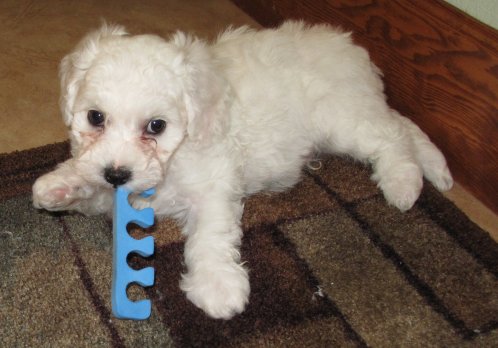
  • Our new puppy now weighs five pounds and is going on eleven weeks old. He still hasn’t told us his true name, but we’ve suggested Dash, Pascal, Dover (think “White Cliffs of”) and two dozen other things, and all he wants to do is chew on Carol’s slippers. At least he’s learned to use the potty pad, a trick Aero never quite mastered.
  • You can help classify galaxies from the Sloan Digital Sky Survey over at the Galaxy Zoo, which is one of the coolest crowdsourcing apps I’ve ever seen. You don’t have to know anything about astronomy to classify galaxies, but people who are passionate about galaxies may find the process less boring.
  • Anyone who has ever killed time with Conway’s Game of Life has got to see this video, of a spaceship gun: a large, complex GoL pattern that generates moving “spaceship” automata that then crawl away toward the right. The gun seen from a height looks stable and in its own way beautiful, but at higher magnification it’s full of furious activity, almost like a chaotic Pac Man game. How such things are designed escapes me completely, but this makes me wonder what larger and even more complex GoL structures exist and have not yet been designed. (Discovered?) Thanks to David Stafford for the link.
  • David’s hot this week: He also sent a link to an extremely intriguing article suggesting a different sort of cosmic cycle: After the Big Bang, time began running, but then gradually slows down until it stops. At that point, what had been the time dimension becomes a new space dimension, and (presumably) the whole thing blows up again with a brand-new time dimension, as a richer and in some respects more mature cosmos. Shades of Stapledon’s Star Maker.
  • Although we’re still seeing TV spots by the late, great (ok, loud) Billy Mays, Mays has an heir-apparent: Vince Offer, who has begun to saturate off-peak Weather Channel ad space with pitches for Sham Wow and the resurrected Blitzhacker, now unfortunately called Slap Chop in the US. (Carol and I had one thirty years ago, and it was indeed useful.) Mays had a certain goofy warmth about him. Vince, well, he’s just…scary.
  • “Sheesh, this thing is ancient! If it breaks, where am I going to find another?”

The Power of Lawn Thatch

hole1.jpg

Sometime this spring, a dent appeared at the low point of my sister’s sizeable back yard in Des Plaines, Illinois. It wasn’t a hole, but simply a dimple…and over the next couple of months, got lower and wider. I hadn’t seen it for seven weeks when we went over there about a week ago, and this time, at the center of the dimple was a five-inch-wide hole into blackness.

In a moment of manic heedlessness, I stuck my arm down the hole, and it went all the way to my shoulder without my fingers brushing anything like bottom. I waved my arm around, and found that there is substantial emptiness down there. I went back into the house for a broom, and with the handle found that the hole was four and a half feet deep, and went on horizontally in all directions farther than a broom handle would reach.

This was interesting because I was standing right where my sister’s broomstick told me there was no dirt supporting the grass. The grass didn’t seem to be yielding under my weight (about 155 fully dressed) and although I didn’t try jumping up and down, I did feel around the edges of the hole, and discovered that the thatch was about six inches thick and very dense.

Then I got a wonderful, non-grinchy idea: I ran back to the car and grabbed my small Kodak EasyShare V530 digital camera. I turned it on, gripped it carefully, and then thrust it down into the hole. I took eight shots before the battery croaked (it had been in need of a night-long charge for days and days) and when I got back here, popped the camera’s SD card into the reader on the PC, and discovered a dark, creepy wonderland.

Most of the shots failed simply because there was a jungle of dangling root tendrils hanging from the underside of the lawn thatch, and the camera’s autofocus mechanism focused on the roots and not on the more distant walls of the cavern. I had hoped to catch a glimpse of the storm drain pipe that ran nearby (there’s a manhole about six feet away from the hole) and which we suspect has collapsed. But no; there are roots and fresh plant debris washed down into the hole, but not much else to see. The village has told Gretchen and Bill that they are going to (at some point) dig where the hole is and see what needs to be done. That will be interesting, though when it will actually happen is unclear. The hole is still too small to admit dogs or small children, so it may be awhile yet. I want to get back there and take a bunch more photos on a fully charged battery, angling the camera in the direction of the manhole and hoping that I won’t drop it.

hole2.jpg

I am amazed at the strength of healthy lawn thatch, and only a little less amazed at my enthusiasm for such a peculiar thing as a hole in the backyard. (I guess my inner 12-year-old isn’t completely dead.) Then again, life generally hands us fewer peculiar things than we might want, and in an otherwise slack week they can make life deliciously worth living.

Big Brother’s Ebooks

An interesting thing happened the other day: People turned on their Kindles to discover that several books they had purchased were just…gone. Amazon had without warning or explanation reached down the devices’ Whispernet connections and wiped all traces of the books, which were by George Orwell. I’m not sure anyone has ever spelled “irony” more clearly than this.

Amazon refunded the full price of all books to all those who had purchased them, of course, or this would have been theft. (Many think, with some justification, that it was still theft.) Yea, the world of Copyright Deathwish is getting stranger all the time.

What I find intriguing is that there are two versions of the story out there:

  1. The rightsholders of the books changed their minds and decided they didn’t want ebook editions on the market, and demanded that Amazon pull them.
  2. The people who licensed the ebook editions to Amazon did not have the right to do so.

Story #1, if true, reflects badly on both Amazon and the Orwell rightsholders. Books are published under contract, and if the author/rightsholder can negate a contract simply by changing his mind, it wasn’t much of a contract. On the other hand, if Amazon won’t hold a rightsholder to the terms of a contract, Amazon isn’t much of a publisher.

Story #2, if true (and I think it’s more likely) reflects badly on copyright law as we have it here in the US. It’s entirely possible that Amazon did what it considered due diligence on the purported rightsholders and decided that they were legitimate. Alas, US copyright law makes it diabolically difficult (and in many cases, simply impossible) to determine who the legal rightsholders to a work actually are. Rights change hands all the time, especially for popular works that have been around for a few decades, and double especially works by authors now deceased. Someone who once had rights to a work may not currently have them, or the rights may have been divided by medium, or the rights may be under dispute between heirs and former licensors, or among the heirs themselves.  Michael Jackson bought the rights to the Beatles’ canon in the US years ago; those rights are now “in play,” as they say.

The core of the problem is that there is no public record of ownership for copyrights, as there is for “real” property, like land or even cars. And in today’s environment of cheap server space, there’s no reason for that to be true. It should be possible to trace ownership of IP from the date it was registered down to the current day, with a legal requirement that changes in ownership be recorded, for copyright to be enforceable. There should be no ambiguity whatsoever about who owns what works in what media, and that record should be available to the general public. As long as it is not, incidents like this will continue to occur.

Amazon has pledged that they won’t do this again, but the damage has been done, both to Amazon’s Kindle system and to the idea of copyright itself. People who bought and paid for a book in good faith had that book taken away by copyright holders without notice or explanation. It may have been legal in the narrowest sense of “legal,” but that doesn’t matter. The incident adds yet another brick to a growing edifice of public opinion seeing copyright holders as arrogant, greedy bullies who can harass individuals on little or no evidence, and take back what they’ve offered to the public on a whim. Whether the perception is true or not (and to what degree) doesn’t really matter. Copyright, especially in an era of fast pipes and massive electronic storage, operates primarily on the honor system, which requires honor on both sides, and a legal framework making it possible for that honor to flourish. No honor, no copyright–and we’re much father down that road than most people think.

Odd Lots

  • Probably because I don’t work that much in the realm of historic images, I did not know that scanned or photographic copies of public-domain images are also in the public domain, at least in the US. I’ve been gathering scans of pre-1923 artwork for possible use on book covers for several years now, but the uncertain origin (and thus the copyright status) of most of the copies themselves has given me pause. I guess it’s time to end the pause and hit Play.
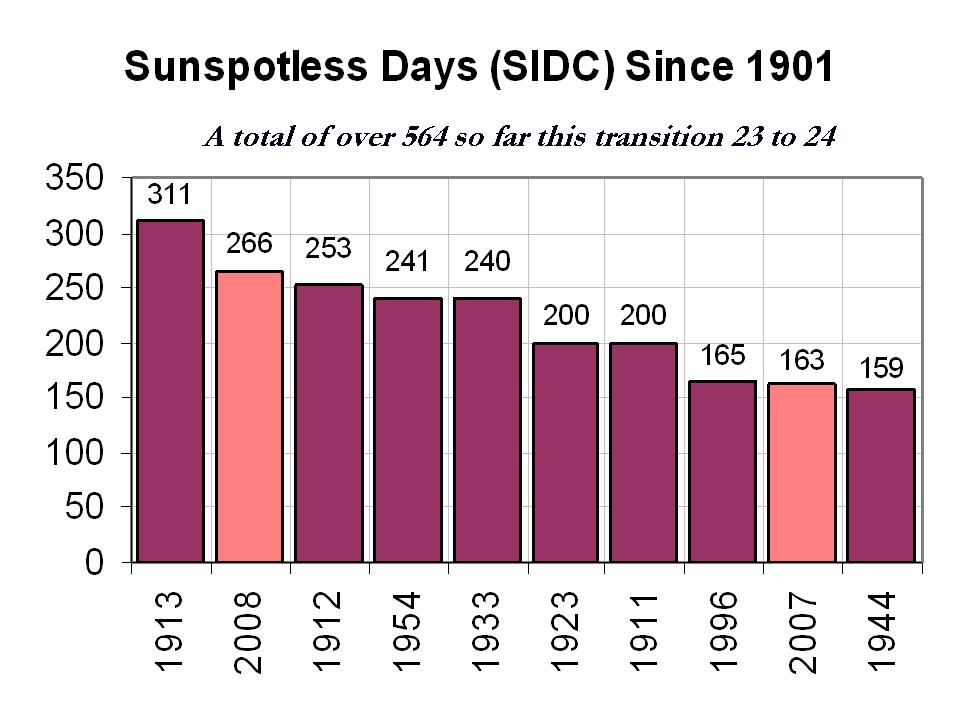
  • We’re currently in peak season for noctilucent clouds, which are high-altitude ice-crystal plumes of mysterious origin. Because they’re so high, they reflect sunlight long after the land beneath them is in night-time darkness. NLCs are appearing farther south recently for reasons not understood; predictably, it’s been ascribed to global warming, but some research indicates that southward excursions of NLCs are a proxy for low solar activity, which we’ve certainly been seeing the last couple of years. (Spaceweather has been covering NLCs a lot in recently weeks, with good photos.)
  • Here’s an R2D2-shaped toilet paper cozy. Hey, why is this any weirder than the crocheted teal-yarn poodle-nose cozies that my Aunt Josephine used to keep her toilet paper in?
  • I have a strong affection for Nebraska, and here’s an interesting article about abandoned farmsteads and structures in the western Great Plains portion of the state. (Thanks to Pete Albrecht for the link.)
  • A chap named Julian Beever may be the real master of 3-D sidewalk art. (Thanks to Roy Harvey for putting me on to him.)
  • We’ve now had cheap desktop CD-R burners for at least ten years, and the lifetime of the media is supposedly about that. Here’s a reasonable article on optical disc longevity that isn’t from an industry source. Has anybody noticed any burned (not stamped) data discs from the 90s going bad yet?
  • When we lived in Arizona, I used to climb an elderly neighbor’s thirty-foot-tall grapefruit tree to help her get the high-hanging fruit. I was in my early forties and that was the last time I ever climbed trees on a systematic basis. If I had to do it again, I would probably stay on the ground and build something like this.
  • Has Bucky Fuller’s Cloud 9 cities concept ever been used in SF? There’s not much to be found online about them, but in brief, he was talking about geodesic spheres as much as several miles in diameter, each containing whole cities that could float via thermal lift by virtue of as little as a degree or two of temperature delta between inside and outside. I’ve been imagining Cloud 9 spheres made of drumlin parts (with possibly a Hilbert drive ring around the sphere’s equator) and I’m a little surprised that I haven’t already seen the idea used in fiction, given that Bucky wrote about it in 1960.

Baby Farm Animals and Other Sillinesses

babyfarmanimals.jpgWe pulled into Crystal Lake last night after all the usual 1100 miles, with three adult bichons and an eight-and-a-half-week-old puppy in the hold. Redball is looking for two permanent names: A kennel name, and a call name. Kennel names are nominally unique (if often complex and sometimes ridiculous) and are how individual purebred dogs are listed in breed databases. QBit’s kennel name is Deja Vu’s Quantum Bit, and Aero’s is Jimi’s Admiral Nelson. Jackie’s kennel name is Jimi’s Hit the Jackpot. We went through a lot of ideas on the way out (Nebraska is good for such things) and floated possibilities like Jimi’s Morning Cloudscape. As for call names, well, that’s how you call the dog for dinner. Short is good. One of my favorites, after listening to him fuss halfway across Iowa, is Riesling, or Reese for short. Hey, he’s white and he whines. (Ceaselessly.)

We’ll figure it out. The trip was uneventful. We played my mix CDs, and when the thumping hi-hat intro to Barry Manilow’s 1981 cover of “Let’s Hang On” started to rise, I cranked up the volume and yelled, “Let’s disco!” I was being silly, but Carol took me at my word, and for the next 2:57 I watched my spouse do an absolutely pure disco routine without ever leaving the front seat of the 4-Runner. Carol has an amazing gift for dance improv that she almost never gets to exercise. I remember back in 1975 when she stood up to a friend’s wedding, and I watched in awe as she and one of her sorority sisters did a near-acrobatic dance improv to a George M. Cohan medley, all in long dresses and high heels, with the wedding party’s pink parasols for canes, in front of what must have been three hundred people. Thirty-four years later, well, she still has it.

I do need to set something straight here before too much longer. I got a note from one of my long-time readers just before setting out, asking me how it was that I wrote a book about baby farm animals. I’ve been asked this before, and the simple answer seems somehow inadequate: I didn’t. However, if you google Baby Farm Animals by Jeff Duntemann” you will get plenty of hits on all the new and used book sites. Don’t order it on the strength of my reputation. The book exists, but in fact was written and drawn by the formidable Garth Williams, who is better known for the art in Stuart Little and Charlotte’s Web. A little digging revealed an error right at the source: Bowker’s ISBN database, which somehow got Williams’ book listed under my name. That single booboo has by now propagated into virtually every significant bookselling site on the Web. I think it’s hilarious, but if I were Garth Williams, I’d be seriously annoyed, or at least I would be if I weren’t dead. I sent a note to Bowker, but don’t expect the error to be corrected any time soon.

Ah, well. As I’ve said before, better Baby Farm Animals than The Story of O.