Jeff Duntemann's Contrapositive Diary Rotating Header Image

Ideas & Analysis

Discussions of various issues including suggested solutions to problems and pure speculation

Pirates of the Caribbean, V2.0

I originally thought it was a hoax when I heard about it this past January. It sure sounded like one. But it’s for real: The World Trade Organization has given the otherwise unexceptional Caribbean nation of Antigua permission to sell US copyrighted content, without any payment to copyright owners.

WTF?

It’s revenge, people. Antigua was making a pretty good living in online casinos until 2001, when the US outlawed online gambling. What was a $2.4B annual business dropped by two thirds. (Apparently, two thirds of the world’s stupidity lies within US borders.) I’d be temped to say that nothing of value was lost, which may have been true unless you were Antigua. So Antigua went to the WTO asking for compensation for the loss. The WTO gave them all American copyrights, free of charge. There’s a $21M cap on the annual take, but as best I can tell, no time limit on the grant. Basically, Antigua can sell anything copyrighted in the US at all.

This is the plot of a comic novel. It reminds me of nothing more than The Mouse That Roared, which was a 1959 sendup of nuclear weapons politics. A US firm creates a clone of the signature wine of the Duchy of Grand Fenwick, which is a nanoscopic country somewhere in Europe, probably bordering San Marino on one side and Liechtenstein on the other. The Duchy goes for the throat and declares war on the US, expecting to lose and make up for lost wine revenues in foreign aid. Instead, the country accidently captures the horrible Q-Bomb from a secret lab (with a bumbling crew of Robin Hoodish bowmen) and the US surrenders.

Except that this time, it’s real. Buried in my notes on possible novels is something I called TC Pirates in Paradise that dates back to 2006. A disgruntled engineer slips something extra into his company’s “smart” wall-wart product: a powerline networking system that sets up a hidden filesharing node every time it’s plugged into the wall. Nobody notices at first. He leaves the company, and nothing happens until a billion file-sharing wall warts have been sold into the wild. Then he reveals the secret, and all hell breaks loose.

Ok, not my best idea, and people would get annoyed at me for making fun of piracy. But man, this could be a marvelous high-tech farce with a title like Pirates of the Retail Channel. The whole business was made possible by a loophole in WTO rules that allows intellectual property to be used in punitive trade settlements. The glass on your irony meter will shatter explosively when you realize that the treaties that allow this are the same treaties that US copyright interests pushed for years ago and occasionally use against other countries. If those guys didn’t know what a “petard” was before, they’re sure as hell reaching for the dictionary now.

Antigua didn’t create its own online casinos. It licensed other people to create them, and took a cut of the profits. One wonders if they’re going to license Pirate Bay clones and do the same thing. Certain issues are unclear, primarily whether they’ll be able to strip DRM. On the other hand, who would stop them? (They could just download pre-stripped copies from Usenet and sell them.) What sort of prices are we going to see? Would they dare to become the Five Below of online commerce? Windows 7 for $5? And how soon before DRM-stripped items would show up on the rest of the pirate ecosystem? Is it any wonder that Adobe is giving up on selling boxed software?

No, I don’t approve. But man, I giggled. Politics is its own punishment, as the US copyright lobby is figuring out about now. If Rockhound57 and HockWards need to flee the country, well, Antigua would be the logical place to go.

Popcorn anybody? Let’s watch.

Jeff Duntemann’s Metadiet Picobook, Part 6

Wrapping up the series, which began here.

By far, the most contentious issue in weight loss these days has nothing to do with carbs or fat. It’s about the sheer quantity of the stuff that we eat. In one corner are the people who say that one calorie is exactly like every other calorie, and the only thing you have to do to lose weight is to eat fewer calories. In the other corner are people who say that if you eat the right stuff (typically protein, fat, and green vegetables) you can hork down as much as you want and not gain weight.

Who’s right? We don’t know.

We don’t know a great many things about human health. In my view, the ad lib diet question is the biggest single unknown in the whole weight-loss arena. This may be because both sides assume that they’re right (settled science!) and insist that no further research is necessary. Alas, I’m appalled at how little good research there actually is.

But I have noticed something: Carol and I tend to pick up weight when we travel. Part of this may be the fact that we often go home to Chicago on holidays, when there’s loads of snackable sugar around. But it occurs almost any time we’re away for a week or more. When we get home, the weight vanishes over the next several weeks.

Hmmm. When we’re away, we eat at restaurants a lot. When we’re home, we hardly eat at restaurants at all.

I was boggled to learn that many people eat at “sit-down” restaurants four or five times a week. Carol and I eat at restaurants perhaps two or three times a month. Good stats are hard to come by, but this graph (possibly skewed by the nature of the site and its patrons) says a lot. 25% of the respondents confessed to eating out or doing takeout 6-11 times per week. Not per month. Even cutting that in half in an effort to back out selection bias, we still have a quarter of Americans eating restaurant food 12-22 times per month.

Wow.

Note well that I’m not talking about fast-food here. Fast-food meals are fairly small compared to sit-down restaurant meals, and I think their primary contribution to weight gain is unlimited refills on sugared drinks. Writer Tom Naughton tried to get fat eating at McDonald’s for a month and failed. He published his food logs. Morgan Spurlock of Super Size Me fame did the same thing and claimed all kinds of health problems as a result. Spurlock has steadfastly refused to release his food logs (if he indeed ever kept them at all) and so to me his research is “research” and very likely bogus.

Looking carefully at sit-down restaurant meals reveals two things: The portions are very large, and the meals are carb-heavy. Been to Macaroni Grill lately? Egad. You’re looking at a couple of pounds of pasta. Carol and I have also noticed that restaurant pizza has gotten crustier in recent years. Baked potatoes, which I remember as smaller than my fist decades ago, now seem as large as wing-tip shoes. Carbs are cheap. Wheat in particular is cheap, and there are special issues with wheat, as I explained earlier in the series. There is also the natural tendency to eat the whole thing at the restaurant rather than take two-thirds of it home.

If any experiment is possible relating to portion size, it’s this: Stay out of restaurants for a month and see what happens. If you lose some weight, try to do it for another month and see if the trend continues. If it does, don’t panic. It doesn’t mean you have to stay out of restaurants forever. It may mean that you have to cut back, to perhaps one meal a week or so. Say five a month.

My thought on the portion control issue is that portion size does matter, but because it’s so difficult to separate the portion size issue from the carbs issue in restaurant meals, it’s tough to put real numbers to in any reasonable experiment. Eating out less may simply mean eating carbs less, and that’s almost certainly a win.

They don’t state it explicitly, but having looked at the methods of weight-control programs like Jenny Craig and Weight Watchers, I’d say they work because they’re portion-training systems. No, their pre-packaged meals don’t look all that appetizing. They are, however, modest in size and contain enough energy not to shock your body into fat-storage mode. Eating a little less on a regular basis works better than starving yourself for a couple of months and then giving up. Do that and you will gain weight.

Eating smaller portions at home is easier because you control the portions. One trick I’ve seen is just to use smaller plates, so that less food looks like more. Beyond that, it’s just planning. Don’t cut portions in half when you’re getting started. Ramp down slowly. Don’t stop when you feel full. Stop when you no longer feel hungry.

And that’s pretty much all I had in my notes about weight loss. I’ve lost 20+ pounds since 1997, almost all of it from my gut, which is where you want fat the least. I eat low-carb, which for me is mostly low (or no) sugar. I eat high-fat by conventional standards: Butter? Love it. Meat? Lots! Eggs? Every day. By experiment I’ve determined that modest quantities of wheat, potatoes, and rice don’t seem to have the effect on me that they do on many people.

But that’s been the whole point of this series: You cannot generalize about human metabolism. We’re all over the map. You have to do the science to find out what works for you. So do the science. Keep good records. Don’t starve yourself. Be patient. Believe your findings. (That can be tricky when you’re nostril-deep in diet books that all claim to know The Way.)

It’s a peculiar and surprising business. If you learn anything interesting, do let me know.

Jeff Duntemann’s Metadiet Picobook, Part 5

Hypothesis: Eating fat gooses your metabolism, burning body fat.

Experiment: Eat more fat.

Some time back, I reviewed a very old book: A Letter on Corpulence, Addressed to the Public, by William Banting. It was published in 1865, and you can get it for free from Google Books. It’s the earliest I’ve ever seen anyone publish what amounts to an experiment in losing weight. An overweight man got advice from his doctor, tried it, and lost weight. Better still, he published what he ate, and passed out the book (which is more of a pamphlet) to anyone who wanted it. Banting’s diet proved so popular that “to bant” became a Victorian term for what we now call “going low-carb.”

Fast forward to the late 1950s. A physician named Herman Taller, like Banting, got impatient with his own weight. He’d tried the fashionable remedy of his time (counting calories and avoiding fat) without any success. Then, at the encouragement of a fellow researcher, he did something remarkable: He started consuming what could have been as much as 5,000 calories a day, most of it fat. He lost weight.

Also, like Banting, he wrote a book. Calories Don’t Count was published in 1961. Again, like Banting, Taller and his book have been pretty much forgotten. Forgotten, of course, until Gary Taubes redisovered them, and described them both in his 2008 book, Good Calories, Bad Calories.

Taller’s book is mostly of historical interest these days. His science is now 55 years old, and we’ve learned a lot in the meantime. (There are hazards in polyunsaturated fats that we had no clue about in the 50s.) So I don’t recommend it. Taubes’ book picks up the science that Taller began with, and brings it up to the current day. I do recommend Taubes, enthusiastically, and have several times. If you want to know anything at all about human metabolism, he’s your go-to guy.

For this entry, the point I want to make is something that Taubes explained: Going low-carb is an excellent first step. But you can’t just eat protein, or you risk mal de caribou, which is liver overload due to eating almost nothing but protein. You have to eat fat as well. If you’ve reduced your carb intake, eating fat begins a remarkable process: fat mobilization. Your body runs out of convenient carbs in the bloodstream, and begins to burn stored fat for energy. Your metabolism ticks up sharply. You generate more heat. It’s a weird concept, but I did the experiment. It works.

Here’s how: I banished all carbs from my breakfast. No sugar, no grains, no juice, no fruit. What I began eating (and have eaten most days since) is an egg fried in butter, sometimes two. Coffee with cream. Some days (not always) full-fat unsweetened yogurt. An odd thing began to happen. Within twenty minutes to half an hour, I started to sweat under my arms.

I added up the calories, and it was about a wash compared to a bowl of Cheerios. But when I ate Cheerios, I didn’t sweat. I got a little sluggish, in fact, an hour later, in what was literally a Cheerios crash. The key is that I hadn’t eaten any carbs since the previous evening’s meal, and had gone all night without eating anything. By the morning, I was out of carbs. There was nothing to stoke the fires but protein and fat.

As with everything I’ve suggested in this series, it may not work this way for everyone, but the biochemistry seems legit, and it certainly worked for me. Try it. Lose your fear of fat. There’s nothing to it. When I ate more fat, I lost weight, and both my bad cholesterol and triglycerides went through the floor. By conventional measures I’m healthier than I was when I was 45. I credit that to eating more fat. (The kidney stone just pushed me in the right direction.)

Tomorrow: Wrapping up.

Jeff Duntemann’s Metadiet Picobook, Part 4

Hypothesis: Wheat sensitivity makes you gain weight.

Experiment: Go gluten-free.

(Quick note: This is a series. If you haven’t been reading it from the beginning, please go back and do so.)

Wheat is a weird business. Furthermore, the current emotional furor about GMO foods has muddied the water horribly. When people think “GMO,” they imagine legions of scientists in blinding white labs teasing DNA strands out of organisms and inserting artificial genes with nanogrippers. Or scanning-tunnelling electron microscopes. Or black magic. People forget that homo sap has been doing GMO for ten or fifteen thousand years. Selective breeding and hybridization (not the same thing) have turned wolves into dogs, grass into corn, and (different) grass into wheat. Nanotechnology not required.

The mud in the water comes from a widespread impression that if a food plant is “natural” (i.e., untouched by high tech) it’s completely safe to eat. GMO is fine as long as you leave the DNA intact.

Alas, hybridization does not leave the DNA intact. This is new knowledge for me, and a lot of what I know comes from an excellent 2011 book called Wheat Belly by William Davis . The publisher appears to have wanted a diet book, but what they got was heavy on the science. Some of that science is disturbing, to say the least:

Analyses of proteins expressed by a wheat hybrid compared to its two parent strains have demonstrated that, while approximately 95 percent of the proteins expressed in the offspring are the same, 5 percent are unique, found in neither parent. Wheat gluten proteins, in particular, undergo considerable structural change with hybridization. In one hybridization experiment, fourteen new gluten proteins were identified in the offspring that were not present in either parent plant. Moreover, when compared to century-old strains of wheat, modern strains of Triticum aestivum express a higher quantity of genes for gluten proteins that are associated with celiac disease. [pp 25-26; author’s emphasis]

To make a long and unnerving story short, 10,000 years of meddling have made wheat’s genome very odd. Accelerated hybridization in the last 100 years has accelerated its oddification in tandem. Now we’re finding that more and more people just can’t digest the stuff well. A small but growing cohort (celiac sufferers) can’t digest it at all.

I don’t have this problem myself. However, a number of close friends do. In addition to digestive difficulties, wheat sensitivity makes people put on weight, particular around the waistline. Two of my friends have cut back on wheat gluten and by doing so have lost a great deal of weight. They also feel a lot better.

It’s a difficult experiment to make, more difficult than cutting back on sugar. Sugar is in a lot of things. But a lot of other things are wheat and little else. The bulk of the grain carbs we eat are wheat, and the cheaper the wheat, the more likely it is to be a modern hybrid. Gluten-free baked goods and pasta exist, but they’re not common and they’re relatively expensive.

Worse, there are no generally accepted lab tests for non-celiac wheat sensitivity. The only thing you can do is cut out wheat and see what happens. Again, Carol and I don’t have the problem, but we’re aware of the issue, and we try to buy imported pasta that isn’t as likely to be hybridized to the extent that mass-market pasta is. I’m trying to move my carb intake (reduced as it’s become) to corn and potatoes. This is bitchy because I’m sensitive to corn bran. But it does give me an excuse to stick with potato chips.

It’s not obvious to everybody, but beer is a wheat product, and going wheat-free means going beer-free. There are gluten-free beers. I don’t drink beer and don’t know if they’re any good. If you just want the buzz, red wine is better. If you’re really attached to beer, you may have to do some hunting.

I’ve been asked an excellent question: How do I know if weight loss experienced after going gluten-free is due to gluten exclusion and not simply reduced carbs? Answer: I don’t know. It is true that wheat’s ubiquity makes it hard to go gluten-free without cutting carbs drastically, and that makes single-factor experiments tricky. I guess you could boost your consumption of other starches in compensation, but starches are still carbs and do affect insulin regulation. My suggestion: Hold your non-wheat carbs steady and try gluten-free for a month. If you lose weight, keep at it. Weight loss is good even if you’re not sure precisely how it happens, and this is one instance where controlled experiments may not be possible.

So. Sugar and wheat are the first things to go after in your metadiet experiment. Next: The Magic Ingredient. (I may need to post an Odd Lots first.)

Jeff Duntemann’s Metadiet Picobook, Part 3

Hypothesis: Sugar makes you fat.

Experiment: Stop eating sugar.

I came upon this whole business when I threw a kidney stone in late 1997. It was very unpleasant, and my urologist told me to drink nothing but coffee and water until the stone was recovered and analyzed. I did as he said. The biggest change was to stop drinking two (sometimes three or four) Snapple sweetened iced teas every day. Tea is a known factor in kidney stones, though not the only one. I did not expect what happened next: I lost weight in a big damned hurry.

The weight went fast enough that, fascinated, I continued the experiment long after the stone report came back. I gave up both sweetened and unsweetened iced tea almost entirely, for obvious reasons. I gave up sugared sodas generally. (This was when I began a love affair with Diet Mountain Dew that lasted ten years.) I stopped snacking on cookies and other sweet things. I did other experiments over the next several years, and I’ll describe them in coming days. In my case, sugar was the big one.

For most people, it may also be the hardest. I admit that there could be a Fox and Heron effect in play for my own situation: I’ve never really loved sweets, so giving them up was no huge effort. Most people I’ve talked to and read about report that giving up sugar is tough. Whether sugar is addictive is still being debated. However, there is an enormous amount of research indicating that most individuals gain weight eating sugar. I know at least one person who doesn’t, and I suspect that there is a smallish human cohort who just handle sugar and carbs better than most of us. Everybody else is going to have to go cold turkey, whatever it takes.

The case against sugar is most clearly made in Gary Taubes’ book, Good Calories, Bad Calories . It’s long, and technical, and can be a slog in spots, but I’ve read it twice and will read it again in the near future. It’s the best description of sugar metabolism I’ve ever seen. It’s how I learned that fructose is metabolized in a completely different way than glucose. Read the book, but here’s the short form: Glucose messes with your insulin levels. Fructose messes with your liver and your triglycerides, which are fat precursors. Either will put fat on you, and sucrose contains an equal measure of both. Whether fructose is worse than glucose is still being debated, but there is clear evidence that overdosing on fructose can destroy your liver. (This may also be why we lost celebrity fruititarian Steve Jobs decades before we should have. Fructose appears to be the food of choice for malignant tumors.)

Giving up sugar is doubly hard because it’s in almost everything, even a lot of things that don’t taste particularly sweet. That said, most of the sugar we ingest these days comes in through sweet drinks, particularly sodas and fruit juice. Dry wine contains almost no sugar. Beer contains very little simple sugar, but may be fattening through a completely different mechanism, which I’ll get to in coming days. Milk contains a little sugar in the form of lactose, probably too little to be a serious fat-factor.

A few researchers say that sweet tastes are enough to make you fat, and that non-sugar sweeteners won’t help you. This cooks down to insulin sensitivity, which varies hugely across the human species. Some people’s insulin systems are so sensitive that sweet tastes of whatever source cause an insulin pulse. However, like the people who can ingest all the sugar and carbs they want without putting on weight, this is a minority trait, on the opposite extreme of the sugar-metabolism spectrum. I’ve known a number of people, some of them quite well, who lost an enormous amount of weight simply by switching from sugared sodas to diet sodas.

So if you really can’t eliminate all sugar from your diet, at least get rid of the obvious sources: Sugared drinks and sweet snacks. Give it a month, and if the trend is in the right direction (even if it’s not a huge trend) give it another month.

Note well that I only mean sugar here, not carbs generally. Carbs are not all the same. This is a point that I’ll come back to later on.

Jeff Duntemann’s Metadiet Picobook, Part 2

To begin: Everything you think you know about dieting is wrong. Put it all out of your head. You’re going to have to start from scratch. This is work. It’s also a species of science. You’ll have to be rigorous and consistent, which involves four important first principles:

  • Keep good records. This suggests a calendar, but all those little squares on calendars just aren’t big enough. I’ve been tempted to write an eating-specific database utility in Lazarus, and I may if time ever allows. In the meantime, an ordinary diary in a text document will do.
  • Change only one thing at a time. Jumping feet-first into a whole new way of eating may lose some weight for you, but it won’t teach you anything about losing weight. Learning what works is the whole idea here.
  • Record consistently. Weigh yourself on the same scale at the same time every day. Ditto blood pressure, if you choose to record it.
  • Don’t give up. Individual metabolisms have inertia. The process may take some time.

Here’s what I call the Jeff Duntemann Metadiet: You’re going to try a number of relatively narrow changes to your daily diet, one at a time, and record what happens with each. Some will work. Some won’t. Continue with any change that works. Abandon any changes that don’t. Repeat until you’ve lost the amount of weight that gets you where you should be.

The above paragraph comes in at under 100 words, so it’s what I call a picobook. If it had come in at 10 words, it would have been a femtobook. IBM published an attobook once. It was a runaway bestseller. Anybody ever read it?

If at all possible, get some fresh blood numbers before you begin. If you’ve had a recent physical, that’s perfect, and it doesn’t have to be yesterday, just within a year or so. If you’re lacking a recent physical, I’ve had good luck with a chain called Any Lab Test Now. You don’t need a prescription or a doctor appointment. Also, their phlebotomists are among the best I’ve ever experienced. Other such labs are all over the place, and they’re not horribly expensive. Weight is only one indicator of health. Get your cholesterols and triglycerides at bare minimum. Record your blood pressure as you go, on a daily basis.

A sidenote: Exercise doesn’t really help you lose weight directly. It has lots of other benefits, especially training that builds muscle. Since muscle consumes energy 24/7, exercise helps indirectly by goosing metabolism. But we don’t burn calories like we burn charcoal in a grill. Calories don’t count. (Doctors knew that in 1964. By the late 1970s, they’d forgotten.) The type of calories counts critically.

Another sidenote: The BMI is bullshit. It doesn’t distinguish between fat and muscle. If you’re in the process of losing fat and gaining muscle, it’s less than useless, and I will no longer discuss it. Don’t even bring it up.

Still another sidenote: There are other causes of overweight beyond diet. Genetics is big, as is the state of your endocrine system. You may not be able to eat your way skinny. My experience and research suggest that you can eat your way healthy.

The last sidenote (for today, at least): Don’t starve yourself. Eating less generally is a good thing, considering how much we eat, but taper off slowly. Going off a calorie cliff kicks survival mechanisms into gear that you don’t need, and over the long term will only make you gain weight again.

Tomorrow: The Biggie. I suspect you already know what it is. I suspect that you’re right. Get that calendar ready. And put down that doughnut.

Jeff Duntemann’s Metadiet Picobook, Part 1

As my inner circle already knows, I’m planning a new technical book with a big publisher, and it’s consuming more of my life than I had expected. That’s most of what I’ve been off doing for two weeks. Once I nail the contract, I’ll be mighty busy for a few months, and may not report here as often as I’d like. Bear with me. In the meantime, I’m finally getting a long-overdue Contra project written up.


Another backchannel correspondent suggested that I write a diet book the other day. Jim Tubman’s been asking me to do that for a couple of years, because what worked for me worked for him. Problem is, there’s no such thing as a diet book–at least one that lays out a prescription for food that will allow you to lose weight.

Here’s the kicker: There are seven billion ideal diets, one for every single one of us on this planet. Alas, they’re all different, and nobody knows what they are. The only way you can find your very own is to engage in a long-term science experiment, keep good records, and do what works. This won’t be the same for everyone, and in fact will be radically different for a lot of people. Metabolism is a complicated business. We are not all identical. Write those words in fire in the back of your head. Forget them, and you will fail.

What I’m going to do here over the next few days is write a sort of metadiet book. It’s a method of determining what exactly allows you to lose weight. In the process, you will write your own diet book. It will have an audience of exactly one, and thus is unlikely to become a bestseller. But it may well be the best book you ever read.

I don’t intend this as medical advice. Nor is it dietary advice, since you’re the one who’s going to determine the sort of diet you’ll follow. Like I said, it’s a science experiment. I’m going to suggest a number of hypotheses, and you’ll test them, in a marvelous lab that begins right behind your teeth.

We’ll get underway tomorrow.

The Primacy of Ideas

One of my SF teachers, a brilliant man whom I respect very highly, said something once that I still don’t understand: “In the end, what people will remember about your fiction are the characters.” This was in the context of an intense discussion about character creation, but it seems extreme to me. In some sorts of fiction, sure. What I remember about Saul Bellow’s The Adventures of Augie March is Augie March.

Or is it?

Sure, I remember Augie. But I, too, am an American, Chicago-born. A great deal of what I remember about The Adventures of Augie March is depression-era Chicago, and how it shaped Augie’s character. Without Chicago, there wouldn’t have been anything particularly memorable about Augie himself. I bring this up because I’m encountering more and more new writers who seem to think that ideas don’t matter in SF and fantasy. Characters are the whole story. Everything else is backdrop. That simply isn’t true, and I think it’s time for a little pushback.

Here’s how I see it: The two essential elements in any story are characters and context. Without characters, context is narration. Without context, characters are soap opera. The magic happens when you rub one against another.

In mainstream fiction and real-world genres like romance and mystery, you don’t create your context so much as select it from a huge menu of known placetimes and cultures, like Chicago in 1933, modern-day Manhattan, or Amish country in the 1950s. There’s some tinkering around the edges, but for the most part you pick a well-documented placetime and turn your characters loose in it. If you’re a good writer, entertaining and insightful things will then happen, and your readers will come back for more.

It gets interesting when you switch from real-world genres to SF and fantasy: You can then create your own contexts. World-building is (as I like to say) a spectrum disorder. You can build a little or a lot, or go nuts and create entire worlds and societies from whole cloth.

To do that, you need ideas.

For good or ill, I’m an ideas guy. It’s just how I think. Furthermore, I have a hunch that ideas are in fact what people actually remember about good SF and fantasy. Really. C’mon, when was the last time you heard somebody ask, “Hey, what was the name of that story in which a callow young man is jolted out of ordinary life and with the help of an ironic sidekick finds unexpected strengths and talents that allow him to defeat evil in ways that change him forever?” No, you hear questions like this: “What was the name of the story that had an FTL communicator in which every message ever sent, past, present, and future, is gathered into a beep at the beginning of every message?” (I know the answer, and if you’re serious about SF you should know it too.)

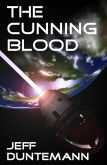
When I read SF, I want to see cool ideas. When I write SF, I feel a responsibility to deliver them. It’s not just about having rivets. It’s about having rivets that nobody’s ever seen before. Is it silly to love the rivets? Well, I’ve gotten several fan letters about the wires in The Cunning Blood. The novel centers on a prison planet in which microscopic nanomachines seek out and disrupt electrical conductors, supposedly keeping the prisoners from developing electrical technologies. Well, the prisoners make non-disruptable wires by filling hoses with mercury. When your rivets start getting fan mail, I think it’s fair to assume that you’re on to something.

This sort of idea-centric story isn’t for everybody, but there are a lot of people for whom it’s the heart and soul of fantastic literature. The challenge is to use clever ideas to draw out characters that grow, change, and learn. I’ll freely admit that I’m still better at ideas than at characters. However, I’m aware of the issue and I’m throwing a lot of energy into the character side, now that I’m finally out of my teens and into my sixties.

I’ll grant the “cowboys on Mars” objection, in which an ordinary situation is dropped without modification into an exotic locale and called SF. However, it’s just as bogus to say, “Nobody cares about your starships,” when the starships are in fact a key part of the story’s context. Jack Williamson’s definition of stories as “people machines” is correct but incomplete: To have a people machine you need the machinery. Without that machinery, you have “white universe syndrome” and your story collapses into soap opera. You can choose your context from a menu, or you can build it. Either way, you need that context to make characterization meaningful.

I’ll get myself in trouble here for going further and suggesting that a story’s settings and ideas can be entertaining and sometimes dazzling, even when its characters are thinner than we’d like. That’s not an excuse but simply a fact of life. Do we remember Ringworld because of Louis Wu? Or do we remember it because of, well, the Ringworld?

As I prefer to put it: Ideas will get you through SF stories with no characters better than characters will get you through SF stories with no ideas.

That said, have characters. Have context. Rivet them together so well that both your characters and your rivets get fan mail. Then, my friend, you will have arrived.

An Ebook Piracy Mystery

For the most part, the ebook pirates have forgotten about me. Five or six years ago, I was all over the pirate sites. Now I’m not even on the Pirate Bay, and haven’t been for some time. Binsearch shows that the last time I was uploaded to Usenet was almost a year ago. It’s enough to give a guy a complex. (It’s certainly enough to make me feel like I need to write more books.)

So last week the backchannel sent me a link to an article about how several major textbook publishers have subpoenaed a couple of Usenet service providers demanding the identities of two prolific Usenet uploaders operating under the pseudonyms Rockhound57 and HockWards. Both upload technical books to a certain newsgroup devoted to technical nonfiction.

Boy, do they.

I fired up my newsreader and took a look. I’d been there before, and have gladly downloaded crufty scans of old Heathkit and classic tube gear manuals and the occasional supreme oddity, like the German-language service manual for the Nazi V-1 flying bomb. There are scans of military field manuals and much other odd junk, plus all the spam, trollery and asshattery we’ve been accustomed to seeing in newsgroups since, well, there were newsgroups. (I first got on Usenet in 1981.) Rockhound57’s posts are, for the most part, academic science books of almost vanishing narrowness. If you’re ever curious about Dipetidyl Aminopeptidases in Health and Disease, well, Rockhound57’s got it. Ditto Automorphisms and Derivations of Associative Rings. I actually thought that “cobordism” in Algebraic Corbordism was a typo. Then I looked it up. Man, if you can make head or tail of that one, you’re a better geek than I.

If you think about what those books (and they are indeed books, and not articles) have in common, you may understand some panic on the part of the big presses: Those books have very, very small audiences and very, very high cover prices. Algebraic Cobordism has a cover price of $99. Small potatoes. Hold on to your manifolds: Automorphisms and Derivations of Associative Rings will cost you $269. I’m not exaggerating when I suggest that there are maybe 500 people on Earth who might conceivably buy such books, most of them starving graduate students. (I suspect that the publishers make what money they make selling to university libraries.) Having perfect PDFs flitting around on Usenet is an academic publisher’s worst nightmare.

But that leads us to a very important and completely unanswered question: Where did all those perfect PDFs come from? Not a single one of the titles I spot-checked is available as an ebook on Amazon. These copies are not slap-it-on-the-glass pirate scans. They are as perfect as the print images we used to generate for our books at Coriolis and Paraglyph. If they’re not being sold, how did the pirates get them to begin with?

I can think of a couple of possibilities:

  1. They’re DRM-stripped versions of e-texts that aren’t sold on Amazon but rather through heavily protected textbook sales channels like Adobe’s.
  2. They’re the print book equivalent of “screeners,” sent out for review, proofing, indexing, etc.
  3. They’re downsampled print images lifted somewhere along the pipe leading from the publisher to the printing presses.

My gut is going with #2, though #3 is certainly possible. Publishing services have been thoroughly commoditized. Most publishers use freelancers for proofing and editing, and many outsource layout itself. Any time a print image goes outside a publisher’s doors, there’s the chance it will “get legs.”

That said, I boggle at how many perfect PDFs were uploaded by those two chaps. We’re talking literally tens of thousands. Are there that many leaks at the major presses? Or is something else going on here? I still can’t quite figure it. I do know that a number of backchannel sources have told me that ever more file sharing is being done locally and off-Net, often by passing around now-cheap 1TB SATA hard drives. There’s no stopping that. Publishers need to start taking a very close look at their own internal processes. Pulling production back in-house might help, but it wouldn’t be a total solution, at least as long as desktops have USB ports. Problems don’t always have solutions, and piracy is probably one of those increasingly common nuisances.

There were times when I miss being in publishing. Alas, there are other times when I’m glad I’m not.

End of the Road for CS-in-a-Box

Big news today: Adobe’s CS6 product is the last one that you’ll be able to install “out of the box” from a retail copy. Much fuss is being made about a move that was lead-pipe predictable after Creative Cloud went live last year. Some of today’s new stories give you the impression that there’s some dazzling new browser-based whatchamacallit technology behind CC, but after reading the Creative Cloud FAQ I’m not sure there’s any radical re-engineering going on at alll. Creative Cloud is not a browser-based technology. It’s just a new release of a digitally delivered client-side app suite, with a difference: You have to connect to the Internet at least once every thirty days to authenticate it.

So calm down. It’s just stronger DRM, and a leakproof end-run around the First Sale Doctrine.

The DRM, like all DRM, is probably crackable. Having to re-crack it every thirty days will slow the pirates down a little, but I wouldn’t bet on it being impossible. DRM is less significant than then other half: You can’t resell bits the way you can resell discs. There’s a pathway to de- and re-registering an Adobe boxed product, but it’s a nuisance and I’m sure Adobe has wanted to eliminate the whole process for a long time. This’ll do it.

Going to a subscription model means that people will no longer be able to buy a box for $500 and then use it forever. Big shops may be able to justify the cost. Smaller shops may stick with old versions. Doesn’t matter. Adobe obviously wants to eliminate the perpetual-license home market, which has always cost more in support than it generates in revenue. Going to subscriptions means a predictable and mostly reliable revenue stream. Losing individual users and very small shops isn’t much of a loss, money-wise. I also wonder if this may be the end of the road for Adobe Resellers. CC may do for boxed software what self-published ebooks are doing for books: eliminating the middleman.

Now, one final point I haven’t seen others make so far: Without a boxed product for pirates to steal, Adobe will lose a certain number of sales from people who tried it illicitly, liked it, and then bought it. (Most people credit this model with giving Microsoft a lock on the office suite market back in the 90s.) This makes me wonder if the otherwise-puzzling release of non-authenticating copies of all CS2 apps back in January was intended to keep the piracy-driven sales channel alive. In a sense, Adobe provided a pre-stolen copy of CS for people to install and fool with, no risky cracking required. A certain number of those people will like it enough to sign up for CC for better apps and sync services. Also, don’t underestimate the value of skills developed in using a product line. Unlearning a product and learning a different product is a pain in the butt. (This is why student versions at breathtaking discounts make sense in the long run.)

And for all the talk about CC being the future of software, c’mon. There are maybe four software companies in the universe that can pull this off. The future for $20-$50 apps like Atlantis is bright, and open source software has never been better. Adobe has kicked itself upstairs. That leaves a whale of a lot more room for everybody else down here.