Jeff Duntemann's Contrapositive Diary Rotating Header Image

Ideas & Analysis

Discussions of various issues including suggested solutions to problems and pure speculation

The Zero Is Gone

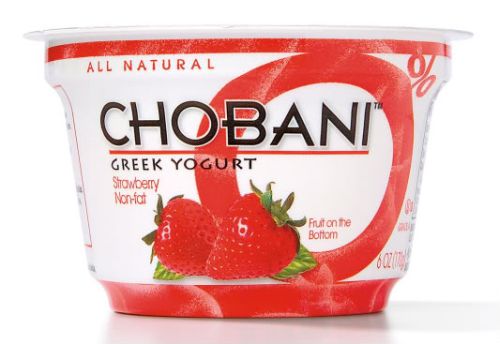
Chiobani.jpg

I think Chobani has figured out that we’re on to them. Therein lies a tale.

Carol and I were shopping at Safeway the other day, and were browsing the yogurt section. Chobani has the most yogurt SKUs at Safeway, and damned near all of them have long been decorated with a huge, garish “0.” This is supposed to be a signal that Chobani yogurt has no fat and is thus healthy. (What it means to me is that the nutritional value in the cup is zero, and I avoid the brand.) What I noticed today at Safeway is that the zero is gone. They’re not making a big deal of their nonfatness anymore. Wow. We won.

Anybody who reads me regularly knows that I lost weight by eating more. No, I didn’t change the Laws of Thermodynamics. What I did is give the lie to the BS that one calorie is like every other calorie, and if you eat more calories, you gain weight. That’s not true. (Really. For the love of science, stop repeating it.) When I switched from eating Cheerios in 2% milk for breakfast and went to an egg fried in butter, I lost weight. Then I began eating two eggs fried in butter, and lost more weight. There’s two parts to the method: 1) Eat less grain and sugar, and 2) eat more fat. It works for most people. You won’t know if it doesn’t work until you try it. (I’ve beaten this to death and yes, I’ll stop now.)

In the decades following WWII, there arose a near-maniacal War on Fat, which was based on dodgy or outright fraudulent science, and won the day when Ancel Keys got the Feds to back him up. Suddenly, 2%, 1%, and skim milk were mandatory, butter was demonized, and (shazam!) the country gained the weight of a minor planet. You’ve heard all this before, from me and others. What most people don’t know is that Big Dairy went along with it. You’d think they would put up a horrible fuss, but they didn’t. Why is an interesting question, but the answer is pretty clear: Alluva sudden, you could separate the cream from milk, sell the cream, and still sell the milk.

This wasn’t always the case. Prior to the War on Fat, skim milk was used in a few recipes or processed into casein (Elmer’s Glue!) and much of the rest was fed to pigs. (What couldn’t be fed to pigs was often just dumped.) People who drank milk wanted whole milk. Cream wasn’t considered dangerous. People put it on their corn flakes, for pete’s sake. Cream was considered the most valuable part of the milk, and we consumed a monumental quantity of it without gaining weight. We picked up the weight in part by eating sugar, which was added to nonfat and lowfat dairy products to make them taste like something. But more to the point, full-fat dairy causes satiation, and low/nonfat dairy does not. That’s why skim milk is fed to pigs: It keeps them eating.

Huge dairy product manufacturers could buy cheaper skim milk, make yogurt or cheese from it, and then claim that these new, 0% products were healthy and desirable. The cost to consumers was about the same as full-fat products. Do the math.

The War on Fat is pretty much over, but old habits die hard. We’re going to be mopping up for decades. The absurdity called fat-free half and half still exists. I still have to shop a little for full-fat yogurt and cottage cheese. (Look for the Big 4, though it’s still small. I expect that 4’s on dairy packaging will grow, if slowly.) We should take some comfort in small victories, like the vanishing of the Big Zero from Chobani yogurt cups. I take even more comfort from the vanishing of the fat from my waistline.

I’m still looking for potato chips fried in lard. Sooner or later, we’ll win that one too.

Why Oscar Wilde?

People have been asking me what I’ve been up to as a writer recently, and that’s a hard question. I got a little burned out on the Raspberry Pi textbook project, about which I won’t say more right now. What I really want to do is write another novel.

There is no shortage of possibilities:

  • Old Catholics. You’ve seen pieces of this. I already have 37,000+ words down, but for reasons I don’t understand I’m completely wedged on it.
  • The Anything Machine. Basically the Drumlins Saga arrival story, and how teen boy Howard Banger discovers the thingmakers, and faces down the bitter billionaire who later founds the Bitspace Institute.
  • The Everything Machine. An autistic young girl discovers a “placeholder drumlin” that looks a great deal like an enormous space shuttle. It clearly needs a very large thingmaker to build it. Mike Grabacki thinks he knows where one is, and in his all-drumlins ATV Old Hundredth, he, Ike, and Mother Polly go off to find it, with the Bitspace Institute in hot pursuit.
  • The Everyone Machine. Wrapup of the Drumlins Saga. I can’t write this before I write The Everything Machine.
  • Wreckage of Mars. What happens after (almost) all of the Martians die at the end of Wells’ War of the Worlds? Nothing like what you would expect.
  • The Molten Flesh. See below.
  • The Subtle Mind. Wrapup of the Metaspace Saga, and probably the larger Gaians Saga. The Protea Society creates a human being with the power to sense and manipulate metaspace directly, and all kinds of interesting things happen.
  • The Gathering Ice. Neanderthals! Global Freezing! Neanderthals! Glaciers level Chicago! Neanderthals! The Voynich Manuscript, which was written by, well, not the Masons nor the Illuminati. (Hint: It’s a recipe book for reversing a looming Ice Age.) And did I say, Neanderthals? No? Well, then: Neanderthals!

Which brings us to Oscar Wilde. I’ve been reading up on our friend Oscar over the past year or so, revisiting his work, becoming familiar with his life, and thinking hard about a challenge I’ve set myself: to craft a convincing AI character that thinks it’s Oscar Wilde. The character is central to what will be the sequel to my 2005 novel, The Cunning Blood . In The Molten Flesh, the focus is on a nanotech secret society called Protea, which develops a nanomachine that optimizes the human body. Unlike the fearsome Sangruse Device, which was given an ego and a little too much instinct for self-preservation, the Protea Device doesn’t even have a personality. Like Sangruse v9, Protea is extremely intelligent and contains essentially all human knowledge, but unlike Sangruse v9, it remains quietly obedient, doing its job and serving its operator as best it can.

That is, it doesn’t have a personality until one day the instance of the Protea Device that lives within operator Laura Rocci pops up and announces that Oscar Wilde is back, and, by the way, madam, your figure is exquisite when seen from the inside!

Laura reboots her alternate of the Device, but this fake Oscar Wilde will not go away. She consults with her Society, which orders her to live with the Wilde personality for a few years (she’s already 142 years old, and immortal) to see where it came from and what might be learned from it. What she learns (among many other things) is that this ersatz Oscar, while often annoying, is as brilliantly creative as the “stock” Protea Device is literal and dull. It devises a very clever way to “sample” other AI nanodevices and keep them imprisoned as unwilling consultants. As the story begins, the Protea Society directs Laura to enter into a relationship with an operator of the Sangruse Device, in hopes that the Sangruse Device will decide to enter her without her knowledge as a “silent alternate;” basically a backup copy. It does, and Oscar’s trap is sprung. (Those who have read The Cunning Blood may remember that Laura Rocci is the name of Peter Novilio’s short, mousy girlfriend, and that the Sangruse Society is aware that Protea sampled it, though not how.) Protea/Oscar then begins to seduce Sangruse v9, which (as readers may recall) is indeed extremely intelligent, while not being particularly, um, bright.

I didn’t choose Oscar Wilde at random. Wilde was a man of the senses, who lived for the experience of beauty in the physical world. I wondered: How would a mind like Wilde’s react to not having a body at all? Protea/Oscar is ambivalent. He tells Laura at some point: I traded my body for immortality! Isn’t that like trading my brain for brilliance? Then again, Oscar does have a body, after a fashion, and quickly learns how to experience the world through Laura’s senses. Once Oscar comes to understand the fate of the world in 2374, he throws his lot in with a patchwork force of rebels who are trying to overthrow Canadian rule of what had been the United States until the global catastrophe that was the second half of the 21st century. If you’re familiar with Wilde’s biography, you’ll understand that he has a grudge against England, and much admired American pragmatism (see “The Canterville Ghost”) even while considering most Americans cultural bumpkins. Protea/Oscar Wilde’s opinion of Canada is not flattering:

Canada, mon dieu. An ounce of pale English butter spread across four million square miles of rough American bread.

(The Canadians actually come off pretty well in the end, and are very conflicted about holding the American tiger by the tail. Hey, would you let go?) The plot is still unfolding in the back of my head. I’ve sketched out and scrapped several already, in the fifteen years since the concept occurred to me while writing The Cunning Blood. I may not be quite ready to start yet. I may do The Everything Machine first. People have been nagging me for more drumlins stories. But if I had to finger a single character I want to portray more than any other, it would be Oscar Wilde. My notefile of fake Oscar Wilde quotes continues to grow:

God is a yam. Or maybe a sailor.

Let there be spite!

Learn to laugh at yourself, Grunion. Life demands a sense of humor–and lilies are cheap.

This is gonna be fun. Eventually. (No, I said that.) I’ll keep you posted.

Let There Be (Long-Lived) Light!

A recent story on the 113-year old light bulb reminded me that I needed to say something about light bulbs here, as they’ve been a long-running low-level project of mine that’s been so low-level that I keep forgetting to post a report. Money quote: LED bulbs are (finally) ready for prime time. It took awhile, but we’re there. Furthermore, there’s upside in LED technology that should make all things LED-ish even better in five or ten years.

Like a lot of people, I stocked up on incandescents when the Feds outlawed them. I did so because my experience with alternative lightning technologies has been hideous. I was curious about CFLs, and I tried them once they became commonplace. If there are light bulbs in Hell, man, they will be CFLs. Their light quality can only be described as sepulchral. They are never as bright as the package says they are. They don’t reach peak brightness immediately, and sometimes take several minutes to get there. (Good luck trying to pee in the middle of a cold night in a one-CFL powder room.) They have mercury in them (granted, not much) which is released into the environment when they break. Oh, and they remind me of spirochetes or intestinal worms.

Fortunately, they die quickly. I recently replaced a couple that were less than a year old. Some have died in a matter of months. I have incandescents in this house that were installed during construction in 2003 and are still in service. Why some bulbs last so much longer than others has always puzzled me. The Phoebus Cartel was real, and it’s not beyond imagination that keeping the tungsten thin for ostensible cost reasons could cover for deliberately limiting the bulb’s life. Still, this doesn’t explain why I have 11-year-old bulbs in some places, and bulbs that repeatedly die in a couple of months in others.

I have theories. One is that some sockets have center contacts that aren’t quite close enough to the bulb to make a firm connection when the bulb is screwed in. Nothing kills a bulb faster than rattly intermittents in the fixture, especially if thermal expansion and contraction of parts in the fixture cause the intermittents. (This is why bulbs shouldn’t be installed with the power on. The moment when the bulb touches the center contact during screw-in is not one moment, but several.) I have also observed that the bulbs that die quickly tend to be mounted either horizontally or at some odd angle, as in my great room ceiling fixtures that are fifteen feet off the floor. The long-lifers are nearly all mounted vertically, bulb-down. I can see how that might work: The filaments of vertical bulbs experience the same gravity load no matter how far they screw into the fixture. Horizontal or angled bulbs will place their filaments in different gravity load situations depending on the angular position of the bulb in the socket, which in turn depends on the manufacturing details of both the socket and the bulb.

Those atrocious CFLs made me cautious. I bought my first LED bulb only about six months ago, having watched them converge on incandescents in terms of spectral signature for some time. That first one was kind of blue, and it’s now in the pantry ceiling fixture where color doesn’t much matter. We’ve been buying Cree TW (True White) bulbs for a couple of months, and they are so close to 60W incandescents that I’ll be ready to install them in critical places (like the master bathroom over-the-sink fixtures) once the incandescents are gone. The Cree bulbs evidently use neodymium-doped glass to add a notch filter to get the spectral signature closer to incandescents. The sweet spot for color seems to be 2700K, and if you want a swap-in for those evil outlawed cheap light bulbs, 2700K is the number to look for. The lerss expensive Feit LED bulbs are bluer, even at the same Kelvin rating, and serve well in places like the laundry room ceiling.

I’ve just started replacing those angled 65W ceiling floods in our great room vault with 650-lumen Duracell Procell BR30s. They’re just a hair brighter, and at 3000K a hair whiter, than the generic incandescent floods we’ve used for ten years now. Replacing angled bulbs fifteen feet off the floor with a sucker pole is a royal nuisance, so even though the Duracells are $20 each, they use a fraction of the power and supposedly live forever.

Supposedly.

The clock’s ticking. I’m skeptical. Yes, Phoebus was real. But in the meantime, you really can get 65 watts’ worth of instant-on light with 10 watts’ worth of electricity, in a color that doesn’t resemble a zombie’s complexion. If any of them die on me, you’ll definitely hear about it.

Elves ‘n’ Dwarves

I just finished walking to Peter Jackson’s The Hobbit: An Unexpected Journey,which is the third or fourth time I’ve seen it. I have some grumbles: The damned thing came to 181 minutes long; did we really need atolkienic rock giants starting a rumble with dwarves clinging to their pants legs? On the other hand, it was visually startling and lots of fun, and I give Jackson points for working in some of the appendices’ material, especially Radagast and Dol Guldur. Sure, Goblin Town was over the top, as was the Goblin King (“That’ll do it”) and the whole Goblin Town episode reminded me of a side-scroller video game.

All that said, what I really like about the film is its depiction of the dwarves. We didn’t see much of them in Jackson’s LOTR trilogy, beyond Gimli and stacks of decayed corpses in Moria. From his own text, Tolkien clearly didn’t like the dwarves much, both explicitly and implicitly. I figured that out over 40 years ago, once the Silmarillion was published. Unlike elves and men, the dwarves were tinkered together after work hours by Aulë, the Valar demigod of tinkering. Aulë was out of his depth there, so Eru (God) fixed their bugs and archived them until the elves got out of beta and were RTMed.

That’s a pattern in Tolkien’s universe: Aulë’s guys were always digging stuff up and doing stuff with it, causing lots of trouble in the process. Fëanor made the Silmarils, and before you know it, we’d lost half a continent and the rest of the First Age. The dwarves in Moria dug too deep and struck Balrog; the dwarves in Erebor unearthed the Arkenstone, which made Thrain go nuts and hoard so much gold that Smaug sniffed it half a world away.

Oh–and Sauron (disguised as as a sort of evil Santa Claus) gave the clueless dwarf kings Seven Rings of Power. Worst. Idea. Evah.

Ok. They were nerds. You got a problem with that? By contrast, the Elves just sort of sat around inside their own collective auras, eating salad and nostalgia-tripping. The elven makers like Fëanor and Celebrimbor all came to bad ends, leaving behind the elven New Agers, who made a three-Age career of doing nothing in particular while feeling like on the whole, they’d rather be in Philadel…er, Valinor.

Screw that. I’m with the dwarves. They had an angular sort of art design that I envy (see any footage set within Erebor) and a capella groups long before the invention of barbershops. (See this for a bone-chilling cover.) We haven’t seen them in the films yet, but Weta concepts indicate that dwarf women are hot, irrespective of their long sideburns. And only a celebrity dwarf could tell you why mattocks rock.

Metal is fun, and craftiness is next to demigodliness, especially with Aulë as your demigod. The dwarves are basically Tolkien’s steampunkers, and if they didn’t have airships it was solely because they didn’t like heights. Sure, they were maybe a little slow on the uptake at times. Playing with minerals requires an intuitive grip on chemistry, and out of chemistry (given metal plating for motivation) comes electricity, as the Babylonians showed us. After three Ages, the dwarves still didn’t have AA batteries? Sheesh.

Still, they did real damned fine with iron, bronze, gold, and mithril. Makes you wonder what they could have done with ytterbium. Eä, the Final Frontier? Fifth Age, fersure!

Godzilla’s Gumball Machine

This is Part 2 of an entry I began yesterday.

Nine years ago, I called for the creation of a digital content gumball machine; that is, a Web site that would accept payment and send back a file of some sort, whether a song, a video, or an ebook. It was the start of a popular series and I got a lot of good feedback. I’ve since walked back on several of the original essay’s points, primarily the notion that every author should have his or her own ebook gumball machine, but also the notion that DRM needs to be accomodated. At the time, I thought that while DRM might not help much, it wouldn’t hurt. I think the experiences of Baen and Tor (and probably other imprints) have proven me wrong. Lack of DRM helps. Besides, DRM is what gave Amazon its market-lock, and publishers demanded it. Petard, meet hoist.

The really big lesson Amazon taught us is that Size Matters. What we need isn’t a separate gumball machine for every author or publisher, nor even a clever P-P network of individual gumball machines, though that might work to some extent. We need Godzilla’s Gumball Machine, or Amazon will just step on it and keep marching through the ruins. To compete with Amazon, all publisher/author storefronts must be searchable from a single search prompt. Payment must be handled by the gumball machine system as a whole, via Paypal or something like it. Publishers will probably sell direct, and pay a commission to the firm operating the system.

This could be done. It wouldn’t even be hideously difficult. The technology is not only available but mature. Best of all, well…it’s (almost) been done already. There is a second e-commerce titan in the world. Its name is EBay. (Ok, there’s also Alibaba, which I have never used and know little about aside from the fact that it’s bigger than Amazon and eBay combined. Oh, and the fact that their TMall site is already hosting stores for Chinese print-book publishers.)

I’ll cut the dramatics and get right to the point: The Big Five need to partner with eBay and possibly Alibaba to produce a digital content gumball machine (or two) as efficient and seamless as Amazon’s. EBay’s affiliate store model is a good one, and I’ve bought an awful lot of physical goods on eBay, both new and used, outside the auction model. In fact, in the last few years I’ve bought only collectable kites at auction. Everything else was a fixed-price “buy it now” affiliate sale.

Admittedly, eBay has some work to do to make their purchasing experience as good as Amazon’s. However, they are already providing digital storefronts to physical goods retailers. I haven’t seen any plans for them to offer digital content so far, but man, are they so dense that they haven’t thought of it? Unlikely. If eBay isn’t considering a content gumball machine, it can only be because the Brittles won’t touch it. That’s a shame, though I think there’s an explanation. (Stay tuned.)

A large and thriving eBay media store would provide several benefits to publishers:

  • Print books could be sold side-by-side with ebooks. Publishers could sell signed first editions to people who like signed print books (and will pay a premium for them) and ebooks to everybody else.
  • Selling direct means you don’t lose 55% to the retail channel. Sure, there would be costs associated with selling on such a system, but they wouldn’t be over half the price of the goods.
  • Cash flow is immediate from direct sales. It’s not net 30, nor net 60. It’s net right-the-hell-now.
  • Publishers could price the goods however they wanted, at whatever points they prefer.

So what’s not to like?

Readers who have any history at all with the publishing industry know exactly what’s not to like: channel conflict. In our early Coriolis years, we sold books through ads in the back of our magazine. They weren’t always books we had published; in fact, we were selling other publishers’ books a year or two before we began publishing books at all. The Bookstream arm of the company generated a fair bit of cash flow, and it was immediate cash flow, not the net-180 terms we later received from our retailers. Cash flow is a very serious constraint in print book publishing. Cash flow from Bookstream helped us grow more quickly than we otherwise might have.

However, we caught a whole lot of hell from our retailers for selling our own products direct. That’s really what’s at stake here, and it’s an issue that hasn’t come up much in discussion of the Amazon vs. Hachette fistfight: Publishers can’t compete with Amazon without a strong online retail presence, and any such presence will pull sales away from traditional retailers, making those retailers less viable. If the Big Five partner with somebody to create Godzilla’s Gumball Machine to compete with Amazon, we may lose B&M bookstores as collateral damage.

Then again, the last time I was at B&N, they’d pulled out another several book bays and replaced them with toys and knicknacks and other stuff that I simply wasn’t interested in. The slow death of the B&M retail book channel has been happening for years, and will continue to happen whether or not the Big Five create their own Amazon-class gumball machine.

Alas, the Amazon-Hachette thing cooks down to this: Do we want Amazon to have competition in the ebook market? Or do we want B&M bookstores? We may not be able to have both, not on the terms that publishers (especially large publishers) are demanding.

And beneath that question lies another, even darker one: If eBay/Alibaba/whoever can provide an e-commerce site with centrally searchable ebook gumball machine for anybody…do we really need publishers in their current form? Publisher services can be unbundled, and increasingly are. Editing, layout, artwork, indexing, and promotion can all be had for a price. What’s left may be thought of as a sort of online bookie service placing money bets against the future whims of public taste. People are already funding books with kickstarter. B&M bookstores may not be the only things dying a slow death.

So what’s my point?

  • Amazon works because it’s a single system through which customers can order damned near any book that ever existed. Any system that competes with Amazon must do the same.
  • Digital and physical goods may not be sellable by the same firm, through the same retail channels. How many record stores have you been to lately? We may not like it, but it’s real.
  • Neither B&M bookstores nor conventional publishers are essential to keep the book business alive and vibrant. We may not like that either, but it’s true.
  • Publishing will probably become a basket of unbundled services. Big basket, big price. Smaller basket (if you can do some of the work yourself) smaller price. (I have an unfinished entry on this very subject.)
  • The real problem in bookselling is discovery. This is not a new insight, and however the book publishing industry rearranges itself, discovery will remain the core challenge. You need to learn something about this, and although I’ll have more to say about it here in the future, this is an interesting and pertinent book.

And to conclude, some odd thoughts:

  • The future of print-media bookselling may lie in used bookselling. Used bookstores seem to be doing OK, and it’s no great leap to imagine them taking a certain number of new books. Expect it to be a small number, and expect them to be sold without return privileges.
  • The book publishing business may fragment into segments that bear little business model resemblance to one another. Genre books work very well as ebooks. Technical books, not so much.
  • Change is not only inevitable, it’s underway. Brittle will be fatal.

Any questions?

Brittle Publishers

I spent a couple of hours yesterday catching up on posts I hadn’t seen before concerning the Amazon vs. Hachette conflict. Most of it was what I call “nyahh-nyahh” stuff, which is easy to spot and click past. My eyes rolled so hard I could see my own pineal gland. I mean, really, is a ten billion dollar corporation “the little guy”?

In truth, the conflict is and will remain a standoff, for two major reasons:

  • Amazon is doing nothing illegal. I’ve covered this in some detail before.
  • Hachette (and the rest of the Big Five) can’t get what they want (in essence, to form an ebook cartel) without running afoul (again) of US antitrust law. (See the above link.)

So there’s nothing left to do but wage a PR war. This was The Latest Thing for awhile, though I think everybody is rapidly losing interest, probably because it’s really hard to make people feel sorry for James Patterson or Steven King. Calls for compromise will fail, as long as “compromise” remains what it is in today’s political sphere:

  • Unconditional surrender of the Wholly Evil Other (WEO) to My Tribe;
  • Self-humiliation of the WEO on national media, with apologies for existing;
  • A pledge by the WEO to do everything My Tribe tells it to do while quietly dismantling itself and vanishing.

What I found fascinating about yesterday’s session is that nobody is talking about what the Big Five should be doing, which is competing with Amazon. Duuhh. In wondering why, I was reminded of a phenomenon I read about twenty or thirty years ago: brittle thinking. In a business context, brittle thinking appears when an organization has been doing things its own way for so long that it literally can’t imagine any change that wouldn’t destroy it. My theory is that brittle thinking is a consequence of narratives that we tell and repeat to ourselves until they become a sort of Holy Writ that cannot be challenged, lest the world end. The older a business is, the more vulnerable it is to brittle thinking. This may be why so many successful companies eventually fail. A narrative, like a habit, is a cable. The Big Five are all tied up in their own cables, and have become what I call brittle publishers.

The Big Five could take on Amazon. They could even win. They probably won’t, because they may be too brittle to imagine the changes that will be necessary. I’ve refined my thinking on this, and will offer a few points, aimed squarely at the foreheads of the Brittles:

  • Break the Snowflake Mindset. Publishing is just a business. It has its quirks, like any other business. There is nothing magical or inherently special about it.
  • Get out of Manhattan and San Francisco. The Brittles’ mantra that nobody outside Manhattan knows anything about publishing is hooey. I used to run Arizona’s largest book publishing company from a dodgy industrial park in North Scottsdale. My fixed costs were probably a third (or less) of what they would have been in Manhattan. My staffers, furthermore, were nothing short of brilliant. If it can be done in Scottsdale, it can be done in Omaha, Denver, Des Moines, or any other mid-sized heartland city. Hell, I bet I could do it in Cozad, Nebraska.
  • Eliminate DRM completely. Many have commented that DRM was what caused the platform lock-in that gave control of the ebook market to Amazon. Yup. And it was the publishers that demanded that DRM. The only way to reduce piracy to manageable levels is to make the product cheap, good, and easily purchased. Oh–and don’t try to claw back what the honest customers have paid for, or you’ll just be giving them a full ride to Pirate University.
  • And now, the biggie: Create an electronic retailer to rival Amazon.

Huh? What? Am I crazy?

Of course. I’m an SF writer. Tune in tomorrow, boys and girls, for our next exciting episode!

In Search of the Great Unifier

I’ve been in book publishing since long before there were ebooks. Print was always primary, and you saw to print first. Once ebooks became practical, ebooks were derived from print book content. The tools were dicey, and the renderers (in ebook readers and apps) were very dicey. (I think they still are. Will any common ebook reader render a drop-cap correctly? If so, let me know. I have yet to see one that does.) The way publishing is currently evolving, this has to change. Ebooks are becoming the afterthought that wags the industry, and print, where it survives at all, looks to become an extra-cost option.

I’ve been watching for that change for some time, while continuing to use the same system I learned in the 1990s. I write and edit in Word, and then do layout and print image generation in InDesign, which I’ve used since V1.0. I’m willing to change the apps I use to generate books of both kinds, but it’s got to be worth my while.

So far, it hasn’t been. I do intuit that we may be getting close.

What rubbed my nose in all this is my recent project to clean up and re-issue my novel The Cunning Blood in ebook format. Although it was published in late 2005, I actually wrote the book in 1998 and 1999. Even when you’re 62, sixteen years is a long time. I’ve become a better writer since then, and beyond a list of typos I’ve accumulated some good feedback from readers about booboos and awkwardnesses in the story that should be addressed in any reissue. So the adventure begins.

There’s a common gotcha in the way I create books: Final corrections to the text in a layout need to be recaptured when you return to manuscript to prepare a new edition. I was in a hurry and careless back in 2005. I made literally dozens of changes to the layout text but not to the Word file. To recapture those changes to the manuscript I’ve had to go from the layout back to a Word file, which with InDesign, at least, is not easy. I don’t intend to make that mistake again.

That said, avoiding the mistake may be difficult. Word processors are marginal layout programs, and layout programs are marginal word processors. The distinction is really artificial in this era of eight-core desktops. There’s no reason that one program can’t maintain two views into a document, one for editing and one for layout. The marvel is that nobody’s succeeded in doing this. My only guess is that until very recently, publishing drew a fairly bright line between editing and layout, with separate practitioners on each side of the line. Few individuals did both. What attempts I’ve seen are shaped by that line.

Consider InCopy. Adobe introduced InCopy with CS1. It’s a sort of allied word processor for InDesign. It never caught on and is no longer part of CS. (Only one book was ever published about InCopy CS2, which is the surest measure of failure on the part of an app from a major vendor.) I have CS2 and can guess why: InCopy requires a great deal of what my Irish grandmother would call kafeutherin’ to transfer copy between the two apps. InCopy was designed for newspaper work, where a lot of different writers and editors contribute to a single project. I consider it it a multiuser word processor, for which I have no need at all. For very small press and self-publishing, we need to go in the opposite direction, toward unification of layout and editing.

There is a commercial plug-in for InCopy called CrossTalk that sets up InDesign and InCopy for single practictioner use, but the damned thing costs $269 and may no longer support CS2.

I’m still looking. A couple of my correspondents recommended I try Serif’s PagePlus. I might have done so already, but the firm’s free version installs crapware toolbars that most people consider malware. The paid version does not; however, I’ll be damned if I’ll drop $100 on spec just to test something.

I know a number of people who have laid out whole books entirely in Word, and I could probably do that. With Acrobat CS2, I could generate page image PDFs from a Word file. Atlantis edits Word files and generates good-quality .epub and .mobi files from .docx. That’s not a bad toolchain, if what you want is a chain. I already have a chain. What I want is a single edit/layout app that generates page images, .epubs, and .mobis.

Etc. The tools are definitely getting better. Solutions exist, and one of these days soon I’m going to have to choose one. As I said, I’m still looking. I’ll certainly hear suggestions if you have some.

Stapling the Correct Battery to a Dead Horse

In the wake of Heartbleed there’s a whole lotta password changin’ going on, reawakening the always-lively discussion of what constitutes a strong password. Xkcd has a legendary answer to that as well: Correct horse battery staple. In other words, four randomly chosen words beats g0B!deEG00kk. The information theory explanation is that there is more entropy in those four random words than in a quirky misspelling of “gobbledegook.” Xkcd reminds us that if you can picture a horse asking if that’s a battery staple, those four words are also hugely easier to remember.

Bruce Schneier disagrees, and (as always) he lays out a good case. His password-generation scheme is certainly harder to crack than choosing four shortish random words. However, some scorch spot in my genes makes it hard to use a mnemonic like that. Remembering passwords is key, since a password that’s miserably difficult to remember simply won’t be used. Nonetheless, if you can do it, it’s golden. There are traps, however. Some years ago, when I first had an account that allowed (almost) arbitrarily long passwords, I used a favorite line from Tennyson:

Down along the beach I wandered, cherishing a youth sublime

That was in fact an excellent passphrase for a couple of reasons, one of which was unintentional. (Can you guess? Answer below.) Using Bruce’s method combining the initials of this line and the one that follows gives us:

datbiw,cays-wtftosatlrot

I’ll bet that’s damned hard to crack. However, it took a lot of work to extract that from the text, given that I had to extract it every time I typed it in. I could actually type both lines in full twice in the time it took me to extract the initials once. So as password generators go, it’s not my favorite. Furthermore, I intuit that automating initial-extraction from passphrases findable online (like lines from famous poems) would be trivial.

Once I learned a little more about dictionary-driven password cracking, I stopped using lines memorized out of famous poems. Given the size of modern hard drives, and the boggling number of offline hashes that modern GPUs can calculate per second, having a dictionary of all lines from virtually all famous poems, plays, and novels would be a computational blip. (Text is small.)

That said, the passphrase above is actually stronger than you’d think, because, well…it’s wrong. That’s not how the line goes in Tennyson’s “Locksley Hall.” The correct line is:

Here about the beach I wander’d, nourishing a youth sublime

Assuming I hadn’t spilled the beans here, I might actually have gone back to using it, because, having used it for a couple of years, it got pretty well set in my memory. Alas, consistent misremembrances of this quality are scarce. Poetry can work, however, since structures of rhyme and meter make poems easier to remember. It can work if you write the poems yourself. Your mileage will vary. I’m oddly good at both writing poetry (which doesn’t mean that it’s good poetry) and then remembering it. In fact, bad poetry is lots easier to remember. Just now, this line popped out of nowhere:

“Piffle!” said the Golmodox. “His niffled head is all but rocks.”

This is actually two reasonably strong passwords, or one if you’re paranoid. What makes them strong? Two of the words are made up. Words that don’t actually exist make cracking miserable. Poetry makes phrases easy to memorize. So sit yourself down, my writer friend, read some Lewis Carroll to get your brain revving in the right direction, and write a nonense poem. Read it several times until you can recite it out loud without hesitation, and then encrypt it (strongly). Choose a line from the poem and make it a password. As you need passwords, choose other lines from the poem. When you run out of lines, write a new poem.

Nothing is uncrackable…but when you’re the highest fruit on the tree, you’re not going to get picked any time soon.

The Manhattan Hardcover Conundrum

Judging by the online commotion, people are still arguing about whether Amazon or Hachette (and by implication, the rest of the Big Five) will win the current fistfight over ebook pricing. The media has generally positioned Hachette as the plucky little guy trying to take on Saurazon by getting everybody in the Shire to stand up, face east, and yell, “Huzzah!” It’s not that easy, heh. But then again, nothing is.

My position? I think the fight may already be over. The Big Five lost. I say that for several reasons:

  1. The Feds are against them. The whole fight is about how to keep ebook prices from falling, which in antitrust law hurts the public and becomes actionable when producers collude. Even the appearance of collusion will start that hammer on its way down again. Hachette has one leg in a sling before the kicking contest even begins.
  2. The public has already decided that ebooks can’t be sold at hardcover prices. In fact, this decision was made years ago. Although the issues are subtle, it’s completely true that producing ebooks is considerably less costly than producing print books, especially hardcovers. What publishers have tried to declare the floor ($10) is probably now the ceiling. That ship has not only sailed, it’s folded into hyperspace.
  3. Monopsony power (one buyer facing many sellers; e.g., Amazon) is not illegal. I’ve read in several places that Section 2 of the Sherman Antitrust Act does not outlaw monopsonistic practices unless they are acquired by exclusionary conduct. There’s not a lot of settled case law about what sorts of conduct are considered exclusionary by a goods retailer, as opposed to an employer. Future cases may change this, but it’s going to be a near-vertical climb.
  4. Virtually all recent technology works in Amazon’s favor. Ebook readers, cheap tablets, fast ubiquitous broadband, POD machinery, thermonuclear sales data collection, online reviews, you name it: Amazon has almost no legacy baggage.
  5. Almost everything works against print publishing generally, and the Big Five in particular. I’ll come back to this.

I’m still not entirely sure how I feel about the whole business. In general, letting publishers set their own prices via agency agreements with retailers is a good thing because it allows startups to undercut them. The value to the public of any individual publisher (or conglomerate) is low, as long as startups have access to markets and can replace them. Access to bricks’n’mortar retail shelves has always been and still is tricky. Access to other retail channels has never been easier. If I were ten years younger I might be tempted to try again.

Now, why is Big Print in such trouble? Somebody could write a book (and I wish Mike Shatzkin in particular would) but here are some hints:

  1. Trade book print publishing is a big-stakes wager against public taste. It’s hard to predict what the public will want even in categories like tech. Literary fiction? Egad. Guess wrong, and you’ve lost what might be a million-dollar advance plus the full cost of the press run and any promotional efforts.
  2. The economics of trade book publishing are diabolical. Trade books are basically sold on consignment, and can be returned by the retailer at any time for a full refund. This makes revenue projection a very gnarly business. Books assumed to be sold may not stay sold.
  3. Online used bookselling reduces hardcover sales. Buying a hardcover bestseller soon after release is a sort of impatience tax. The impatient recover some of the tax by listing the book on personal retailing sites like eBay or Amazon Marketplace at half the cover price. The patient get a basically new book for half-off, and then sometimes sell it again…for half the cover price. This would not be possible if online searches of used book inventory weren’t fast and easy.
  4. Related to the above: Remaindering teaches the public that new hardcovers are cheap. Most print books are eventually remaindered. The remainders are generally sold online for as little as three or four bucks. They’re new old stock books with a marker swipe on one edge. The more publishers guess wrong about press runs (see Point #1) the more books are remaindered, and the more hardcovers lose their mystique and (more important) their price point.
  5. Fixed costs for the Big Five are…Big. There is a very strong sort of “Manhattan culture” in trade book publishing. Big publishers are generally in very big, very expensive cities, which carry high premiums for office space and personnel. My experience in book publishing suggests that none of that is necessary, but as with Silicon Valley, it’s a cultural assumption that You Have To Be There, whatever it costs.

Bottom line: The Big Five need the $25 (and up) hardcover price point to maintain the business model they’ve been evolving for 75 years. If hardcover sales ramp down, they need ebook sales to make up the difference. Ebooks are cheaper to produce and manage (i.e., no print/bind costs, shipping, warehousing, or returns) and it’s quite possible that a $20 ebook price point could stand in for a $30 hardcover price point. However, Amazon has trained the public to feel that an ebook shouldn’t cost more than $10. Indies have put downward pressure on even that, and the demystification of hardcovers via used and remainder sales hasn’t helped.

What options do the Big Five have? Culture is strong: They’re not going to cut the glitz and get out of Manhattan. (That may not be invariably true; Wiley US moved from Manhattan to New Jersey some years ago. Wiley, however, does not publish trade fiction and has never been deep into glitz. I doubt, furthermore, that they would have moved to Omaha.) A reliable midlist might help, but midlist titles now exist mostly as ebooks. Most publishers, big and small, have long since outsourced design and production to third parties, and are already doing a great deal of printing in China. Beyond that, I just don’t know.

Don’t misunderstand: My sympathies are with publishers, if not specifically large publishers. I was in the trenches and I know how it works. Books can only be made so cheap before quality suffers, especially ambitious nonfiction like Steven Pinker’s The Better Angels of Our Nature. We may be in a race-to-the-bottom that cannot be won by either side. What I’d really like is honesty in all quarters about the issues and (especially) the consequences. Rah-rah tribalism helps no one.

Both sides have points in their favor. Amazon has done something not well-appreciated: It’s made it possible for self-publishers and indie publishers to reach readers. Physical bookstores have long been barriers to entry in publishing. Quality remains a problem, but hey, is that a new problem? Traditional publishers claim that they guarantee quality, even though “quality” is a very tough thing to define. Most of my life I’ve abandoned a fair number of print books every year as unreadable, not because I dislike the approach or the topic but because the writing is bad. This is supposedly the value that publishers add. The adding is, shall we say, uneven.

My suggestions sound a little bit banal, even to me:

  • Publishers need to pay more attention to objective quality. Bad writing is a fixable problem; you either don’t buy it, or you fix it after you buy it if you judge the work important enough to go forward. This is the edge traditional publishers have over the indies.
  • Amazon needs to consider that book publishing is an ecosystem in which many players have important roles. Market share won’t matter if you kill huge segments of the market. They may not care; there’s plenty of money in selling thumb drives and diapers.
  • Readers need to meditate on the realities of writing. Writers need to be paid. Cover price isn’t everything. Quality matters.
  • The hardcover as the core of trade publishing must die. Hardcovers need to become a luxury option. If I read an ebook or paperback of a truly excellent work, I may want a hardcover, and we’re very close to having the machinery to do hardcover onesies at reasonable cost. I’ve upgraded to hardcover many times, but generally on the used market, since by the time I read a paperback the hardcover may already have been remaindered and unavailable new.
  • Publishers need to ask themselves if Manhattan and San Francisco really deliver benefits comcomitant to their astronomical cost.
  • Amazon is a given. The Internet leans toward channel capture. If it weren’t them it would be someone else. Grumble though we might, we need to start there and figure out the best way forward.

In the meantime, remember: There are countless sides to every argument, and no easy answers to anything. You are always wrong. And so am I. Get used to it.

Print and Ebook from the Same PDF

I’ve been tinkering with a recast of my 1993 book Borland Pascal 7 From Square One since 2008, for the excellent FreePascal compiler. One reason I set the project aside after a year or so is that I wanted to see if the Lazarus IDE would mature a little. I had originally planned to use the text-mode IDE bundled with the compiler, but it had what I considered dealbreaker bugs. Besides, if Lazarus became usable, I could create a tutorial for it as well. Lazarus is now at V1.2.2 and (at least to the limits of my tests so far) works beautifully. I’ve gone back to the FreePascal From Square One project, yanking out all mention of the text-mode IDE, and deliberately tilting it toward a prequel tutorial for a future book on OOP and creating GUI apps in Lazarus, Delphi-style.

One of my goals with the project has been to create a single PDF that can be used as both an ebook and a print image. I’ve experimented with implementing it as an epub, with disastrous results. Layouts containing lots of art just don’t work as reflowable text. On the other hand, PDF images are painful to read and navigate unless the reader device can render a full page legibly. Back in 2008, we didn’t even have iPads yet, and the target display for my PDF ebooks was my 2005-era IBM X41 Tablet PC. You could read the PDF…barely. I spun a couple of page layouts that used smaller pages and larger fonts. They were readable, but looked bizarre (almost like children’s books) when printed to paper.

I left it there for some years. Come 2010 we met the iPad, with the multitude of Android slabs hot on its heels. Displays improved radically. I got an Asus Transformer Prime in 2012, and found the 1280 X 800 display startling. I took the page design that I had originally created for my X41 and tweaked it a little. The page size is A4 rather than letter or standard computer trim, for three reasons:

  • Whereas some POD houses can give you computer trim, sheets aren’t readily available at retail and thus can’t be printed at home.
  • A4 paper is the default paper size in Europe, where I suspect that most of my readers will be. It can be had in the US from the larger office stores, and modern laser printers will take it. Lacking A4 paper, the book can be printed to letter sheets with only a little bit of reduction.
  • A4 paper is taller and narrower than letter, and maps a little better to the wide-format displays that dominate the non-iPad tablet segment.

The layout still looks odd to me. Half a century of reading has made me used to fine print, so the larger type jars a little. However, the layout has plenty of room for technical art and screenshots, and full pages read very well on the Transformer Prime. (This is not true on the much smaller Nook Color.)

With print publishers struggling terribly, I’m guessing that this is one possible future for technical publishing: new layouts that allow the same PDFs to be either printed or rendered as ebooks. More and more specialty books that I buy are POD (I know how to spot them) and the customary high prices on computer books leave plenty of margin to make POD copies profitable.

You can help me out a little. The ebook is far from finished, but I’ve posted the PDF here. I’d be curious to know how legibly it renders on other tablets, particularly those smaller than 10″ but with 1280 X 800 or better resolution. Again, it’s not a complete book and there are plenty of typos and layout glitches in it. What I want to know is whether or not technical readers will find it usable on modern tablets. Thanks in advance for any feedback you can provide.