
Earlier today I happened upon an article in Futurism describing the latest on using published books to train AI. Basically, AI providers are buying used print books (not ebooks!) in bulk, taking off the covers by machine, and then scanning, OCRing, and training their AIs on the OCRed pages.
The twist is that unlike Anthropic’s $1.5B settlement over training AIs on pirated ebooks, buying physical books to train AIs is protected by something called the doctrine of first sale. What this means is that if you buy a print book but don’t distribute it in violation of copyright, the copyright owner can’t stop you from doing anything to that book. Scanning a legally purchased book and OCRing up a copy for yourself isn’t illegal. You bought the book. You OCRed it and loaded it on your tablet. You didn’t give a copy to anybody or post it in a pirately fashion. Theoretically, that’s legal. There are judicial rulings specifying that such an action is “transformative” and considered fair use.
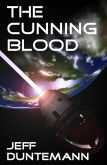
Now, the weird part: Is feeding a scanned book to an AI a violation of copyright? Many think it is. I thought so at first. Much depends on how the AI is used. Suppose an AI trained on loads of books (including mine) were asked, “Show me the full text of Jeff Duntemann’s novel The Cunning Blood.” If it coughs up substantial parts of the book, that’s copyright infringement. But if it says, “Sorry, Dave. I’m afraid I can’t do that,” things get very fuzzy. Could it fork over a few paragraphs and a synopsis? Or just a synopsis? Without producing substantial chunks of literal text from the work in question, my understanding of the law suggests that it’s not infringement.
Now, suppose you ask an AI trained on my books, “Write a novel about a prison planet protected by nanomachines that corrode electrical conductors and thus make electrical devices impossible.” If it drops big chunks of my novel into its output, yes, that’s infringement. But if it writes an original novel with that core idea but without including substantial text from my book, I don’t think it’s infringement. Sleazy, maybe. But not illegal.
One metaphor here would be reading a lot of books we’ve purchased or borrowed from a library (something many of us do) and then writing material inspired or informed by what we’ve read. We digest a lot of factual or fictional material and then talk or write about that material. Absent literal transcription, that’s not copyright infringement.
The Futurism article is a little too worried about destroying huge numbers of print books and not worried enough about the theoretical legality of training AIs on legally-purchased print books. I suspect some law group may try to put together a lawsuit about it, but I think that won’t pass judicial muster.
There may already be machines that can flip through the pages of a print book and OCR its text without destroying the book. Even if they don’t exist (yet), if this means of training AIs on purchased print books becomes clearly legal, my guess is that those machines will happen.
I’m sure it’s possible to build guardrails into AI software preventing it from delivering literal content from OCRed books in copyright. I don’t know how hard that will be, but I suspect that such guardrails could be added to AI. And then, if I understand the legalities correctly, the whole problem goes away.
Sooner or later the problem will be solved. Stay tuned—and bring some popcorn.





I’m curious, some books have disclaimers about all rights reserved, will that create an opening to sue if the book is scanned into an electronic system or “read” by AI?
Interesting question; I’ll look into it. But what the AI outfits are doing is imitating what is certainly legal: Buying a book and reading it…except that the reading is done by a piece of software and not a human being. More than one person can legally read a print book; e.g., libraries. So it may be legal for multiple AIs to read a book that was legally purchased and not reproduced but transformed into something software can read.
I’ve played around with software that can read an ebook aloud, which is legal. That’s what AI training looks like on the surface: Legally purchased print books are transformed into digital books, which are then read by one or more AIs. Whether this is legal or not depends almost entirely on what the AI keeps from its training. Keeping large blocks of literal text is probably illegal. Tokenizing a book may resemble what humans take from books: a few facts, moods, maybe a quoted statement here and there, all of which is considered fair use. “All rights reserved” does not nullify fair use.
One thing I’m pretty sure of: This is probably the most significant question that publishing is now facing, and it may be years before the issue is legally settled.
I searched and couldn’t find an example on my shelf but I remember magazines in the 90s prohibiting storing their contents in an electronic information retrieval system. I guess the big question is, while we allow making backup copies of some things as fair use, is copying an entire book and then destroying the original an u licensed operation? Or does fair use explicitly allow that use? I’m uncertain..
I don’t recall anything like that, but I wonder if they were trying to control transfer of magazine pages to microfilm. Let me know if you spot one. I’d definitely be curious what sorts of magazines would have that concern. I have a scattering of general topic magazines–and lots of electronics and ham radio mags, some issues going back to the 1940s. I’ll flip through some, and see if their mastheads contain that caution.
OK, I might have hallucinated it being in magazines, at least Byte has all rights reserved, Circuit Cellar Ink is all rights reserved, Computer (IEEE) enumerates various ways people can copy for educational purposes, but directs a fee for commercial usage.
But in published books:
The Mythical Man Month by Terry Books Jr.:
“Copyright (c) 1995 Addison Wesley Longman, Inc.
All rights reserved. No part of this publication may be reproduced, stored in a retrieval system, or transmitted in any form by any means, electronic, mechanical, photocopying, recording, or otherwise, without prior written permission of the publisher and author.”
The 7 Habits of Highly Effective People by Stephen R. Covey:
Copyright (C) 1989 by Stephen R. Covey
All rights reserved,
including the right of reproduction
in whole or in part in any form.
The Greatest Salesman in the world by Og Mandino:
(Bantam Trade Edition Feb 1985)
All rights reserved.
Copyright (c) 1968 by Og Mandino
No part of this book may be reproduced or transmitted in any form or by an means, electronic or mechanical, including photocopying, recording, or by information storage and retrieval system, without permission in writing from the publisher.
The Essential Guide to Skiing 201 Things Every Skier Must Know by Ron LeMaster
(c) 2004 Ron LeMaster
All rights reserved, No part of this book may be reproduced, stored in a retrieval system, or transmitted in any form or by any means, electronic, or photocopy, or otherwise, without prior written permission of the publisher.
Democracy At Risk
The Brookings Institute
Copyright (c) 2005
All rights reserved. No part of this publication may be reproduced or transmitted in any form or by any means without permission in writing from the Brookings Institution Press.
So maybe it was a 80’s on technical / academic / self help book publisher thing to discourage photocopying and scanning of books? But I do wonder if that would hold up against a fair use argument as in the right not to be copied was retained against this method….
I am not a lawyer, but I think the issue of training may be moot. The larger issue is, I think, derivative works. Fair use covers a purchaser reading a book. But if a reader subsequently decides to make modest revisions and republish as his own work, that is a derivative work, and a copyright violation. Adapting ideas is fair; including substantial chunks of the original is not.
So when AI is trained on zillions of lines of code, for example, and then generates code for a user, what if the code contains blocks of code verbatim from some other program?
That is a very good question…
Crazy side question, lists of instructions are not copyrightable, so the prose of a recipe book is protected by copyrights, but the ingredients and assembly instructions are not.
Funny enough the courts and legislature kind of side stepped that for software, calling it an expression. But modern AI engines can now disassemble software pretty effectively. If AI could be trained to decompile and break everything down into a pseudo code list of instructions, and then take those and recompile, would that be an effective defense against copyright?
The boom-reduction work out of Boom Supersonic is genuinely fascinating, even if 2029 feels optimistic for certification. I’ll be curious whether they’ll be able to clear the regulatory and materials hurdles at the same time as scaling production.