I haven’t done any new fiction in over a year, largely because I took ten months out of my life to update Assembly Language Step By Step, and another three months to catch up on all the stuff that didn’t happen while I was doing the update. Today was the first day in ages that I had both a reasonably clear schedule and a solid night’s sleep behind me, so I sat down this morning after a bacon & cheese omelette to see what would happen.
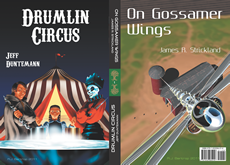
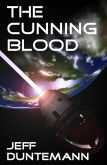
Much good did. I got 2,000 words down on Old Catholics, which is about as much fiction as I generally crank out in an uninterrupted day. So far I’ve got 6 1/2 chapters completed, out of 18 planned, for a total of 32,000 words. The target is 90,000 words, with a hard ceiling of 100,000. I mean to impose whatever discipline is necessary to stay under that ceiling; I set myself the same ceiling for The Cunning Blood and ended up with 145,000 words of novel, which I don’t think helped me at the big presses during the five years that I shopped it.
The current chapter represents a difficult point in the telling of the story. I’m about to introduce the last of the major characters: Cardinal Peter Paul Luchetti of the Archdiocese of Chicago. The problem is that while I’ve met a fair number of Roman Catholic seminarians and priests, as an adult I’ve never been within striking distance of a Roman Catholic bishop, much less a cardinal. (It is true that Cardinal Albert Meyer came within striking distance of me when I was 12, as some of my Roman friends of a similar age may understand.) I generally design characters by drawing on people I’ve met and talked to, but in this case I came up completely empty.
The entire novel is an attempt to design and portray better characters than I have in my SF so far, in a setting where I’m unlikely to get distracted by gunfights, hyperdrives, or berserk nanomachines. Creating a convincing Roman Catholic cardinal is probably the toughest characterization issue I’ve ever faced, simply because cardinals exist. People can call me on the details. I can’t just make things up on a whim. It’s the issue SF people call “offending the known,” and, as I’ve discovered, offending the known is much easier in non-fantastic fiction set in the current day.
I did my best, and used a technique I learned from my SF mentor, Nancy Kress: I wrote a 1,500-word fictional dossier on the man. Only a little of that will actually make it into the story, but filling in the details of Peter Luchetti’s life forced me to consider his strengths and weaknesses and special talents and record them in a coherent way. I’m drawing on the few books I’ve found that speak honestly and in detail about cardinals without mythologizing them: Peter Hebblethwaite’s The Next Pope (1995) and I Am Your Brother Joseph (1997) by Tim Unsworth, a short biography of Cardinal Joseph Bernardin, who was by far the finest cardinal Chicago has had or probably ever will have.
Perhaps I should worry less. The book is a sort of fantasy, in that what I describe is whimsical, outrageous, and almost certainly impossible. That said, I’ve managed to work in almost everything I’ve ever learned about Catholic life, worship, and history, from Benediction, Tenebrae and Holy Hour to apostolic succession, Arminianism, and the Council of Constance (1414-18). Both liberals and conservatives within Catholicism will likely be annoyed at me, and if they are, I’ll call the book a resounding success.
As for the feeling of sitting down to write fiction again: Damn, it’s good to be back!
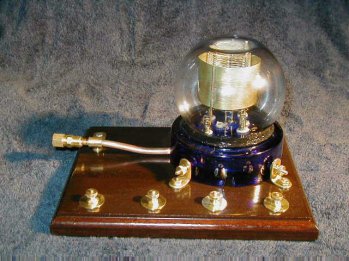

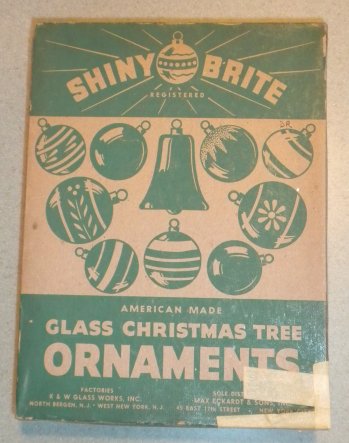 We broke only one glass ornament this year, and it wasn’t one of the old ones. It was perhaps ten years old, the sort of worked-glass item you see artists making in real time with a blowtorch at home and garden shows, out of thin glass rod. When Carol touched it to take it down from the tree, it literally flew apart in her hands. (There were internal stresses involved, as we vacuumed up fragments six feet away.)
 Wow.
Wow.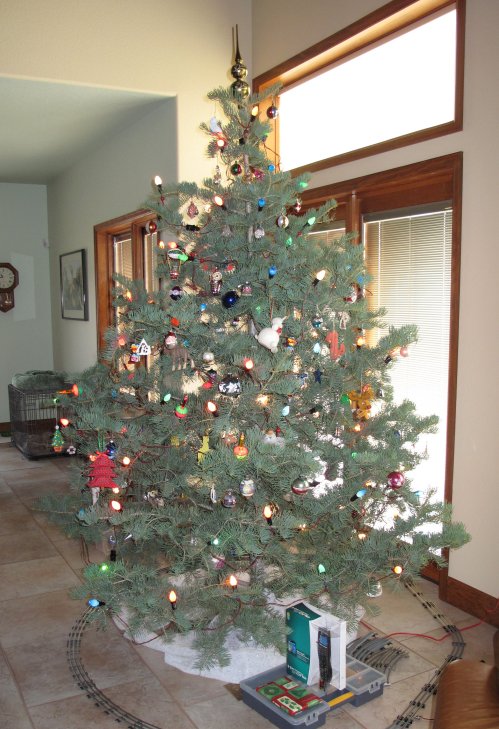
 There was some stress on Tuesday night when Carol’s mom fell at her home outside Chicago and was taken to the hospital. She didn’t break anything, fortunately, but had to spend Christmas in a hospital bed. To cheer her up I put an SX270 system on the coffee table by the Christmas tree and set up a Skype video call with my nephew Brian. The hospital has Wi-Fi in the rooms, and Brian set his new laptop up on Delores’s bed tray. So by virtue of my Phillips ToUCam and Brian’s built-in Webcam, she could see us, the dogs, and the Christmas tree. Delores was delighted, and it’s a technique to keep in mind if you find yourself in such a situation. Skype is very good with detecting and autoconfiguring Webcams, and there was no fussing involved. I plugged in the ToUCam, made the call, and video happened. It’s not exactly a flying car, but it’s definitely one of those odd Sixties dreams fulfilled, mostly when nobody was looking.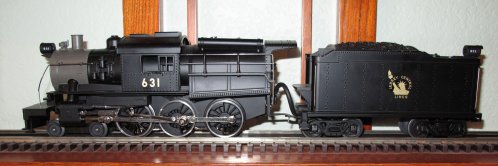
 tracks, yapping furiously at it until he got bored. Pete Albrecht unexpectedly sent me a rare artifact indeed: An original Lionel 275W ZW dual-control transformer (right) that was probably made in the midlate 1950s. It works great, and can control two independent track sections and two independent sets of accessories.