Jeff Duntemann's Contrapositive Diary Rotating Header Image

ebooks

Odd Lots

How Not to Fight Ebook Piracy

The estimable Janet Perlman recently posted a link to an article suggesting a “new” concept in ebook piracy protection that doesn’t involve any sort of encryption or tying of files to a particular device. The gist of it is to embed a purchaser’s personal information in the file purchased. If the purchaser knows his/her name or address are somewhere in the file, well, they’re less likely to post it on Pirate Bay, no?

This concept is not new; I remember talking it as long as ten years ago, when ebooks were still exotica. It’s as wrongheaded as it is obvious, for the following reason: The fastest-growing source of files shared on Bit Torrent is material taken from stolen readers, tablets, and smartphones. If somebody swipes my tablet and the files stored on it are somehow traceable to me, then once the files appear on the file sharing networks, publishers might assume that I was the one who uploaded the files–which in most cases is a felony.

This is true whether or not my name is actually embedded in the files. A serial number or database key pointing to my sales record in the publisher’s store would be enough.

I’ve written before about massive ebook collections available on pirate sites. The file I mentioned in that entry was an old one, and crude. Newer and even bigger ones are available now. (No, I won’t tell you where they are.) Specialized collections are turning up as well, as specific as books on programming for Android.

Driving the trend is the appearance of specialized private Bit Torrent trackers catering to ebooks. If you’ve never studied up on the torrent scene it’s a little hard to explain, but Big Media pressure is driving a lot of torrent traffic into a darknet of members-only trackers that keep their members on very short leashes. To avoid getting kicked out you have to upload as much as or more than you download. Of course, if nobody wants to download what you upload (because it’s of poor quality or they already have it) your ratio goes down and the admins show you the door. This creates pressure to find new material to upload, especially in private trackers with few members who very quickly grab everything of even minor interest to them.

The torrent scene is a numbers game, and ebooks are small files compared to movies or TV shows. So collection editors are grabbing files anywhere they can to spin out new collections. If your device is stolen, your files will find their way to the pirate sites. If your name (or some other identifiable traceable to you) is in those files, you’re the one in trouble, and not the pirates themselves.

File piracy may be an unsolvable problem. The last thing we want to do is propose solutions that might turn completely honest purchasers into criminals–thus providing a perverse incentive to stop buying, and pirate other people’s files instead.

Odd Lots

The Agency Model and the Fair Trade Laws

All the recent commotion over the agency model vs the wholesale model in ebook retailing reminded me of something: my very first pocket calculator. I got my first full-time job in September of 1974, and whereas fixing Xerox machines wasn’t riches, it paid me more than washing dishes at the local hospital. In short order I got my first credit card, my first new car, and a number of other things that had been waiting for my wallet to fatten up a little.

One of these was a pocket calculator. The device itself has been gone for decades, but I’m pretty sure it was a TI SR-50, with an SRP of $149.95. I shopped around for the best price, since $150 was a lot of money back then. However, everybody who sold the SR-50 was selling it for $149.95. I bought it at a camera store downtown, and only a little research told me that it was covered under the Fair Trade laws, meaning that all retailers sold it for the same price, set by the manufacturer. I grumbled a little, but wow! I had a calculator! I gave it no further thought.

Between 1931 and 1975, a significant chunk of retailing in the United States was basically on the agency model. Books, cameras, appliances, some foods, wine and liquors, and certain other things were sold for the price the manufacturer chose. This is one reason prices were often printed right on the goods. Retailer margins were open to discussion, but in a lot of industries, the margin was 40% or pretty close to it. The Fair Trade laws were enacted during the Depression to protect local one-off retailers from being driven out of business by much larger chain stores, during a time of reduced demand and thin profits. How well this worked is disputed, but by 1975 the laws had become so unpopular with the public and so difficult to enforce that they were repealed by an act of Congress.

I grant that Fair Trade was not a clear win for the little guys. Some of my readings suggest that the Fair Trade laws accelerated the dominance of retail chains because chain retailers could build bigger stores and shelve a greater variety of goods, even if their prices were the same as prices in smaller, one-off stores. House brands were invented largely to evade the Fair Trade laws, since the retailer was considered the manufacturer for legal purposes and could set prices in stores as desired. This gave another advantage to large chains, since only large chains had the resources to establish house brands.

Fair Trade retailing as I understand it rested on two big assumptions:

  • Manufacturers compete on price.
  • Retailers compete on things like customer service and selection.

Shazam! Those are the same two assumptions underlying the agency model in publishing, and I don’t think it matters whether we’re talking print or digital. So I think it’s fair to look at what happened after 1975, when Fair Trade went away:

  1. Discounting allowed consumer prices to go down.
  2. Both the chains as a whole and individual chain retail stores got bigger.
  3. Smaller, independent stores vanished in droves.
  4. Small retailing became specialty retailing. This was certainly true of bookstores. Of the two bookstores I could easily reach on my bike in the 1960s, one became a card shop that carried a few books, and the other became a specialty bookstore carrying Christian/Catholic books only.
  5. Small retailers dealing in used goods hung on longer–think used bookstores and used record stores. The Doctrine of First Sale allowed used goods retailers to set their own prices even on Fair Trade goods.
  6. Manufacturer consolidation went into high gear. One reason, I think, was monopsony, which is the power big retailers have to dictate prices to suppliers. Smaller manufacturers who could not meet retailer price expectations merged with larger manufacturers, became importers, or went under.

In the ebook publishing/retailing world, #5 does not apply, as there’s no unambiguously legal used market. Most of the other consequences in the list above are things that I predict an agency model would work against:

  1. Retail prices will rise–though perhaps not as much as some fear.
  2. It will be easier to mount and maintain a new online retailer against competition by enormous retailers like Amazon.
  3. Given the above, with the consequence of more players in the retail market, monopsonistic pressures on cover prices will be greatly reduced.
  4. Absent Amazon’s monopsony, smaller publishers have a better chance of competing with much larger publishers, given small publishers’ advantages of lower fixed costs vs larger publishers.
  5. The presence of a larger number of smaller publishers will keep downward pressure on prices, since that’s their primary way to compete. Macmillan has to keep ebook prices up to protect its print hardcover line. Ten thousand small ebook publishers have no hardcover lines to protect. $10? No problem. $5? The new $10. Even within the agency model, small press will train consumers to expect ebooks to sell for $10 or less.

There’s another consequence that I don’t think has any precedent in the Fair Trade phenomenon: Larger numbers of retailers and publishers will reduce the power of very large retailers or publishers to “silo” the business with proprietary file standards and DRM.

There are problems with such an agency-based business model (and wildcards; Pottermore, anybody?) but overall I think those problems are more solvable than the collapse of book retailing into Amazon, Amazon, and more Amazon. So my vote goes with agency retailing. I’ve just told you why. (Polite) discussion always welcome.

Odd Lots

  • Not posting often here, but I’m ok. Working hard on several things, chief of which is getting my office and Carol’s exchanged, outfitted, and fully functional. This involves furniture, wiring, lighting, and sorting an immense quantity of glarble. I hope to return to regular in-depth posting soon.
  • I have a new favorite cheese: cave-aged gruyere, which can be had sometimes at King Soopers, and is lucious with a good dry red wine. Get the oldest cheese you can find, as young gruyere tastes nothing like old gruyere. A year is as young as I buy.
  • The asteroid that whacked the dinosaurs must have thrown an immense amount of material into space. How much rock might have made the journey, and how far far did it go? Here’s a good quick take on the topic. It would take a million years or more to get to Gliese 581, but suitably rugged bacterial spores might have survived, and made the origin of life on planets there unnecessary. (Thanks to Pete Albrecht for the link.)
  • A book I’m not bullish on: Steven Johnson’s The Ghost Map, which describes how the cause of cholera (infected water) was proven by the persistent John Snow through charting of cholera deaths upon a map of London neighborhood water pumps. Why? The book does not include the actual ghost map named in the title. (So what else is missing or wrong?) Whatever editor let that past should be fired and spend the rest of his/her days stuffing toddler clothes in racks at Wal Mart.
  • Could the TRS-80 Mod 100 possibly be 30 years old? Yes indeedy, and it was ubiquitous among tech journalists when I was at PC Tech Journal in ’85-86. Its keycaps made a distinctive sound, and sitting in a significant press conference back then was like sitting under a tin roof in a rainstorm. I yearned for one myself (the keyboard was wonderful for such a small device) but didn’t pull the trigger because the machine did so little other than keystroke capture.
  • Toward the end of my tenure at Xerox I saw the Sunrise, which was a more ambitious take on the “lapslab” concept. My department was considering writing an app for it, so I had a loaner for awhile. Even better keyboard than the TRS 100, cassette data storage, modem…but the 3-line display was harder to read. Xerox private-labeled the hardware from another company, and basically killed it with a $1500 price point. (There was a flashier version that cost…$2500!) Xerox abandoned the market in 1984, after sinking what rumor held to be an obscene amount of money into it.
  • One machine I did consider was the Exidy Sorcerer, which also had a good keyboard and didn’t cost $3000. Lack of software made me spend the $3000 anyway, on a huge honking S100 system running a 1 MHz 8080.
  • One of the big issues between Amazon and the Big Six is an explosion of co-op fees, which according to some reports have increased by 30 times since 2011. The whole “co-op” business has always smelled gamey to me, but it had a purpose in the B&M bookselling world. How it fits into online ebook retailing is less clear, and in my view starts leaning perilously in the direction of bribery.
  • Most of us think that reading is in decline. Gallup poll results suggest otherwise. Nor are today’s books worse than those of 40+ years ago. This quote is significant: “The bad [books] of yesteryear have gone out of print while the bad ones of today are alive and being sold in supermarkets.”
  • I’m still watching the ASUS Tranformer Prime (their botch of its GPS support has kept me away for the time being) but the Prime has a little (as in cheaper) brother now, and it looks like a decent machine in its own right. Here’s Engadget’s detailed review of theTransformer Pad TF-300.
  • Here’s another wonderful gallery from Dark Roasted Blend, this time of high-speed photos of liquids. Some of it is photoshopped, but it’s all startling. (Thanks to Ernie Marek for the link.)
  • Santorini is smouldering again. Yes, the volcano that may have made the Minoans extinct and launched the legend of Atlantis (or at least put an older legend on the map) is getting restless. Like the Greeks need that right now.
  • Eating meat allowed our hominid ancestors to reproduce more quickly, by accelerating infant brain growth and thus shortening the breastfeeding period. (Breastfeeding naturally inhibits ovulation.) This on top of several other issues.
  • From the Words-I-Didn’t-Know-Until-Yesterday Department: Beatboxing , which is vocal generation of sounds like drums and synthesized sound effects. I heard of this in an interesting way: There’s a slightly silly commercial for the Honda Pilot that involves a Pilot full of bored tweens beatboxing the rhythm of Ozzy Osbourne’s “Crazy Train,” and by chance we had captioning turned on. When the kids started making noises, the captioning read, “Beatboxing.”
  • Pete Albrecht sends a link to a map color-coding US gas prices by county. The very abrupt differences between states suggests that gas prices are more a question of state and local taxes than regional differences in demand.
  • It was inevitable: A 3D printer that prints chocolate novelties. Now we need a 3D printer that prints spice-cake Easter lambs with ears that stay on.

Invading the Most Favored Ebook Nation

Reports are pouring in this morning that the Department of Justice is preparing antitrust action against the Big Five publishers (Simon & Schuster, Hachette, Penguin, Macmillan, and Harper Collins) and Apple for conspiring to raise ebooks prices. (It’s a little ironic that I read it in today’s print Wall Street Journal, which I generally read before turning this damned thing on.)

The problem is in part the agency model, which allows publishers to set a price for books, and give retailers like Apple and Amazon a cut. Publishers are afraid of ebooks eating their hardcover lines, of course, but were absolutely terrified that Amazon’s loss-leader pricing of bestsellers at $9.99 would train customers to think that ebooks were worth $10 and no more. Publishers have experimented with windowed release, which holds back the ebook edition until the hardcover has a chance to generate its bigger bucks, but as best I know that’s not widely done. Agency pricing, however, has stuck.

Here’s an agency example, of a hardcover I read recently: Steven Pinker’s The Better Angels of Our Nature has a cover price of $40. (Publishing seems to be responding to the recent shortage of ‘9’ digits by rolling prices up a penny, at least on hardcovers.) All of the ebook stores that I’ve checked are selling the ebook version for $19.99. In an agency arrangement, publishers set both prices. The sales agent (that is, the retailer) gets 30% of the set price. In this case, that would be $6. The publisher gets the rest, here $14.

Why 30%? It’s arbitrary, and simply the number that Apple gave publishers when it changed its bookstore from the wholesale model to the agency model. Apple’s retail contract had a twist, which is really what’s getting them into trouble today: The “most-favored-nation” (MFN) clause, which specifies that publishers may not give other retailers better terms than they gave Apple. Much byzantine legal reasoning online, but here’s a short summary.

TGIANAL, but this still puzzles me a little, and I think we’ll learn more in coming days. MFN clauses have been litigated and are not themselves illegal. The sense is that, if anything, they tend to drive prices down. The current legal action from Justice seems to turn on whether the Big Five colluded on agency pricing (with Apple’s help) to force Amazon to accept the same terms that Apple got. The idea is that the parties named in the suit intended their actions to raise prices, a use of MFN that is in fact illegal. If that sounds like a hard thing to prove (rather than just allege) well, duhh.

As I’ve said earlier, I favor agency pricing, because it allows small, very small, and microscopic publishers to undercut the Big Five in a major way and maybe eke out a marginal living. You can bet that you won’t see 99c ebooks from Macmillan. Much of my puzzlement arises in wondering to what extent ebook publishing will be affected by things like the Robinson-Patman Act, which was created to prevent predatory pricing, though is not widely enforced these days. When the retailer’s role in selling ebooks is basically database management (or when the retailer becomes the publisher or even the author) predatory pricing is not an issue–but odder things have happened in the legal world before.

As always with complex legal issues involving enormous players with cavernous pockets, almost anything could happen. I think the case will either be settled before going to court, or else will be decided narrowly. Publishers may be stripped of their ability to demand that retailers accept the agency model, or any given given agency percentage. I think Amazon would love to retain agency pricing, and just negotiate a lower number.

As I’ve said many times: We’re still in the Cambian era of ebooks (the Pre-Cambrian Era ended with the arrival of the Kindle) and there’s still a whole mess of evolving to do.

Indies and Gatekeepers

Janet Perlman put me on to this article about why indie publishers (a category that may or may not include self publishers, depending on whom you talk to) get no respect. The whole piece might be summed up this way:

  • Quality is hard work.
  • Quality is expensive.
  • Quantity is no substitute for quality.

I agree, as far as it goes. But that’s not the whole story. You can break a sweat and write a superb novel at considerable expense of time and energy. You can pay an editor to look at it and perhaps fix certain things. You can pay an artist for a great cover. You can pay somebody to do a great page layout, generate print images, ebook files, and so on. Having shelled out all that expense in time, money, and personal energy, you are not likely to sell many books or become especially well-known. Publishing is an unfair business in a lot of ways.

Perhaps the most unfair thing about publishing as we know it now is that it cares not a whit about quality. Sure, the publishers will tell you otherwise. So will the agents, and so will the retailers, assuming you can find any these days. Alas, it’s not true. Publishers, agents, and retailers are indeed our gatekeepers, and the gates are tightly kept. The gates do not open for quality, alas. The gates open in the hope of making money.

This is true not only in quirky markets like fiction (more on which in a moment) but in technical publishing as well. I’ve received and rejected beautifully written books that were well-organized and basically error-free, for a simple reason: The Radish programming language (I just made that up) is used by 117 people world-wide, which means the total worldwide market for a book about Radish is 116. (The author already has a copy.) On the flipside, the best possible book on Windows XP won’t be accepted at any traditional publishing house, because all the books on XP that the universe needs were written a long time ago.

The reverse is also true, to some extent. If a publisher thinks your book will make money, the book will probably be published. Being well-written doesn’t change this equation much. Back in the Coriolis era I spent a lot of money on developmental editors to make a manuscript readable in those cases where I suspected (after market analysis) that the book met a hitherto unmet need. I wasn’t always right, of course, but the point is that I didn’t accept or reject books based on any judgment of quality. What I was looking for was market demand.

This is true of fiction as well, in spades. I picked up Cherie Priest’s steampunk entry Dreadnought last year, and had to force myself to finish it. Two other people in my circle, who live 1,000 miles apart and don’t know one another, both described the book in a single word: Unreadable. (Another said the same of her earlier book, Boneshaker.) Dreadnought was dull, slow, short on ideas, over-descriptive in some places and far too sparse in others. Yet Cherie’s got a following and is evidently doing very well. Somebody at Tor thought her books would make money and took a chance. They were right. That doesn’t make them well-written. (I did like the covers, and covers do matter–if you can get them in front of the readers somehow.)

I don’t want to be seen as picking on Cherie, who will doubtless chew me out if she reads this. It’s a pretty common thing. Nor is it a new thing. Decades ago I read a lot of abominable novels, from Sacred Locomotive Flies to Garbage World. They got into the stores. They probably made their authors at least a little money. (They got mine, after all.) They were crap.

If Dreadnought made money, why would a book that was better written not make money? It’s a long list. The author may not have been able to get a hearing from the gatekeepers in the first place. Luck is needed here, as well as brute persistence, not that persistence is any guarantee. The topic may be considered out of style, or just worked out and already done to death. It may be too long. (I ran into this trouble with The Cunning Blood. Unit manufacturing cost matters.) The book may have been judged to push buttons in the public mind that the publisher would prefer not to push. (Back when I was in high school I read a purely textual porn comedy novel that was brilliantly written and hilarious. Would I publish it? Not on your life.) Books that demean women or minorities a little too much, or focus on cruelty to animals (or probably a number of other things) won’t be picked up as easily, and it has nothing to do with quality. It’s tough to make money in publishing, and publishers are trolling for as broad a market as possible.

This is why I think the article on HuffPo cited above is misleading. Quality is a problem, but not as much of a problem as the author thinks, and not in the same ways. Worse, solving the quality problem won’t make an indie publisher’s books any more likely to get into B&N, and suggesting to indie publishers that they will is just dishonest.

So what’s the answer? Don’t know. There may not be one. The publishing industry is in the process of changing state, and nobody knows what we’ll inherit in five or ten years. Losing B&N (or waking up one day to find that B&N is a tenth the size it was yesterday) could work to indie publishing’s advantage, at least if independent bookstores fill the subsequent vacuum. The more gates to the retail channel there are, the more likely it is that one will open when you buzz. Self-published ebooks have worked for people like Amanda Hocking with Herculean energy who write for twelve hours and then promote themselves the other twelve. Tonnage can get you noticed, even if it’s bad tonnage.

For the rest of us, again, I don’t know. Quality in all writing (fiction especially) is not the choke point. It’s an unfair and beneath it all a mysterious business. Submit good work if you can, but be prepared to have the gates shut in your face a lot. That’s just what gates do.

Odd Lots

Odd Lots

  • Here’s a great site on older toy and hobbyist robots; if you’re a collector or just a nostalgist, it’s a must-see. (Maybe some here have never seen my late 70s robot Cosmo Klein.) Alas, the link came from an old email sent by the late George M. Ewing WA8WTE, who suggested it as an Odd Lot. Better late than never.
  • We used to giggle at the name in the mid-60s, but the founder of Blonder-Tongue Labs is still alive, and maintains a site full of interesting tech information about crystal sets and old radios, as well as the firm’s patents and products from long ago. (Thanks to Michael Covington for the link; again, set aside more than a year ago and never used.)
  • No tablet here yet (waiting to see what if anything pops up at CES 2012) but I’m tempted to get a Nook Color so I can at least quit reading ebooks on my dinosaur of an X41. My friend Erbo has learned a lot about rooting it and running CyanogenMod, and has much good to say about the combo.
  • If you’re considering that step, consider the peculiar nature of the Android OS itself, which may not exist in precisely the same way that Windows exists. This is still good, but you need to understand it, as it’s a newish thing in the computing universe.
  • I’ll never buy one of these, but I admire the concept: An off-the-shelf smartphone-controlled video-equipped RC helicopter. And I admit: If it weren’t for OWS I wouldn’t have heard of them at all.
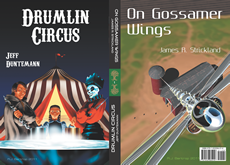
  • Henry Law called my attention to the fact that County Down in Northern Ireland is often called “Drumlin Country” because of its landforms. Odd then that “The Star of County Down” is one of my favorite Irish folk songs, and has been since I first heard it circa 2000–which is precisely when I wrote “Drumlin Boiler,” the first tale in the Drumlins Saga.
  • And of course, when the starship Origen is marooned in the Drumlins system, it is the mere handful of collectible print books on board that allow the castaways to gradually re-create a modern society on an alien world. The cheap consumer-grade tablet PCs in every passenger pocket were all dead inside of fifteen years (most far sooner than that) and nobody thought to create printing presses before they were gone. No wonder that the cult of the printed book rises as the age of the printed book fades. (Thanks to Bruce Baker for the link.)
  • Talk partisan political hatred all the time, and prepare to reap the wind.
  • Can we please add “Google is your friend,” “denier,” and “talking points” to this list? (Thanks to Pete Albrecht for the link.)
  • And with that, the curtain falls on 2011. May the impact of the curtain give it multiple broken bones, concussions, contusions, internal bleeding, hemorrhoids, the heartbreak of psoriasis, and whatever else it might take to keep this year from darkening our doorsteps ever again.

Odd Lots