It’s been a low-energy and off-my-peak couple of days here for reasons I won’t bore you (or gross you out) with. Had to take a run up to Denver, but mostly I’ve been sitting quietly and reading. I finished a book that I don’t really recommend unless you’re chained to the potty and need to kill time: Basilica by R. A. Scotti is a popular history of the construction of the second St. Peter’s Basilica in Rome, the one that we all know and love, which supports the largest church dome in the world. The book is competently written, but it’s a little thin on details of the construction itself. Ms. Scotti is much more interested in politics and personalities, and in truth I did learn a lot about Bramante, Michaelangelo, Raphael, and Bernini (and more than a few popes) that I didn’t know before. But she has no good head for architecture, and does not define any 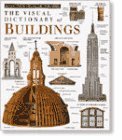 terms. I kept flipping into a wonderful DK book called The Visual Dictionary of Buildings to clarify certain elements of church architecture. Now that book I recommend, especially if you’re a writer trying to set a scene in a complicated building and aren’t entirely sure what an oculus is. (Or—quick, now!—define a “spandrel”.) There are some factual errors in Basilica, one of the worst of which suggests that poured concrete was used in some places in St. Peter’s. Not so—poured concrete was an ancient technology that was lost after Imperial Rome came apart and was not recovered until the 19th Century, or pretty close to it. St. Peter’s was built almost entirely of mortared masonry and sculpted stone.
If you’re interested in the peculiarities of St. Peter’s Basilica, a better book is The Bones of St. Peter by John Evangelist Walsh, which speaks of the excavations under the main altar just before WWII. The Basilica was built over a Roman graveyard, and there was a lot of fascinating stuff under the floors. More about the Shroud of Turin than about the Basilica is Holy Faces, Secret Places by Ian Wilson, of which I reread a considerable chunk. However, Wilson speaks of the countless weird little crannies in the Vatican complex, in which a lot of interesting things, and not only relics, may be hiding. Secrets are not good in religion for many reasons, but mostly because secrets are a power thing, and power corrupts spiritual organizations mortally. (See Encountering Mary by Sandra Zimdars-Swartz for a good discussion of this problem.) Wilson is a marvelously engaging writer, and potty reading doesn’t get a whole lot better.
I also reread several sections in Peter Ochiogrosso’s fascinating 1987 book Once a Catholic, in which a number of famous Catholics and (mostly) former Catholics explain what sorts of marks their Catholic upbringing left on them. The book is not explicitly about the gulf between Tridentine (i.e., Latin) Catholicism and Vatican II Catholicism, but the demographics of the people the author chose to interview almost guarantees it. Like them, I grew up Tridentine, and like them, I know what we lost, and why. (Not all that was lost was good; in fact, a good deal of what we lost was desperately in need of losing.) The book is secular in approach and intent, and does not preach, in either direction. It’s a character study, of real characters. (One of them is George Carlin.) Highly recommended, and I think I’ve spoken of it here before.
All these books but Basilica are currently out of print, but cheap on the used market. Reading them was research for a current project of mine—Old Catholics. (Nothing makes you a better writer than simply reading, and reading a lot.)
Finally, I’ll throw out an idea I had yesterday, for an invention I wish someone would get to work on. I want something I might charactize as a Miracle Voice Teacher. I want a program that will put a musical score on the PC screen and listen to me try to sing it. The program should average the frequencies that come in from the mic and put a line above or below a note in the score, telling me whether I’m high or low. It should have a metronome, and the ability to play the score as MIDI. It should be able to record what I sing and play it back for me, showing me on the screen where I botched the melody.
And if that’s possible, then the program should be able to teach me how to harmonize, by isolating one of the melodic lines and allowing me to sing it, and then gradually adding in the other lines in the headphones while I try to stick with my own line and not get confused. Scarily, such a thing would allow me to sing four part harmony…with myself. The world may not be quite ready for that, but at this juncture I think I am. I went looking for the product and didn’t find it, but if you know of something along those lines, I’d like to hear about it.