- Here’s a great site on older toy and hobbyist robots; if you’re a collector or just a nostalgist, it’s a must-see. (Maybe some here have never seen my late 70s robot Cosmo Klein.) Alas, the link came from an old email sent by the late George M. Ewing WA8WTE, who suggested it as an Odd Lot. Better late than never.
- We used to giggle at the name in the mid-60s, but the founder of Blonder-Tongue Labs is still alive, and maintains a site full of interesting tech information about crystal sets and old radios, as well as the firm’s patents and products from long ago. (Thanks to Michael Covington for the link; again, set aside more than a year ago and never used.)
- No tablet here yet (waiting to see what if anything pops up at CES 2012) but I’m tempted to get a Nook Color so I can at least quit reading ebooks on my dinosaur of an X41. My friend Erbo has learned a lot about rooting it and running CyanogenMod, and has much good to say about the combo.
- If you’re considering that step, consider the peculiar nature of the Android OS itself, which may not exist in precisely the same way that Windows exists. This is still good, but you need to understand it, as it’s a newish thing in the computing universe.
- I’ll never buy one of these, but I admire the concept: An off-the-shelf smartphone-controlled video-equipped RC helicopter. And I admit: If it weren’t for OWS I wouldn’t have heard of them at all.
- Henry Law called my attention to the fact that County Down in Northern Ireland is often called “Drumlin Country” because of its landforms. Odd then that “The Star of County Down” is one of my favorite Irish folk songs, and has been since I first heard it circa 2000–which is precisely when I wrote “Drumlin Boiler,” the first tale in the Drumlins Saga.
- And of course, when the starship Origen is marooned in the Drumlins system, it is the mere handful of collectible print books on board that allow the castaways to gradually re-create a modern society on an alien world. The cheap consumer-grade tablet PCs in every passenger pocket were all dead inside of fifteen years (most far sooner than that) and nobody thought to create printing presses before they were gone. No wonder that the cult of the printed book rises as the age of the printed book fades. (Thanks to Bruce Baker for the link.)
- Talk partisan political hatred all the time, and prepare to reap the wind.
- Can we please add “Google is your friend,” “denier,” and “talking points” to this list? (Thanks to Pete Albrecht for the link.)
- And with that, the curtain falls on 2011. May the impact of the curtain give it multiple broken bones, concussions, contusions, internal bleeding, hemorrhoids, the heartbreak of psoriasis, and whatever else it might take to keep this year from darkening our doorsteps ever again.
ebooks
Odd Lots
Odd Lots
- The Nook Tablet is no longer rootable, thanks to a recent stealth update applied automatically when the device connects to the Internet. The big deal with the mod is that sideloaded apps can no longer be installed; all you get are what’s available from the B&N app store.
- Lose a few, win a few: Amazon no longer blocks rival ebook apps on its Kindle Fire almost-a-tablet.
- I always roll my eyes when people say things like <YEAR> will be the Year of the <WHATEVER>. However, I’m inclined to believe that Android may finally begin coming of age in 2012, and I’m hoping to score a 10″ ICS tablet once I find one with an external card slot and (ideally) USB charging.
- Xoom 2/Xyboard is off my list because it doesn’t have an external card slot. I also agree with the review (having a Verizon-issued Droid X2 now) that the Verizon app store is hideous.
- This may well be the smallest possible USB thumb drive. No, I don’t want one. I might inhale it.
- Joe Bryer, who sent me the coal samples I described yesterday, has posted some nice videos on YouTube about using coal for home heat.
- The chemical structure of coal (granting that it’s not a uniform material but a mix of many hydrocarbon compounds) looks something like this. (Thanks to Pete Albrecht for spotting this for me.)
- My very talented Taos Toolbox 2011 colleague Lisa Nohealani Morton had her name tattoed on her arm–in binary. I myself am no stranger to binary, but if you don’t believe me you can translate it using a binary-to-text translator.
- What if you’d been at my high school lunch table in the spring of 1970? This is what you would have seen. I boggle a little at my then-habit of drinking milk and lemonade at the same meal, but I’ve done (and worn) far weirder things in my life.
- Be careful what stuffed animals you pose with over at the photography studio, especially for your Christmas photo cards. Peace on Earth and all that…
- 42% of the 100% must think they’re part of the 1%. Or something. (Thanks to Michael Covington for the link.)
- Offered without comment: The continents can be rearranged to form a chicken.
Odd Lots
- You’re getting two Odd Lotses in a row for a reason. Stay tuned–I’ll try and explain tomorrow, if I don’t run out of Aleve.
- Bruce Eckel is returning his Kindle Fire because the damned thing will not render .mobi files. C’mon, Amazon. I mean, come on. (Thanks to Mike Bentley for the link.)
- Xoom 2, where are you? Whoops, it’s going to be called the Droid XYboard to distance itself from the Xoom brand, which was done in because Somebody Didn’t Want It To Have a Card Slot. (Don’t know who. Have suspicions.)
- Charlie Stross makes a good case that DRM on ebooks (as required by the Big Six) is a stick handed to Amazon with which to pummel the Big Six. Read the piece, follow the links (make sure you know what a “monopsony” is) and then read the comments.
- Schumann resonance waves can apparently be detected from space. This is surprising, as my earlier readings suggested that they only exist by virtue of a sort of immaterial waveguide formed by layers in the Earth’s atmosphere–the same waveguide effect that allows hams like me to bounce signals around the world.
- Femtotech? I postulated a “femtoscope” in my novel The Cunning Blood, but it was used to plot quantum pair creation and did not rely on exotic matter. I’m not sure such things are possible, or could be done in any environment where we could live or even work through proxies. But as with a lot of things (especially LENR) I would hugely enjoy being wrong.
- I torrented down the brand-new Linux Mint 12 Lisa the other day, and like its predecessor it will not detect the video hardware correctly on my 2009-era Core 2 Quad with NVidia 630i integrated graphics. Somewhat surprisingly, it will install on an older Dell GX620 USFF with (as best I can tell) no video problems. Not sure if I like GNOME 3, though. MATE, a GNOME 2 fork, has promise.
- I may have made this point once before, but hard steampunk authors should have the Lindsay Books catalog on hand, or at least have the site bookmarked. These are books explaining how to actually do steampunk technology, often in the form of reprints of original Victorian-era reference texts. Thermite, brass, steam engines, and loads of other goodies just as great-great grandpa learned them. (Thanks to Bruce Baker for the noodge.)
- One of my German friends told me that plagiarism in German doctoral theses is so widespread that it’s spawned a crowdsourced mechanism for detecting it. That’s the abbreviated English-language version; if you have a reasonable amount of German, go to the richer, fuller main page.
- Very spooky time-lapse video of a little-known physical phenomenon. (Thanks to Pete Albrecht for the link.)
- I originally thought this was a hoax. On the other hand, I have a Tim Bird and I love it. It’s hard to believe that such things actually work as well as they do.
- Sometimes you wear what you eat–or at least a reasonable facsimile.
Pirates and Dummies
I used to go up to the Pirate Bay on an almost weekly basis, to see which Paraglyph Press books were listed there. It ceased to be a priority after Paraglyph folded, and I don’t think I’ve been up there for over a year. Then last week I learned that large NY publisher John Wiley & Sons is preparing a multiple “John Doe” style lawsuit focused on torrent piracy of its staggeringly popular “For Dummies” series. So I sailed back up to the Bay to see how bad it is on the ebook side.
For dummies in search of “For Dummies,” my initial impression is that it’s pretty good, which means that for Wiley, it’s pretty bad. The word “Dummies” can be found in TPB’s torrent catalog 691 times, and although some of those may not be “For Dummies” titles, I’m guessing that nearly all of them are. Individual books are listed, of course, but what probably worries publishers more is that a 6.3 GB file containing 572 “For Dummies” books is listed as well. 6.3 GB sounds like a lot. It’s not. It’s about the size of a single 720p feature-length Blu-Ray rip. 572 PDF ebooks in one lump, egad–in truth, I didn’t know that there were that many “For Dummies” books in existence. (GURPS for Dummies is not something I would have gone looking for.)
Alas, the pirates have forgotten about me personally, and for that matter, about Paraglyph Press itself. Only one Coriolis book is listed, Michael Abrash’s Graphics Programming Black Book. (There may be others that weren’t cited with the word “Coriolis;” I didn’t search deeply.) As I said, my own last name isn’t present even once. Much more startlingly, David Brin is listed only three times. Connie Willis, twice. Vernor Vinge, once. Nancy Kress, not at all. Being hot must help; Neil Gaiman is listed 49 times.
One gets the impression that reading isn’t a priority among pirates. To find out just what is, you need a better metric, and The Pirate Bay offers one: the number of complete torrents. “Seeders” are people who make available complete copies of a given file. “Leechers” are those who are currently downloading the file. The more seeders, the more popular a file, and the faster it will download to the leechers. (The protocol is interesting and described well here.)
Although there are hundreds of torrent trackers, the Pirate Bay is by far the most popular, ranking 91 on Alexa. I think it’s pretty characteristic of the pirate world in general. So let’s go count Pirate Bay seeders:
- The top audio book is Double Your Reading Speed in Ten Minutes. 548 seeders. (Irony alert! Near-toxic levels!)
- The top ebook is Do Not Open: An Encyclopedia of The World’s Best-Kept Secrets. 1,442 seeders.
- The top pirated app is Photoshop CS5. 6,412 seeders.
- The top music track is “We Found Love” by Rihanna. 7,010 seeders.
- The top game is The Elder Scrolls. 12,438 seeders.
- The top movie is Conan the Barbarian. 17,422 seeders.
- The top TV show (in fact, the top torrent of any kind) is an episode of “How I Met Your Mother.” 23,259 seeders.
I hope I don’t have to beat you over the head with it: Video is twenty times more popular on torrent sites than ebooks. Down in Dummies land, it’s worse: The 572-book “For Dummies” collection has all of 99 seeders. Neil Gaiman’s best (46) is less than half of that.
So why is a major book publisher suing a relative handful of torrenters? I’m guessing that it’s because it can. BitTorrent is extremely “open” in terms of who’s doing it, and if you’re downloading you’re automatically uploading too. Recording the IPs of people in a torrent swarm is easy. Suing them is dirt simple. Some money can be harvested offering settlements, but at those minuscule usage levels, not much. I’m sure that Wiley wants to exert a “chilling effect” on sharing of Dummies books, and they are–but only in the torrent world. Even though my books vanished from the Pirate Bay, it didn’t take Sherlock Holmes to find them out on the bitlockers and Usenet, which for various reasons are much tougher nuts to crack on the legal side.
Video rules the torrent world because video is big, and the BitTorrent protocol is the most effective way to get video downloaded quickly. Small files like ebooks are elsewhere, unless they’re gathered into massive collections the size of Blu-Ray rips. Ebook piracy seems to be a minor issue today because ebook piracy is mostly invisible. It’s out there, and for all that I’ve pondered the problem, I return to the conclusion that the problem has no solution other than to sell the goods easily and cheaply, and to stop teaching people to be pirates by making the media experience complicated with DRM.
In the meantime, announcing mass lawsuits of torrenters of a specific product line pulls the Streisand chain hard. You might as well yell “Come and get it!” to people who hadn’t known that all 572 Dummies books (or ebooks generally) could be found on torrent sites. This has to be balanced against whatever chilling effect the lawsuits may have, and I can’t help but think that it’s a wash, at best. The real result of such suits over the years has been to push piracy into places where it’s difficult to see and almost impossible to police. The First Principle of whatever we try has to be this: Don’t make the problem worse. If this means that no solution presents itself, we may have to content ourselves with that.
Odd Lots
- Maybe it’s some of the recent solar storms (the sunspots were not spectacularly high) but I heard both Guyana and the Cayman Islands on 17m the other day–the first time I’ve seen any significant life on that band in several years.
- I have yet to find an Android ebook reader app that will open and render an MS .lit file, of which I have several. No surprise: Having blown an early and promising start in ebook reader software, MS has recently announced that it is withdrawing the app. Reader is actually a nice piece of work, and the first ebook reader program I used regularly. DRMed .lit books are now just noise, and the rest of them will have to be translated by something like Calibre. DRM, especially when it’s abandoned, trains people to locate cracks and become pirates. Way to go, guys.
- SanDisk just announced a thumb drive about the size of its own USB connector cap. 4, 8, or 16GB. I’ve now broken two thumb drives by leaving them plugged into the rear edge of a laptop and then tipping the laptop back. If that’s a common problem, this is definitely the solution.
- What do you do with the Moon once you rope it down? (Watering it would be interesting, though Mars needs it more.)
- This guy thinks like I do. Just ask Carol. (Thanks to Michael Covington for the link.)
- I recently found a PDF describing the first computer I ever programmed for money. It was a…1 MHz…8080. It cost a boggling number of 1979 dollars, so Xerox ended up using most of the initial production run in-house. The 3200 cast a long shadow: I got so used to sitting in front of it that when I built a computer table later that year for my S100 CP/M system, I made it just high enough that the keyboard was precisely as far off the floor as the 3200’s, a height that I use in computer tables to this day.
- How long did it take you to figure out what this really was? (Thanks to Pete Albrecht for the link.)
- Russian President Medvedev has taken a liking to ReactOS, a long-running and mostly ignored attempt to create a driver-compatible, win32-friendly (via WINE) open source Windows clone. He’s suggesting that the Russian government fund it. Now if Medvedev can convince Putin, we could have quite a project on our hands.
- I’d never thought much about how you recycle a dead refrigerator. Now I know.
- Begorrah! Zombies are not a new problem. (Thanks to Frank Glover for the link.)
- And if that machine gun in your hollow leg won’t slow them down, send them into sugar crash.
Amazon’s Print Replica
A few days ago, Mike Ward tipped me off to a new ebook format coming from Amazon: Print Replica. The new format is a lot like PDF, in that it presents a fixed page layout that cannot be reflowed, only panned and zoomed. A lot of people have been scratching their heads over it, but some things were almost immediately obvious to me:
- Amazon will some time (reasonably) soon release their long-rumored high-res color tablet, capable of displaying fixed-format color page layouts at high quality.
- Amazon wants a piece of the digital textbook market.
- The whole point of the format is time-limited DRM.
- And the whole point of time-limited DRM is to prevent any least possibility of a used ebook textbook market.
I’ve spent a couple of days sniffing around for details, though not much is out there yet. The format in question is .azw4, and you can buy some titles in the new format right now. However, .azw4 ebooks will only render on Kindle for Windows 1.7 and Kindle for Mac 1.7–and only in the US. It’s not only a great deal like PDF; it is PDF, inside a proprietary wrapper. For the moment, it seems that publishers submit a conventional print-image PDF to Amazon, and Amazon places it inside the wrapper.
I’m pretty sure that Print Replica is Amazon’s version of Nook Study, which I mentioned in my April 18, 2011 entry. Nook Study is also a DRM wrapper around a PDF. The DRM is draconian and mostly hated by everyone who’s ever tried it. I’ve never seen evidence that Nook Study is being adopted broadly, but if Amazon’s imitating it, that market must have begun to move.
If it is, it’s probably the only segment of the publishing market that is moving right now, where “moving” means “better than marginally profitable.” Textbooks are the cash cows of the publishing business, and because college education is a monopoly market for books, students shrug and pay well over $100 a copy, often more. There’s very little competition and almost no choice. The prof assigns the book and that’s that. The only shopping possible is for cheaper used copies.
The argument made for digital textbooks is that they are less bulky and can be cheaper than printed textbooks, but cheaper here means $80 as opposed to $120. The argument against is that the legal waters are still very murky on used ebook sales. The doctrine of first sale makes it legal to sell used print textbooks, though there are wrinkles involving importation. Current case law for software suggests that license agreements (even ones that can’t be examined before the sale) may prohibit resale of a physical boxed software product, like AutoCAD. It’s pretty clear that if ebooks are eventually considered software, first sale may no longer apply. To be certain, publishers want textbooks to vanish once each term is over, so that they cannot be resold irrespective of future legal decisions. Once most textbooks are ebooks, every sale is a new, cover-price sale, and if time-limited DRM is taken at face value, once the term is over, the book goes poof. (And whaddaya bet that that $80 e-text will be $85 next year, and $95 the year after that?)
I still have about a quarter of my college textbooks and still refer to them occasionally, most recently Listen, by Nadeau and Tesson (1972.) It’s hard to imagine not having any of the books I studied back then (granting that I only kept the better ones) but it’s sure starting to look like that’s the future. It’s also hard to think of a redder flag to wave in front of the nascent ebook piracy scene than an $80 price tag. As I’ve said many times, I’m glad I got my degree in the 70s, when a term cost $600 and you could keep your books forever.
Odd Lots
- The IBM PC turns 30 today. I had a dual-floppy 5150 and loved it. Hard to believe it came home almost thirty years ago.
- The number of retractions of dead-wrong and perhaps fraudulent scientific papers is surging, rising fifteen-fold in the last ten years. So what’s a citizen scientist to do? Probably not buy into just anything that might be in a peer-reviewed paper. (Maybe we need more peers. Or better ones.)
- Good example: There’s little or no evidence that salt causes hypertension, but that doesn’t stop certain scientists and many government functionaries from insisting that it does. (If salt did cause hypertension, I’d be…dead.)
- From the Words-I-Didn’t-Know-Until-I-Played-Scrabble-With-An-Expert Department: ort, which is a fancy but short word for leftover food scraps. As in, “Yesterday at 12:15 the junior-high lunchroom became an ort cloud…”
- The Perseid meteor shower peaks tonight just before dawn, but a nearly full moon will drown out many or most of the fainter traces. Hey, get up early and plop into a deck chair for a while. Assuming a clear sky, you’re almost guaranteed to see something. And there’s always next year. (Carol and I have been watching them as weather allows since 1969.)
- This is still extremely new, but it has promise: an AbiWord plug-in that exports epub files from within AbiWord. (I haven’t tested it yet.)
- Ditto for Open Office Writer. (Haven’t tested it either, but thanks to Sam’l Bassett for the link.)
- Are you the kind of reader who reads the ending in the bookstore before buying the book? (I used to be.) Apparently spoilers don’t spoil the fun of reading novels as much as most people assume.
- Who doesn’t like control panels? Here’s a wonderful album of panels from every sort of machine, from the Space Shuttle to the 1966 TV series Batmobile. Don’t miss Part 2. (Thanks to Ernie Marek for the links.)
- Wow. You used to be able to buy dynamite at the hardware store…at least if you were a farmer.
- Scott Adams thinks that boredom lies behind a lot of creativity. As we become less bored, we grow less creative. He may be right. But…how do we solve the Boredom Shortage? (Thanks to Pete Albrecht for the link.)
- I like butter. I like it a lot. But maybe not this much. (Thanks again to Pete Albrecht for the link.)
- Don’t just have your survivors give you a 21-gun salute. Be the 21-gun salute!
Odd Lots
- Heads up here; this is important: Something called EasyBitsGo.exe appeared in a directory under Documents and Settings/Application Data/All Users this morning about half an hour ago. The executable was already installed and running and wanted permission to install Flash Player. (I do not allow Flash Player on Windows machines, as it’s exploit fertilizer.) The timestamp on the executable’s directory tree indicated that it had been installed no more than a minute before it popped up. There appears to be a Skype connection, and I was using Skype at the time. Be careful. If you see it, close Skype, kill the easybitsgo.exe process in Task Manager to close it, and then nuke that directory. Then go to Add/Remove Programs and uninstall it. Reboot. If Skype did in fact install this thing without asking, it may be the beginning of the end of my own use of Skype.
- Per the above: Launch Skype. Select Tools | Options | Advanced, and un-check Automatically Start Extras. Then reboot again and make sure it’s not still running.
- All RAMmed up and nowhere to go: KingMax has announced a 64GB MicroSDXC card…and there’s almost nothing on the market that will use that much storage in one chunk. If we’ve learned nothing else in the last thirty years, it’s that “barriers” are a mark of either hardware vendor cheapouts, or software vendor incompetence. Are address lines so dear that we can’t raise the barriers to a level at least five years out? (I suggest 256 TB. Ok, six or seven years out.)
- What if Babbage had outsourced tech support to the Pacific Rim? (Thanks to Ernie Marek for the link.)
- Yet another longstanding dietary fetish is now in jeopardy. The case against salt always looked weak to me, in that it was clearly hazardous to people who already had certain kinds of heart disease, but that the case that it caused heart disease was mighty thin and mostly anecdotal. All roads continue to lead back to carbs, and especially sugar. More in coming days as time allows. (Thanks to Carol for the link.)
- If just rooting your Nook Color isn’t quite enough, here’s a description of how to turn it into a complete Android tablet. If it sounds scary to you, well, you may not have the computing experience to do it; but when I read the article I thought, Sheesh, that’s easy. You can even boot from the SD slot to get a sense for the mod before making changes to device memory. The process appears to be reversible, and the mod allows you to use Bluetooth-capable GPS receivers and other Bluetooth devices. Given how cheap the NC is, I’m tempted to try it while I wait for the high-end slates like Xoom to mature.
- We could maybe use a few more of these.
Odd Lots
- I’ve just added a book catalog page to my primary WordPress instance of Contra. There’s a link on the title bar at the top. If you’re using LiveJournal, here’s the direct catalog link. From my WordPress instance you can also go direct to an individual title within the catalog by clicking on one of the cover thumbnails in the right sidebar. It’s a little barebones for now, but it’ll do until I finish getting the Copperwood Press site rehabbed.
- This sounds worse than it probably is: B&N has restricted sideloaded content to only 1 GB of the Nook Color’s internal memory. The NC has become very popular as a somewhat broader device than an ebook reader, and I’m sure B&N is worried that people will fill the little slab up with so much of their own stuff that there’s no room to buy more from B&N. The key is the MicroSD slot, which (for the time being) can hold up to 32GB. If sideloaded content stored on the MicroSD card is completely accessible to the Nook’s machinery, it’s really not a terrible problem. (I don’t have an NC so I don’t know for sure.)
- B&N’s certainly been busy: There’s a new, inexpensive, smaller, lighter e-ink Nook in the pipe called Nook Simple Touch. 6-inch display and two months on a charge (sheesh!) will appeal hugely to commuters who just want to read books and not do seventeen things at once. $139; mid-June arrival.
- Then again, if you want a cheap Nook ($99) and don’t mind the orginal model, go to eBay.
- Here’s an expert’s braindump on ebook creation/formatting, which clearly highlights the appalling nature of ebook formats and ebook creation tools. Mobipocket in particular comes in for some (well-deserved) hard whacks with the baton. None of this crap should be necessary. An epub file is basically a collection of HTML documents with an external TOC, all wrapped up in a ZIP archive. Why is this so hard to do? (My thought: Immature rendering engines, like Web browsers in 1994. We are compensating for bad software.)
- This is the high road toward SSTO, and I hope to hell they can pull it off. The trick isn’t so much getting to orbit as getting back intact. We’ll see.
- From the Words-I-Didn’t-Know-Until-March-But-Forgot-Until-Yesterday Department: oneiric; meaning of or pertaining to dreams. Also the adjective in the next Ubuntu animal version code: Oneiric Ocelot, due this November. Not new news, but I forgot to mention it in March. Dreams, sure. But having read some of the fights that the discussion of Ubuntu Natty’s Unity desktop has triggered since then, I also picture an ocelot that lost one ear in a bar brawl.
- Bichons are notoriously hard to housebreak. Carbreak too, evidently.
- From the Painfully Obvious Research Department: A study (PDF) suggesting that when we see people breaking the rules, we assume that they’re powerful. Duh. (One wonders if a lifetime of watching powerful people be abject shitheads could have anything to do with it.)
- And a much more interesting study on the role that some airborne bacteria play in acting as seeds for precipitation. Get a look at that hailstone! (Duck!)
- Amen, brother. (Thanks to John Ridley for the link.)
All Thumbs
Now that I have books to sell in more than one format, I need to erect some machinery to drive sales to more than one retailer. Time was, when all my books were conventionally published print books, a simple link to each book’s Amazon page was enough. Now I have a conventional print book, several POD print books, and ebooks in two formats.
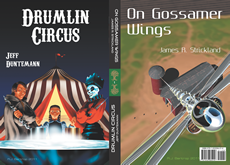
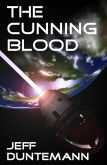
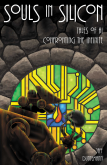
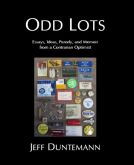
The Copperwood Press catalog page needs a total rewrite, and I’ve been working on that. (It’s one reason I’ve been a little bit scarce here.) One thing I did do today is mount a generic WordPress HTML window in the wide sidebar, and then fill it with thumbnails of all my books. The thumbnails will eventually be clickable links into the catalog, from which you will be able to choose your format and jump to a retailer. (I will not be mounting a cart myself; it’s far too much kafeuther if Amazon and B&N will both give me 70% margins on my $2.99 ebooks.) If you’re reading Contra on my WordPress site, look to your right to see the thumbnails. If you’re reading Contra on LiveJournal, go here.
When you do, you’ll understand the conclusion I came to earlier today: My covers are not very thumbnailable. Some work better than others, and you can only do much with an image that’s 115 pixels high. I’m not an artist but I do know layout. The problem is that I learned it under the assumption that the purchaser would make his or her decision based on a much larger view of the cover, including true face time at bookstores.
With ebooks the cover game changes radically, and it’s all about thumbnails. Here’s an intriguing article on the issues associated with cover design for ebooks. When all you get is 90 pixels, it’s tough to do flourish. The best you can hope for is legibility for the title. (Interestingly, Amazon seems to have bumped search results thumbnails up to 115 pixels in the six months since Joel posted his essay. Cold comfort.)
 As I explained in my May 19 post, I’ve done well so far because I’ve published the sorts of books that people search for by name, as with Carl & Jerry. But if Cold Hands and Other Stories (now available on Kindle) is being browsed in the very big bin labeled “Hard SF,” the thumbnail cover image has a crucial selling job: getting above the noise represented by everybody else’s 115-pixel search results thumbnails.
Clearly, I have some work to do. What you see to the right are 165-pixel thumbnails, which are one and a half times the size of what the readers see in search results listings. The little Cold Hands cover above is 115 pixels high, and the more pixels you have on your screen, the smaller it looks. I’ve already done some surgery on the cover for Jim’s On Gossamer Wings, and I think I may well just start over with “Whale Meat.”
It’s hard to avoid the conclusion that covers are becoming icons. Alas, the job of an icon is precisely the opposite of the job of a cover thumbnail: An icon stands in for something that we’re already familiar with and see constantly. A cover thumbnail stands in for something that we’ve never seen before. Worse, covers are becoming icons that must contain readable words. Of all the examples shown by Joel Friedlander in his article linked above, only Christopher Smith’s Fifth Avenue really works at 90 pixels. It works because there’s almost no image involved. You get a little color, and a tiny black stick that could be just about anything. (If I didn’t know where “Fifth Avenue” was, I might not have guessed a skyscraper.)
I’m not entirely sure what to think about the problem. If cover images get too small, they carry too little information to be useful. We can read the title in text beside the thumbnail; do we need to be able to read it in the thumbnail too? Will people get so used to minuscule cover thumbnails over time that they’ll basically stop noticing them?
Subtlety and beauty have not always been the domain of book covers. Maybe this is yet another indication that we’re returning to the pulps: Our covers may need to become very small collections of iconic symbols (bug-eyed monsters, V-2 spaceships, traffic-cone breasts, ray guns) to be recognizable as anything at all.
I’m not sure that worked for the pulps. I’m even less sure it will work for us. The real bummer is that I’m not sure what else to suggest.