- The hat size/shape measuring gadget that I mentioned in my entry for August 11, 2010 is called a conformateur, and here’s a whole bunch of pictures. It’s evidently a lot commoner than I thought, still in use, and works spectacularly well.
- And another kind of Fedora anxiety: I accidentally installed OpenSuse 11.3 over my Fedora 13 instance yesterday. Might be a good trade; nothing irreplaceable was lost with Fedora, and I need practice in KDE 4 more than I need practice in GNOME.
- A new, pre-shrunk iPad may be in the chute: 7″ diagoinal display but the same pixel resolution. Will fit in a smaller pocket, and may well render ebooks just as crisply. We won’t know until it happens. If it happens. But if it doesn’t happen, Apple will be way dumber than they look.
- Worry less about hurricanes, at least this year: Accumulated cyclonic energy (ACE) is at a 30-year low and still falling. ACE is a good proxy for hurricane number and strength (look at 2005 on the graph) so while it’s low, breathe deep and take that tropical vacation you’ve been putting off.
- This guy gets on my nerves sometimes, but he nailed it: We may someday create software that does much or most of what the human brain does, but we will not do it by reverse-engineering the human brain, at least the way that Ray Kurzweil thinks we will. (For a more detailed popular treatment of why the genome is not a deterministic description of anything, see Matt Ridley’s The Agile Gene.)
- There’s something very likeable about this Icelandic proposal to build high-tension towers in the form of skeletal human beings. Most of the ones I see here in the US look like angry bull heads–and all absolutely alike–so this would be a huge improvement of something huge that has long needed improvement.
- I see this little guy in sheet music fairly regularly, but never knew what it was until I hunted down this summary of just about all modern musical notation symbols. The symbol in question is called a fermata, but would you know a segno if you saw one? (Or, better yet, a hemidemisemiquaver?)
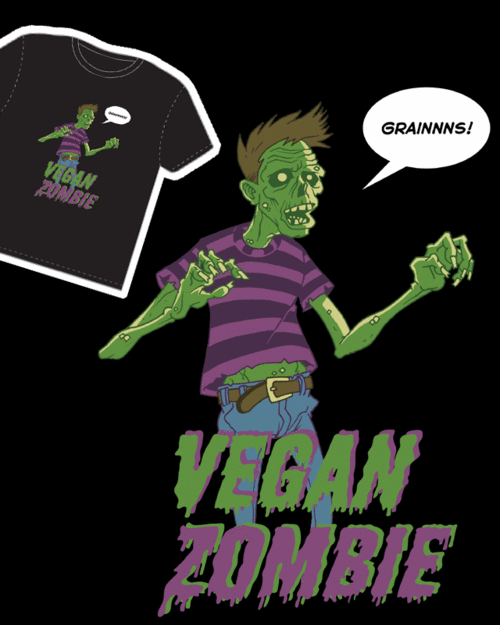
- What do vegan zombies crave as they stalk about like undead celery? Grrrainnns!
science
Odd Lots
Odd Lots
- As I polish up this Odd Lots, I see that Sectorlink.com is down, which is significant to me since they host duntemann.com and copperwood.com. Have no idea what’s going on yet, nor how long the outage has existed. (I was over at one of Carol’s friends’ rebuilding some very ad-hoc tomato shelters in honor of George Ewing until an hour or so ago.) If some of my pages are inaccessible, it’s not about me; it’s the whole damned hosting service.
- We lost Martin Gardner the other day, at 95. Amazing man, something like a technical Colin Wilson, who wrote the “Mathematical Games” column in Scientific American for 25 years, edited Humpty Dumpty’s Magazine for Little Children (which I read circa 1957-59) and cranked out books for most of his life. Every one I’ve read has been terrific, and I especially endorse Fads & Fallacies in the Name of Science (1957) and The Annotated Alice (1960.) I should look for a few more.
- Art Linkletter too, who made it to 97. It was in Linkletter’s very funny book Kids Sure Rite Funny that I found the wonderful kid-quote: “Now that dinosaurs are safely dead, we can call them clumsy and stupid.” The book’s copyright was not renewed and it is now in the public domain; you can read it online or get free ebook copies in various formats here.
- The problem with how to carry your iPad made it all the way to the Wall Street Journal, which devoted an A-head story to the issue. My correspondents (including a couple who have the iPad) think a belt holster is unrealistic. Best iCartage solution I’ve seen so far (including a photo endorsement from Woz himself) is the Scott eVest, with 22 hidden pockets, including one custom-designed for the iPad.
- Then again, there’s some unexplored form factor territory between smartphones and iPads. I find the Dell Streak (formerly the Mini 5) intriguing for its size/shape alone. (Here’s an interesting perspective on display size from Engadget.) The 5-inch model that will launch later this year (and in the UK on June 4, I hear) is about the size of an old HP scientific pocket calculator, and in the fevered days of my youth alpha geeks carried those around in leather belt holsters. Even the rumored 7-inch version could be belt-holstered with some care; beyond that it gets dicey. (Dell supposedly has a 10-incher in development.)
- After asking mobile developer David Beers about his thoughts on the Android OS, I discovered that Google will let you download an Android LiveCD so you can mess around with the OS on an ordinary Intel PC without having to lay out for an actual mobile device.
- That unpronounceable volcano in Iceland, perhaps fearing that the world was starting to get bored with it, blew a volcanic smoke ring the other day. Many people, perhaps thinking that smoking may be hazardous to a volcano’s health, are cheering it on.
- After several calm days here, the winds came up again yesterday morning. As Carol and I were driving back from Walgreen’s, we saw dust clouds crossing Broadmoor Bluffs in front of us on several occasions. It’s dry here, and construction sites generate a lot of brown dust, true. But then the winds calmed for a few seconds before starting up again, and when they did, we saw a large pine tree shake in the wind and let go a thick cloud of yellow dust. Pine pollen by the pound. No wonder I can barely breathe.
Odd Lots
- Jupiter has always looked better with a few belts, but now, astonishingly enough, one of them has gone missing.
- Ever want a stuffed muon? Head right over to the Particle Zoo, where that and many other cuddly plush species of atomic debris can be had, including a few (like the tachyon) that have never been observed and probably don’t exist. Oh, you can get stuffed dark matter too–and does that Higgs Boson look happily stoned or what?
- I’d heard about it a while ago, but only recently began reading up on the Haiku OS, inspired by ahead-of-its-time BeOS. What intrigued me is Haiku’s inherent suitability for multicore CPUs, since it’s pervasively multithreaded, and damned near every piece of an app is spun off into a separate thread. Alpha release 2 is now available. I’ve downloaded the ISO and will report back here when I test it on my quad core.
- One of the more interesting issues involving the iPad is where to put it: Do all of us macho geeks need to get used to carrying man-purses? Hardly. We wore our leather-holstered slide rules on our hips like mathematical six-guns back in the 60s. A quick check online showed nothing comparable for the iPad and its inevitable imitators, but trust me: Leather belt holsters for slates will be the Christmas gift in 2010. Draw, pardner! Whoops. Visio isn’t available for the iPad yet. Surf, pardner!
- The Hong Kong knockoff artists are beginning to fill the Fake iPad niche, and according to Wired may well clone the Google Android slate before Google even admits that it exists.
- And Bill Roper sent a link to a barely $100 Android slate shaped to better fit your stylish black leather belt holster. With one of the new Android-based e-reader software packages like FBReader and Aldiko, a gadget like that could serve as a socko indoor ebook reader.
- From Pete Albrecht comes a link to Lehman’s, a vendor offering mostly non-electrical products and catering (presumably) to an Amish clientele. (Preppers too, I suspect.) An amazing number of items in the catalog (the red rubber hot water bottle, for example) were commonplaces in my youth, and some (like the strangely retro-deco Stirling engine fans) would be right at home on planet Hell from my novel, where electrical devices don’t work. All in all, a fascinating flip.
- The May 2010 Scientific American published an article suggesting that carbohydrates may be worse for you than saturated fats. This is not news to me (when I eat carbs I gain weight rapidly, and lose just as rapidly when I stop) but it’s encouraging to see a “big-time” publication take the notion seriously. After all, the Federal government has been telling us that fat makes us fat for thirty years now, and all we could do in response has been to…get fatter. I’ve doubled my fat intake in the last year or two, and have remained at my customary 155 pounds. Something’s screwy somewhere. (Found via The Volokh Conspiracy. Read the comments; amazingly good signal-to-noise ratio there.)
Daywander
We’re going to see just how fat our pipes are tomorrow, when Canonical cranks open the spigot for Ubuntu 10.04 Lucid Lynx. It’s an LTS release, and I’m guessing that a lot more people will be grabbing it than usual. I may download it just to see how well the torrent works on Day One; in fact, I have a new hard drive on the shelf for my SX270 here and if abundant time presents itself this week (possible) I may swap in the new drive and install the release. This is the second-to-last machine I have that still uses the System Commander bootloader app, and I’d really much rather have grub everywhere.
Other pipes will also be in play: We got a note from the condo association last week telling us that the water will be shut off for eight hours tomorrow while the plumbers fix our backflow valves. We may fill the bathtub for emergencies tomorrow morning, but I suspect that Carol and I will go shopping (there’s a Mephisto store in Deerfield) and then stop over at Gretchen and Bill’s to run the dogs and take a bathroom break.
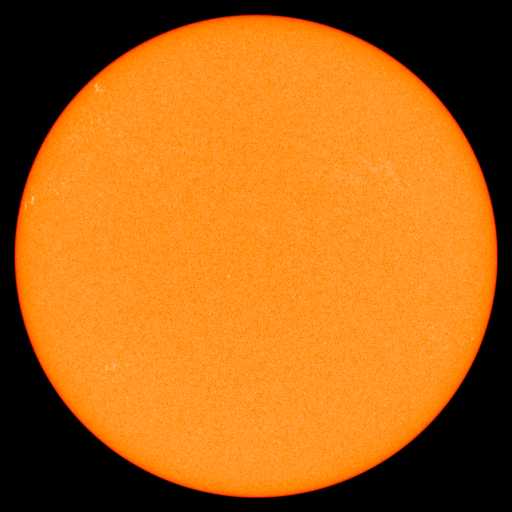
Interestingly, the sunspot machine more or less shut down two weeks ago, after switching on roughly January 1 and keeping a spot or two (though mostly small ones) in view almost all the time since then. Some have been predicting a double bottom to the current solar minimum, and if we run a long stretch of spotless days going forward, this may be Bottom 2.
Speaking of double bottoms…while I was in the checkout line at Bed, Bath & Beyond the other day buying Tassimo coffee disks, I was confronted with a POS display for a product called BootyPop. I guess the best way to describe it is a padded bra for your butt. Really; I write SF, not fantasy, and couldn’t make up anything that bizarre.
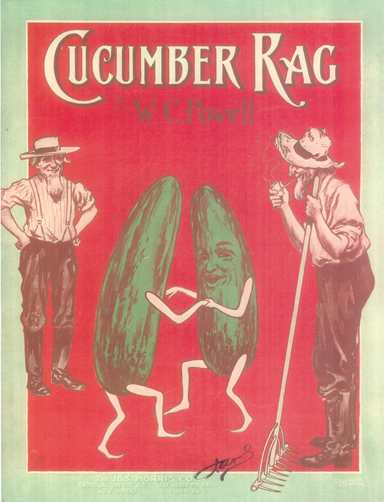
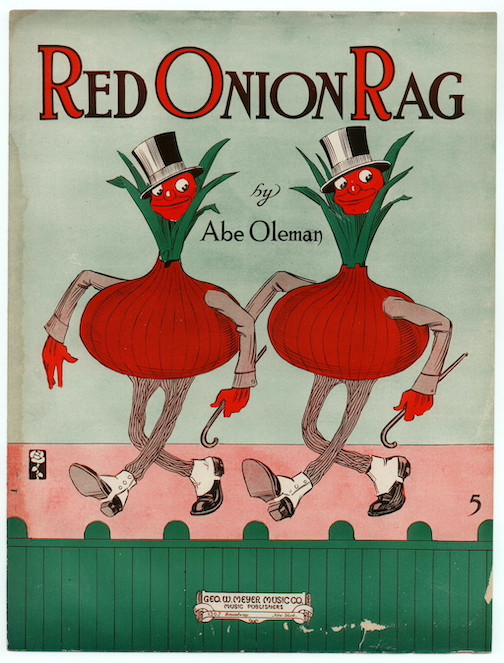
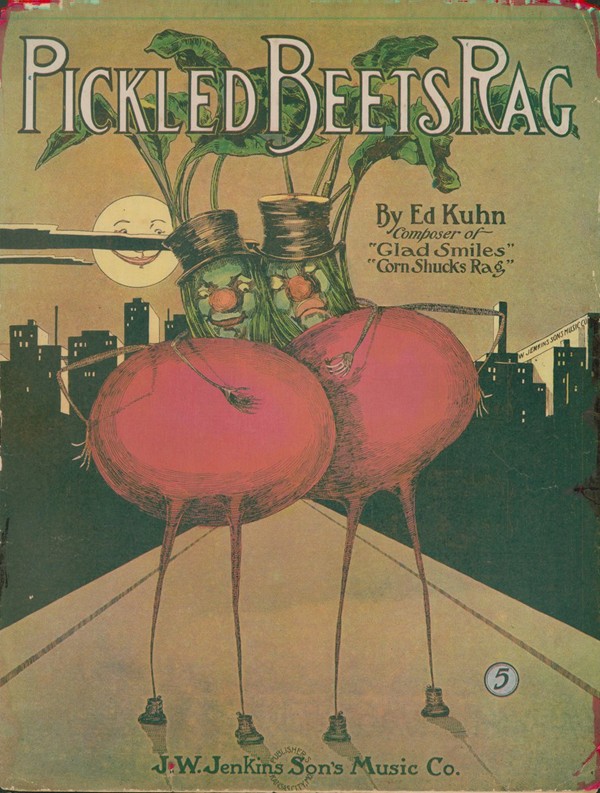
We had dinner with the family the other night at Portillo’s in Crystal Lake, and whenever we eat at a place like that, I wander around gaping at what I call “junkwalls”–old stuff tacked to the wallboard to make the place look atmospheric and (in this case) 1925-ish. Close to our table was a framed piece of sheet music for a song called “Ketchup Rag.” It was published in 1910 and is now in the public domain, and you can see the piece here. Writing entire songs about condiments seemed peculiar, but once I got online, I discovered that ragtime had an affinity for food, and there were in fact a Cucumber Rag, a Red Onion Rag, an Oyster Rag, and a Pickled Beets Rag, among many, many others. I confess a curiosity as to what the Ketchup Rag sounds like (it’s a complicated piece, that’s for sure) and discovered to my abject delight that there is such a thing as sheet music OCR. One example that particularly intrigues me is Audiveris, a Java app that can evidently scarf down a PDF and spit out a MIDI file. I’m downloading it even as I type, and with some luck will get it working later this evening. If it works (or even if it doesn’t) you’ll see a summary in the next Odd Lots.

Odd Lots
- From the Words-I-Didn’t-Know-Until-Yesterday Department: Fixie, a fixed-gear bicycle; i.e., a bike in which the pedals always move with the rear wheel and coasting is impossible. Fixies are currently the rage among hipsters in stylish cities. It sounds deranged to me, but I lack the hipster gene and value my knees, so what do I know?
- From Aki Peltonen comes a link to probably the best volcano blog I’ve ever seen. Great photos, interesting analysis, and reasonably courteous comments. (Boy, you don’t see that everywhere!)
- While we’re talking volcanoes, how are the sunsets in the UK? Denmark? Any personal reports from readers here?
- Many have sent me a link to the Panoramic Wi-Fi Camera, a fascinating gadget that consists of 20 cantennas arranged in a vertical line on a frame that spins 360 degrees horizontally. Spin the device, and a netbook builds a panoramic image of the 2.4 GHz field in the immediate vicinity. Watch the videos. Fascinating on its own merits, and pay attention to what happens when somebody throws a cup of coffee into a nearby microwave oven: The oven blinds the camera to everything else. For all the tooth-gnashing we hear over cellphone radiation, microwave oven RF leakage never seems to get a whisper.
- This should surprise no one: Google’s Street View carcams have also been wardriving. There’s less to this than meets the eye (there was a project, now defunct, doing this in 2002) but it’s yet another reason I don’t power-up my Wi-Fi access point unless I need it for some reason. (My house has Cat5E in the walls, and I use PowerLine bricks for high-speed Net access in odd corners.)
- Dave Schmarder N2DS has given his homebrew radio site a major upgrade and its own domain, so even if you saw it a few years ago, do take another look. Gorgeous work.
- We blew through the range of SDHC Flash memory cards in record time: 32 GB cards are now in the supportable $60-$80 range…and 32GB is as big as they get. We did this in four years. Admittedly, SDHC was a cheap’n’easy hack, but hell, what kind of damfool memory standard only increases capacity by 16X? (Even SDXC, which takes us to 2 TB, should have gone much farther.) My guess: Standards authors don’t want to be wrong about future advances in hardware, and certainly don’t want to be a drag on future innovations by being too explicit about how hardware is supposed to work ten or twelve years on. I can see both sides. That doesn’t make it any less annoying.
- From Michael Covington comes a pointer to a 1952 riff on beer and ham radio, and a glimpse of what cash-poor radio guys dreamed of the year I was born. I’ve never met anybody who ever had such a rack (the radios, the radios!) but beer was and remains very big in radio shacks to this day. K1NSS is the cartoonist behind the Dash books, about a dog who does ham radio. (I found him last year while researching names for our current puppy…)
Hurray for the Leaners!
Say what you want about cold fusion; it’s been a great show and a huge amount of fun. If time allowed I would read more on it; right now, the only book I’ve been through is Fire from Ice by Eugene Mallove, the cold fusion culture’s first martyr. In 2004, Mallove was murdered, probably by muggers, but Certain People are sure that it was the government, or the oil companies, or Arabic shieks, or somebody else who would be on the losing end of the energy stick if cold fusion actually came true.

Mallove’s book is now 11 years old and is strongly pro, and I need to read Gary Taubes’ book Bad Science (1993) for balance. Beyond that, well, the literature, having lain low for many years, is exploding again in celebration of finding a whole new name. (More on this shortly.)
I know, I know. How can I take any of this seriously, you ask? Back off, man. I’m a scientist. I also like street theater, especially science and technology street theater. I suffer fools gladly if they entertain me, because I learn best when I’m entertained. (Fools spouting politics rarely entertain me; street theater has its limits.) I’ve stated my official position here many times, and I’ll say it again: It’s probably not fusion. But it’s almost certainly interesting, and if pursued may actually turn out to be something useful, if not a source of free energy. Desktop fusion is nothing new, after all: Philo Farnsworth, needing to do penance for having invented television, went on to create desktop fusion. The nut they couldn’t crack is releasing more energy than their gadget absorbed, but hey, neutrons are useful, and they don’t just come when you whistle.
I was pleased to learn quite recently that “cold fusion” as a term has been deprecated in favor of Low Energy Nuclear Reactions (LENR) which has the authority of an acronym and no obvious links in the public mind to a name more properly associated with margarine. A recent presentation on YouTube from a cold fusion guru admits that it’s not about fusion, and that’s a big step forward. I’m not sure that there as many rabbits in the LENR hat as Krivit thinks, but even one rabbit would be delicious, especially with melted butter.
LENR is supposedly caught up with the electroweak force. One thing I do need to do is hunt down a good summary of what we know about the electroweak force; there are a few too many Greek letters in the Wikipedia article for my tastes, and probably my forebrain as well. Suggestions always welcome.
As an SF writer LENR fascinates me, especially the notion that it could be implemented in biological system. Nuclear-powered cockroaches, anyone? The bugs wouldn’t need to make breakeven; LENR could act as a storage mechanism: After gathering and processing fuel during times of energy abundance, they’d consume the fuel when their only sun sets for a decade or two and temps go down to double digits K.
The show goes on. LENR can and should replace all mention of “cold fusion.” The LENR acronym suggests to me a general term for people pursuing (or cheering on) research in that area: Leaners. I’m a Leaner. I’m cheering for these guys, and with more lifespan ahead of me, more time, more brains, and another small fortune in machine tools beyond what I already have, I would go downstairs and see what I could throw together. Damn, this stuff calls to me.
It’s April, the month to be mad as a hatter, and you know all about me and hats.
Odd Lots
- Here’s a great article from NASA on the unexpected success it’s had with the WISE (Wide-field Infrared Survey Explorer) spacecraft in spotting previously unknown asteroids in the infrared spectrum. WISE is detecting hundreds of new asteroids every day, which is unnerving, since a rock no bigger than a Motel 6 could cause regional devastation greater than any nuclear weapon yet produced.
- From Larry Nelson comes a pointer to the AirStash, an interesting $100 USB Wi-Fi gadget that can accept up to a 32 GB SD card and act as a content server over Wireless b/g. Anthough nominally a thumb drive, the USB plug also charges the internal battery, and (though it’s not screamed from the rooftops) the thingie works all by itself, no computer connection required. This suggests “wearable file sharing”: Drop one in your pocket and nearby people can download files from the device without having any idea where it actually is. Little by little, the jiminy (an AI wearable computer I thought up in 1983, and figured would be mature by 2027) creeps toward realization. The AI is actually the tough part; everything else already exists, if not in as small a package as I imagined 25 years ago.
- And if you ever wanted to run Linux on one of your fillings (ok, one of your elephant’s fillings) this would be the solution. (Thanks to Bill Cherepy for the link.)
- Here’s a gadget that builds you an external USB storage device by dropping in (literally) a naked SATA hard drive. I may not need it, but I admire the elegance of the concept.
- I’ve been arguing in favor of dual-screen reader devices for years, and this one is a good start. Sounds like the user interface software needs work…but when has that not been an issue for a first-gen device? We’re closing in on it, though.
- Nice status update on some of the current non-Tokamak fusion research approaches, link thanks to Frank Glover.
- Also from Frank comes a reasonable article on how people would die in a vacuum and how they wouldn’t. I had heard of lung shredding; heart failure was new to me. But take, um, heart: Your blood wouldn’t boil.
- If you ever wondered why you cry when you slice onions, well, it’s the sulfuric acid released by cells in the onion when they’re cut open. Supposedly living things evolved this mechanism (or at least key parts of it) half a billion years ago. Onions evolved their chemical weapons to avoid being laid on hamburgers in slices–but we evolved Vidalias to prove that we were smarter than onions, and that fast food will prevail against all threats.
- Interestingly, the Canon G11 camera reduces the size of the image sensor to 10 megapixels, down from the 12.5 on the G10. The new sensor gives you fewer pixels but better ones, and faster, which is all for the best.
- Burger King is testing a new retailing feature in Brazil. When you order a burger, they take your picture and print your face on the burger wrapper.
Odd Lots
- It happens all the time, but it’s rare that we actually watch it happen: a comet falling into the Sun. (It’s unclear to me what the brief tiny streaks are, since SOHO is a spacecraft and the image was not taken through Earth’s atmosphere, where meteors would look like that. Meteors in the solar atmosphere?)
- The SOHO spacecraft may also be shedding some light on why the recent solar minimum was so deep.
- We’ve identified what may be a much better proxy for ancient climate: clam shells. Unlike tree growth rings, which may be affected by several factors like rainfall, sunlight, soil chemistry, and so on, clam shell growth (and the mix of isolotopes, particularly oxygen) seem very closely correlated to the temperature of the water in which the clam lived out its life.
- Intel’s Nehalen-based Gulftown CPU has been officially announced, with six 3.33 GHz cores and 32 nm traces connecting a boggling 1.2 billion transistors. They’re calling it the Core I7-980X Extreme Edition, and it fits the LGA 1366 socket, which implies than it can be swapped in as an upgrade. (No confirmation on that yet.) You may be able to get an overclocked desktop system running all six cores at 4.3 GHz by April. And if that’s not enough cores for you (four is way more than enough for me, if this past year’s experience is any guide) we’ll be seeing the eight-core Nehalen-EX (with 2.3 billion transistors) later this year, nominally for the server market.
- I know, I know, AMD has its Magny-Cours 12-core Opteron server CPU, but the cores only run at 1.7 GHz–and more to the point, exist on two separate side-by-side six-core dies, which may be cheating a little. I’m sure they’re very good chips, but sheesh! We still don’t know how to do parallelism in general terms. Even AMD is puzzled, so they launched a contest titled, “What would you do with 48 cores?”
- And if you don’t believe me, open Windows Task Manager, click the Performance tab, and watch all your cores but one do nothing. To paraphrase George Carlin: What do cores do on their day off? They can’t just lay around…that’s their job!
- Frank Glover put me on to an interesting hand-drawn animated movie that I hope to see fairly soon, if I can find anywhere playing it. (Distribution in the US is inexplicably a problem for them.) The Secret of Kells is about the Book of Kells, and (more intriguingly) is drawn in the style of medieval manuscript illumination. It took a few seconds watching the trailer to catch on, but eventually I had the feeling that I was watching manuscript illuminations come to life. Damned cool.
- And 229 years ago today, Sir Frederick William Herschel first spotted Uranus.
Odd Lots
- Today’s Odd Lots is a rare (nay, to this date unique) all-video edition. I dislike TV sufficiently so that that’s a contrarian act all by itself.
- To begin: We used to make five-stick “popsicle bombs” on the fourth-grade playground, and compete to see whose bombs would toss sticks the farthest. (I actually devised a 4-stick bomb, but nobody seemed impressed. The technology has clearly advanced since 1961.) Anyway: Here’s a linearly detonating, 2,250-stick popsicle bomb, and it is indeed a thing of beauty.
- While we’re blowing things up, consider this unfortunate attempt to demolish what appears to be an apartment building molded of solid concrete. They should feel fortunate that the building had not been erected on even a mild slope, or it would simply have rolled down the hill until it struck something bigger and denser than it was. (Thanks to Pete Albrecht for the link.)
- I guess if you’re going to blow a demolition, do it this way. Then you either buy more dynamite, or advertise it as a tourist attraction.
- And this may be the most amazing video clip I’ve seen in years: An Atlas booster breaking the sound barrier at just about the altitude where ice crystals responsible for sundogs form. Watch what happens to the sundog! (Thanks to Mary Lynn Johnson for the link.)
- Admittedly this is a hybrid, but don’t miss the video if you’re a train freak. That double-stacked consist is 18,000 feet long, propelled by what is essentially a local-area network of nine computer-controlled diesel-electric locomotives distributed evenly among the cars and operated by one guy in the cab of the lead engine. (Thanks to Bruce Baker for the link.)
Daywander
Not having much luck making Workstation 6 function, and two conversations and numerous emails with VMWare’s tech support people hasn’t helped. I install the product, I enter the serial number as requested, and get this error message. Has anybody else ever seen this? Or can anybody even explain it? I emailed the screenshot to VMWare, and that’s about the time they clammed up.
I hate to abandon Workstation entirely. VMWare’s snapshot system is far superior to that of VirtualBox, and I use it a lot. I’ll miss it. Boy.
And while I’m asking peculiar things, let me ask the multitudes here how you pronounce “iodine.” I have always said eye-oh-dyne, but Bob Thompson, who knows more than a little about chemistry (and certainly more than I) pronounces it eye-oh-deen. This lines up with the rest of the halogens; we don’t, after all, say “broh-myne.” So? Which is it?
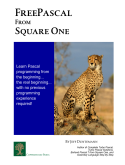
I edited another half a chapter of FreePascal From Square One yesterday morning, and in laying out the edited material got up to page 136. The book I’m adapting it from is 800 pages long, but don’t look for anything that size. To be workable on Lulu, the book is going to have to stop at or before page 400. A lot of the material in Borland Pascal 7 From Square One just doesn’t apply anymore…who’s called the Borland Graphics Interface lately, or done text output by poking word values into the video display buffer? The BGI chapter was 100 pages all by itself, and when I slice out that and other things like overlays and DOS/BIOS calls, I’m really pulling 400 pages out of no more than 600 pages of useful material, maybe less. Should be done by June. I hope.
The issue of whether Amazon imposes DRM on Kindle publishers is complicated, and I’ll back away some from my statement to that effect on Monday, and will hold off until I try to get one of my own titles into the system. This article suggests that recent policy changes have made DRM optional. Having to face the DRM issue square-on has kept me putting off publishing on the Kindle for some time. As a very small publisher I’ve made this promise to my readers: No DRM of any kind, on anything, ever. I’m willing to forgo Kindle sales if the DRM decision is not my own, but from what I’m reading now, I think that won’t be the case.
As for Amazon caving, well, that’s more complex too. I see that Nancy Kress’s new book Steal Across the Sky is listed on the Amazon Web store, and her publisher, Tor, is one of Macmillan’s imprints. However, you can’t order it from Amazon at this time. (Third-party affiliates are offering it, but Amazon itself is not. Note the double dashes under “Amazon Price.”) Ditto Nancy’s Beggars and Choosers, another Tor book. Yesterday morning’s Wall Street Journal had a story explicitly stating that Amazon had conceded the price issue to Macmillan. But Amazon isn’t selling the books yet, so clearly the struggle goes on.
Off to church, to install an SX270 in place of a doddering old E-Machines box that is four times the size and probably a third the capability.