
When I saw three articles on the death of mass-market paperbacks (MMPBs) in the last couple of weeks, I knew something was up—and the articles said what was up, if not why: ReaderLink, the largest book distributor in the US, announced that it would stop distributing mass-market paperbacks. The piece from The Guardian (an affiliate link) mentioned ebooks in passing as one factor in the collapse of the format. (The other two articles did not mention ebooks at all.) A Kindle Paperwhite is more or less the same size as an MMPB, and thinner. Furthermore, a lot of people—Carol included—now read ebooks on their smartphones.
MMPBs first appeared in the 1930s, as a means of spreading book retail sales beyond traditional bookstores. MMPBs were designed to be sold like magazines: In drugstores, grocery stores, gas stations, dime stores, train stations, and other places where casual, low-value sales occur. They were cheap to broaden the reader base beyond trade paperbacks and hardcovers. When I first began buying my own books with allowance money in high school (1966-70) MMPBs started at 60c or 75c, with fat ones (like Dune) sometimes 95c. (The obese 1970 MMPB of Blish’s Cities in Flight cost a stinging $1.25.)
How do I even know this? I still have the books. I have hundreds of MMPBs on my shelves, many going back to my high-school days. They look amazingly good for a peculiar reason: I coated most of them with my mom’s ConTact self-adhesive transparent shelf plastic. I don’t pull them off the shelf much anymore. When I have tried to read them in the past five or ten years, the yellowed and sometimes crumbly pages came loose in my hands.
I wasn’t surprised. Like the magazines that inspired them, mass-market paperbacks were intended to be read once and thrown away.
But there’s another issue that none of the articles I linked to mentioned at all: The audience is aging, and aging eyes often can’t read MMPBs comfortably. I remember when I tried to read Charles Harness’s The Ring of Ritornel two or three years ago, that I needed my strong readers to make the near-microscopic text readable. And even then, while possible, the reading was nothing anywhere near comfortable. Ink fades over time, and type contrast matters.
I’ve asked several of my contemporaries in their 70s and beyond, and they agree: The type is too small. It was small to make the books cheap. Now they’re mostly unreadable.
The answer is obviously ebooks. I don’t buy print books very often anymore, and when I do, the size of the type is often the decision hinge. I have two Samsung Galaxy Tab tablets, which I read ebooks on for a simple reason: I control the size of the type. This doesn’t work well on books containing photos/graphics or stuff like source code, but print books like that are often twice the size of MMPBs or more. And I don’t generally sit down and read print books like The Rust Programming Language from start to finish in long stretches. I read them until my eyes start to hurt.
Alas, the only serious downside to the death of mass-market paperbacks is that a lot of them haven’t made it to ebooks and probably never will. Most of the short story collections I read in high school are just gone. Groff Conklin did a lot of good anthology work. Amazon carries the crumbling print editions.
Anyway. Ebooks are the answer. My Galaxy Tab S9 is full of ebooks, many of which cost less than $5. Those old MMPB covers on my shelves remind me of being young. Sooner or later I’ll have had enough of that, and they will feed the dumpster. I just wonder what will take their places on my shelves.
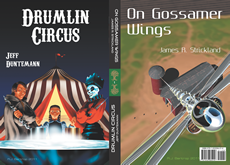





I rarely buy MMPB any more. We have thousands of them in our home library. I have read most of our science fiction books many times since I started buying them in the early 1960s (they cost a lot less back then!). I still prefer to hold a real book even though I have read a few books on my iPad. Perhaps part of the demise of MMPB is that the aging readers have so many books that they have enjoyed over many decades that they have less desire to add more books to their library. Just a thought.
We moved from a 3000 sq ft house in MD to a 1400 sq foot house in San Diego. Something had to go, and sadly, it was a lot of my MMPBs.
I still have a few MMPBs on my shelf to read. I think most of them (all?) were picked up secondhand. I can still read them, more or less readily, with my computer bifocals. God willing, they will be read in the next year or two.
I applied a jailbreak to my Kindle so I could side load any epub I want. I can still buy a book from Amazon, and do. But I also have access to other outlets. Plus, the Kindle no longer phones home to inform the mother ship what I am doing with it.
I don’t like to read on a computer screen or any other display that emits light. It makes my eyes uncomfortable. it’s bad enough to work on a display. I find e-ink much better, hence the reader.
But… for technical books that I am learning from (yes, still learning in my 70s) I prefer books. My technical library is much smaller than it was, but I still have books on LaTeX, R, *nix, hydrology, hydraulics, and a few more topics. Those get used regularly.
73 OM
What you describe is why I don’t use my Kindle Paperwhite much anymore. Still works, and is good for travel (at least for reading pure text titles) but I keep other files on my Galaxy Tabs and don’t want to fight with Amazon. Reading off lit screens in the evenings is supposed to disturb your sleep patterns, so if I spot a letter-sized LCD reader with a turn-offable backlight, I’ll pick it up. (Haven’t started the hunt yet; recs definitely appreciated.)
I’m another one with a large library of real books, both MMPB and hardbound. I just bought my latest MMPB book last month (Asimov’s “The Gods Themselves”). I prefer books, and only read on a screen when I can’t avoid it.
A related problem is that books on the web have a much shorter “half-life” than real books. I have technical data books (also cheaply printed) whose information can only be found in abbreviated form on the web, if at all. I also have 100-year-old technical books and fiction that are perfectly readable, while copies on the web are either hard to find or never existed.
You mention 75c paperbacks, and I remember some of those, although I remember $1.50 as the most common price when I was in elementary school. By high school, that had gone up to $2.95 or so. But now, when I look at a book on the shelf, the price is usually $8 to $9, or even higher. That may be a contributor to the demise of the paperback — people just aren’t willing to pay that much.
I am conflicted on the phasing out of MMPBs. I enjoy going to used book stores & shopping eBay and getting a SF novel from yesteryear. And, like others have said, there is something pleasant to having a physical book in your hands. In addition, my bookshelves of paperbacks, technical books, old textbooks, magazines, etc, are a visual representation of much of my life’s journey. That said, I prefer getting QST on PDF instead of the printed version. It saves ARRL money and makes a minor contribution to the environment. When we relocated to AZ, my printed versions of QST (going back to 2010) were discarded. I also threw out 30+ technical books that were either out of date or were books that I realized I would never revisit (based on actuarial life tables).
My main complaint with eBook readers is losing the ability to easily flip back & forth to any page in the book. I noticed this recently when I read a couple war history books and found if difficult to jump directly to map illustrations or the book’s index. Another concern is the question of who really owns the eBooks on my Kindle? Having a PDF copy of a book or magazine is another matter. if the PDF is stored on my SSD or cloud service of choice, then I feel I have 100% ownership and control of the file.
Sigh – in my 50’s now, and even with dedicated reading glasses, I prefer my Kobo reader over paper.
Large, “hi-res” paper-white screen, backlighting, adjustable font-size, either touch or button to flip to the next/previous page (although after 5-years, the buttons are getting a bit… skippy/aggressive). Works with my local library ebook system, or alternatively purchases from the Kobo ecosystem. (It took several generations from the first I started with 12-years ago, before I fully transitioned to using it for all “enjoyment” reading – had this one for about 5-years now)
With one exception… Technical books – those need to be full-sized, and honestly I have never found a tablet or ereader that will work well (and have high-enough resolution) with diagram-heavy materials. For those, I still prefer paper.
In my experience, tech books don’t do well as ebooks, because they’re generally way more than just text; think source code, diagrams, screen shots, etc. Dare ya to read those on your smartphone. That said, there are big tablets out there that could reasonably handle the resolution. The real problem is reflowable formats that don’t keep things in the same place as screen sizes/type sizes change.
I read most ebooks on a Samsung Galaxy Tab S9. I also have a Galaxy Tab S3, and while it still works, it’s nine years old and sometimes does Weird Stuff.
I prefer ebooks, mostly for reasons others have given here, and print for technical.
Sometimes the print edition supposedly includes a free ebook, success in getting that has been spotty for me.
I was forced to buy a mmpb recently, in my endeavor to read all the Hugo Award for Best Novel winners, in order.
This meant I needed the winner of the 2nd Hugo, 1955’s ‘The Forever Machine’ by Clifton & Riley, and it was only available as a used MMPB print (1981).
Rather mediocre, if anyone was wondering.
I have a few thousand MMPBs in storage; when I finally get my life unpacked they may go. A few of them are out now. One is an ACE double from 1962 (40 cents new). I hadn’t looked at it in years, and I see the textface issue, which I’d never thought about before.
Jeff, this really makes me glad that I bought the full set of Carl And Jerry stories in the books you sold at least a decade or two ago. I am less than one month away from birthday number 79 and I still go back and read some of those stories. I never would have found all of those back issues of Popular Electronics.
I can empathize with the degraded vision that getting older brings on. My presbyopia finally caught up and has surpassed my life long my myopia.
I moved Carl & Jerry from Lulu over to Amazon some time ago, and they’re still selling. It’s funny how one or two books sell, and then a week or two later I sell five or six on the same day. I wonder sometimes if a guy our age at a ham club discovers the books via web search and talks about them at a meeting–or on 20 meters!–and I get a (small) burst of sales from others in our age cohort who remember the originals and thought they were gone forever. (Odd that nobody ever asks for ebook ediitions…)