- I've posted a significant update of my Carl & Jerry page, with new material on John T. Frye, including the conclusion I've drawn (with help from 1910, 1920, and 1930 census records provided by Bob Ballantine W8SU) that Bailey Frye was not John Frye's brother. Bob also sent out a scan of W9EGV's QSL card, worked up against a 50s cover (not sure precisely what issue) of Boy's Life. New details from newspaper clippings sent me by Michael Holley flesh out the man a little. He was quite a guy. Do take a look.
- Science is good at puncturing legends, and German researchers digging around in the former backyard of Martin Luther have deflated the legend that Luther was a humble monk (and, by implication, starving) but was instead born to an upper-class family and became a prosperous man who weighed 23 stone, 8 pounds (330 pounds for us Yanks) and ate goose, young piglet, several kinds of fish, and (egad) robins. Nor did he pound his 95 theses to the door of the Wittenburg cathedral in a fury with nails, as legend holds, but instead used drawing pins—what in America we call thumb tacks. Oh, the humanity…
- While researching Marian apparitions for a seminar I'm teaching at our church in November, I ran across the Apparitions of Jesus and Mary Reference Chart. It sounds silly, but trust me: The apparition curve has gone exponential in the last 30 years, and you can't tell the Marys without a program anymore.
- I'm in the Chicago area for a few days, and found on my arrival that the legendary Choo-Choo Restaurant in Des Plaines (just down the street and around the corner from our condo) is in danger of being razed to make room for a new police station. There's a Web site for gathering protest and forwarding it to the City of Des Plaines, which apparently can either raze the Choo-Choo or the defunct Masonic temple across the street. I don't quite understand why that's a hard decision.
- Harry Helms sends word that TV Guide, which Rupert Murdoch bought ten years ago for three billion dollars, has been sold for…a buck. Boy, the magazine business is not what it used to be. (If it were, I'd still be in it.)
- Slashdot reports a bit of useful black humor, in that Codeweavers (makers of the Crossover product line) gave the Bush administration a challenge: Reduce the cost of gasoline in the Twin Cities below $2.79 a gallon, and they would give away their products for an entire day. Well, courtesy the recent financial meltdown (which was not caused exclusively or perhaps even primarily by the Bush administration, by the way) gas has gone south of $2.79, and while the Codeweavers site has been Slashdotted into paralysis, there is a facility online whereby the firm will email you an unlock code for something. I've been meaning to try Crossover Linux for some time. Here's my chance, I guess. And gas in Colorado Springs is even cheaper than that. Inc(Boggle);
Odd Lots
Short items presented without much discussion, generally links to other Web items
Odd Lots
Odd Lots
- Sorry to be gone so long here; I haven't felt well for some days and did not do my usual daily quota of follow-your-nose Web exploration. Part of it is the politics; I seem to be hitting the I-Can't-Stand-It-Anymore level about three weeks earlier than I did in 2004. The rest seems to be the result of eating too many MSG-laden barbecue potato chips.
- Or maybe it's all the purely amateur reporting on the current financial crisis, declaring that it's either the end of the world or already well past it. Michael Covington (who would probably win any contest for World's Sanest Man) has some perspective on both the financial crisis and the stock market's recent fall. Read them, and heed the advice printed on the front cover of the Hitchhiker's Guide to the Galaxy.
- I learned yesterday that Herb S. Brier W9EGQ was a paraplegic and could not walk. Like John T. Frye, he lived in Indiana (Gary) and was almost entirely self-taught in electronics. Bob Ballantine W8SU wrote up a short bio on Brier, and if you ever followed his Novice columns in the 50s and 60s, do read it. The closeness of the two men's call signs (W9EGQ and W9EGV) is probably a coincidence; as best we can tell the two men did not know one another.
- If you build radios, particularly tube or crystal sets, The Radio Board is worth a look. The sheer amount of cumulative tube-hacking expertise there is mind-boggling.
- The local newspapers have been breathlessly reporting rampant theft of campaign signs from both sides of the spectrum, and now that several perps have been caught, it turns out that they were…junior high kids! Wow! (Like I couldn't have told you that.) The little snots are not being charged with anything; after all, theft is political speech. Solution: Force them to give their allowances for the next year to the parties whose signs they stole, and wear a T-Shirt printed with that party's canididate's portrait.
- Pete Albrecht sent me a link to a PDF railroad map of Illinois, containing all currently active routes.
- And while I'm at it, let me point you to Pete's photos of Stephan's Quintet, a group of five close-set galaxies (two are actually foreground objects) that are one of the meanest challenges for backyard galaxy collectors—especially if your backyard is in Costa Mesa. The group is fascinating, and this article about them is worth reading.
- From David Stafford comes an article about what it's like to be a professional term paper writer.
- Once again, The Economist proves itself to be one of the few intelligent print mags remaining by explaining why even peer-reviewed scientific journals are not as trustworthy as we would like. (The Atlantic is on my S-list again for running too much politics; maybe I'll resubscribe in December.)
- Here's a robot that carries your houseplants to a spot in the livingroom where there's more sunlight. It's unclear what happens when the robot tries to share the sunbeam with the dog. I guess it depends on the dog; QBit would tear it to shreds; Aero would lift his leg on it. Suum quique.
Odd Lots
- Speaking of sunspots (see yesterday's entry) The Boston Globe posted a series of some of the most amazing photographs of the Sun that I've ever seen. I'm not sure there's much more I can say but go look.
- More sunspot stuff: Wikimedia has a very nice graph of sunspot peaks since we started tracking them more or less scientifically in 1749. I have sometimes wondered if better instruments built in the last 100 years have led to higher sunspot counts, simply because we can see smaller and shorter-lived spots, but supposedly that's been taken into account. My one serious quibble with the associated writeup is that it's the Wolf Minimum and not the Maunder Minimum that corresponds to the beginning of the Little Ice Age. Maunder just made it worse, and Europe's coldest era does indeed correspond to a 70-year near-absence of spots between 1645 and 1715.
- The Make Blog aggegated an item on a beambot built in…1912. It works essentially the same way as the Popular Electronics Emily robot that I built in 1966, minus the solid state current amplifier. Relays can “amplify” current in a snappy, sparky, ozone-y kind of way, and this device has a definite steampunkish air about it.
- I am two days older than musician/composer David Arkenstone, and we're both Chicago boys. Didn't know that until ten minutes ago. Will probably forget it sooner or later, but not in time to make room in my head for more useful knowledge.
- More of what my sister calls “brain sludge”: I built my first kite in September 1962. How do I know this? I remember pulling a sheet of newspaper off the top of the pile in the basement, and seeing the ad announcing the premiere of “The Beverly Hillbillies,” complete with an Al Hirschfield caricature of the Clampett clan in their truck. I had read of his habit of sneaking his daughter Nina's name into every one of his cartoons (I think in the Saturday Evening Post) and took time to find it. I then used the sheet in the kite, which flew well, and was the first of many to be made of newspaper, and other (odd) things. Now, howcome I can remember this so vividly, and still have to think hard about where I left my damned cellphone ten minutes ago?
- This says something about human nature, and nothing good. Me, I prefer cars that don't go off the road, though I have eaten and enjoyed a number of smoked chubs that looked very angry.
- The email consensus is that the Turtle Wax Turtle was indeed atop the Wendell Bank Building at Ashland and Ogden. One correspondent asked the obvious: “Why not email the Turtle Wax people who posted the video?” Duhh. Will do. Sorry.
Odd Lots
- Small, short-lived sunspots are starting to turn up on a fairly regular basis. (I monitor spaceweather.com daily.) Their polarity suggests that they belong to the long-delayed Cycle 24, but they are so small as to be almost invisible without a powerful solar telescope, and many vanish within 24 hours of their initial detection. So we could still be facing something like a Maunder Minimum, with small and short-lived spots keeping the count up even with generally minimal solar activity. The coming year will be especially interesting in solar astronomy.
- I ran across a fascinating couple of homebrew radio projects, and the tube design is especially intriguing. If you understand tubes even a little bit, read the article (PDF) on the low-voltage 3GK5 “Hellenedyne” one-tube reflex AM receiver. This is like nothing I've never seen before, and it's making me itch to throw one together just to see what this peculiar tube can do.
- This is humor for deep, deep railroad geeks only, but wow: Parodies of classic locomotive designs, some of them realized as HO scale models. Ok, you may not think these are funny without knowing a little bit about railroad history, but hey, there's just something inherently silly about a locomotive painted with the legend “Wrong Island.” Thanks to Pete Albrecht for the link.
- Also from Pete: Suppose that Tolkien's Hobbits, out from under their terror of the Dark Lord, had a thousand years or so (Hobbits don't hurry) to develop a reasonable technological civilization. Their astronomical observatories might well look like this, which is in fact a working observatory in Potsdam, Germany, named for Albert Einstein (I can picture Buildo Baggins, a distant descendent of the Sackville Bagginses, analyzing variable star luminosity curves at those desks, between bites of bread spread with entirely too much butter…)
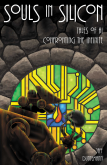
- Interestingly, the ebook edition of my Souls in Silicon collection is outselling the print edition 3 to 1. Even more interestingly, I make 23c more per copy on the ebook edition, priced at $3.99 vs. $11.99 for the print edition. This is an extremely useful dataset, and I'm tempted to drop the price on Cold Hands to $2.99 when I release it in December, just to see how it does.
Odd Lots
- A chemical found in red wine may slow aging in mammals. Reservatrol is a hot item these days, and whereas there probably isn't enough in wine to have measurable effects on health or longevity, Big Pharma firm GlaxoSmithKlein paid $720M for Sirtris, a biotech firm doing research on the reservatrol family of chemicals. Thanks to Frank Glover for the link.
- Larry Steckler, who had worked for the Gernsback organization from 1957 until its bitter end in 2003, has published a 700-page biography of Hugo Gernsback. We've been waiting for a decent biography of our man Hugo for a long time, and I'll post my reaction here once I've read it.
- Bruce Baker sent me a link to photos of a (more or less) scale model of the aircraft carrier Harry S. Truman built entirely in Lego. The story has been written up (in English) on the Make Blog, with more photos here. My big question with Lego (having grown up on Meccano, in which everything is bolted together with real bolts) is how such monumental Lego sculptures stay intact. Is it all friction? I've built small things with Lego, but models that come apart in your hands don't seem to me to be anything near as good as the (admittedly holey) things you make with Meccano/Erector and their ilk.
- From Don Doerres comes a link to a software defined radio (SDR) on the Web, covering a portion of the 80, 20, and 40 meter ham bands. The “waterfall” visualization is fascinating, and something that “real” radios just can't do. We're good at matching patterns, and I was able to see when a new signal appeared anywhere on the covered band out of the corner of my eye. Contesters must love SDRs!
- Michael Covington suggested that unnecessary animations are a far bigger distraction and degradation of the computing experience than windowing, and I have to agree. This is one reason I continue to use older software: Its moving parts don't move unless they have to.
- Also from Michael comes a story from the UK about the fact that 2% of the 1£ coins in circulation are counterfeit. This boggles the mind: 1£ won't even buy lunch, and making enough coins to be worthwhile must take a lot of time and work, considering that you can and probably will do time if they catch you. (Does anybody remember Bernard Wolfe's wry short story “The Never-Ending Penny”?)
Odd Lots
- Do not—I repeat—do not buy the Greenlee Cablecaster if you're faced with running wires through difficult places. I'm running a 65-foot shortave antenna in our attic, basically throwing cords for stringing two wires from the center of the structure to each end along the long axis, and the unit was a total botch. In every single case, the fishline tied to the nifty glow-in-the-dark dart broke under the force of the spring that throws it. (I wisely tried it out in the street before I took it up in the attic.) After narrowly resisting the urge to stomp on the damned thing, I drilled a hole in a tennis ball, threaded a contractor cord through it with a large cotter pin, and lobbed the ball myself. It worked. And here's what I was dealing with. I got the ball through that maze with my own right arm, though it took fifteen minutes of bad throws. I now know what pitching practice must be like.
- Alluva sudden, egg and onion matzo crackers have simultaneously vanished from all the local supermarkets. I have not seen any for two months, after reliably seeing them in all kosher sections throughout the five years we've been here. They've been my favorite soup cracker for 25 years. I cannot figure this; if there's been a change in kosher rules or something like that, it has not reached Google yet.
- An article in today's Wall Street Journal reports studies indicating that atheists are four times more likely to believe in Bigfoot, ghosts, and the Lost Continent of Atlantis than people who go to church at least once a week. (31% vs. 8%) Faith appears to be inborn, and if you don't believe in God, well, there are plenty of other things to choose from in the marketplace of unprovable phenomena.
- I'm not sure this is proven, but I sure wish it were: A study indicating that eating vegetables shrinks your brain. (Thanks to Brook Monroe for the link.)
- And if broccoli-induced brain shrinkage isn't enough to scare you off the Whole Foods wagon, consider that organic soils are often just as contaminated with heavy metals as soils used in conventional agriculture.
- Off-brand 16GB SDHC cards are now down to $35 at NewEgg, and even name brands like SanDisk are in the $60 range. Three of those will carry every bit of data I have except for ripped ISOs, and according to a friend of mine who works in the industry we still have no crisp idea how long the data will last.
- Today is International Talk Like a Pirate Day. I dunno; it seems mighty quiet somehow. Wait a sec…the pirates all had subprime mortgages on their ships—and they're all now underwater!
Odd Lots
- Greg Singleton sent me a pointer to an English translation of a Russian short story done in comics format. I’m not a huge fan of comics, but the wizardry in this piece is mostly in the drawings: When I saw the large pane in which the man stands behind the boy he once was, reading the same Jules Verne book against the backdrop of Captain Nemo’s ocean—the very same exact copy of the same book—I shivered.
- Another sunspot, albeit a very small one, has appeared, so we’re not likely to break the 1913 record of the longest time without an observed sunspot any time soon. Also note the article on Martian dust devils, which have been dancing around the Phoenix lander and have been caught on video.
- This article on Intel’s current research into programmable matter (but not the quantum dot kind, fortunately) qualifies as the worst-edited Web article I’ve seen in a month. Don’t these people proof their work before they post it?
- The Large Hadron Collider went live the other day, and people died. Strange physics has nothing on strange psychology.
- Particle Accelerators of Unusual Size (PAUSes) loom large in a number of apocalyptic SF novels, and here’s a summary collection, courtesy Frank Glover.
- Here’s another reason I rather like Good Pope Benny: He’s cracking down on nutcase apparitions of the Blessed Mother, which have gotten weirder and weirder and fuller of God-stomps-the-shit-out-of-everybody apocalypticism in the last sixty or seventy years, and are making the whole idea of Catholicism look bad.
- And to round out this this discussion of Apocalypses of Unusual Stupidity, I give you a list of thirty ends-of-the-world that never happened. Here’s hoping that the New Agers will become so dispirited when nothing happens on December 26, 2012 that they will take up a more productive hobby, like woodburning, or breeding planaria worms.
Odd Lots
- Stumbled across a spectacular site devoted to WW-I era military aviation. These guys restore and actually build faithful replicas of things like the Sopwith Triplane. Go through the photo albums if you have any least interest in such things.
- Harry Helms asks if Götterdämmerung will occur on September 10. Maybe in Europe, but not over here; Americans can't even spell “physics” much less Gotter…well, you know, Wagner's Really Big Show. Hey, I survived the 70s—strangelets don't bother me.
- Owen Shurson sent me a link to Magic Angle Sculptures, and forsooth, I have never seen anything quite like it before. Basically, you have bizarre 3-D sculpture things that cast morphing shadows under bright light. Watch the video.
- Don Lancaster reminded me that a “spandrel” (see my entry for September 1, 2008) is a medium-sized hunting dog that comes in two varieties: Crocker and Springy.
- Mike Reith told me about a free alternative to Camtasia Studio, for recording on-screen activity to use in demos or tutorials. I really need to study video—yeah, I know, I told myself that four years ago—and this is high on the list of video things to play around with.
- So far, I've run across only one voice-training product, Singing Coach Unlimited, a $99 item that may or may not teach harmony. (Doesn't look like it.) Many thanks to Larry Nelson for the pointer. We still may need Harmony Hero.
- I was contacted by a woman whose parents were very close friends of John T. Frye. She sent me a scanned newspaper clipping from 1962, showing Frye at his typewriter, and ferdam if he doesn't look like a grown-up version of the canonical drawing of Jerry. More on this as I digest all she sent me. I'll update the Carl & Jerry page sometime this coming week.
- Pete Albrecht sent me a link to a page of Photoshopped Far Side tributes. Alas, no sign of “Welcome to Hell. Here's your accordion.”
- There will apparently be an all-electric version of the Smart Fortwo to go nose-to-nose with GM's Volt. Let's hope they call it the Ohm. Resistance is Futile.
- Eggs apparently are much healthier than we thought they were—but just tasting sweetness may cause metabolic disruptions. Crap, how will I live without Diet Citrus Drop? I shouldn't worry; by next week eggs will be deadly again and diet sodas will get a clean slate.
- I've pretty much decided that Contra and much of my other Web content will go into a CMS over the coming year. So far Drupal is the top contender. In the meantime, I'm brushing up on my CSS.
Odd Lots
- We have lost another Duntemann, in a world where there have never been many: John Philip Duntemann of Des Plaines, Illinois died this past Monday night, of cancer. He was 83. John Phil (which is how he was known in our family) was a strong and gentle man, my father's first cousin, who raised seven children and saw them earn a collection of advanced degrees like I have never seen in a single household. (Most of the Duntemanns you see online who aren't me are his children.) John was in England during the Blitz, and tells the story of how he heard an odd noise at one point while working on a piece of construction machinery, put his wrench down, looked up, and saw the guldurndest little airplane fly thirty feet over his head, to go on another mile or so and explode. It was a Nazi V-1. He didn't know that he was experiencing history; he would say he that was just doing his job. (I'd prefer not to live that kind of history!) Godspeed, John. Mission accomplished.
- Pat Thurman K7KR sent me a link to a nice set of reviews of Chicago restaurants.
- Also from K7KR comes word that Tom Kneitel has left us. Tom was a wickedly funny writer from the heyday of CB and build-it-yourself electronics, and I used to read his column in Electronics Illustrated before I looked at anything else. (In flipping through some old issues this morning, it sounds weirdly like a blog.) Oddly, his most famous book was a small press thing about how to listen in on other people's cordless phones, which was evidently quite a hobby in the 80s and 90s, when they were basically FM walkie-talkies. He was also the grandson of cartoonmeister Max Fleischer.
- If you were ever asked to carry around $1000 as either dimes or quarters, which would you pick? Now you don't have to do the math. Hint: It's a…coin toss. (Thanks to Jim Strickland for the pointer.)
- The world's longest novel is SF—and it's about mutant cicadas—or something. 12.6 million words. At least he sounds like he's having fun. (Thanks to Pete Albrecht for the heads-up.)
- This face-animation technology seems awesome on the face of it (as it were) but in reading the explanation, it sure starts to sound like his-res rotoscoping to me. Hey guys, do it without a model reading the lines for you, and I'll be much more impressed.
- I'm having hosting service problems here—have had them for some time, actually—and will probably jump to another service in coming months. I'm considering using Joomla to host Contra and my photo galleries, and create an online SF workshopping system. I'm tired of editing Contra by hand, but I'm unwilling to have its primary instance outside my control, as it would be if it lived entirely on LiveJournal or Blogger. Anybody out there have any thoughts on Joomla as a platform for this sort of thing?
Odd Lots
- I lived in Scotts Valley, California for three years, and I never once heard of Axel Erlandson, an arborsculptor (that is, a person who coerces trees to grow in odd or artistic ways) who had a roadside attraction of sculpted trees in Scotts Valley from 1955 to about 1970. Not as weird as the Mystery Spot and clearly not weird enough for the Santa Cruz vicinity, the Tree Zoo was not a success, but some of those trees are mighty odd.
- There's a PDF document detailing name changes to Chicago streets here, and it explains who or what some of Chicago's streets were named after. The street where I grew up, Clarence Avenue, was named after a river in Australia. Kedvale, the street on which my grandparents lived, was an Anglicization of an Indian term for the print of a moccasin in damp ground. (Hence those shoes named “Keds.”) Thanks to Pete Albrecht (another old Chicago boy) for the link.
- From the Some People Have All The Fun Dept.: Walter Jon Williams got himself and several other SF writers a tour of the NORAD facility inside Cheyenne Mountain, during this recent Worldcon. How they pulled it off isn't clear; I was told by people who have reason to know that they're just not doing tours anymore. (And sheesh, I only live about 3/4 of a mile from the Big Iron Door!) Thanks to Jim Strickland for letting me know.
- Bill Higgins sent a link to an interview with Wayne Green in ComputerWorld. Ol' Wayne is now 86 and still out there, supporting weird causes and making a ruckus–just not in the magazine business anymore. I'm fond of the guy because he bought my very first published article in the fall of 1974, and quite a few others in subsequent years. His legend counfounds historians; I've gotten many different opinions on just how much he had to do with Byte. I still have a very funny but weird little book called See Wayne Run by Gordon Williamson that suggests that he had little or nothing to do with Byte, but other people with reason to know claim otherwise. Here's some useful reminiscence/discussion; see especially the comment by Harry Helms W5HLH.